Unchecked Weight Gain in New Energy Vehicles: Taxation as a Stopgap, Not a Long-Term Fix
 05/22 2026
 383
383
New energy vehicles with unchecked weight increases are encountering widespread restrictions.
Taxation measures targeting new energy vehicles have commenced.
This news surfaced from overseas last week. Official reports indicate that a U.S. House of Representatives member has proposed an annual $130 tax on electric vehicles to fund road repairs, aiming to ensure the sustainability of federal road maintenance funds.
Taxation on new energy vehicles is not a novel discussion in the U.S. Senate. Previously, the Trump administration suggested an annual $250 fee for electric vehicles, but it was not included in the final legislation. In February 2025, some Republican senators also put forth a one-time $1,000 tax on newly purchased electric vehicles for the same purpose.
Despite the rejection of these two prior proposals, federal road maintenance funds in the United States are facing significant shortfalls, prompting some states to take independent action.
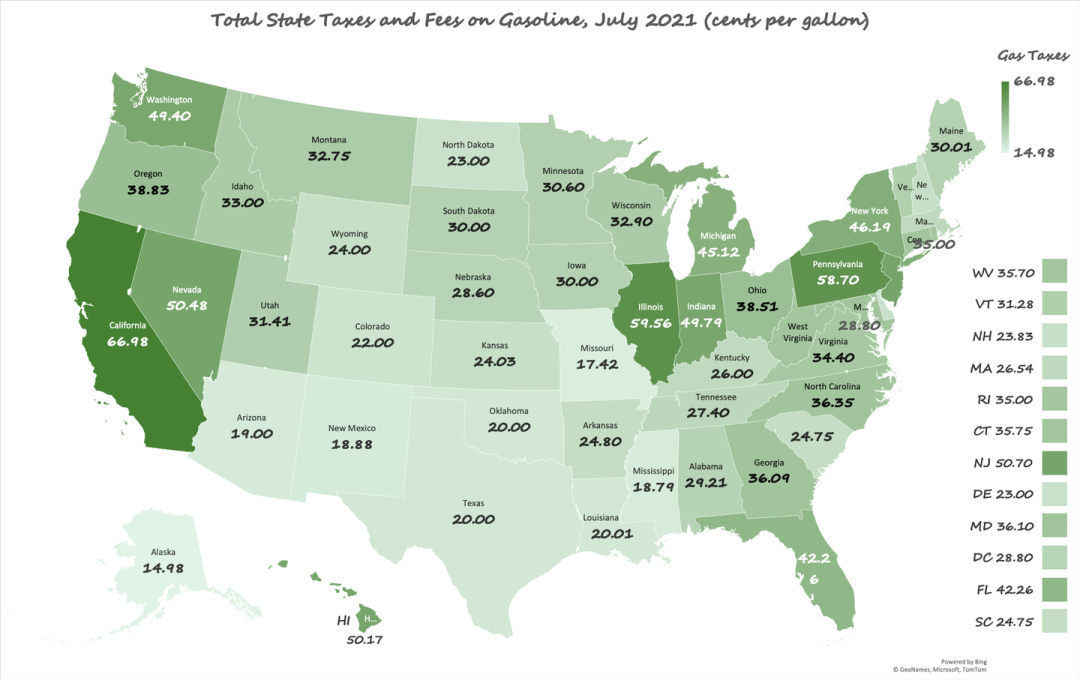
On one hand, most states have implemented annual registration fees to secure maintenance funds. On the other hand, some states have begun taxing public charging stations as an alternative to fuel taxes.
Given that new energy vehicles either do not require gasoline or consume less of it, traditional fuel tax revenues have declined, while vehicle mileage continues to rise. Additionally, the increasing weight of new energy vehicles imposes a greater burden on roads.
As environmentally friendly products, new energy vehicles are now contributing to a widening gap in infrastructure maintenance costs, sparking a nationwide debate on the relationship between vehicle weight and infrastructure wear.
Unchecked Weight Gain
It is widely acknowledged that new energy vehicles are heavier than their gasoline-powered counterparts in the same class.
Data from the Ministry of Industry and Information Technology reveals that the average curb weight of new passenger cars in China has increased from 1,312 kg in 2012 to 1,704 kg in 2024, a 392 kg or nearly 30% rise over 12 years.
The primary driver of this weight surge is the "battery stack." Consumer concerns about driving range have spurred automakers to compete in equipping vehicles with larger battery packs. Currently, mainstream lithium iron phosphate batteries have an energy density of about 140-160 Wh/kg. To achieve a range of over 500 kilometers, the battery pack weighs approximately 400-600 kg; for 800 kilometers, a 100 kWh battery pack alone weighs nearly 700 kg, and with protective structures and thermal management systems, the entire battery system easily exceeds 800 kg.
A high-end electric SUV from a domestic automaker is fitted with a battery pack exceeding 100 kWh, with the battery system alone weighing over 600 kg, accounting for about 20% of the vehicle's total mass.
Although battery technology has advanced over the years, consumer concerns about driving range persist. Not only have the ranges of pure electric vehicles increased, but in the past year or two, the weight gain of hybrid vehicles has also approached uncontrolled levels. Some hybrid models now have battery capacities comparable to pure electric vehicles, and when combined with an engine, their weight spirals out of control.
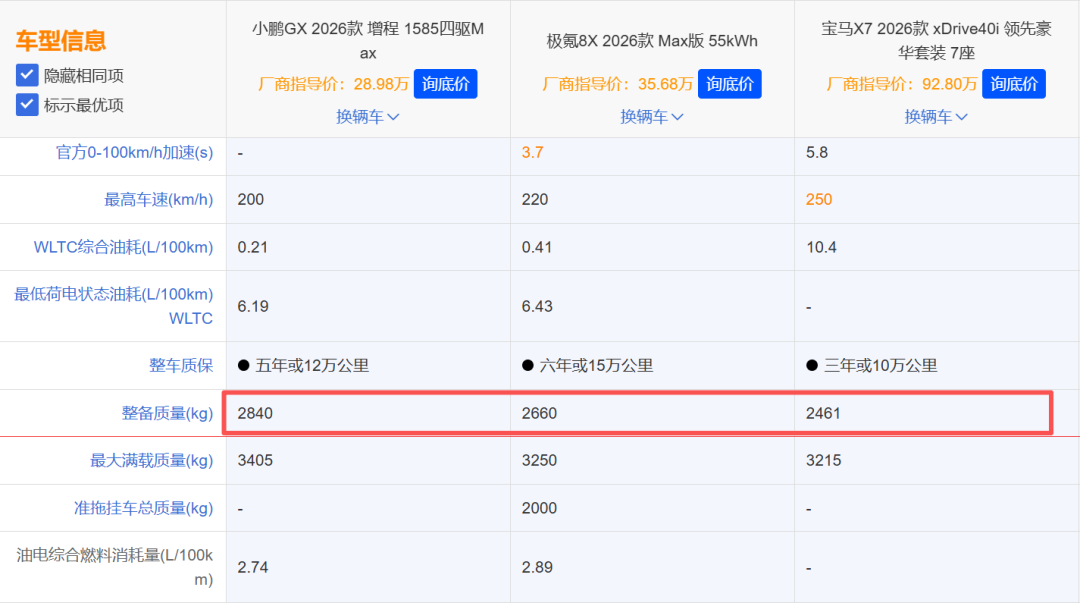
For instance, the newly launched Zeekr 8X (55 kWh version) has a curb weight of 2,730 kg, while the newly launched Xpeng GX extended-range version with a 430 km pure electric range has a curb weight of 2,840 kg. In contrast, the 2026 BMW X7 seven-seater version has a curb weight of just 2,461 kg, nearly 300 kg lighter.
Besides the weight added by batteries, various cross-functional features also contribute. From multi-layer soundproof glass and multi-screen interfaces to increasingly complex arrays of intelligent driving sensors, as well as "TV-sofa" configurations like refrigerators and large sofas, all contribute to pushing up the vehicle's weight.
Miao Wei, a member of the National Committee of the Chinese People's Political Consultative Conference, has publicly urged new energy vehicles to avoid blindly "stacking range" and instead focus on energy consumption management. Data shows that the average electricity consumption of pure electric passenger vehicles in China was 12.54 kWh per 100 km in 2024, a 9.5% decrease from 2018. However, since 2022, average electricity consumption has risen instead of fallen, prompting relevant authorities to impose mandatory standards to limit consumption.
All these factors indicate a vicious cycle: "stacking batteries to increase range leads to greater weight, which in turn increases energy consumption."
In addition to unchecked weight gain, the size of new energy vehicles is also spiraling out of control. Recently, CCTV News reported on the difficulty of parking new energy vehicles, partly due to their increasing size, which is approaching the limit of parking space dimensions designed under previous national standards. On the other hand, parking space dimensions are shrinking as developers try to increase the number of spaces by reducing their size.
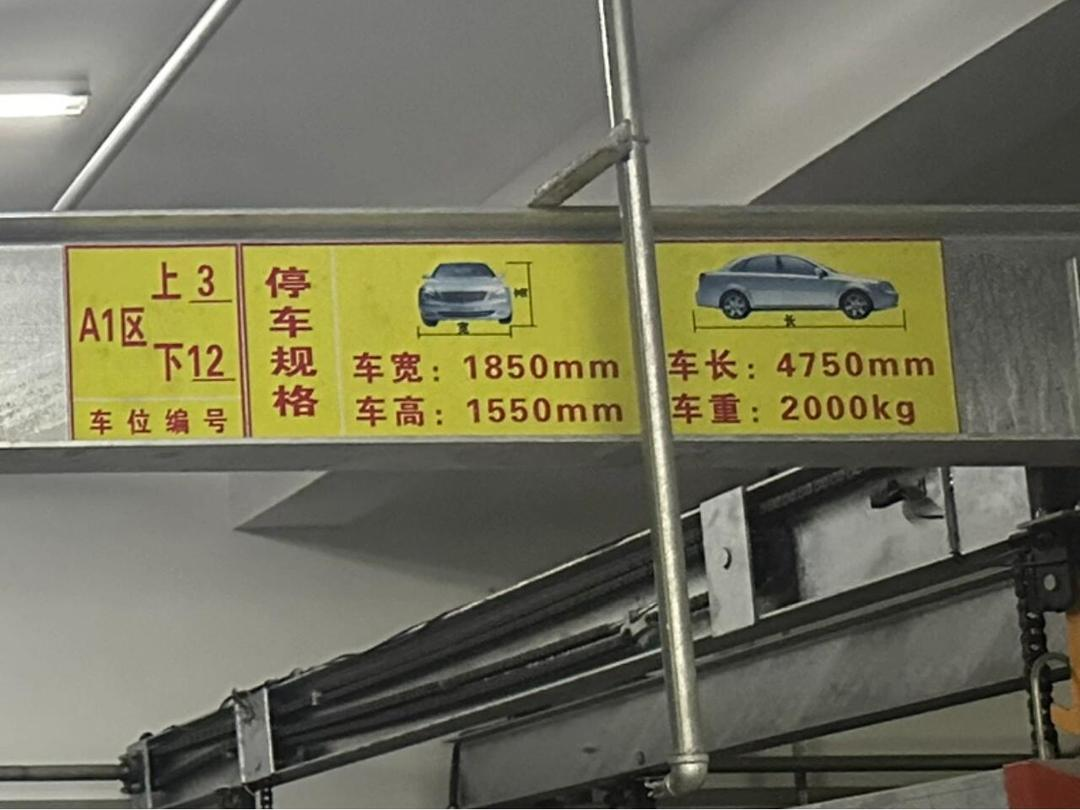
Mechanical parking spaces, seen as a compromise, are struggling to cope with the increasingly heavy new energy vehicles. The current "Design Code for Garage Architecture" still limits the dimensions of small vehicles to 4.8 meters in length and 1.8 meters in width, with a weight limit of 2 tons for mechanical parking spaces, which is no longer sufficient for today's new energy vehicles. As a result, about 30% of mechanical parking spaces in residential areas have become "decorations."
Increased Infrastructure Risks
The issues of overweight and oversized new energy vehicles first impact basic transportation, which is why U.S. lawmakers have repeatedly called for taxing new energy vehicles.
In road engineering, there is a famous "fourth power law": the damaging effect of a vehicle on the road surface is proportional to the fourth power of its axle weight. In simple terms, doubling the vehicle's weight increases road damage by 16 times.
According to a report by the China Association of Automobile Manufacturers, every 1-ton increase in vehicle weight raises the damage intensity to asphalt pavements by 47%, with corresponding increases in road maintenance costs of 23%.
Besides the roads themselves, driving safety risks are also increasing, with bridge guardrail crash designs facing challenges. As vehicle mass increases, while the deformation of the guardrail itself does not grow significantly, the deformation of the vehicle's structural components increases markedly.
For an SUV with a curb weight of 2,000 kg, collision damage is severe, and the calculated occupant injury index exceeds the allowable limit, indicating that existing guardrails may not provide sufficient safety protection for occupants of heavier new energy vehicles.
Meanwhile, safety risks in parking lots are also rising. Data shows that about 60% of old parking lots nationwide still have weight limits of 2.0-2.2 tons. In old office buildings within Beijing's Fifth Ring Road, over 40% of parking lots have a weight limit of 2.0 tons, while several underground parking lots in the core area of Guangzhou's Zhujiang New Town have a weight limit of only 2.2 tons.
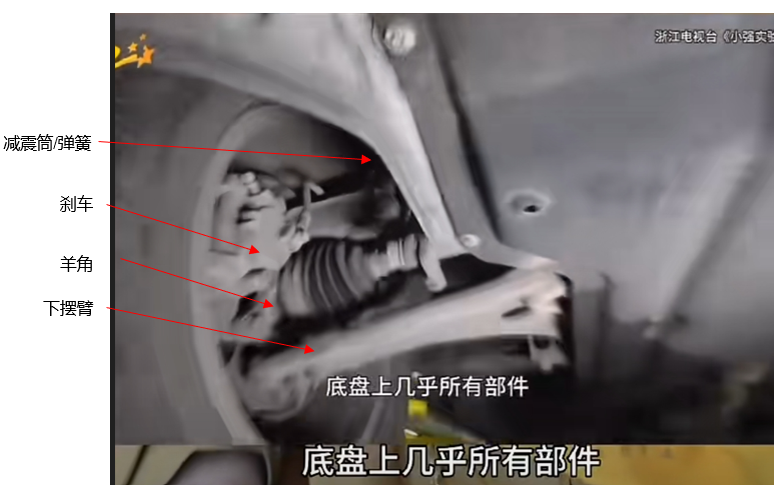
In addition to these long-term safety issues, consumers also face more hidden expenses, as increased vehicle weight accelerates wear and tear on tires and braking systems.
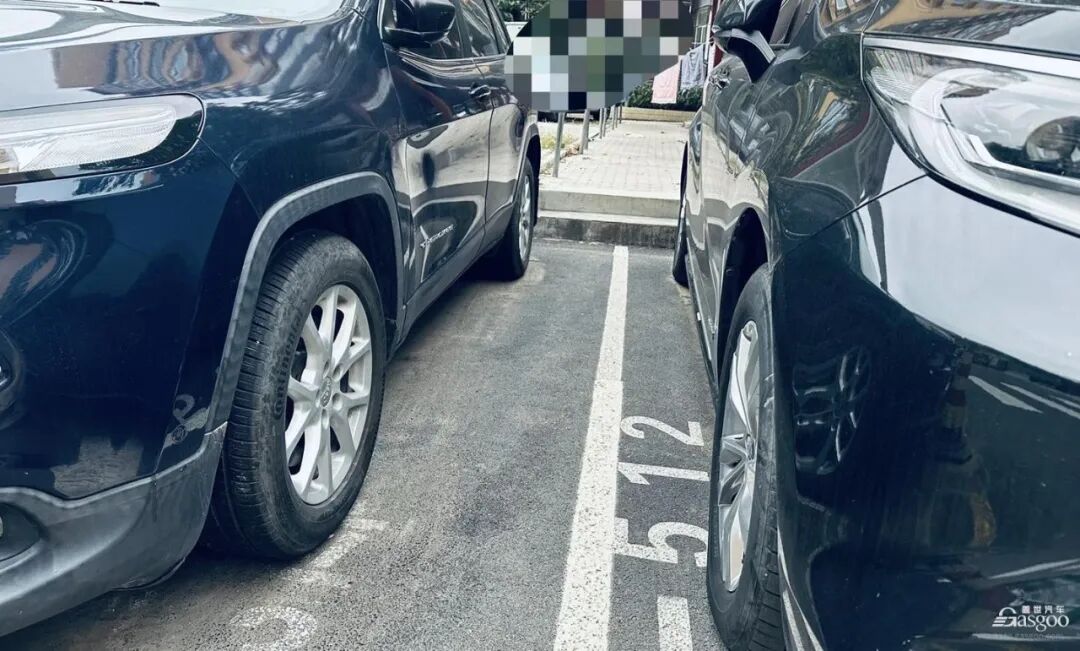
Research shows that due to the heavy weight of battery packs, electric vehicles experience faster wear on brakes and tires than traditional vehicles.
A 2.5-ton new energy SUV has front tire wear that is 35%-50% faster than a 2.0-ton gasoline vehicle, shortening the tire replacement interval from 60,000 km to 40,000 km.
For the braking system, the replacement interval for brake discs and pads is shortened by 20%-30%, while the replacement interval for chassis suspension components—such as shock absorbers and control arms—is shortened from 80,000-100,000 km to 50,000-70,000 km. These hidden costs are ultimately borne by consumers.
Increased road wear requires funds for maintenance. In the era of traditional gasoline vehicles, road maintenance costs were included in fuel taxes, with much of the funding coming from government expenditures.
However, with the development of new energy vehicles and the superimposition of various preferential policies, tax revenues are far from covering road maintenance needs. In particular, electric vehicles do not pay federal fuel taxes, leading to a reduction in revenue for the Highway Trust Fund and creating a "free-rider" phenomenon.
According to estimates by the U.S. Congressional Budget Office, the Highway Trust Fund is projected to face a funding gap of $2.41 trillion over the decade from 2024 to 2033. However, the federal gasoline tax in the United States has remained at 18.4 cents per gallon since 1993, and the diesel tax at 24.4 cents per gallon, with no adjustments in 33 years, making it difficult to support future road maintenance.
Although the tax proposal originated in the United States, the underlying issues affect the global market, especially in China, where the penetration rate of new energy vehicles exceeds 50%. Competition among automakers in 2026 is shifting toward high-value-added large vehicle markets, with new energy vehicles rapidly increasing in size and weight, akin to an arms race.
However, in the domestic market, larger bodies, longer-range batteries, and more luxurious configurations have long been equated with better products and travel experiences.
Automakers should consider how to incorporate lightweight designs amid the pursuit of intelligence and electrification, achieving "weight reduction" while ensuring safety and performance, rather than equating "heaviness" with "high-end" and "safety."
For regulatory authorities, besides promptly revising outdated standards, they should also consider changing the original "pay-for-fuel" road maintenance model and incorporating vehicle weight factors into the pricing system.
Faced with the trend of unchecked weight and size of new energy vehicles, a "correction" in mindset is needed to ensure the healthy development of the entire industry.
Note: Some images are sourced from the internet. If there is any infringement, please contact us for removal.
-END-

-
![]()
Why Is Tencent Not Rushing into the AI Race?
-
![]()
Application of Agentic AI in Cancer Research and Oncology
-
![]()
Several Hidden Signals from the Alibaba Cloud Summit
-
![]()
Big Shake-Ups in PR at Leading Firms! Top Executives in Internet and Auto Sectors See Major Turnover, Talent Migration Reaches New Heights
-
![]()
Unchecked Weight Gain in New Energy Vehicles: Taxation as a Stopgap, Not a Long-Term Fix
-
140 Trillion Tokens Later: China is Building a 'High-Speed Rail for Computing Power'
-
![]()
Jeep's Second Attempt: Stellantis' Self-Rescue More Like a Leveraged Position Increase
-
Chinese Cars' North American Experience: Canada Opens a Window While the U.S. Tightens the Door