5 Years, 170 Billion Yuan Wealth Vanishes: Where Did Wei Jianjun Go Wrong?
 06/08 2026
 465
465
By Qiaofu
The Interplay of People, Cars, and the Market Arena
A Shared Journey in the Ascendancy of China's Automotive Sector
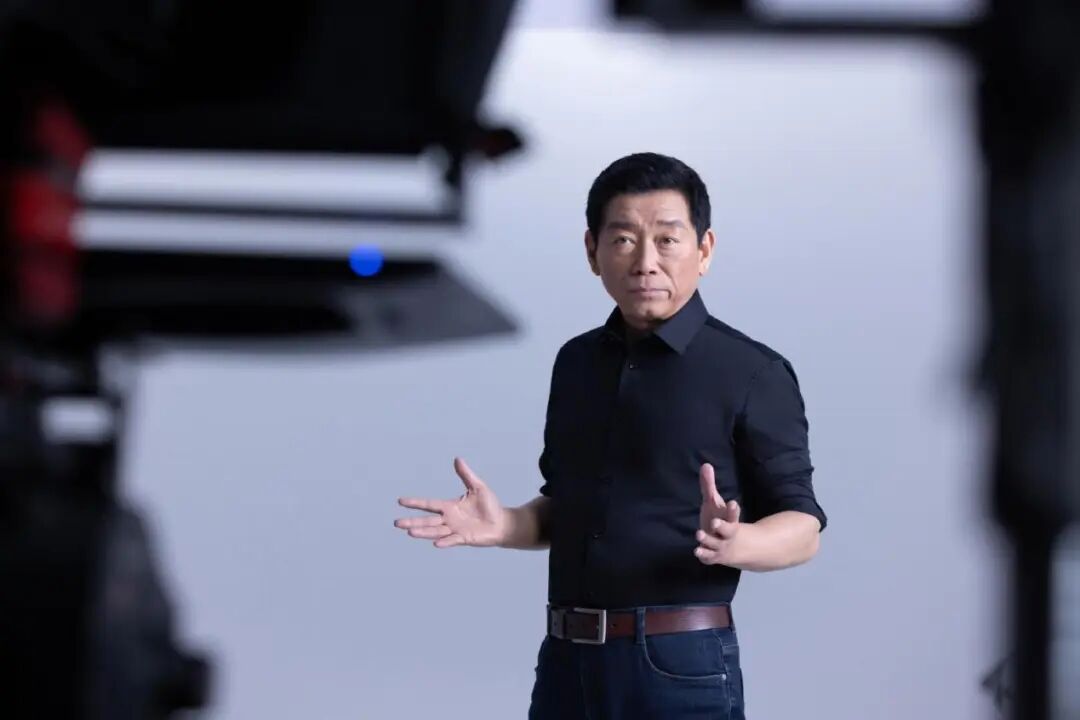
Over the past five years, Wei Jianjun has witnessed his wealth dwindle by over 170 billion yuan, a staggering loss. If this is to be seen as retribution, it is indeed a formidable one. Yet, the fault does not lie with Wei Jianjun; rather, it is Great Wall Motors that bears the responsibility.
01 The Short-Term Downturn of Great Wall Motors Impacts Wei Jianjun's Wealth Accumulation
Wei Jianjun's financial standing is predominantly tied to his stake in Great Wall Motors, which exceeds 30%. 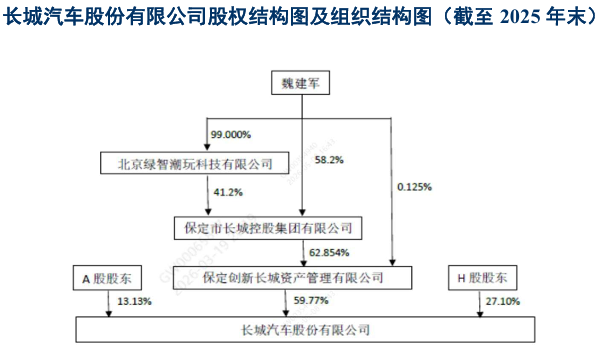
In the latter half of 2021, Great Wall Motors' stock soared to a peak of 69.8 yuan per share, boasting a total market capitalization of approximately 644.6 billion yuan. At that juncture, Wei Jianjun's shareholding was valued at around 222.4 billion yuan. Propelled by this all-time high stock price, Wei Jianjun ascended to the pinnacle of wealth in Hebei province.
However, the subsequent decline in Great Wall Motors' stock price was swift and severe, plummeting to around 29.79 yuan by March 2022, effectively halving its value. This downturn resulted in a near 127.7 billion yuan reduction in Wei Jianjun's wealth. Presently, with the stock price hovering around 17 yuan, the market capitalization stands at approximately 144.5 billion yuan, leaving Wei Jianjun's wealth at around 50.3 billion yuan.
In a mere five years, Wei Jianjun's personal fortune plummeted from a zenith of 222.4 billion yuan to 50.3 billion yuan, marking a meteoric rise and fall.
The trajectory of Wei Jianjun's wealth—whether it will rebound or continue its descent—remains uncertain. It is noteworthy that Wei Jianjun has steadfastly maintained his shareholding in Great Wall Motors above 30%, without any significant reductions, demonstrating a level of commitment that surpasses that of Xiaomi's co-founder Lin Bin, who reduced his stake in Xiaomi.
02 The Tangible Causes
The decline in Great Wall Motors' stock price is not without reason. The management of Great Wall Motors urges netizens to approach the situation with rationality. 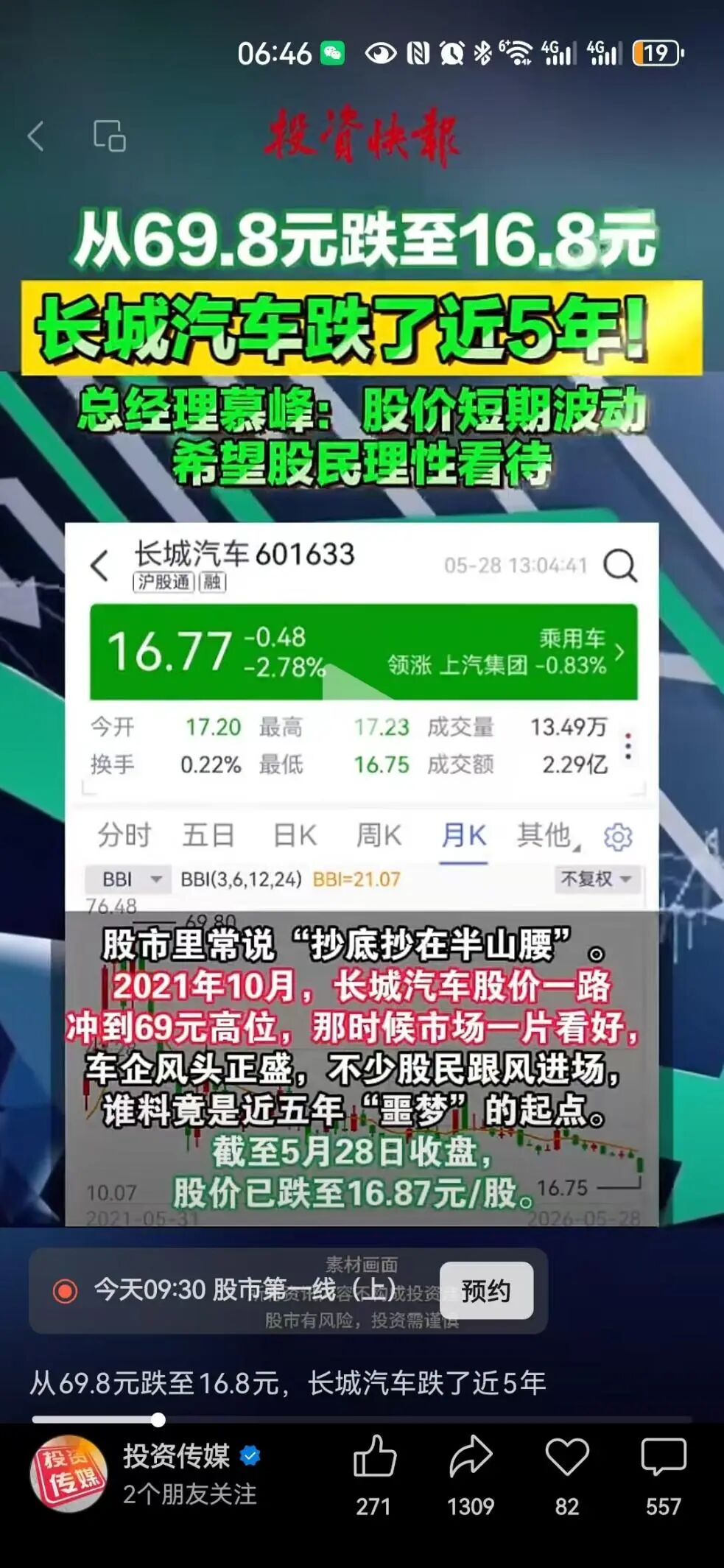
Yet, is the capital market's apparent devaluation of Great Wall Motors a betrayal of its intrinsic value? Whether this constitutes a misjudgment is debatable, but capital speaks through its actions, and it is all tangible money.
From its peak in 2021 to its current state, Great Wall Motors' stock has endured a "lost five years"; correspondingly, the company has experienced a "stagnant five years" in the market.
Expanding the lens, over the past five years, Great Wall's sales growth has consistently trailed behind that of many domestic competitors. Once the vanguard among independent brands, Great Wall has now slipped to the rear.
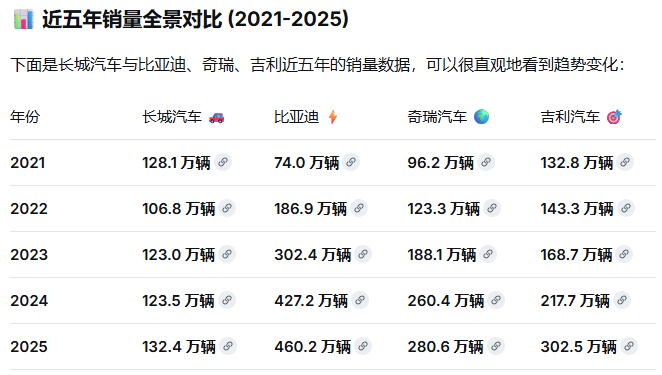
In truth, when considering only sales figures, Great Wall Motors' lag is somewhat forgivable; as long as it can capitalize on the future's dominant trends, there is still hope for a resurgence.
Currently, two widely acknowledged frontiers in automotive development are electrification and intelligence. To secure a foothold in the future, automakers must excel in at least one of these domains.
In terms of electrification, Great Wall is still striving. From a sales perspective, its electric vehicle lineup currently lacks any standout products. Its highly anticipated WEY brand has yet to establish itself. Taking May as an example, Great Wall sold 30,000 electric vehicles compared to 70,000 gasoline vehicles. In contrast to its competitors, gasoline vehicles have consistently been the mainstay of Great Wall's sales and profits. However, the prevailing trend is for electric vehicles to supplant gasoline vehicles as the mainstream. Once Great Wall's gasoline vehicles are overtaken, its sales may suffer.
As for intelligence, while most automakers can manage superficial aspects like smart cockpits, not all can excel in intelligent driving.
What is the caliber of Great Wall's intelligent driving capabilities? Wei Jianjun asserts its excellence, but market validation is pending.
03 Who Should Bear the Responsibility for Great Wall Motors?
Who should be held accountable for Great Wall Motors' transition from a former leader to a current follower?
As the captain of Great Wall Motors, Wei Jianjun's vision and foresight dictate the company's trajectory.
The crux of Great Wall Motors' predicament can be encapsulated in a single sentence: it missed the historic opportunity in electric vehicle development.
Besides Great Wall Motors, traditional automakers like FAW, SAIC, and GAC also grapple with similar challenges. However, behemoths like SAIC and GAC have achieved some success in their transformations; as a private enterprise, Great Wall's transformation pace should not lag behind that of state-owned enterprises.
-
![]()
Smartphone Prices Surge Amid Manufacturer Anxiety
-
![]()
Orbbec Soars to Record Heights, Eyes Further Capital Influx of 980 Million!
-
![]()
Tongding Interconnect Sets Up Shop in Shaoguan with 800 Million Yuan in Registered Capital
-
![]()
Before Kimi’s A-Share Debut, Zhipu Aims to Secure More 'Strategic Funding'
-
![]()
Innovative Leap | Fiber-Pluggable 1470nm Laser Source: Revolutionizing Precision Laser Weeding
-
![]()
73-Day Rapid Listing: Where Does Unitree's Wang Xingxing's 'Sense of Urgency' Come From?
-
![]()
AI Project Mindverse, Backed by Meituan, Faces Data Inflation Allegations Over Its Macaron Product
-
![]()
3000-word In-Depth Analysis | What Makes Physical AI So Magnetic? It Has Captivated Masayoshi Son, Jensen Huang, and Justin Sun All at Once