When European Factories Face Idle Capacity, Chinese Brands Offer a ‘Traditional Chinese Remedy’
 06/08 2026
 469
469
Recently, Nissan Motor Co., Ltd. and Chery International UK inked a non-binding memorandum of understanding (MOU) to explore the feasibility of producing passenger vehicles for Chery at Nissan’s Sunderland plant in the UK, with production potentially starting as early as the fiscal year 2027.
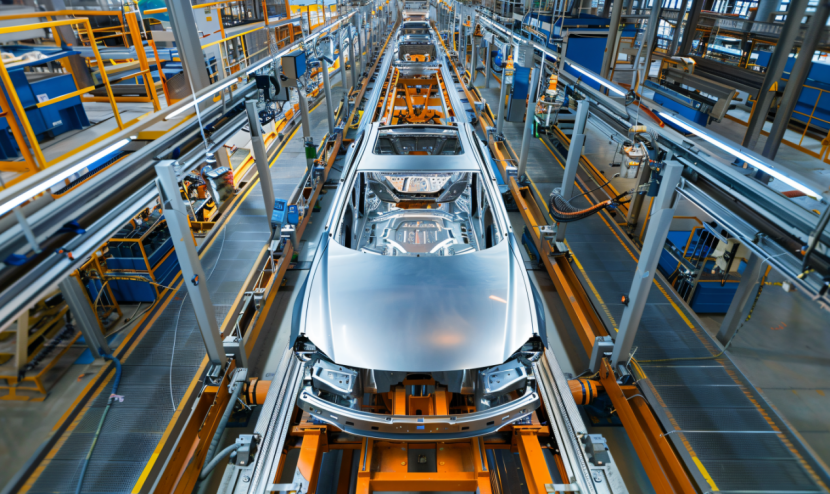
In the preceding month, Dongfeng and Stellantis signed an MOU to establish a joint venture in Europe. Leapmotor leveraged Stellantis' Spanish plant for localized production, and Geely held negotiations with Ford to share production capacity at a Spanish facility. Chinese automakers have been forging intensive collaborations with foreign counterparts through methods such as foundry operations, equity participation, and shared production capacity. Once serving as ‘apprentices’ in joint ventures, Chinese automakers are now switching roles to infiltrate the core of the global automotive industry as technology exporters, capacity integrators, and brand operators.
▍Intensive Rollout of Reverse Cooperation Accelerates Capacity Restructuring
Nissan’s foundry agreement with Chery marks another typical case of recent reverse cooperation among Chinese automakers. According to the MOU, Nissan will retain ownership of the Sunderland plant’s property rights, production equipment, and on-site employees, fully responsible for operations and management. Chery will only use Production Line 1 for vehicle assembly, without acquiring any equity in the plant. Nissan will consolidate production of its proprietary models onto Production Line 2, reserving Production Line 1 exclusively for Chery to produce right-hand-drive models for the UK and other Commonwealth markets.
The Sunderland plant is the largest vehicle manufacturing facility in the UK, with a peak annual capacity of 600,000 units. It once served as Nissan’s core production base in Europe, manufacturing best-selling models such as the Qashqai, Juke, and Leaf. However, impacted by the global automotive industry’s transformation and weak consumer demand in Europe, the plant has faced overcapacity in recent years. In 2025, its total output was 273,000 units, with capacity utilization below 50%. To reduce operational costs and stem continuous losses in its European business, Nissan finalized a capacity optimization plan in May 2026, deciding to seek foundry partners for Production Line 1 on a global scale. Chery ultimately emerged as the preferred partner.
For Chery, this collaboration marks a significant step in deepening its presence in the UK market. Currently, Chery has established a market presence through three major series—Omoda, Jaecoo, and its main Chery brand. In April 2026, its monthly sales exceeded 10,000 units, capturing a 6.7% market share and ranking second in the UK, just behind Volkswagen. By localizing production at the Sunderland plant, Chery will effectively bypass UK tariffs on Chinese electric vehicles and EU anti-subsidy duties.
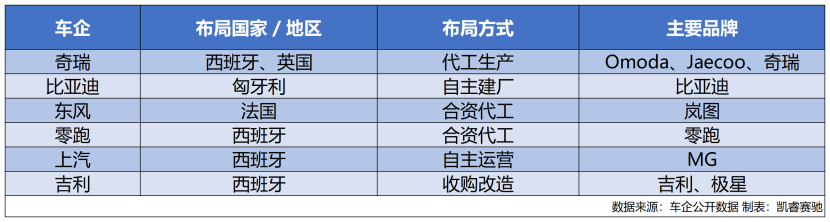
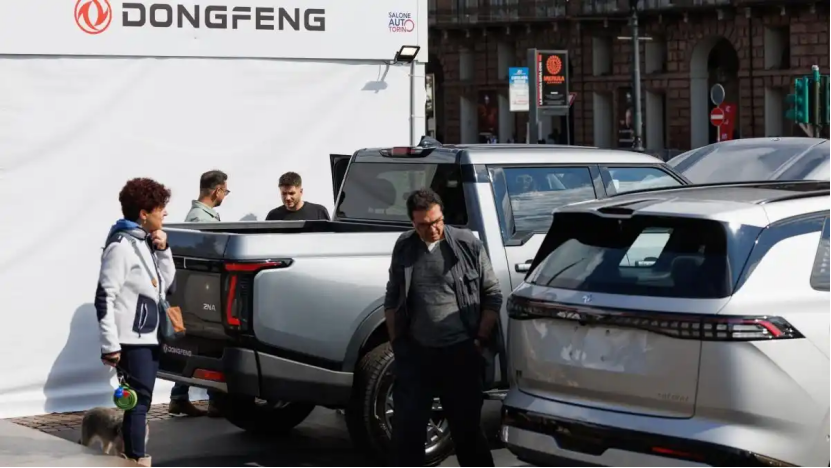
Nissan’s collaboration with Chery is not an isolated case. On May 20, Dongfeng Motor Corporation and Stellantis Group signed a non-binding MOU to establish a joint venture in Europe, with Stellantis holding a 51% stake and Dongfeng holding 49%, under Stellantis' operational leadership. Initially, the joint venture will handle sales and distribution of Dongfeng’s premium new energy brand, VOYAH, in agreed European markets. Simultaneously, both parties are exploring the possibility of localizing production of Dongfeng’s new energy vehicles at Stellantis’ plant in Rennes, France.
Earlier, on May 8, Leapmotor and Stellantis Group announced the deepening of their strategic cooperation. Both parties are evaluating the addition of a production line at Stellantis’ Figueruelas plant in Zaragoza, Spain, to manufacture Leapmotor’s B10 model and Opel’s new C-segment all-electric SUV. The Leapmotor B10 is expected to commence production at the plant in the fourth quarter of 2026, adopting a CKD (Completely Knocked Down) model with core electric components supplied from China. Additionally, both parties are assessing the revitalization of Stellantis’ Villaverde plant in Madrid, Spain, planning to produce a new Leapmotor model starting in the first half of 2028. Ownership of the plant is also under discussion, with the possibility of transfer to the joint venture established by both parties.
In addition to the aforementioned officially announced collaborations, Geely and Ford are negotiating to share production capacity at a Spanish plant. There are also reports that Huawei’s Harmony Intelligent Mobility Alliance (HIMA), JAC Motors, Stellantis Group, and its Maserati brand are in talks to jointly develop new energy vehicles under the Maserati brand. Reverse cooperation between Chinese automakers and multinational giants is entering a period of intensive implementation.
▍Mutual Needs Drive Cooperation: ‘Coming In’ and ‘Opening Doors’
From a cooperation model perspective, current reverse collaborations among Chinese automakers exhibit diverse characteristics. Beyond pure foundry operations like Nissan and Chery, there are models such as Leapmotor and Stellantis’ technology export combined with capacity sharing, Dongfeng and Stellantis’ joint venture with localized production, and Chery’s reverse brand licensing with Jaguar Land Rover, as well as XPENG’s technology platform export to Volkswagen.
A common feature of these diverse cooperation models is that Chinese automakers have assumed a more proactive position. They are no longer merely technology importers and market providers but have become technology exporters and brand operators. Multinational giants, on the other hand, primarily serve as capacity providers and channel collaborators.
According to a report by AlixPartners, the European automotive industry is experiencing a production capacity ‘avalanche,’ with annual vehicle production in Europe plummeting from 16 million units in 2018 to 11.4 million units in 2024, a loss of nearly 5 million units in six years. Currently, the average capacity utilization rate of European automotive plants is merely 55%, below the industry’s healthy range of 70%–90%. Stellantis Group faces the most severe situation, with its European plants averaging only 46% utilization in 2025, leaving approximately 3.5 million units of idle capacity and incurring annual losses exceeding billions of euros. Volkswagen Group’s European capacity utilization also fell below 60% in 2025, with its Osnabrück plant operating at just 30%. Weak demand, high costs of electric transformation, and all-around competition from Chinese automakers have shrunk the market ‘cake,’ turning factories into ‘hot potatoes.’
A more challenging issue is the strong influence of European labor unions, making direct plant closures extremely costly. Therefore, revitalizing idle capacity through foundry operations for Chinese automakers has become another option for multinational giants to avoid massive layoffs and sustain plant operations.
Additionally, in October 2024, the EU imposed additional anti-subsidy duties of up to 35.3% on Chinese electric vehicles, on top of the existing 10% base tariff, bringing the comprehensive tariff rate for brands like SAIC’s MG to 45.3%. Even though China and the EU reached a ‘price commitment’ framework consensus in January 2026, pricing flexibility remains constrained by minimum import prices. Meanwhile, the EU is contemplating local content rules, with France even advocating that 75% of electric vehicle components must originate from Europe. Relying solely on exports will only narrow the path forward. Tariffs are compelling Chinese automakers to ‘come in,’ while the predicament of European factories is ‘opening the door.’
Beyond revitalizing idle capacity, multinational giants also have a demand for acquiring Chinese electric vehicle technology. European automakers have made slow progress in electric transformation, with manufacturing costs at least 30% higher than those in China and significant gaps in three-electric systems (battery, motor, electronic control), intelligence, and cost control compared to their Chinese counterparts.
By collaborating with Chinese automakers, European brands can swiftly acquire mature electric technologies and accelerate product transformation. For instance, Opel will partner with Leapmotor to launch a new C-segment all-electric SUV, with Leapmotor providing the electric platform and core components, while Opel handles exterior design and engineering adaptation. This cooperation model can significantly shorten European brands’ R&D cycles and reduce costs.
For Chinese automakers, the primary drivers of reverse cooperation are bypassing trade barriers and rapidly entering overseas markets. The EU’s anti-subsidy duties on Chinese electric vehicles have substantially eroded the cost advantages of vehicle exports, making localized production a crucial path to bypass tariff barriers. Additionally, by collaborating with multinational giants, Chinese automakers can leverage their mature sales channels and after-sales service systems to quickly establish brand recognition and reduce market entry costs.
The wave of reverse cooperation between Chinese automakers and multinational giants is a result of the global automotive industry’s restructuring. It signifies that China’s automotive industry has transitioned from the stage of ‘exchanging market access for technology’ to a new phase of ‘exchanging technology for capacity and brand.’ This cooperation model represents a win-win choice for both Chinese and foreign parties, helping multinational giants revitalize idle capacity and accelerate electric transformation while assisting Chinese automakers in bypassing trade barriers and swiftly entering overseas markets.
Layout 丨 Yang Shuo Image sources: Qianku.com, Dongfeng Motor, Leapmotor
-
![]()
Smartphone Prices Surge Amid Manufacturer Anxiety
-
![]()
Orbbec Soars to Record Heights, Eyes Further Capital Influx of 980 Million!
-
![]()
Tongding Interconnect Sets Up Shop in Shaoguan with 800 Million Yuan in Registered Capital
-
![]()
Before Kimi’s A-Share Debut, Zhipu Aims to Secure More 'Strategic Funding'
-
![]()
Innovative Leap | Fiber-Pluggable 1470nm Laser Source: Revolutionizing Precision Laser Weeding
-
![]()
73-Day Rapid Listing: Where Does Unitree's Wang Xingxing's 'Sense of Urgency' Come From?
-
![]()
AI Project Mindverse, Backed by Meituan, Faces Data Inflation Allegations Over Its Macaron Product
-
![]()
3000-word In-Depth Analysis | What Makes Physical AI So Magnetic? It Has Captivated Masayoshi Son, Jensen Huang, and Justin Sun All at Once