"After Six Years of Selling A00-Class Cars, I Find Myself at a Crossroads"
 06/17 2026
 497
497
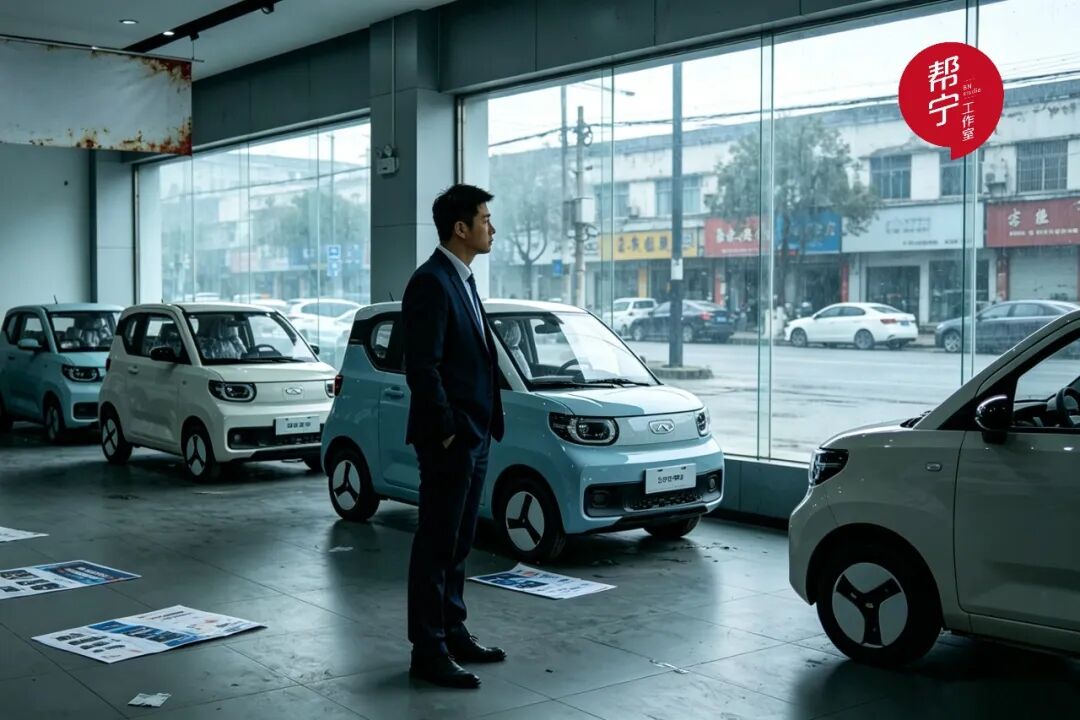
"Who is Responsible for the Decline of Micro Electric Vehicles?"
Oral Narration by Wang Guang (pseudonym) | Compiled by Gong Chenyan | Produced by Bangning Studio (gbngzs)
| Editor's Note
In a mere few years, the A00-class micro electric vehicle market has witnessed a dramatic cycle of fluctuations. Once, these vehicles, with their affordable pricing and precise positioning for short-distance commuting, formed the backbone of the new energy vehicle market in lower-tier regions. They became the go-to choice for countless ordinary families venturing into the new energy sector and a crucial revenue stream for many automotive salespeople.
However, the landscape swiftly changed. By 2026, a confluence of factors—subsidy reductions, purchase tax adjustments, market saturation, and the emergence of more cost-effective alternatives—led to a significant downturn in sales within this niche market.
On June 8th of this year, the China Passenger Car Association (CPCA) released data indicating that in May, the A00-class and A0-class economical electric vehicle markets faced substantial pressure. Wholesale sales of A00-class vehicles stood at 87,000 units, marking a 44% year-on-year decrease and a 22% month-on-month increase. These vehicles accounted for 10% of the pure electric vehicle market share, a significant drop of 11.6 percentage points compared to the same period last year. In the first four months of this year, the A00-class micro electric vehicle market experienced the steepest decline among new energy vehicle segments, with sales of 140,800 units, a 66.4% year-on-year decrease.
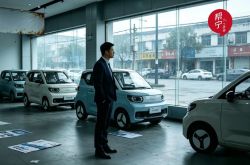
Nowadays, customer traffic in stores specializing in this niche market is sparse. Sales personnel, deeply entrenched in this sector for years, find themselves grappling with uncertainty and the brunt of the impact. Unlike their counterparts in mid-to-high-end mainstream brands, who enjoy stable premiums and customer bases, micro electric vehicle salespeople cater to a highly price-sensitive clientele. The market's ebb and flow directly influence their income, daily routines, and career trajectories.
During the market's heyday, they could thrive by selling compact cars priced at just tens of thousands of yuan each. Now, with the market cooling, their customer flow, sources, and commissions are dwindling simultaneously. Their years of accumulated sales acumen seem to have lost its edge, leaving them in a quandary.
Recently, Wang Guang (pseudonym), a sales consultant who has exclusively sold micro electric vehicles in Suzhou, Jiangsu, for six years, shared his sentiments with Bangning Studio. The following is his account.
I am a post-90s car salesperson (consultant) born and raised in Suzhou, Jiangsu. I have been in the automotive sales industry for over a decade, and for the past six years, I have relied on a few mini electric commuter vehicles in the showroom to make a living. This job, which may seem insignificant to some, was once my most stable source of income to support my family.
No one anticipated that in just three or four years, the market would take a sharp downturn. The national commuter car that once helped me establish myself has now become the heaviest burden on my mind.
After graduating from university, I dove headfirst into the automotive sales industry. Six years ago, the store I worked at began selling a certain brand's micro electric vehicle priced at 33,100 yuan with a range of 120 kilometers. At that time, there were few similar products on the market, and the boss hired someone specifically to handle this model. I took the initiative to take on this task and immersed myself in the commuter market.
My friends ridiculed me for sticking with a commuter car priced at just a few tens of thousands of yuan, saying it was a waste of my potential. No one expected that this car would become an instant sensation, with sales skyrocketing and directly heating up the entire micro electric vehicle market. During the first two years of selling it, I experienced moments of glory that I will never forget.
A00-class micro electric vehicles are affordable, provide shelter from the elements, and are convenient to park, making them ideal for short-distance trips such as picking up children and running errands. These advantages once led to a flood of orders, with manufacturers struggling to keep up with production. Sometimes, customers had to wait up to six months for their orders. Store sales personnel also had to compete for quotas, and if they were a bit slow, they could only make customers wait indefinitely for their cars.
At that time, our store had more than ten sales personnel, and each of them could easily sell over twenty units of this micro electric vehicle per month. The showroom was bustling with activity from morning to night, including mothers, small shop owners, retirees... the customer flow was endless. Test drives required queuing, and negotiating deals had to be done in turns. I was often too busy to eat.
In addition to individual customers (C-end), corporate bulk orders also kept coming in. You wouldn't understand unless you experienced it. Real estate companies and liquor distributors often purchased this model in bulk for activities such as house purchase lotteries and promotional giveaways. Their orders didn't require repeated price negotiations; the process would be completed swiftly, and the vehicles would be dispatched directly.
During those years, my income was substantial, with a maximum commission of 500 yuan per vehicle. Relying on this income, I could comfortably support my family's expenses. Many of my peers envied me for choosing the right trend.
At that time, I naively believed that micro electric vehicles were a sustainable market segment, a rigid demand for ordinary people's commuting, and would never disappear. So, I thoroughly understood every parameter of that model, memorized the range loss, charging costs, and maintenance details under different road conditions, and figured out the core needs that customers cared about the most. Relying on meticulous service, I accumulated a large number of loyal customers who actively introduced their relatives and friends to come and see the cars.
I always thought that such prosperity would last for a long time and never expected that the triple whammy of market saturation, policy reductions, and competition from similar products would hit so soon.
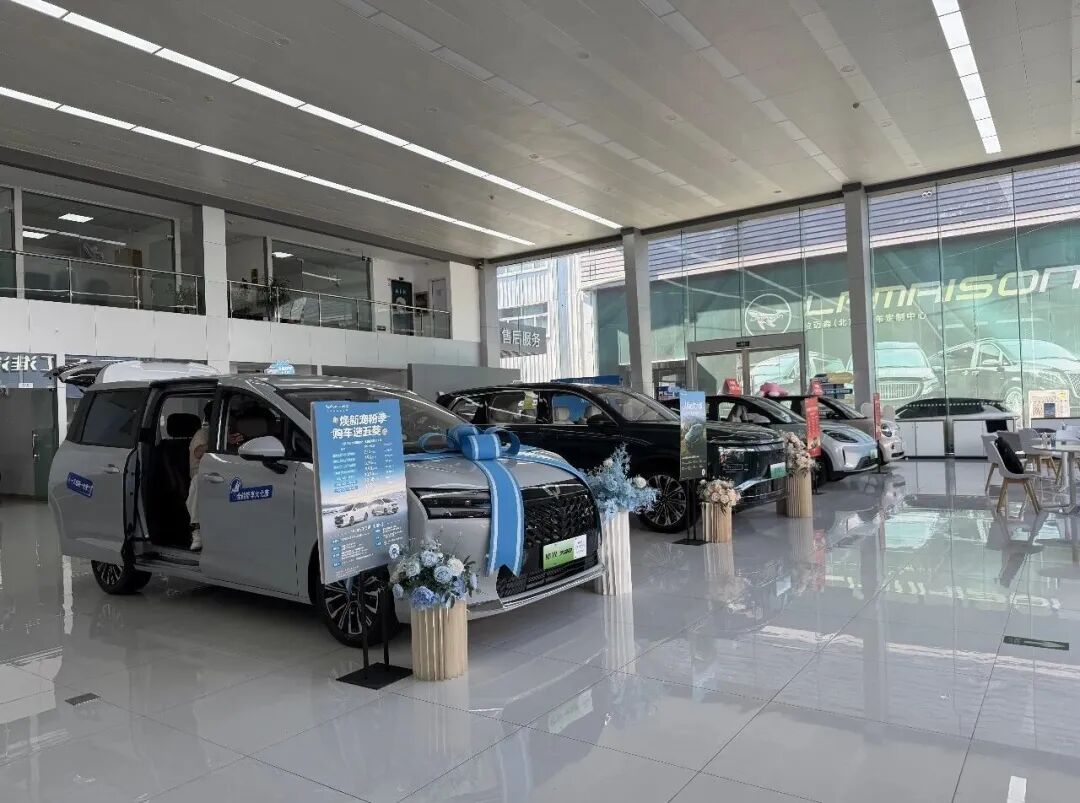
Especially after the start of 2026, everything changed.
The biggest turning point was the comprehensive adjustment of subsidy rules.
In previous years, there were generous subsidies for scrapping and replacing vehicles. This year, the subsidies are calculated based on the proportion of the new car's price. This means that for micro electric vehicles priced at thirty to forty thousand yuan, the scrapping subsidy has directly shrunk from twenty thousand yuan to a few thousand yuan. Coupled with the fact that the new energy vehicle purchase tax is no longer fully exempted but has been reduced to a 50% exemption, the total cost of going through all the procedures for the same model last year was just over twenty thousand yuan, while this year it has directly risen to over forty thousand yuan.
The price difference of ten to twenty thousand yuan is a significant hurdle for my customers. Customers who choose micro electric vehicles have a tight budget and are extremely price-sensitive. The same model now suddenly costs an additional twenty thousand yuan, causing a large number of potential customers to give up directly.
The in-store customer flow has visibly decreased. Previously, the showroom was always full, but now, throughout the day, there are few customers inquiring about micro electric vehicles. Most customers who come to the store head straight for the adjacent A0-class small electric vehicles as soon as they enter.
That model has a range of 330 kilometers and is priced at 56,800 yuan, with a total cost of over sixty thousand yuan. It's only ten to twenty thousand yuan more expensive than the micro electric vehicle, but it has a five-seat layout, more spacious interior, more refined appearance, double the range, and more comprehensive basic configurations. After comparing the two models, customers almost always choose the small electric vehicle.
The predicament of A00-class micro electric vehicles has been thoroughly exposed. The size of these vehicles cannot be further compressed; any smaller, and they would not be able to comply with regulations for road use. Enlarging them would create competition with A0-class small electric vehicles. With thin profit margins, automakers cannot afford to add high-cost configurations such as intelligent driving and fast charging, leaving no room for product upgrades. They can only stick to the single scenario of short-distance commuting.
From a demand perspective, people who buy micro electric vehicles do not have a pressing need for replacement because they purchase them for daily commuting. Additionally, these vehicles have low failure rates, are durable, and require little maintenance, making it completely feasible to use one for three to five years. Therefore, there is no incentive to replace the vehicle. From my customer base, few of the first batch of customers who bought cars six years ago have replaced them with new models of the same class.
On the other hand, new potential customers are all eyeing A0-class vehicles, which are larger, more attractive, and better equipped, with only a slight price difference. My number of new customers has plummeted.
Furthermore, the once-abundant corporate bulk orders have almost disappeared. With the cooling real estate market and reduced liquor promotion activities, I no longer receive large orders for dozens of vehicles at a time.
What's even more challenging is market supply saturation. A large number of new models have entered the same segment, with seven to eight micro electric vehicles at similar price points competing on the same stage, infinitely dividing the already limited market cake. Competitors are engaging in a price war, making our situation even more difficult.
Of course, even in this environment, our vehicles still maintain a leading position in sales, thanks to our stable product strength and reputation advantages.
Nowadays, the total monthly sales of micro electric vehicles in the entire store hover around 20 units, which was the basic sales target for a single salesperson in the past.
I still go to work on time every day, repeatedly explaining vehicle parameters, usage costs, and subsidy policies, exerting more patience and enthusiasm than ever before to receive every customer who enters the store. However, the conversion rate is disappointingly low.
The sharp drop in income is the most direct factor that has pushed me to a breaking point.
The entire industry is engaged in a price war, with stores疯狂 (frantically) slashing prices to boost sales. Micro electric vehicles have extremely thin profit margins, and often, selling one vehicle without incurring losses for the store is considered a success. The commissions for sales personnel have significantly decreased. Now, if a customer does not purchase insurance in-store, the commission for a vehicle is only a few tens of yuan; even for orders with insurance, the commission is less than half of what it used to be, directly halving my income.
Every day, looking at the empty micro electric vehicle display area, I feel utterly powerless. The sales experience I accumulated over the years is almost ineffective in today's transparent market. On short-video platforms and social media, price information is everywhere. The first thing customers say when they enter the store is, "Just give me your lowest price." If I quote a price lower than what they find online, they immediately get up and leave, without caring about service differences.
In the past, I could impress customers and close deals with my professionalism and sincerity; now, whether I can sign a deal depends entirely on luck.
To find a breakthrough, I followed the trend and started an online account, posting videos on Douyin and Xiaohongshu every day, trying to attract customers through online lead generation. However, the competition on short-video channels is equally fierce, with countless salespeople live-streaming and posting videos simultaneously. My traffic is minimal, and despite investing a large amount of time in shooting and editing every day, it's hard to convert into effective orders.
But this is currently the only outlet that all sales personnel can think of.
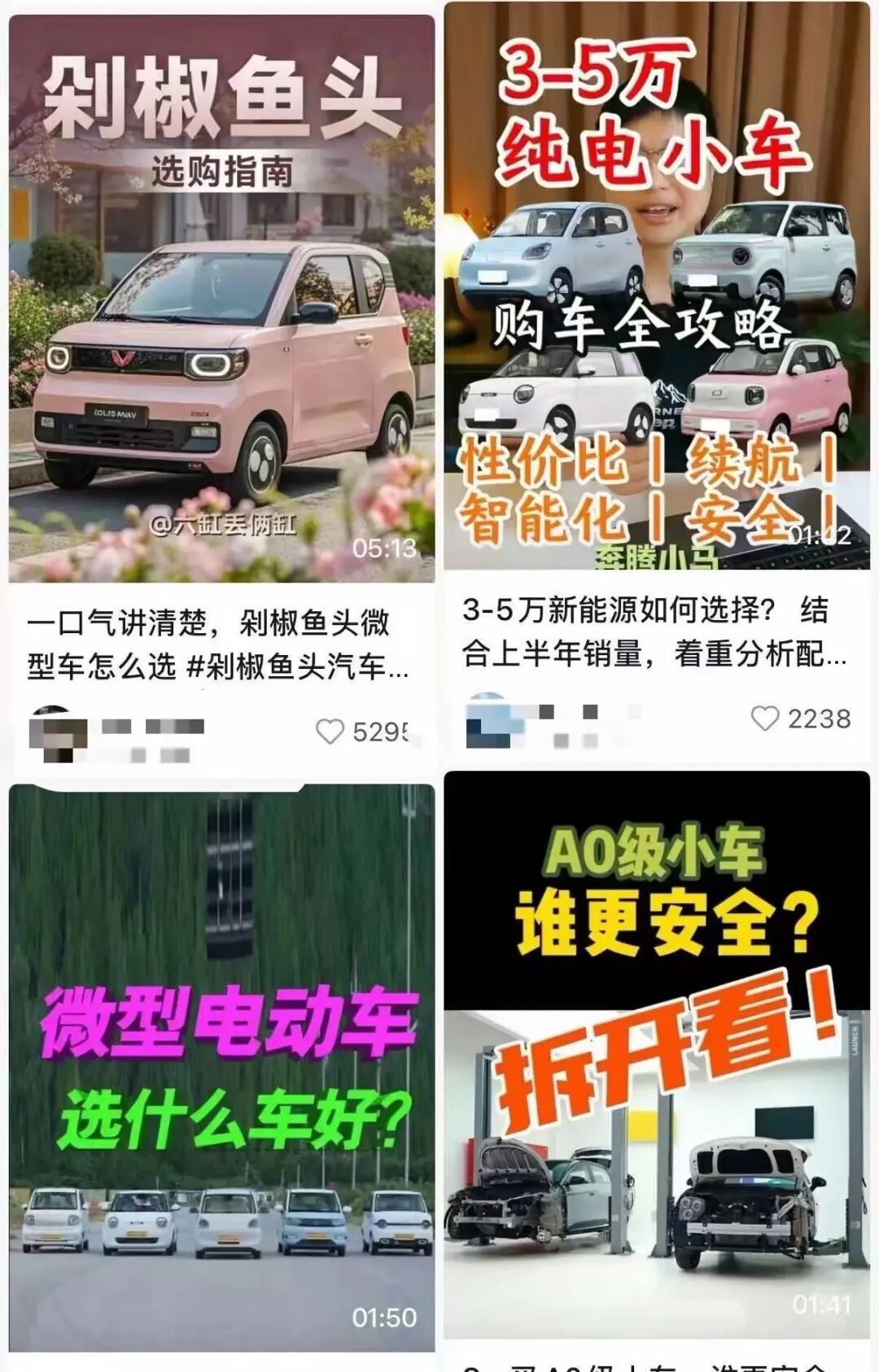
As the market continues to decline, I have found myself in self-doubt countless times, tossing and turning at night, unable to sleep, and contemplating whether I should abandon the micro electric vehicle segment that I have been deeply involved in for six years. My initial reason for becoming a car salesperson was simple: to earn a steady income to support my family. Now, relying solely on selling micro electric vehicles, with low sales and meager commissions, it's hard to support my family's expenses.
I believe that the micro electric vehicle market is unlikely to recover this year and may even weaken further. Customers' core demand is always cost-effectiveness. If the subsidy policies are not restored, the price advantage of micro electric vehicles will completely disappear. At the same time, if the industry does not regulate and control the price war, this niche market will only continue to shrink.
Even though the current market conditions are tough, I can only persevere, constantly adjusting my sales approach to adapt to market changes, and striving to find new breakthroughs in this dilemma.
Of course, if the micro electric vehicle market remains sluggish, I will adjust my direction and leave this (micro electric vehicle) industry, turning towards more promising fields.
Over the past six years, I’ve been privileged to witness the full trajectory of the A00-class vehicle market—from its meteoric rise to its eventual downturn. Now, I’ve come to realize: the automotive industry operates in cycles, with its inevitable peaks and troughs. The market dividends, much like fleeting trends, are not meant to last indefinitely. As frontline practitioners, our only recourse is to continuously adapt and recalibrate our strategies in response to shifting market dynamics.
While the future trajectory of the micro electric vehicle segment remains uncertain, one truth endures: the ability to deliver exceptional service and truly understand customer needs will always remain invaluable. Whether or not I continue selling micro commuter vehicles down the line, this exhilarating yet turbulent journey will forever hold an irreplaceable place in my professional narrative.
(Cover image generated by AI)

-
![]()
A Counterintuitive Insight: New Products Shine in This 618 Shopping Festival
-
![]()
"Chinese Palantir" Wenge Zhongke Launches Share Offering Today: Six Cornerstone Investors Inject $31 Million—What Are the Motives of Top-Tier Capital?
-
![]()
Don't Just Look at the Price! The Real Strength of Leapmotor's C-Series Lies Beyond the Spec Sheet
-
![]()
"One Million Kilometers": A Journey Without a Script, Where Car Owners and Honda Shine Together
-
![]()
The Supernatural Episodes of Claude Opus 4.8
-
![]()
"After Six Years of Selling A00-Class Cars, I Find Myself at a Crossroads"
-
![]()
Racing Against Time: Chinese Automakers Take Over European Factories
-
![]()
US$60 Billion Deal: Musk’s SpaceX Acquires Parent Company of ‘Cursor’!