150,000 Orders: Is Production Capacity the Sole Challenge for BYD’s Tang? BYD Adjusts Strategy to Surpass Profit Limits
 06/18 2026
 542
542
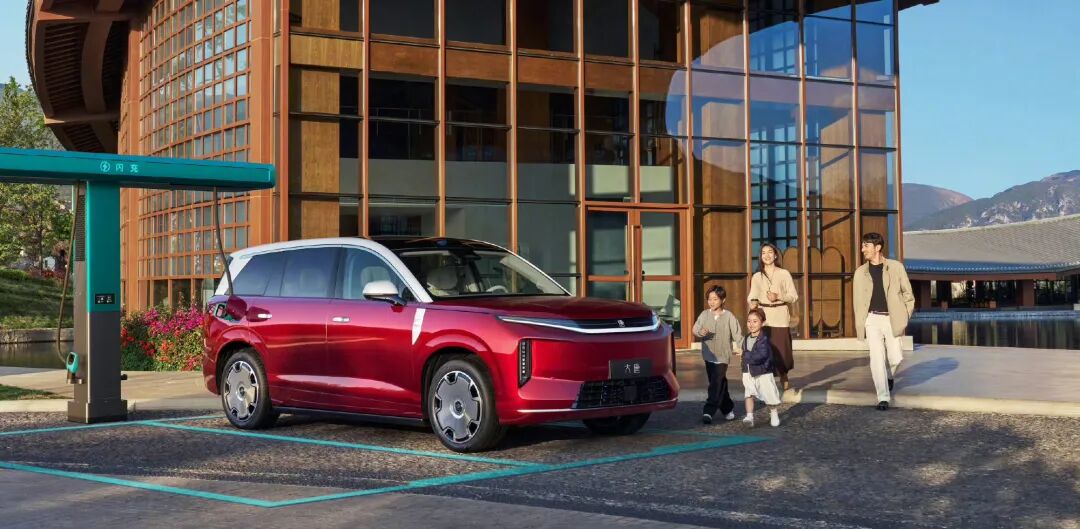
The BYD Tang has once again achieved a remarkable milestone in terms of orders. Since its launch on the evening of June 17, the BYD Tang has garnered 150,000 orders, the highest among all BYD models and ranking among the top in China's automotive order volume. Prior to the BYD Tang, only two Xiaomi products and a select few others, such as the Seres M7 and M6, had surpassed 100,000 orders. However, their order cycles varied significantly, with some extending over half a year. In contrast, the Tang's order volume was accumulated within just two months, comfortably securing its place in the top three overall.

During the pre-sale phase, the BYD Tang was priced between RMB 250,000 and RMB 320,000. There was a widespread anticipation that the price would drop to the RMB 230,000 range, especially since the Xpeng GX, launched before the Tang, had a limited-time promotional price starting at RMB 269,800, exerting pressure on the Tang. Ultimately, the Tang's price was set at RMB 239,900-309,900. From a pricing standpoint, the Tang did not solely rely on price as a competitive edge, aligning with BYD's strategy over the past two years—adjusting its competitive approach amid a nationwide crackdown on price wars.
Of course, these 150,000 orders represent only initial deposits; true sales volume will only be confirmed upon conversion to firm orders. Currently, BYD faces the risk of order attrition.
Firstly, based on typical conversion rates, the 150,000 orders should translate to over 50,000 firm orders. However, BYD is currently grappling with production bottlenecks, primarily due to supply issues with the second-generation Blade Battery. This will inevitably delay Tang deliveries, potentially extending the waiting period beyond two months to as long as six months. In response to this risk, BYD announced that, in addition to offering one year of free fast-charging benefits, it will provide an additional day of fast-charging benefits for each day of delivery delay.
Secondly, there are numerous new products launching this year in the 9-series category. Besides traditional models like the Li Auto L9 and Seres M9, new entrants include the NIO ES9, Volkswagen ID.ERA 9X, Zeekr 9X, Yijing X9, and Leapmotor D9. Essentially, the Tang can also be viewed as BYD's 9-series offering. Among these 9-series products, subsequent launches have the potential to capture market share from the Tang. Currently, the Tang's priority is to swiftly convert the 150,000 orders into firm reservations.
Of course, the Tang faces certain dilemmas regarding these orders. Its entry-level version, priced at RMB 239,900, seems designed to lower the price threshold. Critics have noted its lack of four-wheel drive, a feature that is standard in many competitors. It appears that the Tang's core offerings lie in the RMB 270,000 range, with the four-wheel-drive flagship version offering the best value. This has sparked some pricing controversies post-launch. After all, given BYD's reputation for aggressive pricing in previous years, the market had expected an industry-shaking price rather than a direct leap into the 'premium era.'

This is the challenge that BYD currently faces. On the lower end of the market, it competes with the likes of Leapmotor and Geely, while on the higher end, its brand strength is not yet sufficient. However, BYD could potentially guide customers towards higher-end models rather than having them choose the Tang solely based on price. This represents BYD's current direction for brand upgrade.
This situation is not unique to BYD's main brand; it also applies to its premium brands like Denza and Fang Cheng Bao. BYD has yet to truly establish its 9-series and 8-series models, which remains its biggest bottleneck. The Tang represents BYD's determination to move upward, but its long-term success depends on subsequent firm order conversions. Currently, the Tang is only available as an EV version, with a plug-in hybrid model expected to launch later, making the future prospects of the entire Tang family quite promising.
From a product strategy perspective, launching the pure electric version first was a strategic and market-driven decision. Firstly, BYD's core technologies this year are the second-generation Blade Battery and fast-charging technology, making the launch of a fast-charging model a logical choice. The entry-level Tang model offers a pure electric range of 860km, combined with fast-charging technology, effectively addressing range anxiety. Secondly, the large SUV market has evolved, with the NIO ES8 now leading sales, marking a significant shift in the market landscape.
For BYD, if the Tang can successfully penetrate the market, it signifies a brand upgrade. The Tang's success will also empower Denza and Fang Cheng Bao to achieve greater brand elevation. This will drive BYD to comprehensively transform its competitive model—shifting from price-based competition to technology and brand-driven growth, achieving a holistic transition from scale to strength. BYD is currently at a critical juncture in this transformation.
Meanwhile, this will also improve BYD's profitability. According to BYD's 2025 annual report, the company's 2025 revenue reached RMB 803.965 billion, up 3.46% year-on-year; net profit attributable to shareholders was RMB 32.619 billion, down 18.97% year-on-year. In the first quarter of 2026, BYD reported revenue of RMB 150.225 billion, down 11.82% year-on-year; net profit attributable to shareholders was RMB 4.085 billion, down 55.38% year-on-year; and core net profit (excluding non-recurring items) was RMB 4.148 billion, down 49.24% year-on-year. Under these circumstances, BYD needs additional profit support.
Currently, two practical paths are exports and product mix adjustments. Exports have become a significant component of BYD's sales. At this year's shareholders' meeting, BYD Chairman Wang Chuanfu stated that the automotive industry's global expansion is thriving, with Chinese automakers like BYD enjoying favorable development conditions, surpassing many local competitors in terms of product competitiveness, pricing, technology, and user experience. Product strength will ultimately be reflected in data and real growth. Wang Chuanfu predicted that BYD would exceed its 2026 overseas sales target of 1.6 million units.
On the other hand, adjusting the product mix can achieve higher profit margins. This year, BYD's Denza and Fang Cheng Bao brands are fully exerting their strength, while the BYD (Dynasty and Ocean) series is also making strides in the premium segment. However, Wang Chuanfu acknowledged the challenges BYD faces in penetrating the domestic premium market, stating, "We need to study how to break this impasse. We cannot blame others; our product refinement, technology, and overall quality still need improvement."
Wang Chuanfu announced that BYD will introduce a series of new technologies next year, with even more groundbreaking innovations expected the following year, aiming to win over the mid-to-high-end market with technology and superior products. With these dual strategies in place, can BYD break through its profit ceiling and achieve further transformation?
-
![]()
Chinese New Energy Vehicle Design: Stepping Out of the Shadows
-
![]()
Li Auto Awards Executives 35 Million Shares Based on Performance Metrics
-
![]()
Rushing Towards AI 2.0: How Confident is Unisound?
-
经过今年上半年各路AI豪强对市场的反复教育,有一个判断,可能决定未来一两年的走向:
-
![]()
Global Tech Sector Sees Collective Panic: Is the AI Hype Finally Deflating?
-
![]()
Three Consecutive Rises in Heavy Truck Sales: Both New and Old Players are Betting on the Same Thing!
-
![]()
Why Can’t Vivo Bridge the High-End Perception Gap Despite Support from Authoritative Media?
-
![]()
Regulatory Measures and Industry Norms: The Transformation of GEO's Trajectory in the Second Half