Three Consecutive Rises in Heavy Truck Sales: Both New and Old Players are Betting on the Same Thing!
 06/18 2026
 372
372
In the freight transportation circle, the most discussed topics recently, besides freight rates, are vehicle replacements. From the beginning of spring to now, the heavy truck market has remained hot. The release of May's sales figures has only added to the excitement, with sales rising for three consecutive months and long-standing rankings being upended. Data shows that in the first five months, a total of 544,300 heavy trucks were sold domestically, marking a significant 23% year-on-year increase. Not only has the market achieved three consecutive rises in sales, but "surpassing one million units for the year" seems almost certain. However, both new and established players in the industry are shifting their directions.
Let's first look at the overall market. Monthly sales in May reached 109,500 units, up 23% year-on-year, firmly staying above the 100,000-unit mark. The concentrated release of replacement demand during the traditional peak season and the accelerated phase of-out old National V models have injected stable growth into the market. The export market has also maintained positive year-on-year growth, offsetting some of the fluctuations in domestic demand.
However, beneath the excitement, the market structure is quietly changing. The once-booming gas-powered heavy trucks have seen a noticeable cooling in demand in May, as LNG prices have soared, significantly narrowing or even inverting the price gap between oil and gas, and rapidly eroding their economic advantages. In stark contrast, new energy heavy trucks, benefiting from their operational cost advantages and subsidies for updating old freight trucks, have nearly doubled their sales year-on-year, becoming the strongest growth engine in the industry.
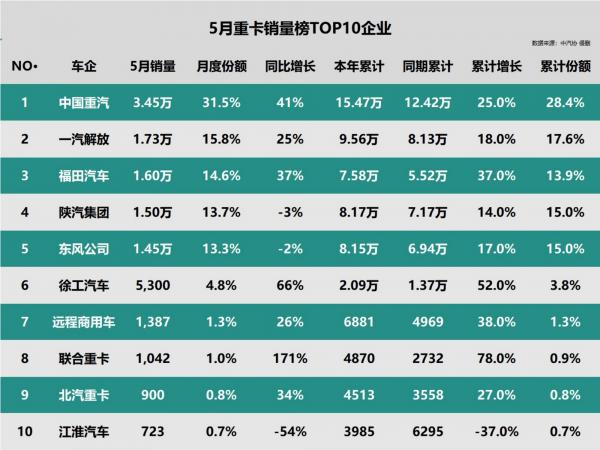
Now, let's examine the rankings of major automakers. China National Heavy Duty Truck Group Co., Ltd. (CNHTC) remains the undisputed leader, with cumulative sales of 154,700 units in the first five months, accounting for 28.4% of the market share, and is the only company to surpass 150,000 units. In May alone, it sold 34,500 units, with its market share soaring to 31.5%, up 41% year-on-year, further expanding its lead. CNHTC's stability stems from its "all-around capabilities." From mainline tractor trucks to engineering dump trucks, and from the domestic market to overseas exports, it has virtually no significant weaknesses. Its comprehensive product layout allows it to always meet every wave of demand.
FAW Jiefang, ranking second, sold a cumulative 95,600 units in the first five months, accounting for 17.6% of the market share, with a 25% year-on-year increase in May alone, showing steady progress. As an established player in the industry, Jiefang's confidence comes from decades of user reputation. In the northern mainline logistics market, Jiefang's image of being sturdy, durable, and convenient for maintenance has long been deeply ingrained in people's minds, and its vast user base is its most stable moat.
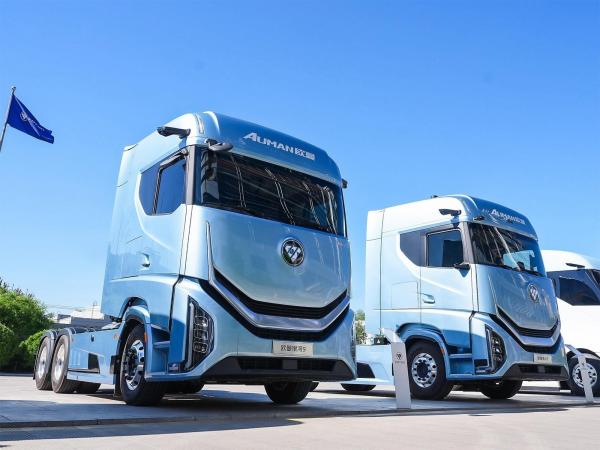
The biggest surprise in May was Foton's surge into the top three for the month. It sold 16,000 units in May, propelling it into the top three for the month, and its cumulative sales in the first five months reached 75,800 units, up 37% year-on-year, ranking fifth in cumulative sales. In fact, Foton's breakthrough was foreshadowed early on. Its Auman series made an early layout (layout) in automatic transmission heavy trucks and continuously upgraded driving comfort, precisely aligning with the preferences of young truck drivers. Nowadays, buying a truck is no longer just about "being able to carry goods"; ease of driving, effort-saving, and comfort are also essential needs.
Shaanxi Automobile Group and Dongfeng Motor Corporation are locked in a tight battle in the cumulative sales rankings. In the first five months, Shaanxi Automobile sold a cumulative 81,700 units, while Dongfeng sold 81,500 units, with a mere 200-unit difference and both holding a 15% market share, ranking third and fourth in cumulative sales, respectively. However, in May, both saw slight year-on-year declines, ranking fourth and fifth for the month. The phased decline in demand for engineering vehicles and the cooling enthusiasm for gas-powered vehicles have affected both to varying degrees. Shaanxi Automobile, which started with engineering vehicles, has deep roots in the northwest infrastructure market, while Dongfeng has clear advantages in the gas-powered vehicle segment and southern markets. Whoever can first regain growth momentum will be able to stabilize their position.
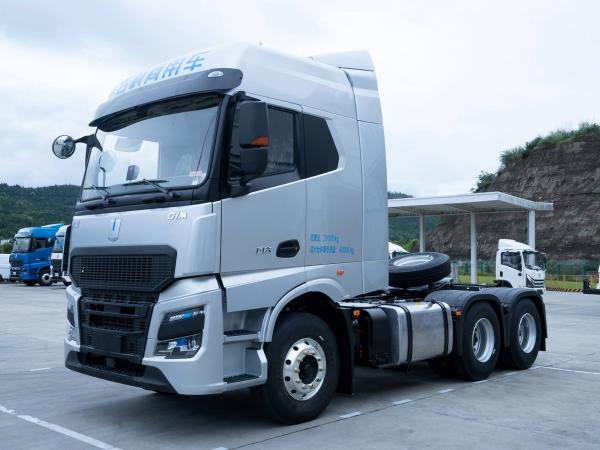
In the lower half of the rankings, new energy has become the absolute keyword. XCMG Automobile remains steady at sixth place, with cumulative sales of 20,900 units, up 52% year-on-year, with new energy heavy trucks being the core growth driver. Geely Remote ranks seventh, continuously deepening its efforts in battery swap and methanol-hydrogen technology routes. United Heavy Truck has shown strong momentum after being empowered by Chery, with cumulative sales soaring 78% year-on-year, while Beiqi Heavy Truck has also shown steady progress.
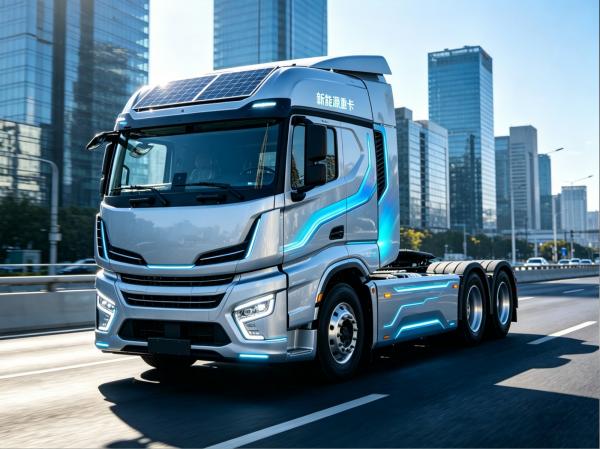
Commercial Vehicle Commune believes that the logic of future growth in the heavy truck market will continue to evolve. On the one hand, the pace of new energy adoption will only accelerate. With the dual support of policy subsidies and cost advantages, electric heavy trucks will gradually penetrate from closed scenarios like ports and construction sites into more transportation scenarios. On the other hand, fluctuations in oil and gas prices will continuously test automakers' product layout capabilities. Betting solely on a single segment can easily leave one vulnerable to market fluctuations. The goal of surpassing one million units for the year is within reach, but the competition in the second half will only be fiercer than in the first.
Epilogue
Commercial Vehicle Commune believes that, when all is said and done, heavy trucks are essentially tools of production, and users will always vote with their feet: whoever can help drivers reduce costs and make driving more comfortable will win users and the market. From diesel to gas to new energy, the track (track) has been constantly changing, and the market is always evolving, but the core logic has never changed: only automakers that iterate alongside user needs can remain at the table. The first five months are just the halfway whistle; the best is yet to come.
-
![]()
Duan Yongping Offers Insightful Perspectives: New Hurdles for Long-Term AI Investment
-
![]()
Chinese New Energy Vehicle Design: Stepping Out of the Shadows
-
![]()
Li Auto Awards Executives 35 Million Shares Based on Performance Metrics
-
![]()
Rushing Towards AI 2.0: How Confident is Unisound?
-
经过今年上半年各路AI豪强对市场的反复教育,有一个判断,可能决定未来一两年的走向:
-
![]()
Global Tech Sector Sees Collective Panic: Is the AI Hype Finally Deflating?
-
![]()
Three Consecutive Rises in Heavy Truck Sales: Both New and Old Players are Betting on the Same Thing!
-
![]()
Why Can’t Vivo Bridge the High-End Perception Gap Despite Support from Authoritative Media?