Geely's Three Strategic Cards for Future Layout Unveiled at Hong Kong Auto Show
 06/23 2026
 510
510
Huasheng Says
Did I lose out? Because I skipped calculating discounts in shopping carts during this year's 618 sale and chose to fly to Hong Kong for the auto show instead.
I gained! Because in one day, I attended three product launches and, through Geely's (0175.HK) strategy, caught a glimpse of the future of mobility ecosystems.

What lingers in the mind will eventually resonate.
Earlier this year, I traveled to Las Vegas for CES coverage, where I jotted down two industry insights. Now, at the Hong Kong Auto Show, I've found real-world examples for both.
One came from Jensen Huang, who said AI's next wave is embodied intelligence—it can't just live on screens but needs physical form to perform real tasks.
The other was from Elon Musk, who stated that autonomous driving would be the first large-scale commercial application of embodied intelligence, where the true value lies not in the algorithm itself but in the operational system's capability.
At the time, I wrote that AI needs embodied intelligence to transform the real world, and the best current carrier (carrier) is vehicles—they move, interact, and can even empower robots. What sounded like cutting-edge speculation then is now becoming reality.
"Robots Are About to Have Their 'Massage Chair' Moment | CES Insights ④"
Back then, the U.S. and Iran hadn't gone to war, and the Strait of Hormuz hadn't faced disruptions. But at CES, I saw soaring demand for computing power alongside an unstable local power grid, leading me to sigh with emotion (remark) that "energy might be AI's future bottleneck"—a prediction that, unfortunately, proved accurate.
"Nuclear-Powered Cars Are Coming?! | CES Insights ③"
From this, I drew a line: energy is the foundation, intelligent technology is the tool, and globalization defines the playing field. For nations, industries, enterprises, and individuals alike, choices made during this period are crucial—those who see the future first will capture value first.
After a day at the show, what still resonates isn't a specific new car model but a three-tiered interlocking strategy: If industrial competition is a journey, energy is the provisions, intelligence is the skillset, and globalization is the stage. Only by linking all three can one go far.

Level 1: Rebuilding Energy Systems with Commercial Vehicles

Many passenger vehicle companies are now entering the commercial vehicle sector. Yin Tongyue, for instance, vowed to "rebuild Chery with commercial vehicles."
I was invited to closely observe the birth of a new Chery-affiliated commercial vehicle company, conducting transoceanic interviews to analyze opportunities. My conclusion—"The market doesn't need another traditional commercial vehicle maker"—was endorsed by Mr. Yin, who shared it with his executive team: "Think Beyond Simply Selling Cars! DELIVAN Rewrites China's Auto Export Logic in the Industrial Revolution's Birthplace"
Many see this as automakers fighting over existing commercial vehicle market share, but to me, it's more nuanced—commercial vehicles operate differently.
Take Geely's Farizon New Energy Commercial Vehicles. It's not just a truck and bus seller but the core carrier for implementing methanol-based energy solutions.
Farizon CEO Fan Xianjun shared data at the Transport Transformation Forum (Hong Kong) & Methanol Electric Vehicle Development Forum 2026: China relies heavily on the Strait of Hormuz for crude oil imports. Expanding methanol production could replace nearly 30% of oil imports, directly reducing external energy risks.
This highlights the weight of Geely's national-level technological breakthrough and its significance amid current energy security constraints.
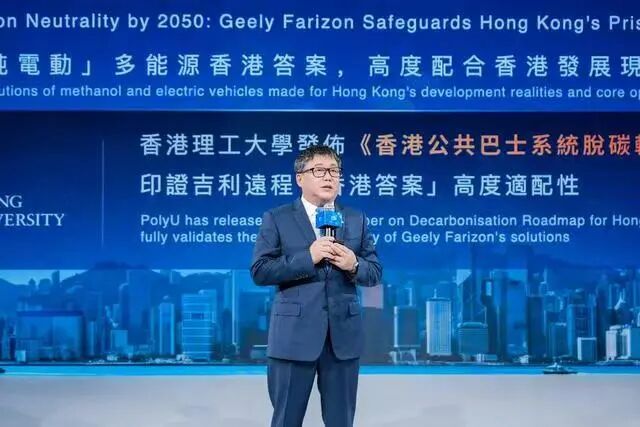
On one hand, methanol serves as an alternative energy source to safeguard bottom-line needs; on the other, it provides green mobility solutions for developed urban areas.
As a liquid energy under normal temperature and pressure, methanol can reuse existing storage, transportation, and refueling infrastructure, with single tank retrofitting costs as low as 50,000–100,000 yuan—ideal for land-scarce cities like Hong Kong with difficult grid expansions. Its full lifecycle carbon reduction also meets global dual-carbon standards.
Debates over "the ultimate green transition path" persist, as if there must be a single technological winner. But my research is clear: plains can promote pure electric, cold regions can adopt methanol, and heavy-duty long-haul can explore hydrogen—different resources and scenarios demand different optimal solutions. "Is There Really an 'Ultimate Path' for Green Mobility Technology?"
Farizon has been on this path for two decades.
From solving basic issues like corrosion and cold starts to iterating methanol electric range-extension technology, it has now deployed over 60,000 methanol electric vehicles with cumulative mileage exceeding 25 billion kilometers—technological maturity built through daily operations.
This month, the Xingzhi T methanol electric light truck set a Guinness Record with 1,699 kilometers on a single methanol-electric charge, shattering the perception that new energy light trucks can't handle intercity heavy-haul.
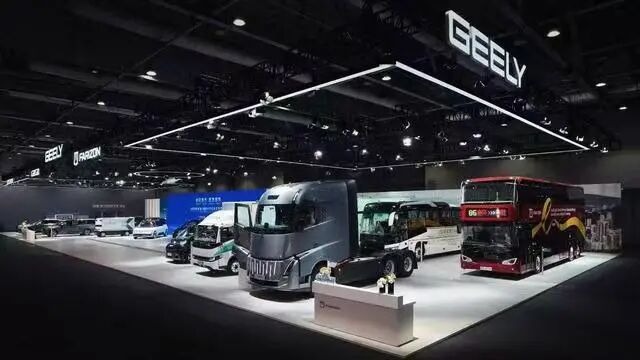
At the auto show, Farizon signed a strategic partnership with Cao Cao Mobility to deploy 100,000 Robovan Shen Tong T6 units by 2030.
Some see this as merely selling vehicles through a mobility platform.
To me, it's far more: by linking commercial vehicles and mobility platforms, it integrates vehicle customization, energy refueling, and operational dispatch to deliver a turnkey green energy solution.
Energy underpins all technological progress. Through Farizon and methanol, Geely is crafting new solutions for domestic energy security and global urban green mobility.
Level 2: Enabling Embodied Intelligence Through Mobility Platforms
At CES earlier this year, embodied intelligence was white-hot—robots boxing, wrestling, carry bricks (moving bricks), tightening screws, folding towels, ironing clothes, almost performing chest-crushing stunts. But overall, humanoid robots ready for consumer adoption seemed distant.
The main issue? Insufficient intelligence. Imagine a multi-hundred-pound steel machine moving through your home—collisions would be disastrous. Against this backdrop, another carrier (carrier) for embodied intelligence and physical AI clearly benefits first: smart vehicles.
Many still perceive Cao Cao Mobility as just a ride-hailing platform. But after its latest launch, I see it as the company closest to embodied intelligence within both the mobility industry and Geely's ecosystem.
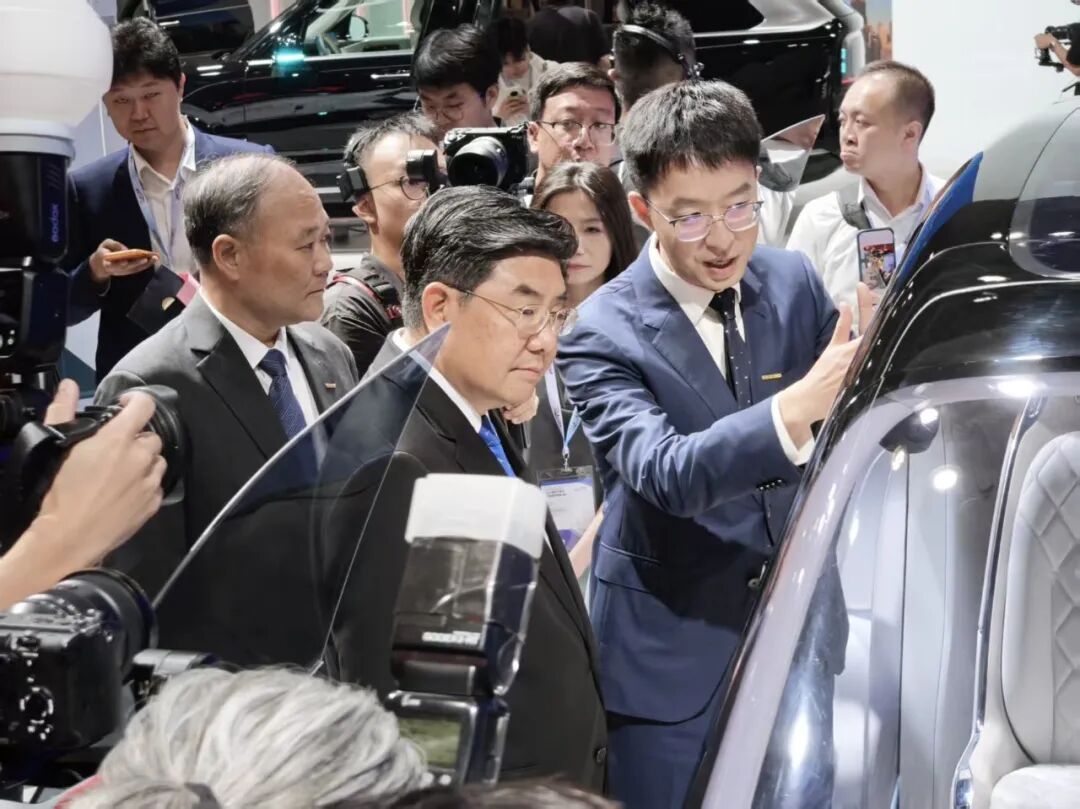
First, it has physical carriers: 38,000 custom vehicles across 31 domestic cities, the largest fleet in the sector. Critically, Cao Cao's custom vehicles aren't just modified off-the-shelf models—operational scenarios and data interfaces are considered from the design phase.
Every driving condition and road scenario generates native structured high-quality data. With 195 cities covered and over 30 million daily kilometers driven, this real-world operational data provides the most solid training material for AI's physical-world deployment.
Second, it has digital entry points. Its strategic partnership with Douyin Group makes Doubao the primary AI ride-hailing entrance (gateway). Some cities now let users hail rides automatically through Doubao.
Small-scale beta testing has begun: users state travel needs in natural language, and the large model calculates routes, matches vehicle types, estimates fares, and places orders with one click. Future plans include integrating Robotaxi reservations and multi-scenario services.
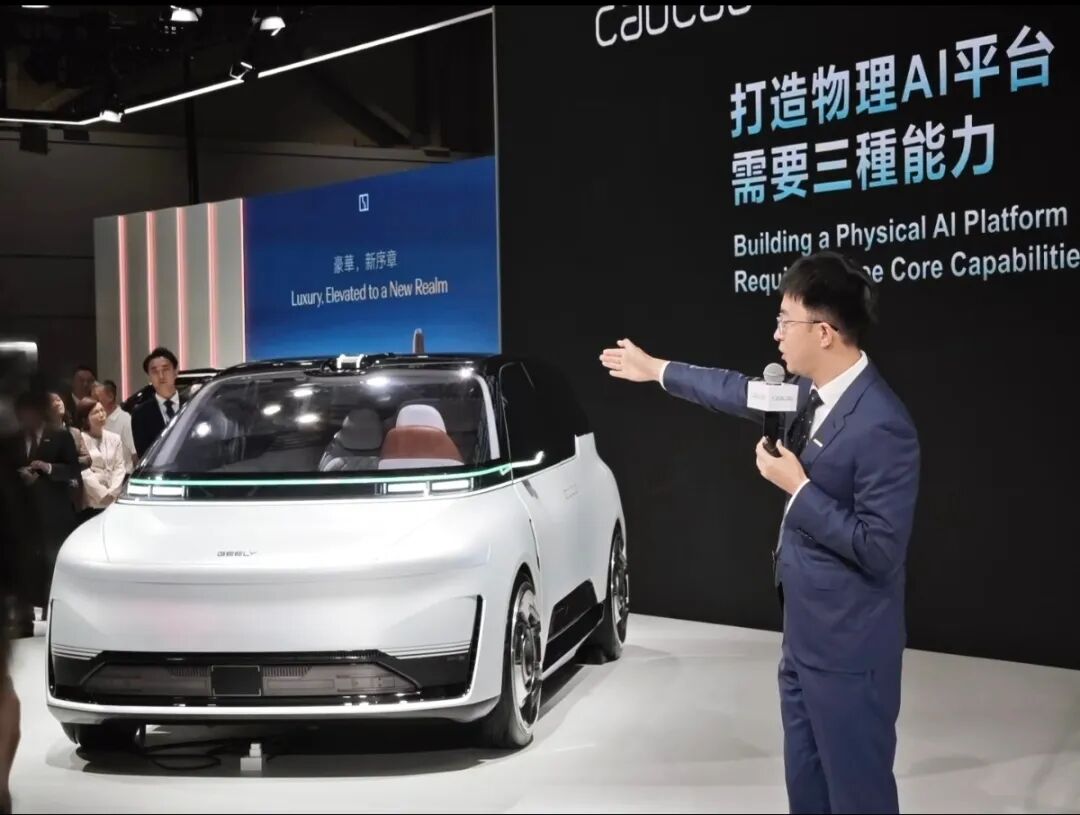
With 300 million monthly active users on one side and a nationwide mobility network on the other, direct digital-to-physical fulfillment establishes the most standard service model for the AI Agent era.
Cao Cao's ambitions don't stop there—it's building a dispatch brain: the future RoboOS will cover demand understanding, supply-demand matching, and service fulfillment, enabling demand prediction, fleet dispatch, and full-process control.
Cao Cao Mobility CEO Gong Xin nailed it: "The core of the RoboX strategy is making vehicles the execution terminals for intelligent agents and turning the operational network into an execution network connecting digital and physical worlds."
This system, currently serving its own fleet, could eventually open to all autonomous driving companies and mobility scenarios.
In Cao Cao Mobility, I see echoes of Amazon two decades ago. "Partnering with Douyin Group to Upgrade RoboX Strategy, Cao Cao Mobility Builds the Largest Physical AI Service Network in the AI Era"
What seems ordinary today was science fiction fifty years ago. Back then, Alvin Toffler proposed in *The Third Wave* that the industrial era's "produce first, sell later" model would collapse, with data redefining circulation and demand driving supply.
Amazon believed this. It patented "predictive shipping," using big data to anticipate user needs and pre-position goods in nearby warehouses—by the time you ordered, the product was already downstairs.
Amazon's self-operated business honed extreme supply chain capabilities, evolving into the FBA global logistics system. Its AWS cloud service, born to support its own computing needs, became the world's largest cloud provider.
Now, a similar story is unfolding at the Hong Kong Auto Show.
Level 3: Penetrating Global Markets with High-End Brands
Energy is the foundational cornerstone, intelligence builds product competitiveness, and ultimately, products validate everything—not just in China's unified domestic market but on the global stage.
At the Hong Kong Auto Show, the brand that inspired me most was Zeekr, also the show's loudest voice, with Louis Koo endorsing it.
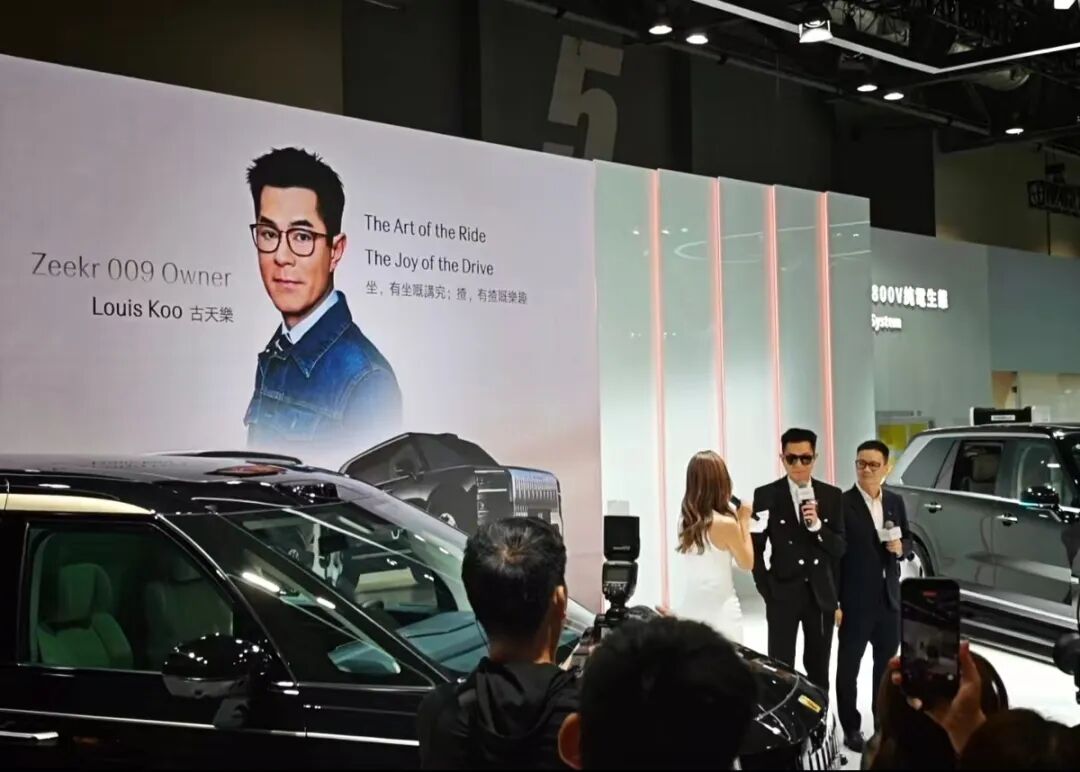
The real story, however, lies beneath the surface. Hong Kong is a unique right-hand-drive market where all global luxury brands compete without local protection—pure market-driven competition. Establishing a foothold here essentially grants entry to global right-hand-drive markets.
The numbers speak volumes. As of June 16, Zeekr's global cumulative deliveries surpassed 800,000 units. From January to May 2026, it dominated Hong Kong's luxury vehicle sales with a 40.7% share, with the 009 winning luxury MPV sales and the 7X winning luxury SUV sales. Beyond Hong Kong, Zeekr ranks first in multiple overseas markets like Thailand, Malaysia, Australia, and Mexico for luxury pure electric segments.
Under the theme "Luxury, A New Chapter," Zeekr unveiled its 9 Series dual flagships—the Zeekr 9X and Zeekr 009 Glory—along with their global go overseas (go-global) strategies. The 9X begins presales in the Middle East, expanding to Latin America, Central Asia, and Europe; the 009 Glory's right-hand-drive version lands in Hong Kong this Q4.
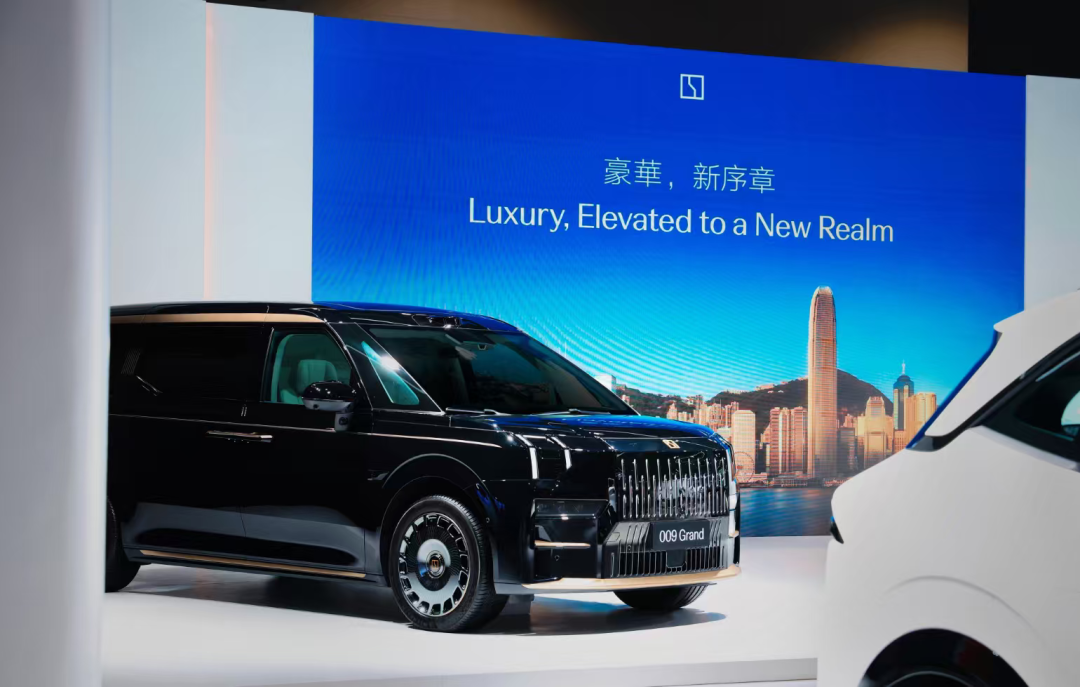
Chinese automakers have moved beyond low-cost volume sales. Zeekr's systemic global expansion covers products, services, and operations, targeting the global luxury new energy market.
By using high-end products to capture markets and systemic capabilities to establish presence, Zeekr exports not just vehicles but technology, standards, and business models.
With Hong Kong as a bridgehead, the global market's potential becomes vast.
A Final Thought on "Focus"
At this point, some might ask: With energy, intelligence, and global expansion, isn't the scope too broad? Coincidentally, at the Chongqing Auto Forum, Li Shufu reiterated the need to implement the Taizhou Declaration, urging the industry to focus on core businesses and avoid redundant efforts.
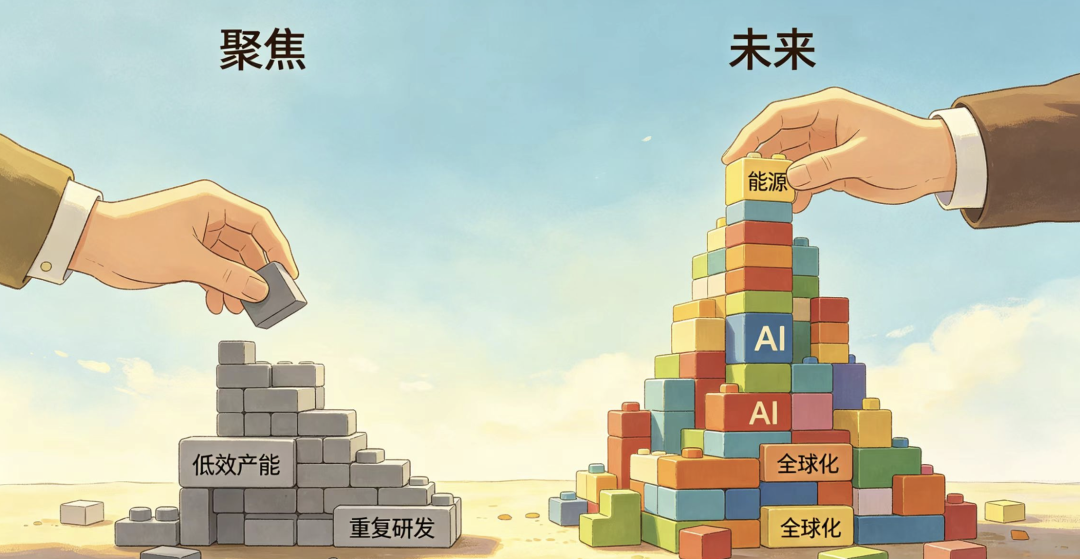
In Peanut's view, many people have misconceptions about 'focus'. Geely's focus involves two layers of logic: on the mature manufacturing side, it's about subtraction—cutting redundant production capacity, avoiding duplicate R&D efforts, and maximizing the efficiency of vehicle manufacturing to move forward with a light load; however, in the future-oriented mobility sector, it's about addition—adding density, adding depth, delving deeper into areas like energy systems, embodied intelligence, and global capabilities, which determine competitiveness in the next era.
These two approaches are not contradictory at all. Subtraction is about freeing up resources from inefficient areas, while addition is about investing resources in truly long-term sectors. Ultimately, both are forms of focus.
As I write this, I particularly like the idea of 'missing' my shopping cart during 618 and choosing instead to see Geely's cars in Hong Kong.
In my view, during 618, everyone is calculating current discounts and immediate savings. What I saw in Hong Kong, however, was a foreshadowing of the next decade for China's automotive industry.
Many say that the domestic automotive market has reached its peak of competition, but in reality, the real race has only just begun. Previously, the competition was about the competitiveness of individual products; going forward, it will be about the robustness of the entire system.
Article by Li Xiyin · Peanut
-
![]()
【OFweek Weike Cup】Fair Optics Officially Nominated for 2026 Outstanding Contribution Award in Optical Industry Application Solutions
-
![]()
The Competitive Landscape of Financial AI Agents in the 'Long Tail' Market: FinTech Subsidiaries, Financial Leasing, Consumer Finance, AMCs, and Other Players Making Quiet Strides
-
![]()
【OFweek Weike Cup】Fair Optical Officially Enters for the 2026 Optical Industry Annual Innovation Product Award
-
![]()
【OFweek Weike Cup】Wuhan Changjin Photonics Nominated for 2026 Optics Industry Outstanding Component Supplier
-
![]()
【OFweek Weike Cup】Xinyuan Optics Officially Enters for the 2026 Outstanding Contribution Award for Advanced Manufacturing Process Solutions in the Optical Industry
-
![]()
Who Dominates the World Cup: Lenovo, Hisense, or Mengniu?
-
![]()
【OFweek Weike Cup】Shijia Photonics Participates in the 2026 Excellent Optical Component Supplier Award
-
![]()
【OFweek Weike Cup】Dingxinsheng Optics Officially Enters for the 2026 Optical Industry Annual Innovation Product Award