31 Auto Firms Unite to Match China’s Rapid Pace
 07/06 2026
 564
564
Lead
Introduction
One of the most persistent misconceptions in the automotive industry is that Chinese automakers' success is solely due to their lower costs.
For decades, the automotive sector has focused on optimizing complexity, emphasizing higher horsepower, more components, and increasingly sophisticated engineering. However, this paradigm is now becoming outdated. In the era of electrification, competition extends beyond batteries to include the simplification of manufacturing processes at the speed of software development.
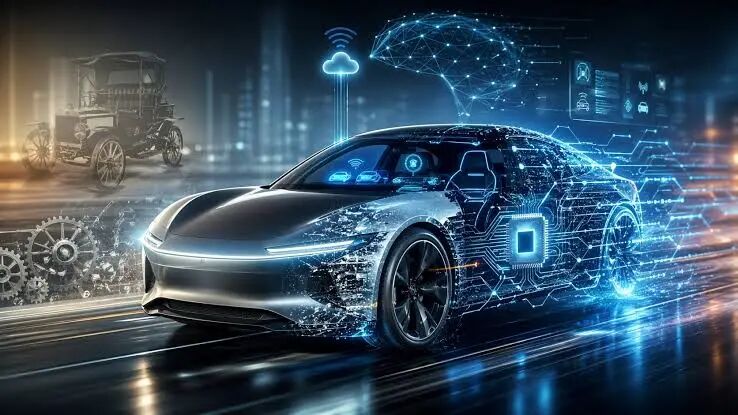
Many observers liken the current moment to a new 'Ford Model T moment,' where the focus shifts from electric vehicles themselves to reshaping the automotive manufacturing model. As a result, the real competitive arena is moving from engines, mechanical structures, and traditional automotive engineering to software-defined vehicles, centralized computing, streamlined manufacturing processes, and industrial scalability.
Undoubtedly, as the global automotive industry enters a new era, the development pace of Chinese automakers far surpasses many expectations. Companies such as Toyota, Ford, and Honda have publicly acknowledged the immense challenge of competing with China in terms of speed, price, battery technology, and production scale.
Chinese automakers introduce new models more rapidly, significantly shorten development cycles, integrate advanced software much earlier than traditional manufacturers, and achieve notably lower overall production costs. Factors driving this transformation include robust control over the battery supply chain, faster innovation cycles, aggressive adoption of electric vehicles, AI-driven manufacturing, and cost-effective production.
Thus, competition is no longer solely about manufacturing cars but about who can control the future ecosystem. For decades, traditional automakers dominated globally through superior engineering and manufacturing capabilities. However, electric vehicles have reshaped the industry landscape through what is often referred to as 'software-defined vehicles.'
The automotive industry may undergo more changes in the next decade than it has in the past fifty years.
01 Foreign Companies Rushing to Form Alliances
As 'software-defined vehicles' become an industry consensus, European automakers are experiencing collective anxiety. Their mechanical advantages in the era of traditional fuel vehicles seem inadequate in the face of intelligent cockpits, autonomous driving, and over-the-air (OTA) updates for entire vehicles. The solitary research and development path is not only costly but also slow, prompting an unprecedented wave of open-source collaboration within the European automotive industry.
In June 2025, the Eclipse Foundation, in collaboration with 11 core members including BMW, Mercedes-Benz, the Volkswagen Group, Bosch, ZF, and Schaeffler, launched an open-source project for automotive software. Half a year later, new members such as Stellantis and Traton, a truck manufacturer under Volkswagen, joined, bringing the total number of participating automakers to 31.
This expansion is viewed by the foundation as a signal of 'the global automotive industry's shift towards open innovation,' with its core platform being the shared open platform named Eclipse S-CORE. According to the plan, the first mass-produced models based on this platform will debut in 2030.

Meanwhile, other open-source alliances are also advancing in parallel: The COVESA Alliance brings together BMW, General Motors, Honda, Ford, and Volvo to work on standards for infotainment and connected systems. SOAFEE unites 120 members, including Geely Holding and Arm, to build a cloud-native architecture for defining software standards.
Supporters have done the math clearly. Peter Fintel, Vice President of Technology at Capgemini Consulting, pointed out that underlying components of vehicles, such as basic middleware and hardware orchestration, are unrelated to brand identity, exterior design, or configuration levels. Whether it's Mercedes-Benz or Volkswagen, the underlying logic for invoking sensors and managing computing power is highly similar.
Independently developing these 'non-differentiated' parts is purely a waste of resources. Through standardized sharing, development costs are expected to decrease by 40%, and time-to-market to shorten by 30%. In an era where per-vehicle profits are squeezed and R&D investments require careful calculation, these figures are highly persuasive.
Additionally, open-source architectures reduce the risk of supplier lock-in, allowing automakers to more flexibly switch chips or operating systems and enhance supply chain resilience. Theoretically, this is an ideal 'faster, better, and more cost-effective' solution.
However, an industry analyst who requested anonymity bluntly stated that the probability of success for the EU-led open-source operating system is 'quite slim.' The fundamental reason is that automakers have no interest in sharing core technologies with competitors. They prefer to deeply bind with fixed technology partners like NVIDIA and Qualcomm to form exclusive competitive advantages.
The loose collaboration in open-source communities, where 'everyone contributes and everyone takes,' naturally conflicts with corporate trade secrets and brand differentiation aspirations. More daunting is the issue of safety liability. The open-source nature of vehicle software means that any code changes may affect functional safety. In the event of an accident, liability is difficult to apportion among numerous contributors.
This is far from comparable to open-source in the consumer electronics sector. As Fintel said, the open-source community must quickly discuss liability frameworks, but 'they must act swiftly, while China is moving forward with concrete actions, not just discussions.'
Pedro Pacheco, Vice President of Research at Gartner, pointedly highlighted Europe's weakness: speed and expertise. With 31 members, countless working groups, and repeated consultations and compromises, this governance structure is inherently slow. In contrast, Chinese automakers approach software with an internet mindset, where weekly or monthly iteration cycles are commonplace. While Europe is still discussing standard interfaces, Chinese automakers' vehicles have already pushed new features via OTA.
More worryingly, Pacheco believes that bringing together several companies already struggling with software may dilute costs but not necessarily improve quality. Software capability is a long-term accumulation of organizational culture, talent reserves, and engineering methods, not something that can be rushed through a few joint meetings.
If European automakers do not introduce true software leaders, whether external tech companies or through internal transformation, the open-source alliance may degenerate into a 'group of underperformers,' producing mediocre baseline platforms without competitive edge.
Europe is not unaware of the issues. The expanded cooperation between VDA and Eclipse indicates they are accelerating. However, the timeline of mass-producing the first S-CORE-based models only by 2030 is itself a dangerous signal. By then, Chinese automakers' software capabilities may have evolved to the next-generation architecture.
02 Cost Reduction and Efficiency Enhancement Still Rely on China
Many foreign veterans have said that one of the biggest misconceptions in the automotive industry is attributing the success of Chinese automakers primarily to lower manufacturing costs. This is not the case. The true competitive advantage of the Chinese automotive industry lies in entirely different engineering approaches to supplier selection and system architecture.
For decades, traditional automakers have relied on a hierarchical supply chain structure. Vehicle companies focus on integration, while key technologies are sourced from external specialized suppliers. In contrast, Chinese automakers are transforming this model, shifting from who can supply this component at the lowest cost to who can accelerate system-level innovation and shorten development cycles.
Therefore, suppliers with software integration capabilities, electronic architecture compatibility, data and AI, battery technology, industrialization speed, and OTA capabilities are stepping into the limelight. From an engineering perspective, software reduces the need for adaptation to the entire vehicle compared to hardware, minimizing integration risks, shortening validation cycles, and enabling faster optimization of performance, cost, and reliability.
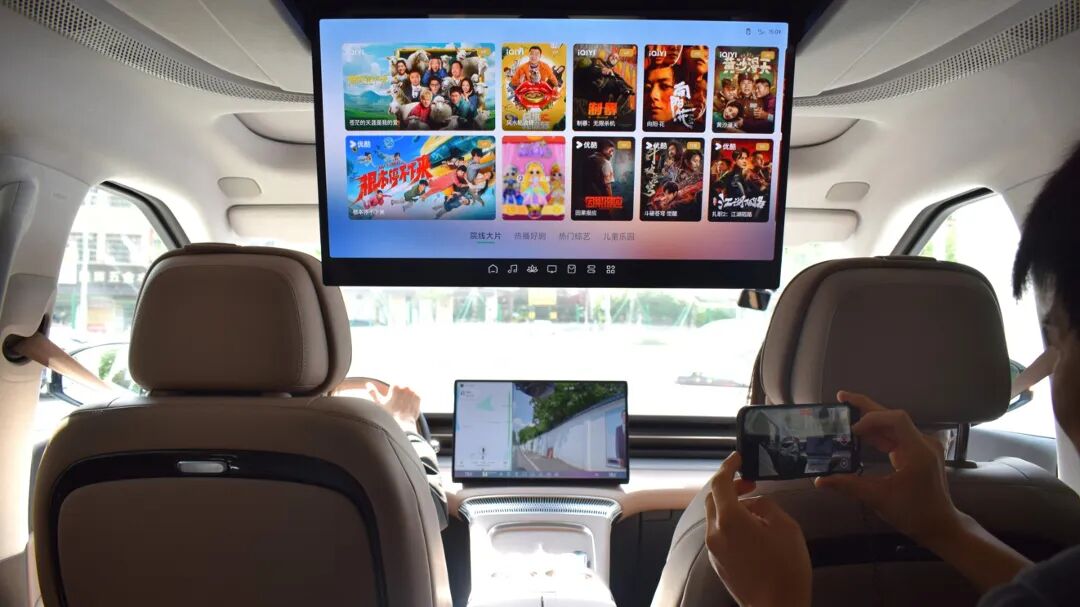
This is what foreign automakers fear. China's real export is not electric vehicles but R&D speed. Previously, most automotive industry processes were built on the assumption that vehicle R&D projects would progress at roughly the same pace as in the past two decades, necessitating more time for validation.
However, the speed at which China's software-centric vehicle R&D projects are advancing is making these assumptions outdated. Some intelligent driving and cockpit companies expanding production agreements around cockpit fusion architectures reflect this shift. This is also why Chinese automakers are introducing new models faster and in greater numbers.
When more vehicle functions run on shared software platforms rather than independent systems, teams can update and validate changes more quickly. Fewer system boundaries mean less integration delay, leading to faster feedback loops. Therefore, the gap between automakers increasingly depends on the speed at which companies learn, validate, and release changes.
From the perspective of foreign automakers' strategies in China, traditional automakers are no longer just competing with Chinese automakers; they are increasingly learning from them and, in some cases, even relying on them.
The reason is that for decades, the automotive industry's leadership was built on mechanical engineering, production quality, engine performance, and manufacturing scale. Today, the competitive landscape is shifting towards software-defined vehicles, AI integration, OTA updates, innovation speed, ecosystem thinking, and vertical integration.
Foreign automakers are also pivoting: Volkswagen is collaborating with XPENG and Horizon Robotics; Toyota is partnering with Huawei and Momenta; Mercedes-Benz is considering adopting Chinese-made vehicle architectures; Renault is leveraging Chinese engineering capabilities to accelerate R&D cycles. Clearly, to catch up, traditional automakers need to acquire China's speed, software, and supply chain.
But the more they rely on China, the more likely they are to lose technological independence. This creates one of the biggest strategic dilemmas in modern automotive history: how to maintain global competitiveness without outsourcing the industry's future? Many foreign analysts believe that 'Chinese speed is not a panacea but a mindset.'
The companies that will prevail in the next decade may not be the largest but those capable of: shortening decision delays; integrating software thinking into their core business; shortening product cycles; and adapting to changes faster than competitors. The automotive industry is undergoing not just technological but cultural transformation.
Editor-in-Charge: Yang Jing Editor: He Zengrong

THE END
-
![]()
The Surprisingly Significant Impact Difference Between Quiet and Noisy Cars!
-
![]()
Breaking Through Storage Cycle Barriers: How AI Large Models and Coding Technology Synergize to Drive Transformation in the Security Industry
-
Facilitating the Slimming of Camera Modules! O-film Obtains Utility Model Patent for Periscope-Type Reflective Component
-
![]()
Hikvision Raytine’s Millimeter-Wave Body Imaging Security Inspection Device Achieves ECAC SSc Category A Standard Level 2.1 Certification for European Civil Aviation
-
![]()
Global Market Share for Security Windows Hits 26%! This Optical 'Little Giant' Makes Its Debut on NEEQ
-
![]()
The Evolutionary Path of Agent Engineering: From Prompt to Harness by Zhang Yutao, Co-founder of Moonshot AI
-
![]()
Profits and stock prices are both declining, so why are executives from these auto companies increasing their purchases?
-
![]()
Burning Tens of Billions of Dollars, Yet No Unified Definition for World Models