After the 'Weaning' of Vehicle and Vessel Tax Subsidies, Will the Transition to Pure Electric Vehicles Be Smoother?
 07/06 2026
 374
374
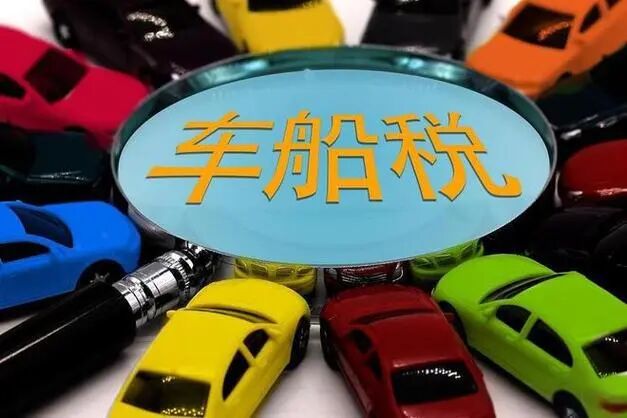
Recently, the Ministry of Finance, the State Taxation Administration, and the Ministry of Industry and Information Technology jointly issued the "Announcement on Adjusting Vehicle and Vessel Tax Preferential Policies for Energy-Efficient and New Energy Vehicles." This announcement clarifies that, starting from January 1, 2027, the policy of halving vehicle and vessel tax for energy-efficient vehicles will be abolished. The exemption policy for pure electric commercial vehicles, plug-in (including extended-range) hybrid vehicles, and fuel cell commercial vehicles will also be discontinued. This marks the official end of the vehicle and vessel tax reduction and exemption policies for energy-efficient and some new energy vehicles, which have been in place for 15 years.

Policy Shift: From Initial Support to Sustained Growth
Looking back, since the full implementation of the vehicle and vessel tax law in 2012, China has halved the vehicle and vessel tax for qualifying energy-efficient vehicles and exempted qualifying new energy vehicles from the tax. This was done to support the development of the new energy vehicle industry and promote energy conservation and emission reduction. This preferential policy played a crucial guiding role during the industry's early growth phase.
However, the historical context has fundamentally changed. Data shows that in 2025, new energy vehicle sales in China reached 16.49 million units, accounting for over 50% of domestic new vehicle sales. New energy vehicles have transitioned from being "policy-driven" to "market-driven."
Officials from the three departments explicitly stated in a Q&A session that pure electric commercial vehicles, plug-in hybrid vehicles, fuel cell commercial vehicles, and energy-efficient vehicles, like other fuel-powered vehicles, are all significant assets. In 2025, the average selling price of plug-in hybrid passenger vehicles was 218,000 yuan, with some models priced over one million yuan. Restoring the vehicle and vessel tax for these vehicles "is conducive to promoting tax fairness and enhancing the role of taxation in regulating income distribution."
Relevant experts point out that vehicle and vessel tax serves functions such as wealth redistribution, industrial regulation, and guidance. With the rapid growth in the number of new energy vehicles, issues such as the impact on tax fairness and the weakening of tax regulation due to preferential vehicle and vessel tax policies have become increasingly apparent, strengthening the necessity of withdrawing support policies.
Industry Impact: A Symbolic Step Towards Equal Rights for Gasoline and Electric Vehicles
This adjustment is not a "one-size-fits-all" approach. According to the "Vehicle and Vessel Tax Law of the People's Republic of China," pure electric passenger vehicles and fuel cell passenger vehicles, due to their lack of displacement, are not subject to vehicle and vessel tax and will remain exempt.
Cui Dongshu, Secretary-General of the China Passenger Car Association, believes that this adjustment is "a symbolic step in the implementation of equal rights reform for gasoline and electric vehicles in the domestic automotive industry." He further explains that equal rights for gasoline and electric vehicles does not mean uniform equalization but rather stratified and precise fairness. The new policy adheres to a scientific stratification principle: pure electric and fuel cell passenger vehicles, as ultimate zero-emission technology routes, retain tax exemption benefits; while energy-efficient fuel vehicles, plug-in hybrid and extended-range passenger vehicles, and new energy commercial vehicles, as transitional technologies and operational vehicles, all lose tax preferences.
In terms of industrial impact, passenger and commercial vehicles face different levels of impact. In the passenger vehicle sector, plug-in hybrid passenger vehicles (transitioning from full exemption to tax restoration) and gasoline-electric hybrid models (transitioning from halved tax to full tax) are the primary affected groups. According to estimates, the marginal cost impact of vehicle and vessel tax on most models is only a few hundred yuan annually, with a maximum of approximately 1,000 to 1,500 yuan, posing limited impact on actual demand.
The commercial vehicle sector faces greater challenges. Pure electric commercial vehicles and fuel cell commercial vehicles, previously fully exempt, will be required to pay vehicle and vessel tax starting in 2027. Buses are taxed per unit, with tax amounts ranging from 480 yuan to 1,440 yuan; trucks are taxed based on curb weight, at 16 yuan to 120 yuan per ton. For commercial vehicle users such as logistics companies and passenger transport enterprises, the restoration of taxation will directly increase annual operating costs due to their large fleet sizes.
Consumer Impact: A Few Hundred Yuan in Taxes Unlikely to Sway Purchasing Decisions
For ordinary consumers, how much additional burden will the vehicle and vessel tax impose?
According to regulations, passenger vehicles are taxed based on displacement tiers. For vehicles with a displacement of over 1.0 liter up to 1.6 liters (inclusive), the tax amount ranges from 300 yuan to 540 yuan; for those over 1.6 liters up to 2.0 liters (inclusive), the tax amount ranges from 360 yuan to 660 yuan. Taking plug-in hybrid passenger vehicles as an example, mainstream car models in the current market generally have a displacement of 1.5 liters or below, requiring an annual payment of 420 yuan in Beijing and 300 yuan in Shanghai and Guangdong Province.
Given the relatively low amount of vehicle and vessel tax, it will not have a significant impact on ordinary consumers. The weekend automotive market also validates this point. A consumer with recent purchase intentions stated after learning that plug-in hybrid models would incur an additional 300-plus yuan in vehicle and vessel tax annually starting in 2027, "This fee will not affect my purchasing decision; compared to the vehicle price, the impact of this tax amount is negligible."
Comparison with Purchase Tax: Vehicle and Vessel Tax Reduction Parallels Purchase Tax Halving
It is noteworthy that the vehicle and vessel tax policy adjustment is not an isolated event but forms a linkage with the adjustment of the vehicle purchase tax policy.
According to current policies, from January 1, 2026, to December 31, 2027, the vehicle purchase tax for new energy vehicles will be adjusted from full exemption to a 50% reduction, meaning it will be levied at a 5% rate, with a maximum tax reduction of 15,000 yuan per new energy passenger vehicle.
Comparing the two policies, significant differences emerge: the vehicle purchase tax is a one-time tax levied at 10% of the vehicle price, and even after a 50% reduction, it may still generate taxes ranging from several thousand to tens of thousands of yuan; whereas the vehicle and vessel tax is an annual property tax with an annual amount of only a few hundred yuan. After the vehicle purchase tax for new energy vehicles was changed from full exemption to a 50% reduction this year, their sales share continued to increase, indicating that the reduction in tax incentives has limited impact on the industry.
From a temporal perspective, the vehicle and vessel tax exemption will terminate on January 1, 2027, while the vehicle purchase tax halving policy will continue until December 31, 2027. This suggests that 2027 is likely to be the final year for new energy vehicles to enjoy the purchase tax halving benefit. Some analysts believe that the vehicle and vessel tax adjustment sends a clear signal of a return to tax neutrality, paving the way for a possible full restoration of the vehicle purchase tax policy in 2028.
Will Pure Electric Models Become More "Popular"?
Looking back from the vantage point of July 2026, the withdrawal of vehicle and vessel tax preferential policies is an inevitable choice for China's new energy vehicle industry as it transitions from a "policy support phase" to a "market maturity phase."
This policy adjustment sends multiple signals: First, the principle of tax fairness is returning. New energy vehicles are no longer "seedlings" in need of special protection but have matured into an industry that competes on equal footing with fuel-powered vehicles. Second, policy guidance is shifting from "inclusive support" to "precise guidance." Pure electric passenger vehicles continue to enjoy tax exemptions, while transitional technologies such as plug-in hybrids and extended-range models no longer receive preferential treatment, reflecting differentiated considerations for technology routes. Third, tax reform is extending from the "purchase stage" to the "ownership stage," laying the groundwork for a more comprehensive reform of the transportation tax and fee system in the future.
For consumers, although the additional annual vehicle and vessel tax of a few hundred yuan represents a negligible proportion of the tens of thousands of yuan in purchasing costs, the policy differentiation between hybrid and pure electric models is noteworthy. This is likely to make consumers more inclined towards pure electric models when purchasing vehicles in the future.
-
![]()
The Surprisingly Significant Impact Difference Between Quiet and Noisy Cars!
-
![]()
Breaking Through Storage Cycle Barriers: How AI Large Models and Coding Technology Synergize to Drive Transformation in the Security Industry
-
Facilitating the Slimming of Camera Modules! O-film Obtains Utility Model Patent for Periscope-Type Reflective Component
-
![]()
Hikvision Raytine’s Millimeter-Wave Body Imaging Security Inspection Device Achieves ECAC SSc Category A Standard Level 2.1 Certification for European Civil Aviation
-
![]()
Global Market Share for Security Windows Hits 26%! This Optical 'Little Giant' Makes Its Debut on NEEQ
-
![]()
The Evolutionary Path of Agent Engineering: From Prompt to Harness by Zhang Yutao, Co-founder of Moonshot AI
-
![]()
Profits and stock prices are both declining, so why are executives from these auto companies increasing their purchases?
-
![]()
Burning Tens of Billions of Dollars, Yet No Unified Definition for World Models