Avita Files Second Application for HKEX Listing, With New President Chen Zhuo Onboard, Accumulated Losses Hit 13.2 Billion Yuan Over Four Years
 07/06 2026
 467
467
Reported by Qi Xin, Sing Tao, Beijing
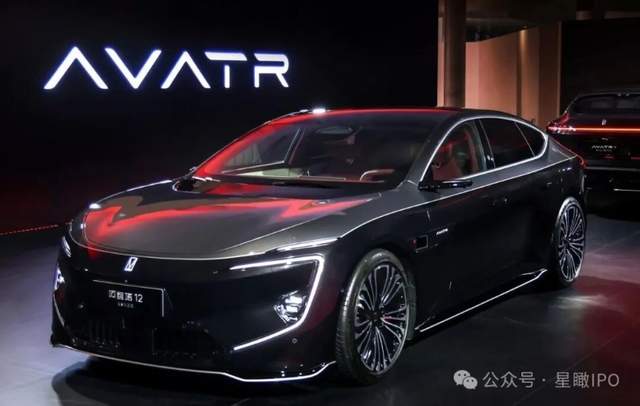
On June 30, Avita Technology (Chongqing) Co., Ltd. (hereinafter referred to as "Avita") submitted a renewed application to list on the Main Board of the Hong Kong Stock Exchange. This marks the company's second attempt to enter the Hong Kong stock market, following the failure of its initial submission in November 2025.
Supported by three major industry players—Changan Automobile, CATL, and Huawei—Avita's bid to list on the Hong Kong stock market has drawn significant attention from the external world.
"Avita's second listing application to the Hong Kong Stock Exchange, just over six months after its initial failed attempt in November 2025, underscores its urgent determination to go public. This determination is essentially a strategic move by new energy vehicle (NEV) manufacturers at their current development stage," Yuan Shuai, co-founder of the New Intelligence New Quality Productivity Forum, told Sing Tao.
In Yuan's view, as a brand backed by the resources of Changan, Huawei, and CATL, Avita has pursued a high-investment R&D strategy since its inception. The continuous innovation in intelligent cockpits, advanced intelligent driving, and three-electric technologies all necessitate a stable funding stream. Relying solely on shareholder support is not only challenging to sustain in the long-term technological race but also dilutes the rights and interests of existing shareholders.
"Going public not only opens up public financing channels, enabling access to lower-cost funds for subsequent R&D and capacity expansion, but also leverages the brand endorsement of the capital market to enhance recognition among C-end consumers and B-end supply chains. For NEV manufacturers requiring long-term investment, going public is akin to securing a ticket for sustained competition in the industry. Avita naturally does not want to lag behind at this juncture," Yuan remarked.
President Chen Zhuo "Steps Up"
Established in July 2018, Avita was formerly known as Changan NIO New Energy Vehicle Technology Co., Ltd., a joint venture between Changan Automobile and NIO, but it saw limited substantive development. In 2020, Changan Automobile, Huawei, and CATL officially announced their collaboration to create a high-end intelligent NEV passenger vehicle brand. In May 2021, it was officially renamed "Avita" and commenced market-oriented operations.
Through a series of capital increases, equity transfers, and other operations, Avita's shareholder base gradually expanded to include CATL, Chongqing Anyu, Bank of Communications Investments, among others. However, NIO withdrew from Avita's shareholder lineup in November 2025.
Although Huawei has not directly invested in Avita, it collaborates closely with the company. In 2022, Huawei and Avita deepened their strategic partnership to jointly drive the development and integration of intelligent vehicle solutions. In 2025, Avita announced the acquisition of a 10% stake in Shenzhen Yinwang, a spin-off from Huawei's Automotive BU, for 11.5 billion yuan. In April 2026, Avita signed a strategic cooperation agreement with Huawei Huitong to jointly develop a high-end intelligent vehicle service ecosystem.
According to the prospectus, as of the latest practical date, Changan Automobile, through Chang'an Innovation, directly and indirectly held approximately 41.57% of Avita's total issued share capital.
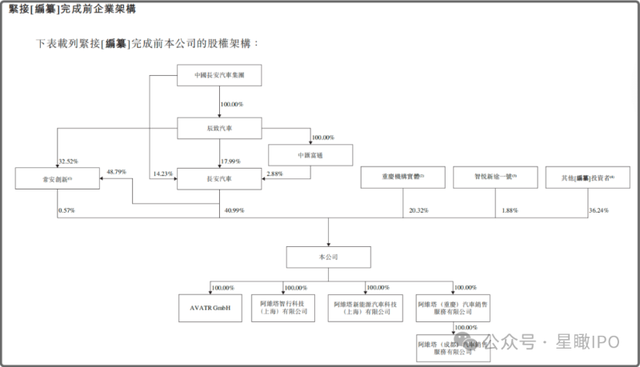
▲Screenshot of Avita's prospectus
In terms of management, Chen Zhuo, Avita's executive director and president, oversees the overall daily business operations of the group. With extensive experience in marketing and brand communication, media relations, and overseas business development, he previously served as an engineer at Changan Automobile Engineering Research Institute, head of the Overseas Business Marketing Department, general manager of Changan Automobile's Brand Public Relations Department, Party branch secretary, and company spokesperson. He was appointed vice president of Changan Automobile in June of this year.
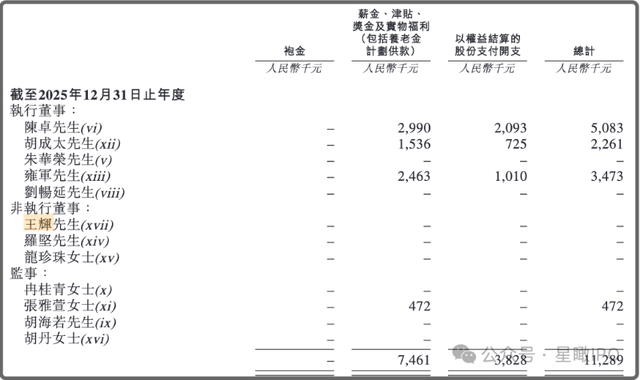
▲Screenshot of Avita's prospectus
Wang Hui, Avita's chairman and non-executive director, is responsible for high-level oversight of the group's management and operations. With over 20 years of experience in the automotive industry, he joined Changan Automobile in 2003 and previously served as a technical officer and department head at Changan Automobile Research Institute's Process Institute, deputy director of the Process Planning Institute at Changan Automobile's Process Technology Department, executive vice president and Party secretary of Mazda Engine, chairman of Jiangling Holdings Co., Ltd., among other positions. Wang joined Avita in September 2025 and was promoted to executive vice president of Changan Automobile in November 2025.
Revenue Growth Amidst Substantial Losses
With this second attempt to list on the HKEX, Avita has updated its financial data to encompass the full year of 2025.
From 2023 to 2025, Avita's revenue experienced three consecutive years of growth, surging from 5.645 billion yuan to 25.631 billion yuan. In 2025, the company delivered approximately 122,700 vehicles throughout the year, representing a year-on-year increase of 99.23%. Its gross profit margin also turned positive, rising from -3.0% in 2023 to 6.3% in 2024 and further to 9.4% in 2025.
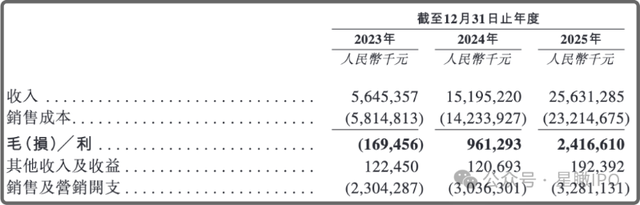
▲Screenshot of Avita's prospectus
However, Avita still failed to escape losses. From 2023 to 2025, it incurred losses of 3.693 billion yuan, 4.018 billion yuan, and 3.489 billion yuan, respectively. Adding the 2.015 billion yuan loss in 2022, the cumulative losses over four years exceeded 13.2 billion yuan. Avita also stated in its prospectus that it "may continue to record net losses for the year ending December 31, 2026."
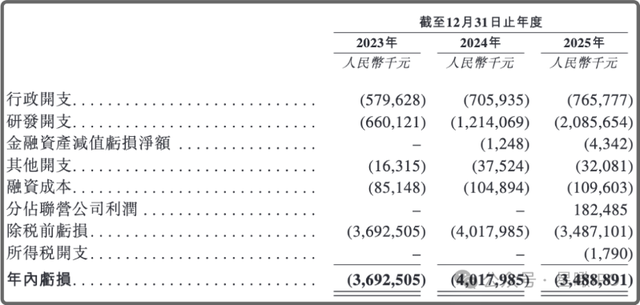
▲Screenshot of Avita's prospectus
Additionally, as of the end of 2025, Avita's asset-liability ratio had reached 80%. Its current liabilities stood at 21.204 billion yuan, while its current assets were 12.92 billion yuan, resulting in current and quick ratios of 0.6 and 0.5, respectively.
Racing Against a Sales Volume Decline
Data from the China Passenger Car Association reveals that in June this year, retail sales of passenger vehicles in the national market reached 1.651 million units, down 21% year-on-year and up 9% month-on-month. Year-to-date retail sales stood at 8.75 million units, down 20% year-on-year, indicating that the entire automotive market has entered a phase of inventory competition.
Despite Avita's sales surge in 2025, its momentum took a sharp downturn in 2026. From January to June this year, cumulative sales reached only 27,619 units, significantly lower than the monthly average of over 10,000 units last year.
In comparison, in June, Leapmotor delivered 93,376 vehicles globally, NIO delivered 40,597 vehicles, XPENG delivered 40,126 vehicles, Li Auto delivered 30,895 vehicles, and VOYAH, which listed on the Hong Kong stock market in March this year, delivered 14,223 vehicles. In contrast, Avita delivered only 7,459 vehicles.
Yuan Shuai believes that within the current domestic NEV market landscape, Avita occupies a leading position in the second tier. The technical endorsements from Changan, Huawei, and CATL constitute its core competitive advantage, with the synergistic effect of resources from the three parties being nearly unparalleled in the industry.
"However, this advantage also conceals challenges. The synergy of shareholder resources implies a balance of influence, and multi-party consultations on product definition, pricing strategies, and channel layout may inevitably slow down market responsiveness," Yuan commented. He also pointed out that the competition in the intelligent electric vehicle market priced above 300,000 yuan has become fierce. Avita's product differentiation, apart from intelligent driving, has not yet deeply resonated with users. Consequently, its sales volume has consistently failed to break through bottlenecks, and the gap with the first tier remains significant.
Zhang Xiang, Secretary-General of the International Intelligent Transportation Technology Association, views Avita as a second-tier brand that has not yet achieved economies of scale.
Under such circumstances, Avita's decision to resubmit its application just 33 days after the first prospectus expired due to the six-month validity period reflects its urgent desire to go public.
Zhang believes that the era of new energy vehicle manufacturing by new entrants is no longer novel. Several years ago, capital was enthusiastic about automotive companies, leading to frenzied investments. However, the industry now clearly suffers from overcapacity, with an excessive number of automotive companies. The future development trend is gradually becoming clear, and industry growth rates have slowed down. The Hong Kong stock market has stringent review standards for automotive company IPO applications, making it more challenging to go public now than five or six years ago. He believes that Avita's IPO journey this time is fraught with challenges.
Yuan Shuai also stated that the current attitude of the Hong Kong stock capital market towards automotive companies is clearly polarized. The market no longer pays for mere "new entrant stories" but places significant emphasis on profit expectations and self-sufficiency. Leading automotive companies that have achieved profitability are more likely to gain capital favor, while those still incurring losses face stricter valuation reviews. The logic of storytelling and boosting sales no longer holds sway; capital now cares more about whether companies can present a clear profit path in an increasingly competitive market.
"In such a market environment, the challenges Avita faces on its path to going public are very direct," Yuan remarked.
Yuan further analyzed to Sing Tao that the first issue is persistent losses. The company needs to provide reasonable explanations and a clear timeline for turning a profit. It must demonstrate to the capital market how the synergistic effect of resources from the three parties can ultimately translate into tangible profits rather than continuous investment without returns.
Secondly, the ongoing price war in the NEV industry requires Avita to control costs while maintaining market share, showcasing stable operating expectations and convincing capital that it can survive and continue to grow amidst fierce competition.
Finally, Avita needs to clarify its own structure and governance model to the capital market, ensuring the independence and efficiency of company decision-making and avoiding risks that may affect long-term development due to disagreements.
"These are the core questions Avita needs to answer in this submission, and they will determine whether it can successfully open the door to the Hong Kong stock market," Yuan concluded.
Edited by Liang Jingqin
-
![]()
The Surprisingly Significant Impact Difference Between Quiet and Noisy Cars!
-
![]()
Breaking Through Storage Cycle Barriers: How AI Large Models and Coding Technology Synergize to Drive Transformation in the Security Industry
-
Facilitating the Slimming of Camera Modules! O-film Obtains Utility Model Patent for Periscope-Type Reflective Component
-
![]()
Hikvision Raytine’s Millimeter-Wave Body Imaging Security Inspection Device Achieves ECAC SSc Category A Standard Level 2.1 Certification for European Civil Aviation
-
![]()
Global Market Share for Security Windows Hits 26%! This Optical 'Little Giant' Makes Its Debut on NEEQ
-
![]()
The Evolutionary Path of Agent Engineering: From Prompt to Harness by Zhang Yutao, Co-founder of Moonshot AI
-
![]()
Profits and stock prices are both declining, so why are executives from these auto companies increasing their purchases?
-
![]()
Burning Tens of Billions of Dollars, Yet No Unified Definition for World Models