The Secret Formula for Spotting 'Hastily-Made Cars' Unveiled!
 07/07 2026
 362
362
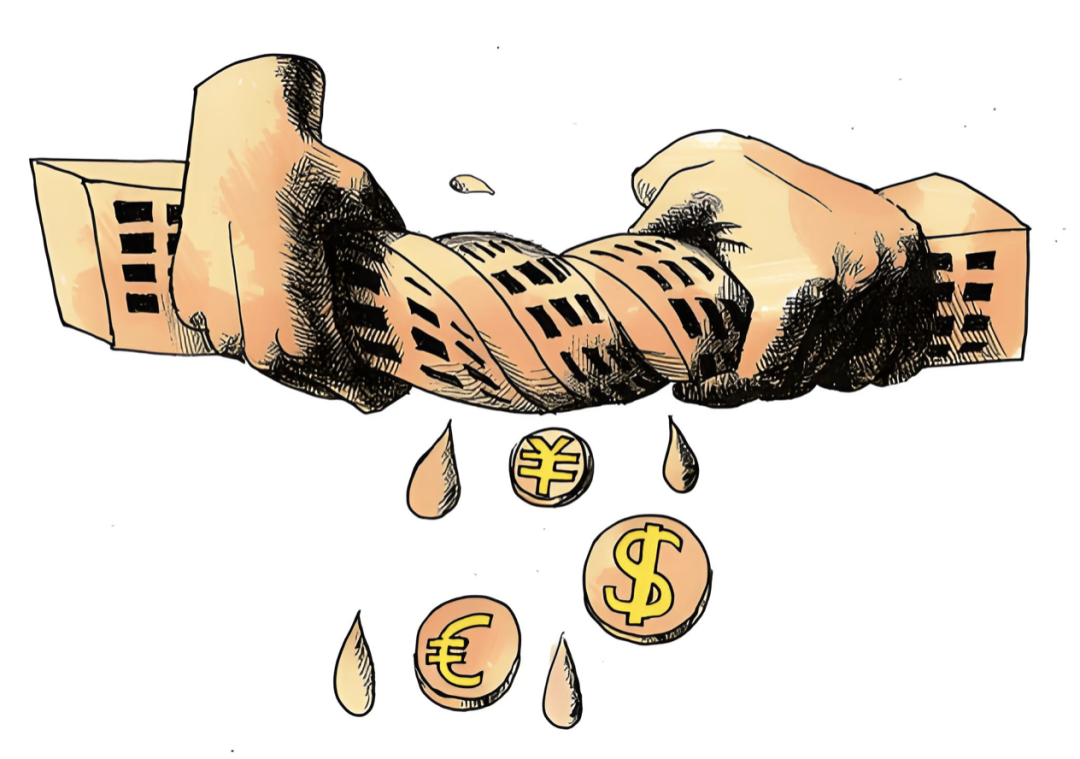
Asset depreciation is a major concern for Chinese consumers today. Some lament that while property market fluctuations are a macroeconomic trend beyond their control, if other significant assets also falter, the last shred of trust that ordinary people have in the fruits of their hard work may vanish entirely.
Cars, as the second-largest consumer item for Chinese households after property, serve both as tools and assets. Yet, just last week, I witnessed a new car from a company on the verge of going public—not only was it rushed from project approval to mass production in just nine months, but even the standard four-month verification cycle was cut short. It's easy to see how much faster the depreciation of cars in the hands of ordinary people will become.
Hastily-made cars are not a new concept. However, when these replace meticulously crafted vehicles and when poor quality drives out good, it means that over the next three years, the 'paper wealth' represented by automotive assets across society will inevitably evaporate by hundreds of billions of yuan. This is not alarmist; let's make a bold prediction: In three years, the residual value rates of 'meticulously crafted cars' and 'hastily-made cars' will reach a 'death crossover,' with the gap widening from the current roughly 20 percentage points between new energy and traditional vehicles to over 40 percentage points.
In other words, for a car worth 200,000 yuan, the value difference between a hastily-made car labeled as 'smart' and a reliable, durable product will be around 70,000 yuan after three years.
It is precisely this fast-fashion approach to car manufacturing that is transforming cars from durable goods into fast-moving consumer goods, accelerating the depreciation of Chinese consumers' wealth and ultimately causing assets to depreciate rapidly or even become liabilities.
Editor | Li Jiaqi
Image Source | Internet
1. The Stolen Four-Month Golden Verification Cycle
On one hand, mature car models maintain a 65% residual value after three years, while hastily-made new cars see their value drop below 40%. This 20-percentage-point value gap stems from a one-sided understanding of the 'car manufacturing cycle.' A complete car manufacturing cycle is akin to a vehicle's journey from conception to adulthood. Typically, it involves four stages: 'product approval, engineering design, production preparation, and finally, mass production improvements.' The dividing line between the end of a car's R&D and the start of production is when the product is listed in the 'MIIT catalog' and obtains the 'Announcement,' the car's 'birth certificate.'
In the past, perceptions of hastily-made cars focused on the 'R&D phase' before the MIIT catalog listing. It was believed that any development cycle shorter than the industry's mainstream 18 months qualified as a hastily-made car.
However, in recent years, companies adopting a consumer-minded approach to car manufacturing have become more sophisticated. Take the new car we saw, which is about to launch. Its nine-month development process set a record for the 'fastest development of a derivative model,' yet it used concepts like reusing qualifications for the same model type, platformization, and internal project codes as cover. By blending the time spent on acquiring projects with the model development cycle, it created an illusion of long-term refinement.
In reality, the full picture of hastily-made cars often involves 'extreme compression' both before and after catalog submission. Thus, their risks are no longer just 'insufficient R&D' but quality hazards stemming from double haste in both 'R&D and mass production.'
Therefore, to determine if a car is hastily-made, we must not only look at how long it was developed but also how long a company prepared for a product.
What does that mean? The car R&D process involves numerous steps because it must adhere to the laws of physics, and many issues cannot be resolved by simply accelerating R&D. Chassis tuning, seasonal testing, durability testing... These tasks must rely on the experience of the production system to find balance. I suspect this company realizes that everyone knows a car's development cycle has been compressed from the traditional 24-36 months to around 18 months. But it's betting that many don't know that while this stage accounts for 80% of a car's development time, the true test of mass production capability lies in the remaining 20%, which begins only after the MIIT announcement is issued.
Generally, obtaining the MIIT catalog means a car is legally cleared for production and sales, but it doesn't mean the mass-produced version is perfect. Thus, 'new cars' listed in the MIIT catalog are essentially 'prototype vehicles' certified by regulations, not the 'mass-produced cars' consumers ultimately buy. Typically, from catalog submission to release, factory production lines are still being debugged, and only a few prototypes may have been produced. True mass production requires an incompressible physical time. This golden window period for engineering verification typically lasts four months in the industry.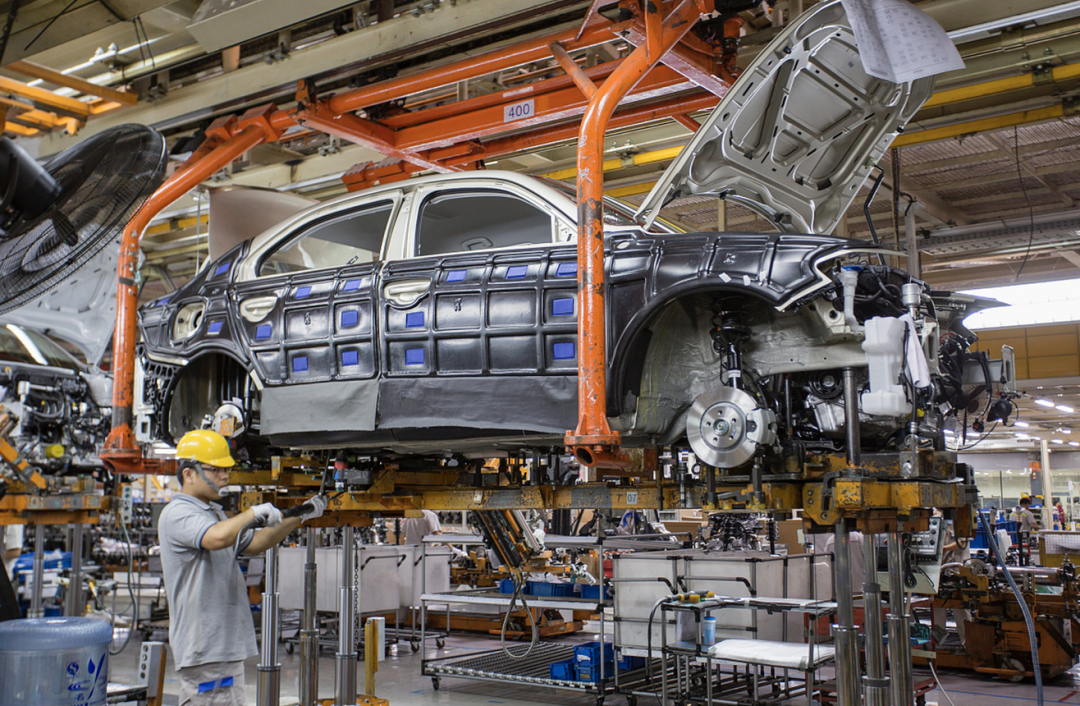
During this phase, there is usually a 20-day public disclosure buffer period after the announcement; molds and equipment require around two months of production line debugging, plus another month of supplementary verification testing. Only by fully completing these three stages can large-scale production yield batch after batch of qualified products, totaling around four months.
The reason it's called the golden window period is that car manufacturing is based on physical laws and long-term experience, summarized as an 'industrial rationality' baseline. Even if a car has platformized foundations in its electrical architecture, intelligent driving solutions, and powertrain, there is still a significant amount of irreplaceable hardware work. The fit between the body structure and production line, the stability of aerodynamics and chassis tuning—all these changes require at least this window period for recalibration and road testing.
2. Derivative Models and Platformization Cannot Justify Compressed Verification
In recent years, as price wars intensify and regulations lack unified standards for defining this window period, you'll notice that if you only look at the interval between MIIT catalog disclosure and presale, many models have inconsistent window periods, ranging from a few dozen days to over six months. Some automakers even deliberately extend product预热 (teaser) periods, releasing information in stages to create sustained buzz, thereby obscuring the window period through marketing tactics.
However, upon closer comparison, you'll find that new models without prototypes or fully newly developed ones typically have a window period close to or exceeding four months from catalog release to presale and delivery. Even for derivative models based on mature platforms, if the window period is compressed to three months, it means the manufacturer has skipped dedicated verification procedures for the new model's unique characteristics.
Take the car I witnessed firsthand: although it uses a sedan as its base model, anyone with basic automotive engineering knowledge understands that an SUV's body structure is entirely different from a sedan's. Welding points, stress distribution, and torsional rigidity all require long-term road testing for verification. Additionally, an SUV's higher center of gravity and greater mass impose new stresses on the shock absorbers, bushings, and springs, whose durability cannot be inferred from sedan data and must be validated after the actual vehicle completes the equivalent of 300,000 kilometers.
That's not all. Since the two models do not share battery cells, differences in battery pack mounting structures, thermal management pathways, and BMS calibration require sufficient time to test long-term degradation performance. Considering that catalog filing often involves reassembling interiors, early mass-produced models lack sufficient verification, leading to higher rates of issues like abnormal noises, uneven gaps, and loose clips compared to mature products—problems that cannot be concealed by claims of derivative models or platform efficiency.
Dong Yang, former Executive Vice President of the China Association of Automobile Manufacturers, stated that reliability verification after a design change requires at least 1-2 months at the component level and at least one month at the vehicle system level. Therefore, automakers must allocate sufficient safety verification time.
Last year, the flagship sedan just released by this automaker experienced steering failures and even lockups shortly after launch, severely impacting driving safety. Its previously released MPV also suffered a concentrated outbreak of quality control issues, including roof leaks, suspension failures, body deformation causing misaligned doors, and severe tire wear. A first-batch owner who had driven the vehicle over 110,000 kilometers listed more than 10 repair records on social media, joking, 'I basically visit the repair shop once a month.'
In response, an automotive industry consulting analyst pointed out that if component reliability standards are relaxed for mass production under compressed development schedules, hidden dangers will gradually emerge over 'years,' ultimately causing used car residual values to plummet.
3. The Finale of Hastily-Made Cars: A Catalyst for Evaporating Hundreds of Billions in Chinese Residents' Assets
Is there a problem with hastily-made cars? Not necessarily. Their R&D and production cycles strictly adhere to regulatory requirements, staying within policy limits without violating rules.
But the reality is that automakers are recklessly pushing technical and physical boundaries, effectively hollowing out a car's long-term technological redundancy. Data from the 2026 China Automobile Dealers Association's residual value report has ruthlessly exposed the cost of this business model. Last year, the three-year residual value gap between Tesla and domestic new energy vehicles was 14%; this year, it has widened to 17 percentage points.
Fully verified steady-state models maintain a residual value of around 65% after three years, while barely compliant hastily-made cars drop below 40%, creating a residual value gap of over 20%. For a 150,000-yuan mainstream family car, the three-year trade-in difference commonly exceeds 34,000 yuan. This not only renders meaningless the electricity costs saved or purchase incentives claimed by consumers over the years but also severely undermines confidence in car ownership due to massive principal losses.
As the property market's turbulence affects nearly all Chinese households, when core assets begin to depreciate, people become hyper-sensitive to the value of other consumer goods. What truly destroys societal and household wealth is not isolated cases of depreciation but the large-scale chain reaction caused by this hastily-made model. According to 2026 first-half survey data from Tengyi Research Institute, 63.87% of consumers explicitly intend to delay car purchases, up from less than 40% three years ago. The primary reason for this sustained expansion of the wait-and-see crowd includes ongoing price wars and user concerns that buying a car means immediate depreciation, fostering a consensus among 'wait-and-see' consumers.
Currently, China's stock of hastily-made new energy vehicles exceeds 32 million units. Compared to traditional steady-state models, each vehicle incurs an excess asset loss of 64,800 yuan over three years, easily evaporating over 200 billion yuan in household wealth. By trading technological redundancy for iteration speed and user residual values for market scale, automakers have completed a silent wealth plunder within existing rules.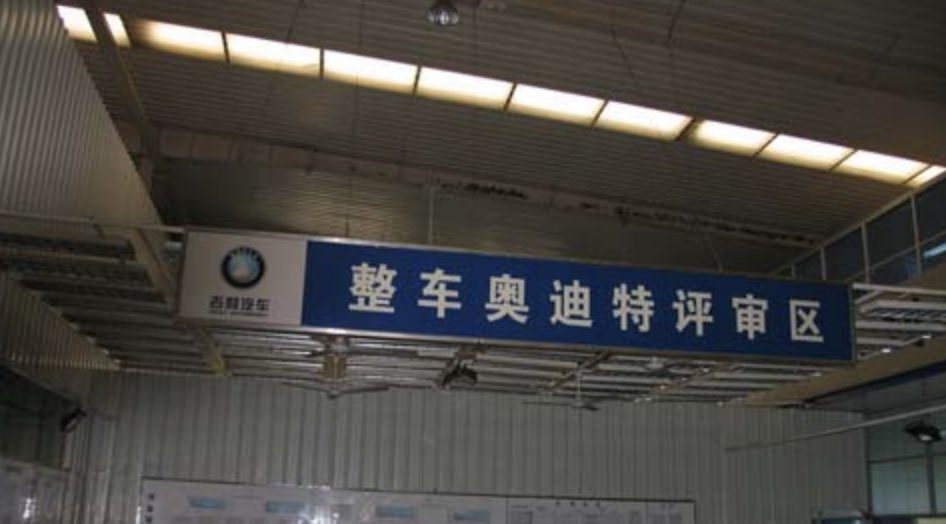
In interviews, multiple industry insiders suggested that the industry should now incorporate mass production maturity into regulatory substantive inspections, extending catalog announcements to include spot checks on the mass production state of vehicles at user handover. The essence of this mechanism is not to measure 'whether a new car is qualified' but 'whether the car can preserve the user's long-term asset value.' These experts recommend borrowing from Volkswagen's Auditor review system as an evaluation criterion for regulatory refinement, serving as a product safety mechanism for industrial innovation. A score of 1.3 to 1.4 represents the quality safety range for long-lasting family cars, indicating full verification, low defects, and high stability; 1.5 is the legal mass production threshold to prevent hidden durability issues from escalating.
If such substantive spot-check mechanisms were established, products like those from the aforementioned company would undergo more thorough verification processes, alleviating user concerns about life and property safety during delivery and use. With improved spot checks, companies could also make more targeted technical improvements during preparation, further enhancing the maturity of the domestic automotive industry.
Unfortunately, in reality, this 'filter' has yet to be established, leaving society and consumers to silently bear greater losses.
End
-
![]()
The Surprisingly Significant Impact Difference Between Quiet and Noisy Cars!
-
![]()
Breaking Through Storage Cycle Barriers: How AI Large Models and Coding Technology Synergize to Drive Transformation in the Security Industry
-
Facilitating the Slimming of Camera Modules! O-film Obtains Utility Model Patent for Periscope-Type Reflective Component
-
![]()
Hikvision Raytine’s Millimeter-Wave Body Imaging Security Inspection Device Achieves ECAC SSc Category A Standard Level 2.1 Certification for European Civil Aviation
-
![]()
Global Market Share for Security Windows Hits 26%! This Optical 'Little Giant' Makes Its Debut on NEEQ
-
![]()
The Evolutionary Path of Agent Engineering: From Prompt to Harness by Zhang Yutao, Co-founder of Moonshot AI
-
![]()
Profits and stock prices are both declining, so why are executives from these auto companies increasing their purchases?
-
![]()
Burning Tens of Billions of Dollars, Yet No Unified Definition for World Models