Skyworth Automobile, Selling a Mere 38 Units Monthly, Teeters on the Brink: Can Huang Hongsheng Engineer a Turnaround?
 07/07 2026
 518
518

Grasping Business Fundamentals, Focusing on Enterprise Core
Author | Li Ping
In 2026, China's New Energy Vehicle (NEV) market is experiencing explosive growth, with penetration rates soaring past 60%. Leading brands are achieving monthly sales in the tens of thousands, while newcomers like Leapmotor and Xiaomi are continually breaking delivery records. Traditional automakers are also ramping up their NEV transformations.
Amidst this industry-wide surge, Skyworth Automobile, which once boldly set its sights on "selling one million units annually by 2030," reported a meager 38 units sold in May, according to the latest sales data.
Skyworth's cumulative domestic sales for the first five months stood at just 331 units, averaging 66 units per month. With diminishing brand visibility and market presence, it has descended into a near-"survival crisis," becoming a marginal player in the automotive sector. Given that its sales are far below the breakeven point (typically 20,000-30,000 units annually), its prospects appear grim, and Huang Hongsheng seems powerless to reverse the trend.
01 From Nearly 20,000 Annual Sales to a Mere 38 Monthly Sales
Skyworth Automobile, initially established as Tianmei Automobile by Huang Hongsheng in 2019, underwent a rebranding in 2021. Leveraging the brand recognition of Skyworth Group in the home appliance sector, it initially made significant strides in the NEV market.
In 2022, Skyworth sold a total of 21,916 units, marking a 255.72% year-on-year increase. In 2023, its domestic sales reached 18,600 units, with monthly deliveries exceeding 1,200 units in March. Overseas exports also surged, reaching 1,420 units in September 2023, up 142% year-on-year.
At that juncture, Skyworth not only set ambitious targets of "250,000 units by 2025 and 500,000 units by 2030" but later escalated them to one million units by 2030. Many industry observers viewed it as a promising contender in the NEV race.
However, the turning point arrived unobtrusively in 2024. That year, a price war erupted in China's NEV market, with leading brands exploiting their full-industry-chain advantages to slash prices. Skyworth's sales, in contrast, plummeted from 1,334 units in July to 509 units by year-end, with cumulative domestic sales for the year at just 11,845 units. Although exports exceeded 3,000 units, the downward trajectory was unmistakable.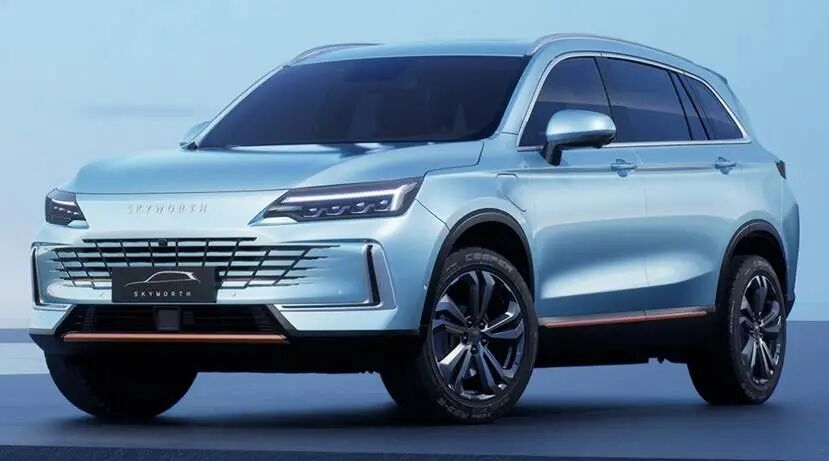
In 2025, competition intensified further, with technologies such as 800V high-voltage platforms and urban Navigate on Autopilot (NOA) becoming standard features in 200,000-yuan-class models. Skyworth's sales continued to nosedive, with global sales of its EV6 model at just 2,176 units and HT-i at 1,587 units, totaling 3,763 units. Exports also dwindled to just over 1,800 units, erasing all previous growth momentum.
By 2026, Skyworth's decline had become irreversible. Its cumulative domestic sales for the first five months were a paltry 331 units, with a mere 38 units sold in May alone. Breaking it down by model, the EV6 sold 24 units, and the HT-i sold 14 units. In the mid-size SUV market, the EV6 ranked 90th in monthly sales and 363rd among all domestic models.
The once-lofty target of selling tens of thousands of units annually now seems unattainable, with even a fraction of that goal out of reach. Numerous offline stores have shuttered due to revenues failing to cover rent and operational costs, making it difficult for consumers in many cities to locate official Skyworth sales outlets. The brand's presence in the domestic market has all but vanished.
02 Mired in an Inescapable Quagmire
Skyworth's current predicament is not the result of a single misstep but rather the culmination of long-standing issues in product development, strategy, and industry dynamics. Market analysts point out that Skyworth's product iterations are severely outdated, lacking any core competitiveness. In the 2026 NEV market, 800V high-voltage fast charging and L2+-level Advanced Driver-Assistance Systems (ADAS) are standard in 150,000-yuan-class models, with urban NOA functionality rapidly becoming commonplace in the 100,000-yuan price segment.
However, Skyworth's long-relied-upon EV6 and HT-i models, both launched years ago, still primarily feature L2-level basic ADAS. They lack self-developed smart driving chips or mature high-level ADAS algorithms, falling far behind the mainstream market in terms of intelligence.
Even its newly released Skyworth S710, while equipped with an 800V silicon carbide high-voltage platform, an 88kWh CATL ternary lithium battery, a CLTC range of 710 km, an ADC adaptive damping suspension system, and 100kW DC external discharge capability, only reaches L2+-level ADAS. In a market saturated with high-level ADAS as standard, relying solely on powertrain parameters fails to create a competitive edge, making it hard to attract mainstream consumers. Notably, in the 2023 C-NCAP crash test, the Skyworth EV6 520 Intelligent Edition received a one-star rating, scoring zero points in the side pole impact test due to excessive chest compression deformation of the front dummy.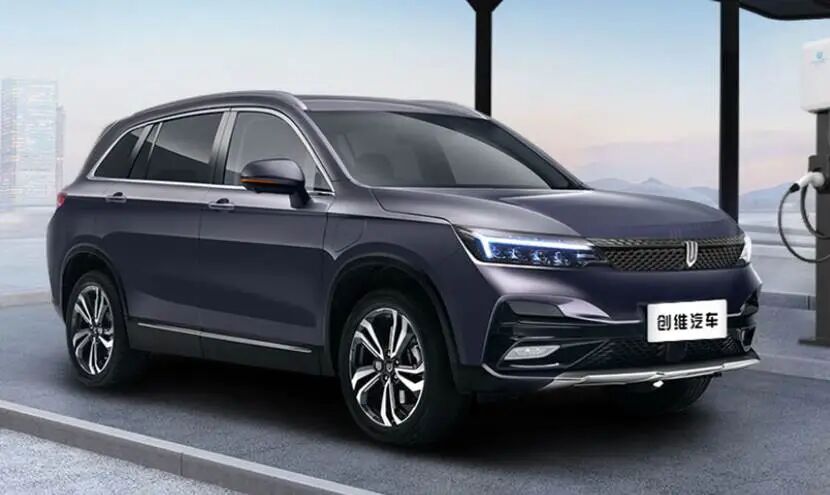
Furthermore, analysts highlight Skyworth's vague brand positioning, with its home appliance crossover advantage failing to translate into automotive market competitiveness. Some argue that it suffers from severe "brand perception misalignment" and "channel ineffectiveness."
As a long-established giant in China's home appliance sector, Skyworth enjoys a robust user base and brand recognition. However, after crossing over into the automotive industry, it has struggled to define a clear brand identity. It lacks a differentiating tagline like "Xiaomi's Human-Car-Home Ecosystem" and has failed to establish a foothold in any niche market. Consumers associate Skyworth Automobile only with the Skyworth brand, unable to recall any unique brand attributes.
In 2026, as the NEV market shifts from a "penetration sprint" to a "structural elimination" phase, numerous marginal brands lacking brand recognition are being swiftly cleared out. Skyworth is no exception. Critically, the industry landscape is undergoing dramatic changes, leaving little room for tail-end brands to survive.
Global EV sales are projected to reach 23 million units in 2026, accounting for nearly 30% of global new car sales. China's NEV penetration has surpassed 54%, with competition evolving from a "wild west" phase to a "clash of giants and rise of new players" consolidation stage.
BYD and Tesla firmly dominate the top tier, while newcomers like Leapmotor, Xiaomi, and HiMo (Hongmeng Intelligent Mobility) rise rapidly. Traditional automakers like Geely and Chery are mounting fierce counterattacks, leveraging their full-industry-chain advantages. Market concentration continues to rise, squeezing out tail-end brands.
Now, Skyworth aims to become the "Transsion of the automotive world," shifting its focus to overseas markets like the Middle East and Southeast Asia to offset domestic declines. However, facing established head brands like Chery and BYD, which have already set up overseas manufacturing bases, Skyworth, lacking systemic support, faces immense challenges in gaining a foothold abroad.
From a once-promising newcomer selling nearly 20,000 units annually to a marginal brand selling only 38 units monthly, Skyworth's fall epitomizes the NEV industry's shakeout. In a market characterized by rapid technological iteration and intensifying competition, brands without core technologies, clear strategies, or systemic support—no matter how bright their past may have been—are ultimately destined for market elimination.
END
Images in this article are sourced from the internet.
-
![]()
The Surprisingly Significant Impact Difference Between Quiet and Noisy Cars!
-
![]()
Breaking Through Storage Cycle Barriers: How AI Large Models and Coding Technology Synergize to Drive Transformation in the Security Industry
-
Facilitating the Slimming of Camera Modules! O-film Obtains Utility Model Patent for Periscope-Type Reflective Component
-
![]()
Hikvision Raytine’s Millimeter-Wave Body Imaging Security Inspection Device Achieves ECAC SSc Category A Standard Level 2.1 Certification for European Civil Aviation
-
![]()
Global Market Share for Security Windows Hits 26%! This Optical 'Little Giant' Makes Its Debut on NEEQ
-
![]()
The Evolutionary Path of Agent Engineering: From Prompt to Harness by Zhang Yutao, Co-founder of Moonshot AI
-
![]()
Profits and stock prices are both declining, so why are executives from these auto companies increasing their purchases?
-
![]()
Burning Tens of Billions of Dollars, Yet No Unified Definition for World Models