Stop Criticizing the Homogenization of Car Manufacturing; No One Buys Innovative Models Anyway
 07/07 2026
 566
566
Lead-in
Introduction
It's not that automakers lack ideas; consumers have effectively ended the path of innovation through their actions.
In the past six months, as all automakers have ventured into so-called 9-series flagships, boxy SUVs, or the new energy sedan segment, a popular narrative has emerged across the internet: Chinese automakers are taking shortcuts again. It seems that the streets are already filled with Land Rovers and Porsches, and now every new car looks like it came from the same mold.
With an increasing number of homogenized models on the market, is this judgment valid?
At first glance, it indeed reflects the current state of the industry. Previously, automakers like Zotye and Landwind habitually copied excellent foreign designs to enhance their image. Now, they simply adopt a different approach, piecing together designs to closely resemble best-sellers, ultimately making consumers pay for their clever tactics.
But is the development of Chinese automobiles always associated with taking shortcuts?
Since China's new energy industry has emerged from disorder and is heading towards the global main stage, no one doubts the absolute capability of Chinese automakers in independent innovation and technological advancement. Things have come to this point not because Chinese automakers are retrograding. When the terminal market constantly signals to companies that 'following the trend brings sales,' what choice do automakers near the survival threshold have?
Currently, in the ever-expanding mid-to-large SUV market, it's increasingly difficult to distinguish new entrants from past internet-famous models. Don't even expect groundbreaking new models in other limited-capacity market segments.
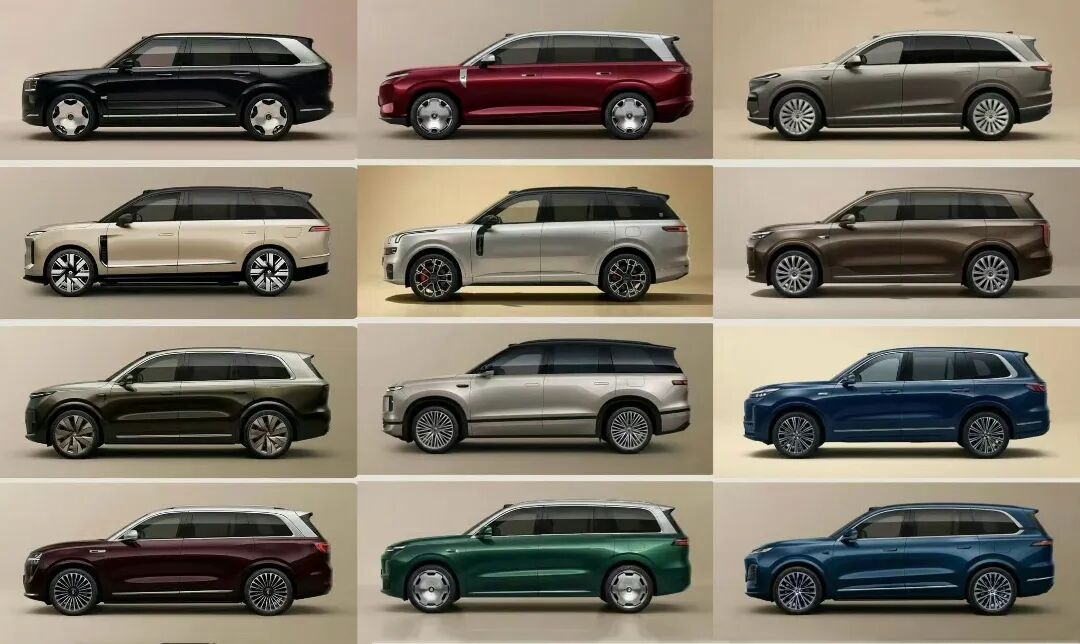
Ultimately, when most Chinese users vote with their feet for uninspired yet practical 'bucket' cars that meet daily needs, automakers under survival pressure aren't foolish. Instead of exerting effort for little reward, they might as well 'copy the cat and draw the tiger.' Even if the outcome is unsatisfactory, at least they can minimize losses in R&D expenses.
We've always said that in fiercely competitive market segments, except for some products with built-in buzz, 80% or even more latecomers will be cannon fodder. For example, under the siege of the AITO M series and Li Auto L series, only a handful of models can stand out in similar competitions.
With this context in mind, the fact that even imitators of the Xiaomi YU7 are emerging endlessly today implies that it's not that automakers are complacent; rather, the true face of the market is compelling them to make decisions.
01 'Innovation' Simply Doesn't Drive Sales
After decades of trials and tribulations, it would be incorrect to say that Chinese automakers cannot innovate. Especially in the era of booming new energy development, many companies have relied on attention-grabbing tactics to establish their presence in the market. New forces like HiPhi and Zeekr have essentially treated the new energy vehicle market as a testing ground for new technologies and models.
In terms of details, they offer a plethora of gimmicky innovations, such as screen-based gear shifting, half-frame steering wheels, T-shaped wing doors, push-button turn signals, and magnetic center console panels. In terms of model positioning, they have tried every possible crossover combination. At that time, the minds of emerging automakers were brimming with ideas that only you couldn't imagine, not that they couldn't create.
Over the past five years, these quirky cars that have emerged in the market have entered the public eye with the craziest marketing campaigns. In their narrative, potential users are referred to as 'geeks.' These redefined Chinese users either good boy (obediently) forked over their money amidst repeated flattery or became promoters and popularizers of new cars and technologies in various ways.
But what was the final outcome? Apart from leaving the industry in disarray and wasting vast amounts of social resources, the only remaining legacy is hundreds of thousands of owners of out-of-production models. With no access to repairs and nowhere to lodge complaints, this grand industrial revolution has cast a shadow.
As the new energy market undergoes several rounds of reshuffling and enters a normal development track, some believe that consumers never wanted those deceptive innovative technologies but rather ideas that truly understand consumer needs yet differ from the norm. Since new energy has enabled Chinese automakers to achieve a overtake on a curve (overtake on a curve), and with precedents now set, shouldn't traditional automakers be able to come up with some unconventional solutions?
After hearing too many people repeatedly typing away, saying that new energy vehicles should abandon past design philosophies and even manufacturing logics, some companies indeed wavered, feeling it was time to come up with something new.
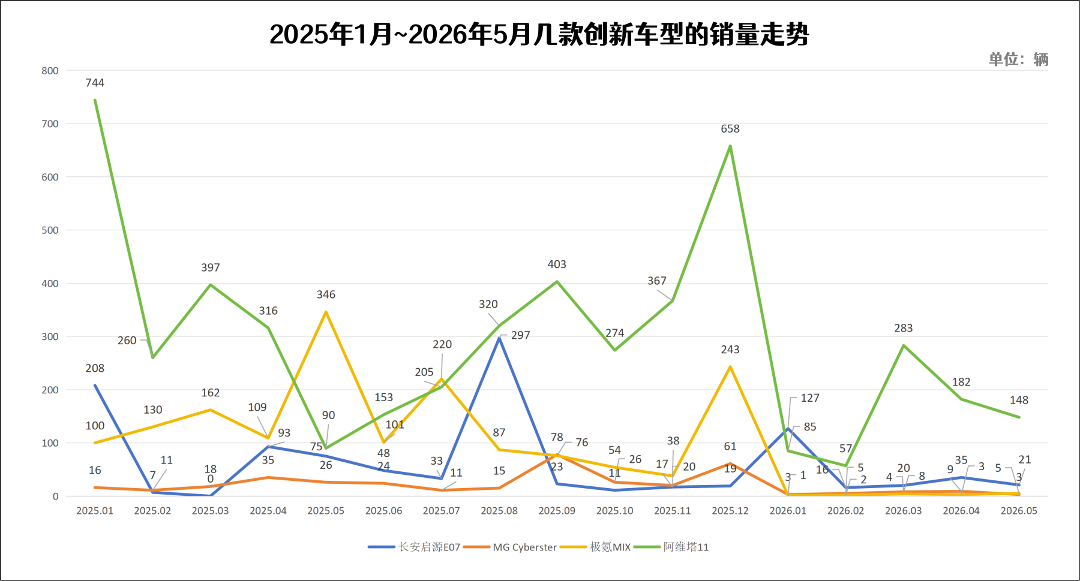
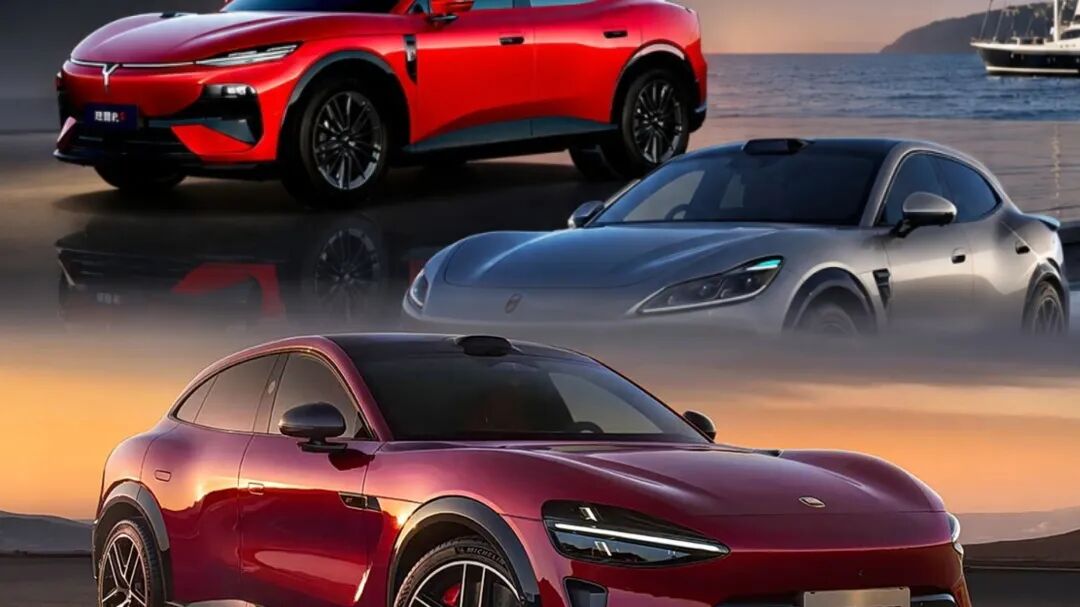
The MG Cyberster concept car made its debut at the 2021 Shanghai Auto Show. Subsequently, the production version appeared at the Chengdu Auto Show in August 2023 and was officially launched in November of the same year.
Similarly, at the end of 2021, the Avatr 11 was unveiled at the Avatr Technology brand launch event. A year later, the Avatr 11 officially entered mass production and delivery. In March 2023, a single-motor version was introduced, followed by the HarmonyOS version in August of the same year, and the extended-range version on December 2, 2024.
By 2024, the Changan Qiyuan E07 and Zeekr MIX made their debut at the Beijing Auto Show and were officially launched by the end of the year.
Not to mention the numerous subsequent station wagon (shooting brake) models, just focusing on the market segments targeted by these few models, I dare say that few Chinese brands dared to venture there in the past. In terms of innovation, they represent some of the most typical examples in Chinese automobiles.
From the automakers' perspective, with the new era surging forward so fiercely and consumers clamoring for innovation, uniqueness, and highly futuristic new cars, these models created in response to such demands should at least rank high on the sales charts, if not continue to sell well.
However, when you examine the actual sales data, Chinese consumers repeatedly slap companies in the face with their most honest choices. The monthly sales figures of these products are a joke, deeply stinging the souls of the product development teams.
Paying for innovation, cheering for trends?
The helpless (helplessness) of reality is that, under the simple demand that 'cheap and large is the truth,' all ideas of building cars for the era and unconventional innovations are merely wishful thinking on the part of automakers. The internet has always been an amplifier for certain types of voices, and those so-called user demands often become information silos for companies. Once automakers believe them, they will suffer sooner or later.
Remember, when the Li Auto ONE first appeared, there were too many voices online saying that range-extended vehicles had no market and that large family SUVs looked boring. But what happened? The more mocking the voices were, the crazier the terminal market became for it.
02 Emphasizing 'Cost-effectiveness' Is the Way Out
As we enter 2026, with the market filled with replicas of the Li Auto L series and AITO M series, and the world abuzz with followers of the Fangchengbao Titan 7 and Xiaomi SU7/YU7, we are well aware of the extent of criticism from the outside world regarding 'homogenized car manufacturing.'
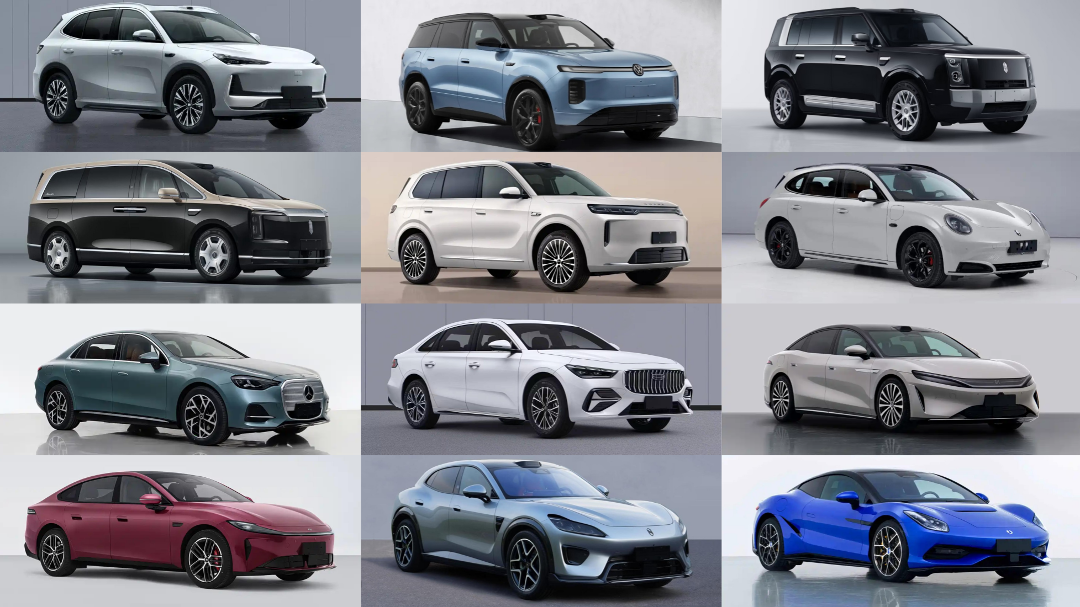
Even if that's not the case, from last year's Hangzhou Bay Cullinan (Zeekr 9X) to the current Greater Bay Area Range Rover (Xpeng GX), and similar jokes, the rhetoric surrounding design plagiarism also subtly points to the impatient mindset of automakers in car manufacturing.
However, from the companies' perspective, having gone through so many attempts where their faces were met with cold butts, the doubts from the outside world cannot withstand the absurdity of reality. The popularity of products like the Zeekr 9X and Xpeng GX, even if short-lived, is far better than the desolation they once tasted. Moreover, the lifespan of these new models may not be as short as imagined.
After numerous precedents, how many automakers would choose to ignore successful examples in front of them and opt to start from scratch and find another way?
This year, facing multiple challenges such as the complex evolution of the international environment and domestic transformation pressures, how low the profit margins are in the automotive industry was early on revealed by Cui Dongshu, Secretary-General of the China Passenger Car Association. From January to May 2026, the industry's sales profit margin further declined to 3.4%. Even in May, which should have seen high returns, the profit margin of 3.6% was weaker than the 3.7% performance in March-April.
With multiple internal and external factors superposition , expecting automakers to innovate and stay away from homogenized car manufacturing in this environment is risky. If things go wrong, who will take full responsibility for the resource losses incurred from trial and error?
Indeed, in the process of industrial transformation, models like the Tank 300, JETOUR Traveler, and later the Li Auto L series and Tengshi D9 have formed dominance in some market segments. Some attribute this to the success of product innovation and argue that the current homogenized car manufacturing approach of Chinese automakers is hopeless.
However, behind these cases, compared to the so-called innovative breakthroughs, more success is still attributable to the cost-effectiveness offensive that Chinese automobiles excel at.
In traditional perceptions, what price range should off-road vehicles be in? What image should MPVs have? Or what configurations should performance coupes/coupe SUVs and mid-to-large SUVs have?
Everyone believes there is a basic framework: high prices, low configurations, and a lack of all-scenario applicability were the most prominent features of foreign products previously positioned in these markets.
In other words, relying on cost advantages and the experiential gap brought by new energy technologies, the success of all the aforementioned popular models merely breaks the balance between price and configuration, completing a profound interpretation of cost-effectiveness and ultimately achieving the desired effect. It has little to do with so-called innovation.
This year, if we don't talk about cost-effectiveness, we also see a plethora of new products launching under the banner of station wagons (shooting brakes), seemingly injecting fresh blood into a market increasingly plagued by product homogenization and striking a balance between them. However, for companies, the returns from building models comparable to the Li Auto L series are still too uncertain.
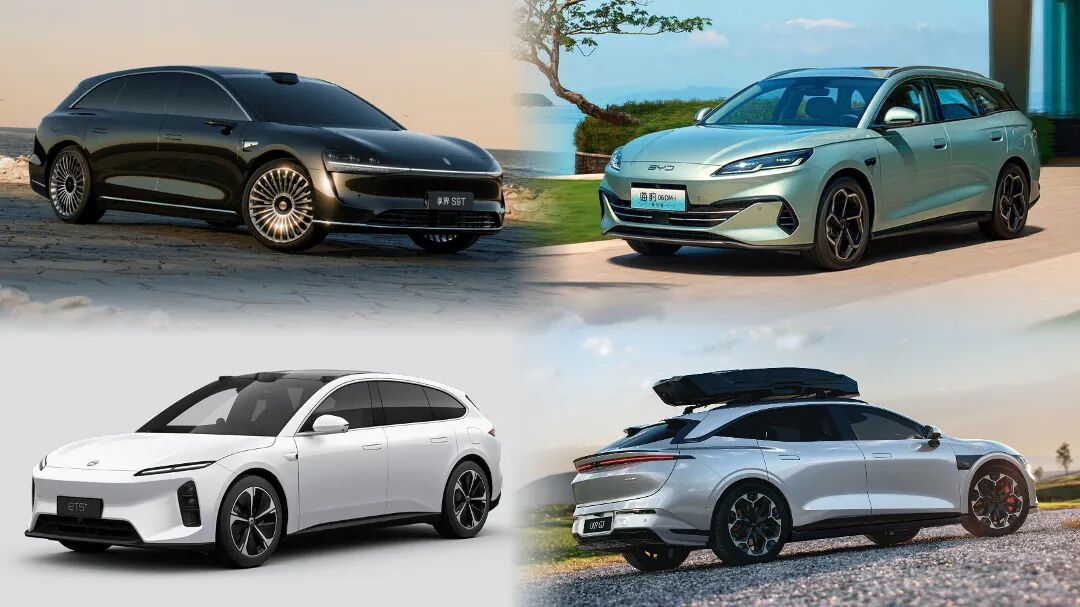
Everyone takes the decent terminal performance of the NIO ET5T as a reference, believing they can replicate such a story. But what if I tell you that because of the existence of the ET5T, the ET5 is almost untraceable? How should we view this issue?
In comparison, no matter how fierce the competition is in the mainstream family SUV market, isn't the fault tolerance rate much lower when following the path of predecessors? And are the prerequisites for determining the outcome merely a trade-off between price and configuration? Far from combing through the advantages of a new product from start to finish and identifying potential users?
Therefore, in this ruthless era, no one should find it unreasonable that everyone is building similar cars. Automakers choosing to imitate is also a manifestation of laziness.
When the economy was doing well, Chinese automakers did provide consumers with a plethora of choices. The unsatisfactory sales results were not caused by poor products or insufficient creativity. The actual purchasing users have hurt automakers' feelings with their actions, discouraging them from continuing to provide entertainment to the market.
Editor-in-Chief: Li Sijia Editor: He Zengrong

THE END
-
![]()
The Surprisingly Significant Impact Difference Between Quiet and Noisy Cars!
-
![]()
Breaking Through Storage Cycle Barriers: How AI Large Models and Coding Technology Synergize to Drive Transformation in the Security Industry
-
Facilitating the Slimming of Camera Modules! O-film Obtains Utility Model Patent for Periscope-Type Reflective Component
-
![]()
Hikvision Raytine’s Millimeter-Wave Body Imaging Security Inspection Device Achieves ECAC SSc Category A Standard Level 2.1 Certification for European Civil Aviation
-
![]()
Global Market Share for Security Windows Hits 26%! This Optical 'Little Giant' Makes Its Debut on NEEQ
-
![]()
The Evolutionary Path of Agent Engineering: From Prompt to Harness by Zhang Yutao, Co-founder of Moonshot AI
-
![]()
Profits and stock prices are both declining, so why are executives from these auto companies increasing their purchases?
-
![]()
Burning Tens of Billions of Dollars, Yet No Unified Definition for World Models