It’s Official! 2030 Marks the Complete Ban on Fuel-Powered Vehicles
 07/07 2026
 479
479
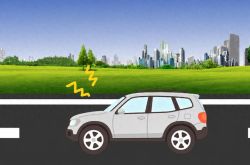
Recently, Hainan Province officially unveiled its 15th Five-Year Plan for the Hainan National Ecological Civilization Pilot Zone (also known as the Beautiful Hainan Construction 15th Five-Year Plan). This comprehensive 60-page document not only systematically charts the course for Hainan’s ecological civilization construction over the next five years but also lays out a clear implementation strategy and quantifiable targets for the highly anticipated objective of achieving a “complete ban on fuel-powered vehicles by 2030.” This move signifies a significant leap from Hainan’s previous status as a “low-carbon pilot” to becoming a “zero-carbon demonstration” zone.
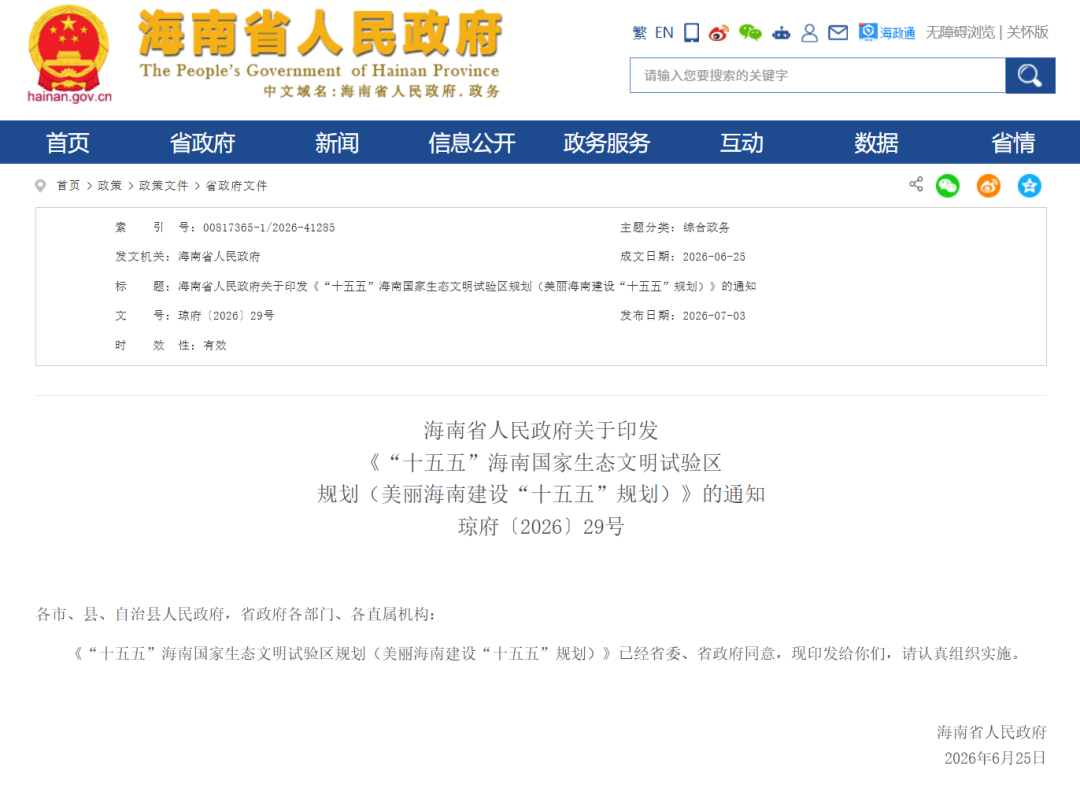
As outlined in the Plan, Hainan is set to steadily progress towards banning fuel-powered vehicles by 2030. Specific targets stipulate that by 2030, the share of clean energy in newly added and replaced vehicles across the province’s public services and social operation sectors (excluding special-purpose vehicles), as well as in the private vehicle sector, must both reach 100%. This implies that by then, Hainan will bid farewell to the registration of new vehicles powered by traditional fossil fuels, maintaining a vehicle-to-charger ratio of less than 2.5:1 to meet charging demands island-wide. The implementation of this policy will position Hainan as the first region in China to truly achieve full electrification of newly added vehicles.
On the energy supply front, the Plan concurrently advances the construction of a new low-carbon energy system. To support the island’s electrification transformation, Hainan aims to boost the proportion of new energy power generation capacity to 55% by 2030. This includes large-scale offshore wind power development, the construction of the Changjiang Nuclear Power Phase II and small modular reactor demonstration projects, and the promotion of integrated “oil, gas, electricity, and hydrogen” energy refueling stations. Notably, the plan highlights the application of “vehicle-grid interaction (V2G)” technology, with plans for large-scale pilot applications in Haikou City. This means that future electric vehicles will not only serve as transportation tools but also as mobile energy storage units for the power grid, aiding in peak shaving and valley filling.
In addition to the radical changes in the transportation sector, the plan also comprehensively addresses Hainan’s “zero-waste island” construction and energy structure transformation. In the energy storage sector, following the previously announced open capacity for grid-side independent energy storage in 2026, the Plan reaffirms the significance of new energy storage. It explicitly proposes to scientifically and reasonably plan new energy storage, foster diversified development and long-duration energy storage, and prioritize the construction of pumped hydro storage power stations such as Sanya Yanglin and Qiongzhong Huangzhuping. In the construction sector, the plan calls for the gradual promotion of large-scale development of ultra-low-energy buildings and near-zero-carbon buildings, as well as the establishment of a “distributed photovoltaic + energy storage + microgrid” transportation energy system for integrated transportation hub stations based on local conditions.
From an industrial development perspective, Hainan seeks to drive green industrial upgrading through policy initiatives. The Plan proposes to create an integrated scenario of “wind and solar power generation + hydrogen energy storage,” explore large-scale applications of green hydrogen, and pilot the construction of a green refining and chemical integration demonstration project in the Yangpu Economic Development Zone. Meanwhile, to tackle the challenge of retired battery disposal brought about by electrification, the plan also explicitly calls for the orderly promotion of efficient utilization of the “new three” solid wastes: retired photovoltaic modules, wind turbine blades, and power batteries. These series of measures indicate that Hainan’s ecological civilization construction is no longer confined to simple environmental protection but is instead constructing a comprehensive green economic system encompassing energy production, transportation, industrial manufacturing, and resource recycling.
Over the past three years, Hainan’s new energy vehicle penetration rate has consistently led the nation, surpassing 50% for the first time in 2023 to reach 50.8%, rising to 58.2% in 2024, and further climbing to 62.9% in 2025, with a cumulative increase of nearly 60 percentage points during the “14th Five-Year Plan” period. By the end of 2025, the province’s new energy vehicle ownership exceeded 500,000, accounting for approximately 23% of the total vehicle ownership, with newly added and replaced vehicles in public sectors such as buses, taxis, and ride-hailing services basically achieving 100% clean energy.
-
![]()
The Surprisingly Significant Impact Difference Between Quiet and Noisy Cars!
-
![]()
Breaking Through Storage Cycle Barriers: How AI Large Models and Coding Technology Synergize to Drive Transformation in the Security Industry
-
Facilitating the Slimming of Camera Modules! O-film Obtains Utility Model Patent for Periscope-Type Reflective Component
-
![]()
Hikvision Raytine’s Millimeter-Wave Body Imaging Security Inspection Device Achieves ECAC SSc Category A Standard Level 2.1 Certification for European Civil Aviation
-
![]()
Global Market Share for Security Windows Hits 26%! This Optical 'Little Giant' Makes Its Debut on NEEQ
-
![]()
The Evolutionary Path of Agent Engineering: From Prompt to Harness by Zhang Yutao, Co-founder of Moonshot AI
-
![]()
Profits and stock prices are both declining, so why are executives from these auto companies increasing their purchases?
-
![]()
Burning Tens of Billions of Dollars, Yet No Unified Definition for World Models