Surge in Costs Compels Automakers to Play Their 'Ace Cards'
 07/20 2026
 552
552
By Wang Huiying
Edited by Ziye
In the first half of 2026, China's automotive market found itself enveloped in a newfound atmosphere of unease.
In July, whispers began to circulate about a potential price hike for the new-generation Li Auto L6. These rumors were far from baseless—from Hongmeng Intelligent Driving's decisive price adjustment in March to Tesla, NIO, GAC Aion, Avatr, and Zeekr all raising their prices in May, a wave of price increases swept across the entire new energy vehicle (NEV) sector.
According to incomplete statistics from Lianxian Chuxing, the price hikes for these automakers' vehicles ranged from RMB 2,100 to RMB 20,000 per unit. Competitors, who had once been embroiled in fierce price wars, almost simultaneously withdrew their discount offers.
Cui Dongshu, Secretary-General of the China Passenger Car Association, noted in an article that the average price of new energy passenger vehicles reached RMB 169,000 in May 2026, marking a year-on-year increase of RMB 7,000.
This dramatic shift was far from a mere fluctuation in market sentiment. Its underlying logic stemmed from the global competition for chip and battery material capacity triggered by the AI industry boom, the resurgence of lithium carbonate prices to high levels, and a new challenge facing all industry players: When policy incentives, capital patience, and consumer curiosity have all peaked, what should NEV competition truly focus on?
Industry players are still seeking answers to this question, but the past three years of price wars have imparted one crucial lesson: Sales driven solely by subsidies and discounts ultimately fail to retain users in the long run.
Price hikes, while representing a passive transfer of costs, also signify an active industry consolidation. When low prices cease to be the sole attraction and NEV penetration rates continue to rise annually, the market transitions from an incremental to a stock competition, rewriting the underlying logic of industry rivalry.
The outcome of this competition will directly determine which players advance to the next round.
In July, discussions within industry circles intensified regarding the price adjustment of the Li Auto L6.
According to Lei Feng Network, the new L6's battery capacity increased from 36.8 kWh to 51 kWh. Coupled with a surge in lithium carbonate costs, battery expenses alone rose by over RMB 8,000. Memory costs increased by nearly RMB 4,000, and the cost of the Qualcomm 8797 chip was expected to rise by over RMB 2,000.
Cumulatively, the comprehensive cost per vehicle increased by over RMB 14,000. Based on estimated annual sales of 160,000 L6 units in 2025, maintaining the original price would have eroded over RMB 2.2 billion in profits for this model alone.
In March, Li Auto President Ma Donghui stated, "The company will strive to absorb external cost pressures internally," while acknowledging that "new model prices will be determined after comprehensive consideration of component costs and user value."
Although Li Auto has not officially confirmed the final price hike for the L6, it signals a deliberate reevaluation of value for this flagship model.
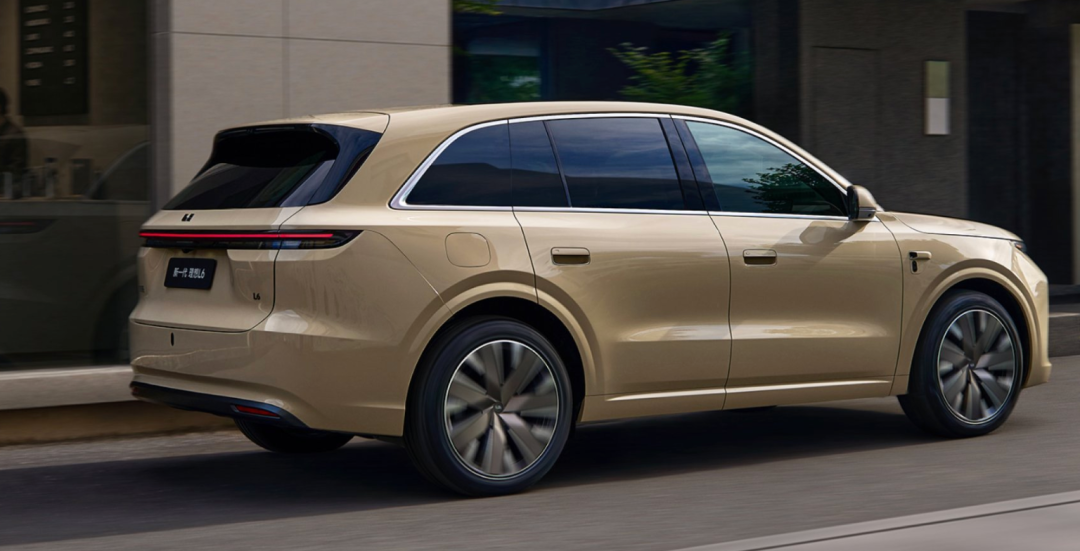
Source: Li Auto Official Website
Rumors of the Li Auto L6's price hike are merely the latest development in this industry-wide trend. The prelude to NEV price increases began as early as March.
On March 4, the AITO M9 raised its new model's suggested retail price by RMB 10,000 due to the integration of a new-generation LiDAR and an upgraded Hongmeng Intelligent Driving system. Simultaneously, certain versions of the Zenith S800 were adjusted, with the Star Glory Premium Edition rising from RMB 788,000 to RMB 808,000.
Following this, on March 19, Xiaomi launched the new-generation SU7, increasing prices across all trims by RMB 4,000. The final prices were set at RMB 219,900 for the Standard Edition, RMB 249,900 for the Pro Edition, and RMB 303,900 for the Max Edition. Xiaomi founder Lei Jun admitted at the launch event that material costs alone had risen by approximately RMB 20,000, and the final RMB 4,000 increase was a carefully considered decision.
In April, price hikes transitioned from tentative moves to broader implementation. On April 28, BYD announced that starting May 1, the price of the "Divine Eye B" auxiliary driving laser version, an optional feature for select models under its Wangchao, Ocean, and Fangchengbao series, would increase from RMB 9,900 to RMB 12,000, a RMB 2,100 rise.
Two days later, Changan Qiyuan announced that the suggested retail price for the Qiyuan Q07 Tianshu Intelligent Laser Edition produced after May 7 would increase by RMB 3,000.
For leading automakers like BYD, which had previously used "parity pricing for ICE and EV models" or even "EVs priced lower than ICE models" as competitive strategies, these price adjustments sent a clear signal: Cost pressures had penetrated the firewall built by economies of scale.
The peak of this price hike wave came in May, traditionally a peak sales season for automobiles, which became the densest month for price increases in 2026.
In early May, NIO adjusted prices for its 2026 ES6, ET5, and other mainstay models by RMB 5,000 to RMB 10,000 while simultaneously canceling free battery swap benefits.
GAC Aion raised terminal prices for models like the AION Y Younger and AION S Plus by RMB 3,000 to RMB 6,000.
The Avatr 12 Extended Range Edition's pre-sale price increased by RMB 30,000 to RMB 299,900, while the Pure Electric Edition rose by RMB 20,000 to RMB 309,900.
Meanwhile, XPENG offered limited-time discounts on whole vehicles but raised the price of its XNGP full-scenario advanced intelligent driving package by RMB 2,000 and eliminated lifetime free benefits. Zeekr and Avatr "implicitly raised prices" by tightening financial interest-free purchase policies.
According to incomplete statistics, by mid-May, over 15 automaker brands had adjusted prices or reduced terminal discounts, with the highest single-vehicle increase reaching RMB 20,000.
Thus, a sweeping price hike wave became evident. This was not an isolated move by a few companies but a chain reaction.
Defining this round of price hikes as a uniform industry-wide increase would be overly simplistic. We must recognize significant differences in the underlying logic and manifestations of these hikes.
First, direct price increases, such as those by GAC Aion, openly reflected rising manufacturing costs. Second, technology-driven hikes, like those by BYD and Hongmeng Intelligent Driving, involved raising prices for high-value options like intelligent driving systems, making consumers pay for technological advancements. Third, benefit-adjusted hikes, such as NIO's cancellation or reduction of free battery swaps and charging, transformed previously bundled services into commodities, achieving equivalent price increases.
Regardless of the form, this wave of price hikes declared the end of an old era. Just a year earlier, the industry had been mired in its fiercest price war ever. Only six months later, the tide shifted abruptly, with competitors who had once been locked in bloody price wars almost simultaneously retracting their discount offers.
This also foreshadowed a shift in industry competition. In the past, automakers competed on who could lower prices further or gain market share through losses. Now, all brands stand on a new starting line, facing the shared challenge of maintaining prices, retaining users, and preserving profits amid rising costs.
The challenge of raising prices to offset costs proved more difficult than anticipated.
Unlike previous price hikes driven by raw material fluctuations, this wave stemmed from a restructuring of industrial chain costs triggered by the AI boom.
Traditionally, automotive cost fluctuations originated from commodities like steel, oil, and rubber. This time, the epicenter was artificial intelligence. The massive demand for generative AI, large-scale model training, and AI-enabled devices like smartphones and PCs acted like a black hole, consuming global advanced production capacity. NEVs, which share core components with these AI devices, found themselves in direct competition for capacity.
The first impacts were felt in rising costs for storage chips and raw materials like lithium carbonate.
According to CCTV Finance, from March to June 2026, domestic automotive-grade storage chip prices surged by 180%, with some high-end DDR5 models exceeding 300%. As intelligence became a key differentiator for premium NEVs, storage chips emerged as critical hardware for intelligent cockpits, advanced driving systems, and infotainment systems. Higher intelligence levels demanded greater storage capacity. UBS data showed that storage chip price increases alone added RMB 4,000 to RMB 7,000 to the cost of mid-to-high-end NEV models.
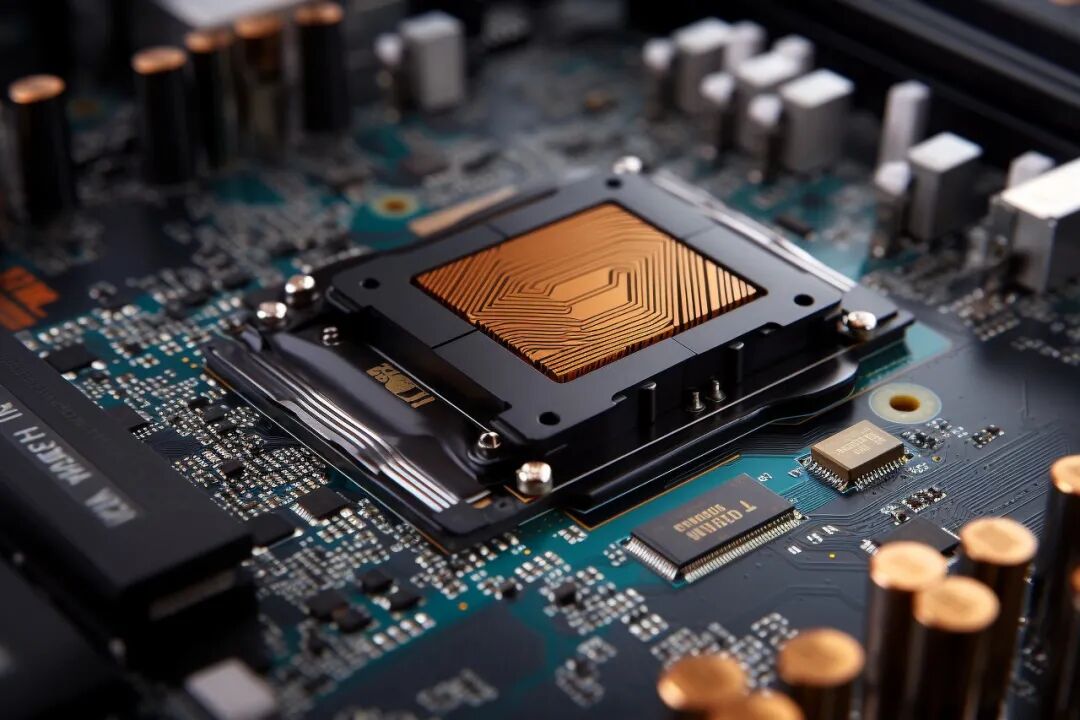
Beyond structural chip-related shocks, the rebound in lithium carbonate prices added clear cost pressures. By late 2025, lithium carbonate spot prices stood at RMB 75,000 per ton but surged continuously in 2026, exceeding RMB 200,000 per ton by mid-May—a 160% year-to-date increase. CITIC Securities estimated in February 2026 that every RMB 10,000 per ton increase in lithium carbonate prices raised vehicle costs by RMB 318.
To some extent, this cost restructuring exceeded automakers' control, rendering traditional reliance on cyclical commodity price declines ineffective for cost relief.
More challenging was the simultaneous pressure on automakers' cost structures and profitability. Data from the National Bureau of Statistics showed the automotive industry's profit margin at 4.1% in 2025. Cui Dongshu noted that from January to March 2026, the industry's sales profit margin further declined to 3.2%, with March alone at 3.7%—historic lows.
Automakers stood at a crossroads: Either hold prices and watch already thin profits vanish or raise prices, risking market backlash while securing survival.
Clearly, automakers chose the latter. However, the path forward depended on each company's unique strengths. Facing the same cost storm, responses varied widely, reflecting a complex interplay of cash reserves, technological moats, economies of scale, and self-research capabilities.
Li Auto adopted a "hold-then-hike" strategy, using RMB 100 billion in cash reserves to secure strategic opportunities. While over a dozen mainstream brands raised prices from March to April, Li Auto held firm, absorbing cost increases internally. The company even spent RMB 500 million to fully cover users' additional costs from the adjustment of NEV purchase tax incentives from full exemption to 50% exemption.
Li Auto's confidence stemmed from its strong cash position. By the end of Q1 2026, its cash and cash equivalents stood at RMB 42.871 billion, with total liquidity exceeding RMB 90 billion.
For Li Auto, rising costs were not merely a crisis but an opportunity for product iteration. By upgrading configurations to solidify product value for family users and pairing this with reasonable pricing adjustments, the company maintained user reputation while offsetting cost pressures. This approach—using product rhythm to hedge against cost fluctuations—reflected Li Auto's accumulated expertise in the family user market.
NIO pursued a strategy of simultaneous configuration and price increases, leveraging its service moat to offset costs. Behind NIO's adjustments lay comprehensive upgrades to intelligent driving hardware, cockpit systems, and chassis performance, clearly enhancing the vehicle's overall competitiveness compared to older models.
While appearing as price hikes, these changes effectively shifted to service value. While users of other brands fretted over charging, NIO users could complete battery swaps in three minutes. This experiential difference gave NIO the confidence to raise prices, with users willing to pay a premium for its "chargeable, swappable, and upgradable" ecosystem.
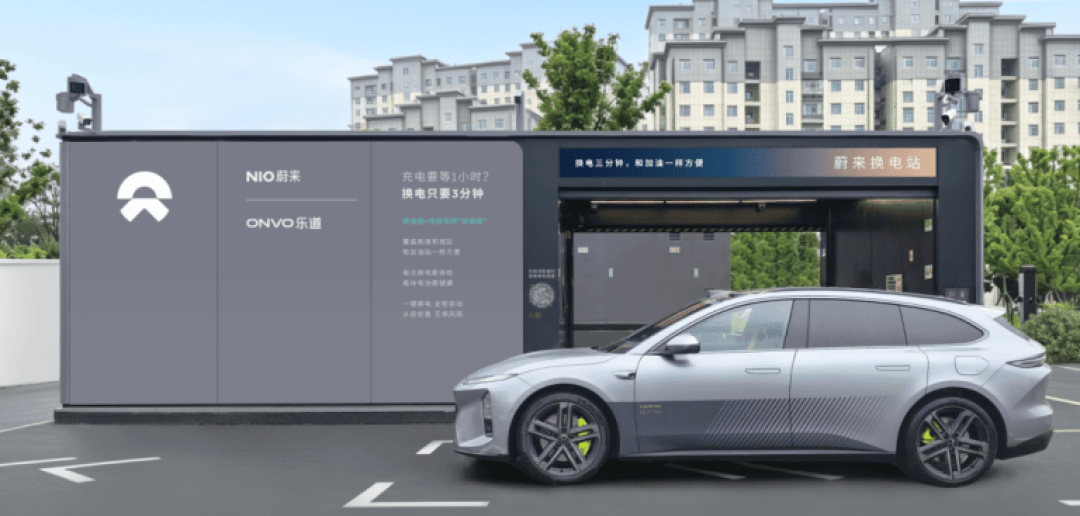
Source: NIO Official Website
Amid industry-wide price hikes, BYD stood out as one of the few brands maintaining stable vehicle prices, adjusting only its advanced intelligent driving option packages. This resilience stemmed from its vertically integrated full-industry-chain capabilities.
As the world's only automaker achieving "mine-to-vehicle" self-research and self-production, BYD's self-made core components ranged from 75% to 85%. This vertical integration was key to withstanding supply chain fluctuations.
Beyond integration, economies of scale formed BYD's core advantage. In June 2026, BYD's monthly sales exceeded 400,000 units, with first-half cumulative sales surpassing 1.8 million. This scale continuously diluted R&D, manufacturing, and supply chain costs.
Notably, Leapmotor was among the few automakers avoiding price hikes for end users during this wave. For a brand like Leapmotor, which focused on high cost-performance, cost pressures were particularly acute. Its ability to hold prices relied on self-research capabilities for cost control.
In April, Leapmotor founder Zhu Jiangming revealed that over 65% of Leapmotor's core components were self-researched and self-manufactured. Assuming an industry-average supplier gross margin of 15%, this self-research ratio translated to a 10% cost advantage. Leapmotor temporarily avoided price hikes by relying on self-research and supplier collaboration to absorb cost pressures.
However, the trade-offs were evident. Leapmotor's gross margin fell from 14.9% in Q1 2025 to 9.4% in Q1 2026. While self-research compressed costs, it could not eliminate them. Zhu acknowledged that if material prices continued climbing, future price adjustments remained possible.
Ultimately, regardless of strategy, all approaches pointed to the same goal: Stabilizing pricing systems and preserving user trust amid cost storms would determine who advanced to the next competitive round. While the price war era favored courage and financial firepower, the value competition era demands true systemic capabilities.
Since 2026, nearly every automotive CEO has repeatedly emphasized one word in public forums: pressure.
At the 2026 China Automotive Chongqing Forum, Seres Group Chairman Zhang Xinghai pointed out that the average vehicle costs for the AITO brand had climbed by RMB 15,000 to RMB 20,000. "Costs and materials are skyrocketing, yet selling prices continue to plummet," Zhang lamented, highlighting the "immense pressure" automakers are facing.
NIO founder Li Bin cautioned that the downturn in the domestic automotive retail market would deepen beyond 22%, urging the industry to prepare for a 15% to 20% annual decline. "This is undoubtedly the toughest year," he stated candidly.
XPENG Chairman He Xiaopeng remarked, "Manufacturing cars is incredibly challenging—price increases anywhere impact us." He joked that he would celebrate the day when consumers willingly purchased cars despite price hikes.
Data further underscores automakers' concerns.
In April 2026, the retail penetration rate of new energy vehicles (NEVs) reached 61.4%, surpassing 60% for the first time and maintaining this level for three consecutive months. However, this high penetration rate conceals a shift from incremental to stock market growth. From January to April 2026, China's NEV sales grew by a mere 0.1% year-on-year.
In incremental markets, all participants can secure a slice of the pie, whereas in stock markets, competition is fierce, with more contenders than available opportunities. This shift in market dynamics is clearly reflected in consumer sentiment.

According to McKinsey's '2026 China Automotive Consumer Insights' report, among consumers who purchased vehicles in the past year, the proportion with a negative attitude toward price wars has, for the first time, exceeded those with a positive outlook.
This change in consumer mindset directly influences their criteria for purchasing cars, shifting from merely seeking bargains to evaluating whether the purchase is truly worthwhile. For automakers, when price hikes become an inevitable trend and affordability is no longer the primary draw, what should manufacturers rely on to persuade consumers to spend their hard-earned money?
The competition in the automotive industry in the latter half essentially revolves around pricing power. And pricing power stems from irreplaceable user value and a robust product moat. From the perspective of leading brands, some automakers have already identified their value propositions, providing consumers with compelling reasons to buy.
Ideal's pricing confidence always originates from meeting the needs of family users. Ma Donghui, President of Ideal Auto, has explicitly stated that in the face of rising component costs, the company will prioritize cost reductions through R&D and the entire supply chain. New model pricing will comprehensively consider cost fluctuations and user value, rather than simply passing the pressure on to consumers.
Under this approach, when users purchase an Ideal, they are acquiring a mobile family living space. For family users, the vehicle's spatial comfort, travel convenience, and the riding experience of family members far outweigh price fluctuations of a few thousand yuan.
From classic features like refrigerators, sofas, and large screens to meticulous designs such as rear-seat entertainment systems, child seat compatibility, and in-car air purification, as long as core user needs are met, price adjustments will not deter purchases.
On the other hand, NIO has established its brand value through comprehensive user services. In addition to its user community and full-stack self-research capabilities, NIO's most notable asset is its battery swap network. As of June 2026, NIO has constructed 3,927 battery swap stations, delivering over 110 million battery swap services.
For its users, choosing NIO means not just selecting a vehicle but embracing a worry-free, sense-of-belonging pure electric travel experience. The value of this service and ecosystem cannot be quantified solely by hardware parameters and forms the core support for its pricing system.
Besides Ideal and NIO, more brands have also discovered their unique value propositions beyond low prices.
Seres leverages Huawei's technological endorsement, building user trust through the seamless experience of its HarmonyOS cockpit and the reliability of its advanced intelligent driving systems, thereby solidifying its premium pricing with technological appeal.
Xiaomi Auto utilizes full ecosystem integration as its core competitive edge. The seamless interaction between phones, smart home devices, and in-car systems provides Mi fans with a consistent cross-scenario experience, enhancing the perceived value of its products through ecological benefits.
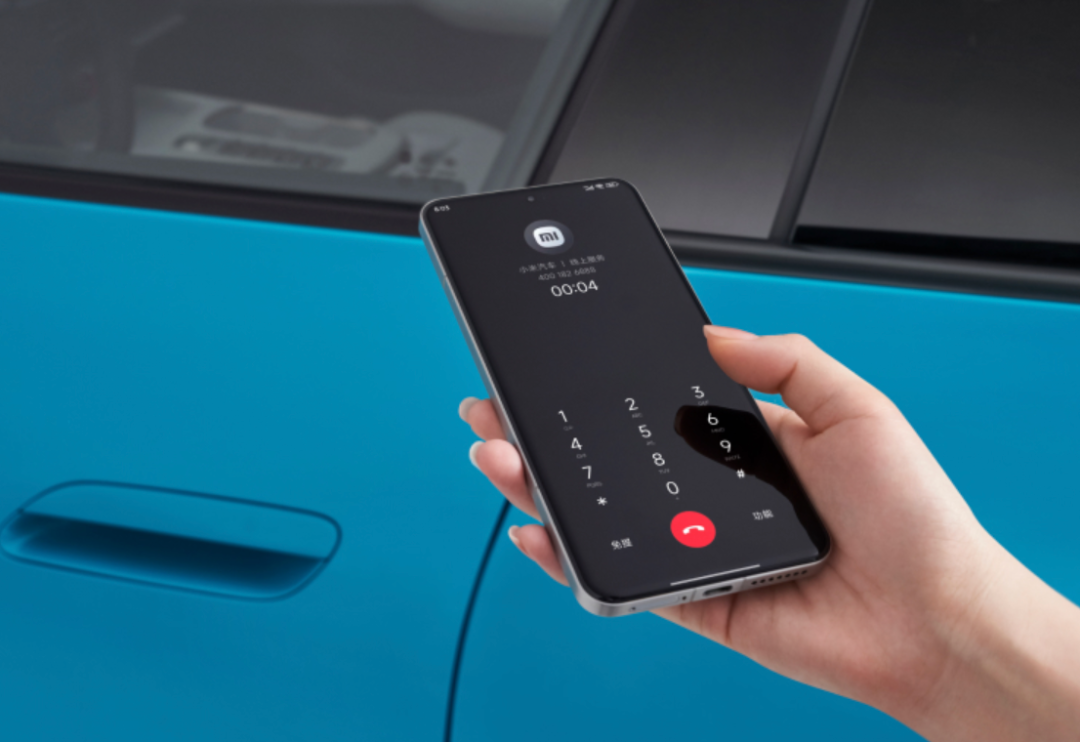
Image source: Xiaomi Auto official website
Zeekr emphasizes driving pleasure and personalized expression, targeting young users' emotional value needs with its shooting brake design, chassis tuning, and continuously updated intelligent experience through OTA.
Leapmotor adheres to a technology democratization route with full in-house R&D, bringing LiDAR and advanced intelligent driving to mainstream price points, enabling budget-conscious users to enjoy cutting-edge technology.
The rules of competition in the automotive industry's latter half have been rewritten, with the focus shifting from price competition to value competition. After the triple challenges of price hikes, differentiation, and industry reshuffling, what remains is a harsher yet clearer industry landscape. The three-year price war taught the industry to exchange scale for low prices, while the 2026 price hikes underscore another point: survivors are never the cheapest but those worth their price.
Price hikes test courage, differentiation examines hidden strengths, and reshuffling determines survival. When the tide recedes, those who were unprepared are exposed. Only those with the strongest hidden strengths can truly navigate through cycles.
-
![]()
AI Memory Race Unveils a Stunning Dark Horse: RedBear AI Raises 6 Rounds of Funding in 15 Months, Valuation Soars Close to RMB 3 Billion
-
![]()
WAIC Concludes: The Three-Year Competition for Large Model Parameters Ends, AI Fully Enters the Industrialization and Implementation Phase for Intelligent Agents
-
DRAM, A Disruptive Technological Breakthrough!
-
Robot Army Mobilizes for Action
-
![]()
Electric Vehicle Penetration Soars Past 60%, Yet Seven of Top Ten Brands Hail from Traditional Fuel Vehicle Sector, Casting Doubt on Their Longevity
-
![]()
Conant Optics Clinches R&D and Procurement Framework Deals with Top Tech Firms!
-
![]()
Over 87% Surge in Net Profit for H1 Anticipated! Dongtian Micro Leads in AI Optical Communication
-
![]()
Tech Titans Offload AI Ventures, Tencent Shifts Stakes to Capitalize on Artificial Intelligence Surge