Breathing New Life into Traditional Fuel Cars! WAIC Debuts Aftermarket Advanced Models, Surpassing Traditional Tech
 07/20 2026
 440
440
On July 17, the 9th World Artificial Intelligence Conference (WAIC) kicked off at the Shanghai Expo Center. As an annual gathering for the AI industry, this year's conference once again brought together leading large model companies, AI application developers, hardware manufacturers, and robotics firms from around the globe. Leitech (ID: leitech), through its Dianchetong platform (ID: dianchetong233), sent a reporting team to Shanghai for on-the-ground coverage.
While not the primary focus of WAIC, automobiles remain a critical conduit for AI to integrate into the physical world, continuing to draw significant attention at this year's event.
The saying goes, "The first half of the new energy vehicle revolution is electrification; the second half is intelligence." The key to achieving this intelligence lies in AI. At WAIC, Leitech/Dianchetong not only witnessed cutting-edge technologies and products but also glimpsed the future trajectory of the new energy vehicle industry.
The core of automotive intelligence comprises two key areas: intelligent driving and intelligent cockpits. From intelligent cockpits to large models integrated into vehicles, and then to onboard agents, the ultimate goal of these advancements is to make cars increasingly attuned to their users.
At the Jieyue Xingchen booth at WAIC, a Zeekr 8X concept car, co-developed by Geely, Jieyue Xingchen, and Qianli Technology, was on display. Numerous media outlets and visitors experienced the fully upgraded Super Eva intelligent agent.
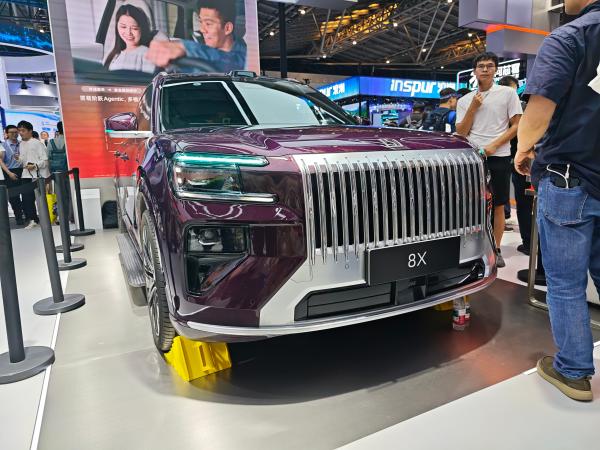
(Image source: Dianchetong)
Earlier this year, the buzz around "lobster" (a metaphor for advanced intelligent agents) spread to the automotive sector, raising consumer expectations for in-car intelligent agents. Super Eva, based on Jieyue Xingchen's new Step hierarchical end-cloud collaborative large model matrix, boasts superior understanding and execution capabilities compared to ordinary large models. Combined with Step Edge's powerful edge computing capabilities, Super Eva can learn from users' habits.
Today, in-car intelligent agents are no longer confined to passively receiving voice commands and adjusting in-car devices; they can also proactively plan and execute a variety of tasks. Take Super Eva as an example: it can not only activate assisted driving functions with a single click but also integrate into a full-scenario lifestyle ecosystem, autonomously completing everyday tasks such as restaurant reservations, coffee orders, and movie ticket purchases.
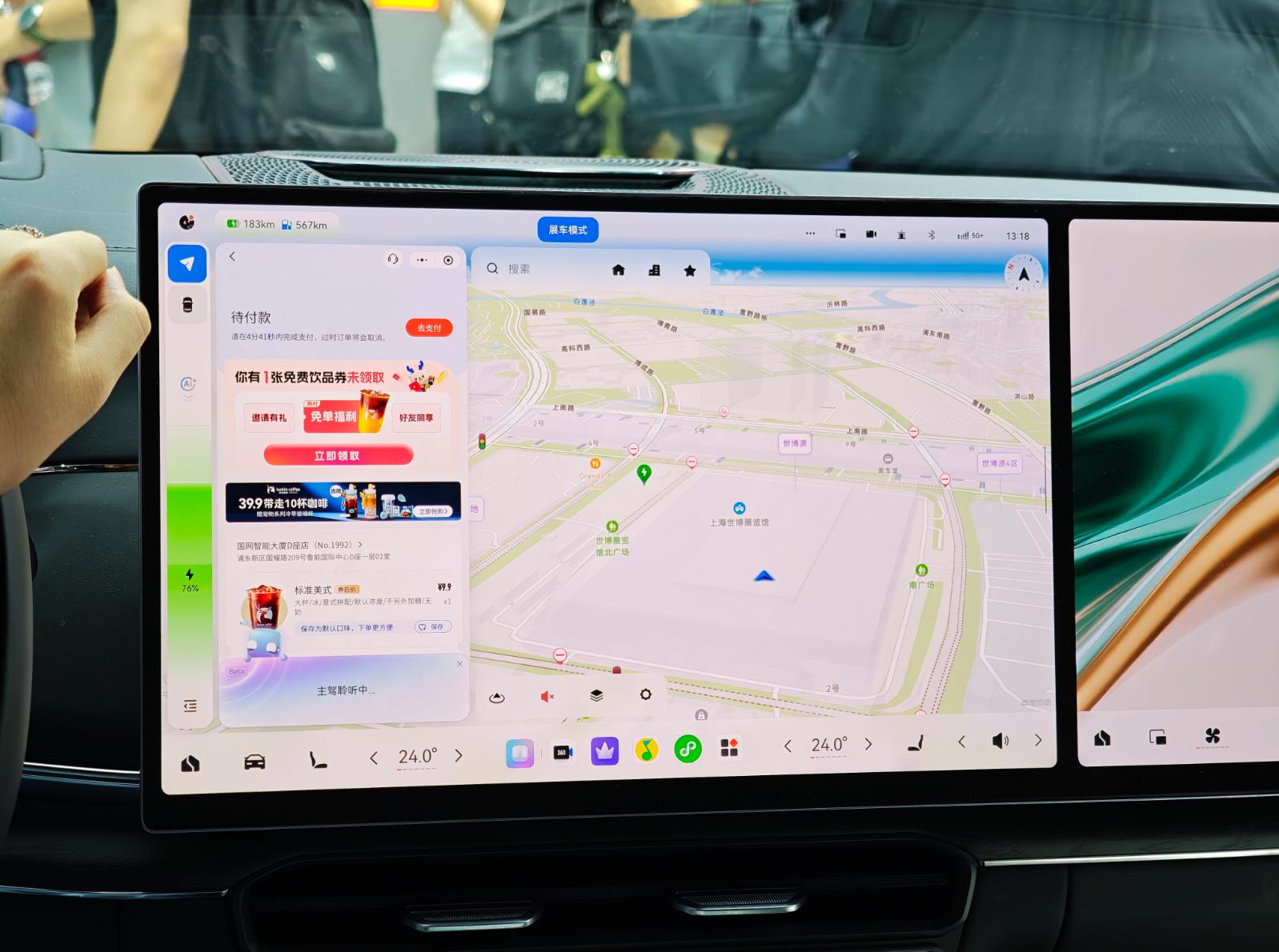
(Image source: Dianchetong)
The widespread adoption and enhancement of agents in new energy vehicles have become an industry standard, with nearly all automakers researching related technologies. Even JD's intelligent ecosystem brand, JoyInside, has partnered with the in-car intelligent robot brand Banjia Spirit Cami to launch a customized product, Cami JoyInside, targeting the needs of users of fuel-powered and low-intelligence vehicles.
This aftermarket device can synchronize vehicle operation status in real time, ensuring driving safety. Leveraging JD's ecosystem, Cami JoyInside offers one-stop vehicle services, including fuel top-ups, maintenance appointments, and car wash reservations. Paired with Banjia Spirit's self-developed edge-side in-car large model, it can recognize drivers' emotions, provide emotional companionship, support simple mobile office tasks, and cost-effectively address the intelligence shortcomings of older vehicle models.
In Dianchetong's view (ID: dianchetong233), the integration of "lobster" and agents into vehicles, along with interconnection with other "human-vehicle-home" devices, is an inevitable trend in industry development. Companies such as Geely, NIO, Li Auto, XPeng, and Harmony Intelligent Mobility are all exploring in the right direction using their unique approaches.
However, with 366 million vehicles in China, the vast majority being low-intelligence models, many owners have no plans to replace their vehicles in the short term due to factors like demand and budget. Yet, they still desire a smarter experience. Cami JoyInside targets this massive market of hundreds of millions of vehicles, and its arrival is expected to extend the service life of low-intelligence models.
Sensors such as cameras, LiDAR, ultrasonic radar, and millimeter-wave radar enable intelligent vehicles to "see" the world, while large models allow them to begin "understanding" it. The bridge connecting automotive systems to the real world is the world model.
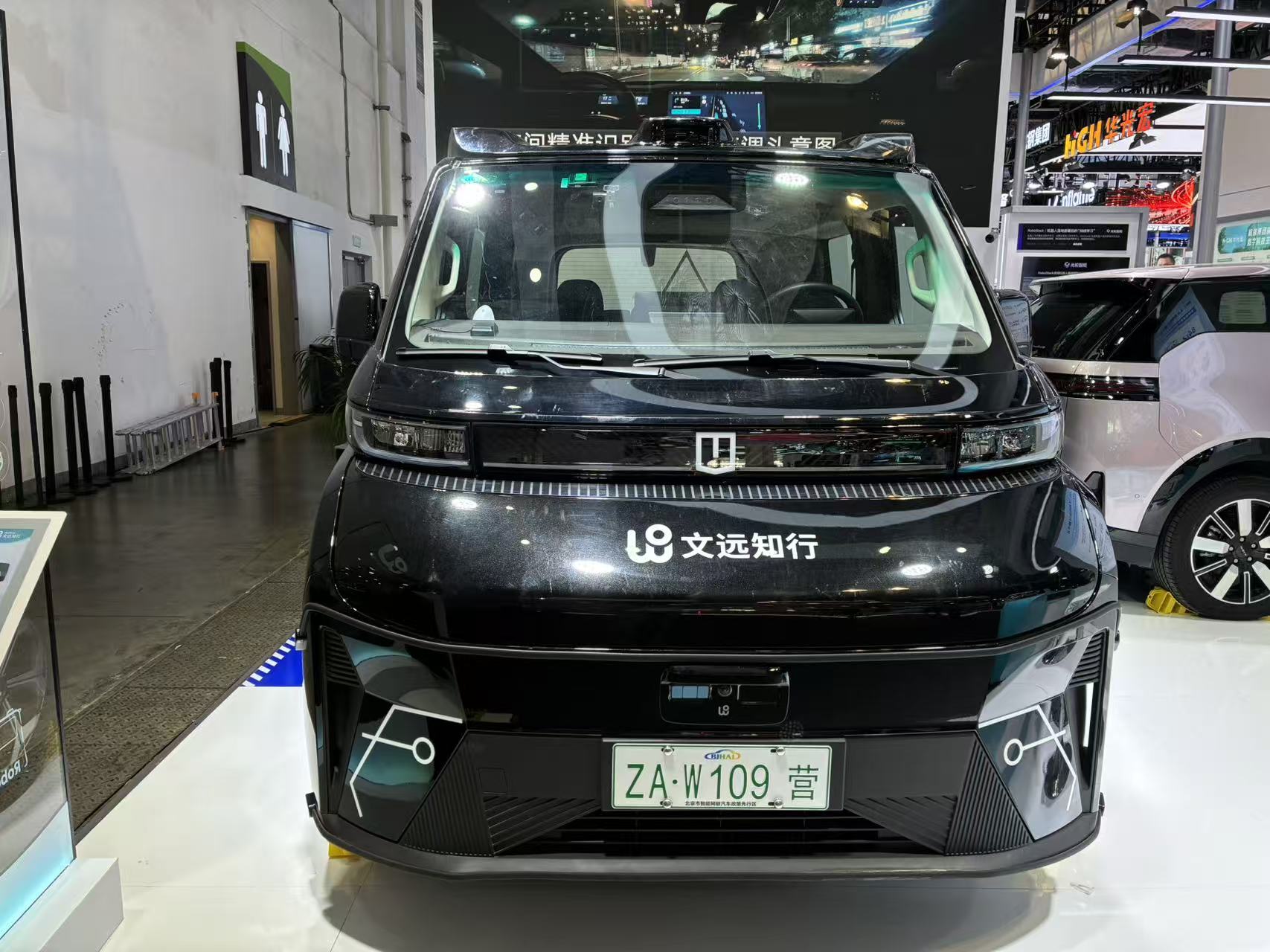
Geely's Holistic AI 2.0 incorporates a world behavior model, enabling scene understanding and reasoning, with enhanced spatial understanding and causal reasoning capabilities. Weride has also developed its self-researched world model, WeRide GENESIS, which achieves four major breakthroughs: pixel-level replication of physical scenes, precise acquisition of traffic physics, intelligent reasoning of scene causality, and dynamic prediction of spatiotemporal trends.
At this year's exhibition, Weride unveiled its new Physical AI Cognitive Large Model, WeRide WITT. Leveraging visual-language large model capabilities, WITT introduces the concept of the "smallest physical fact unit," integrating image, video, and text multimodal data to break down dynamic and complex road conditions into identifiable and verifiable basic information units.
WITT includes four core functions: scene extraction, logical reasoning, credibility verification, and data classification. Facing complex traffic scenarios, the system disassembles environmental information and identifies basic physical units. Through reasoning modules, it sorts out the behavioral logic of traffic participants such as vehicles and pedestrians, proactively predicts road risks, and continuously refines autonomous driving algorithms.
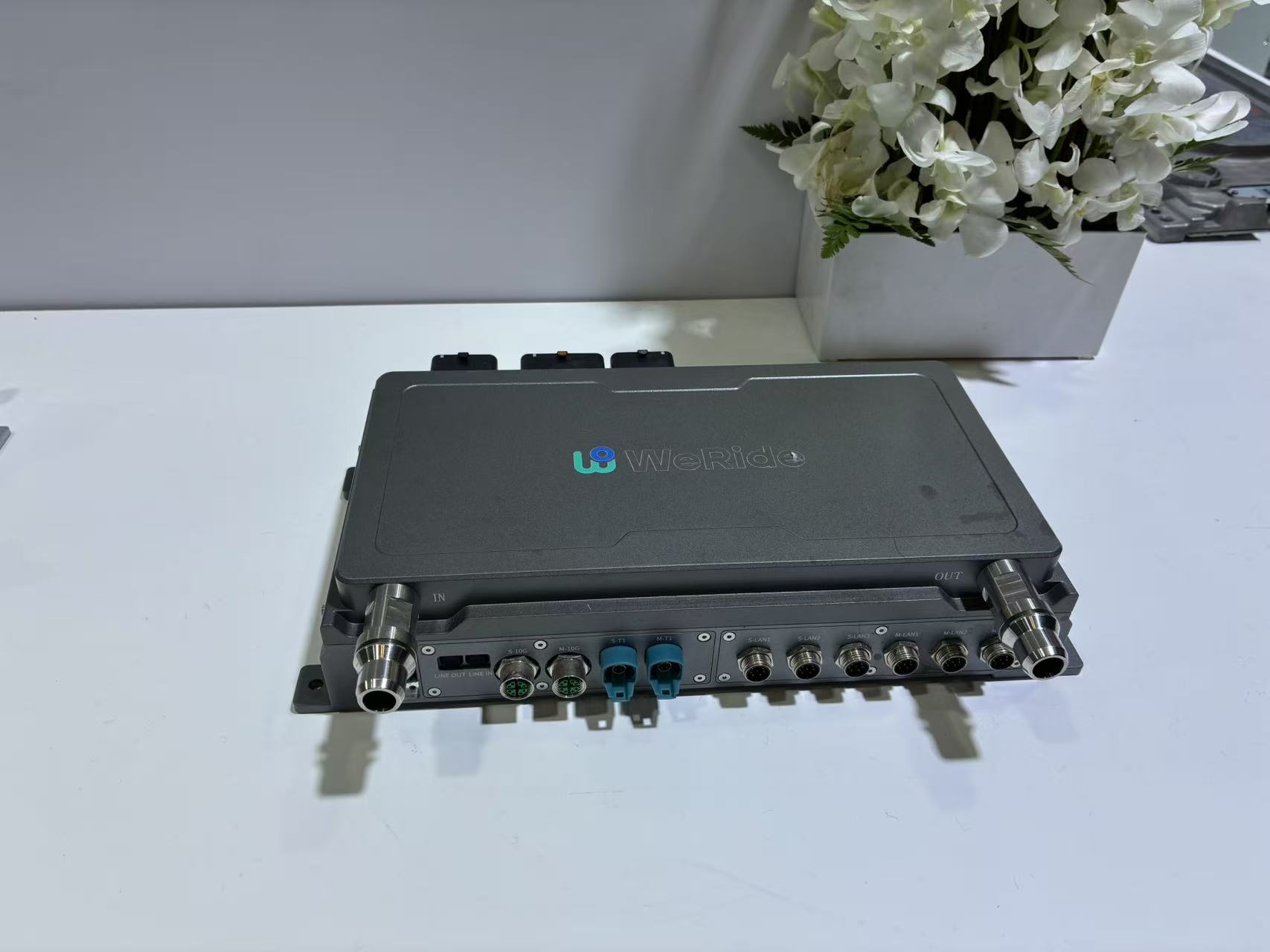
(Image source: Dianchetong)
The model verifies output content across six dimensions, covering pedestrian status, vehicle operations, surrounding vehicle dynamics, overall road conditions, information completeness, and road infrastructure. Relying on confidence standards, it screens out issues such as logical errors, AI hallucinations, missing information, and temporal disarray. The system also automatically classifies materials based on road condition training value, distinguishing between high-frequency commuting scenarios and rare extreme conditions, maximizing the training value of each driving data segment.
Weride has formed a collaborative closed loop, with WITT processing real road test data for information extraction, verification, and classification, while GENESIS uses standardized data to build high-fidelity simulation environments, generating rare extreme road conditions in bulk. The two systems train in tandem, continuously optimizing onboard autonomous driving capabilities.
(Image source: Dianchetong)
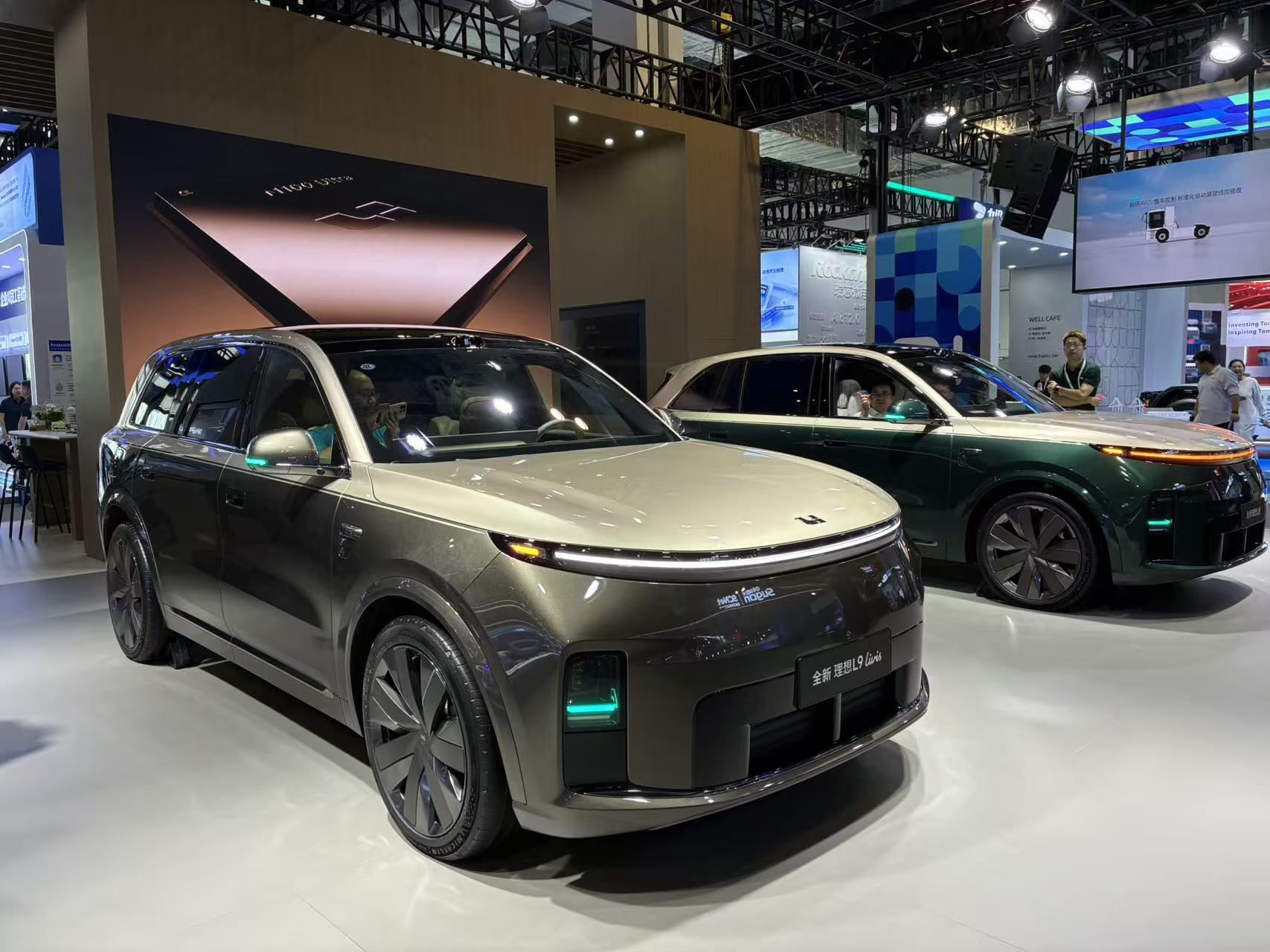
Currently, major automakers are deploying and iterating world models to enhance vehicles' perception and understanding of the real physical environment. While various in-car sensors can only collect road imagery and environmental data, world models serve as the core carrier for vehicles to connect with reality, working with large models to provide in-depth scene interpretation.
Geely's Holistic AI 2.0 incorporates a world behavior model to strengthen spatial perception and causal reasoning. Weride has built a dual-model cloud-edge collaborative system, using GENESIS to replicate real road conditions and predict traffic changes, while its new cognitive model, WITT, breaks down the smallest physical fact units, verifies data across multiple dimensions, and efficiently sorts training materials.
The two work in tandem, generating high-fidelity simulation scenarios from real road test data to continuously iterate onboard intelligent driving models. By leveraging world models to bridge perception and cognition, the industry is reducing AI hallucinations, improving training for long-tail scenarios, and driving continuous improvements in autonomous driving's understanding of real roads.
(Image source: Dianchetong)
Sensors enable cars to "see," large models allow them to "understand," and world models are becoming the core bridge connecting virtual training with real-world driving, propelling intelligent driving from passive reaction to proactive cognition. By 2026, the industry has shifted from mere parameter competition to the deep implementation of physical AI and world models.
Dianchetong (ID: dianchetong233) believes that the competition in world models is essentially a competition in understanding physical laws and end-cloud collaborative efficiency. Weride's dual-model architecture forms unique barriers in fact verification, data efficiency, and simulation generation, making it one of the most engineering-valuable approaches currently available. The industry is transitioning from data accumulation to physical cognition—whoever can make models truly understand the world will dominate the second half of intelligent driving.
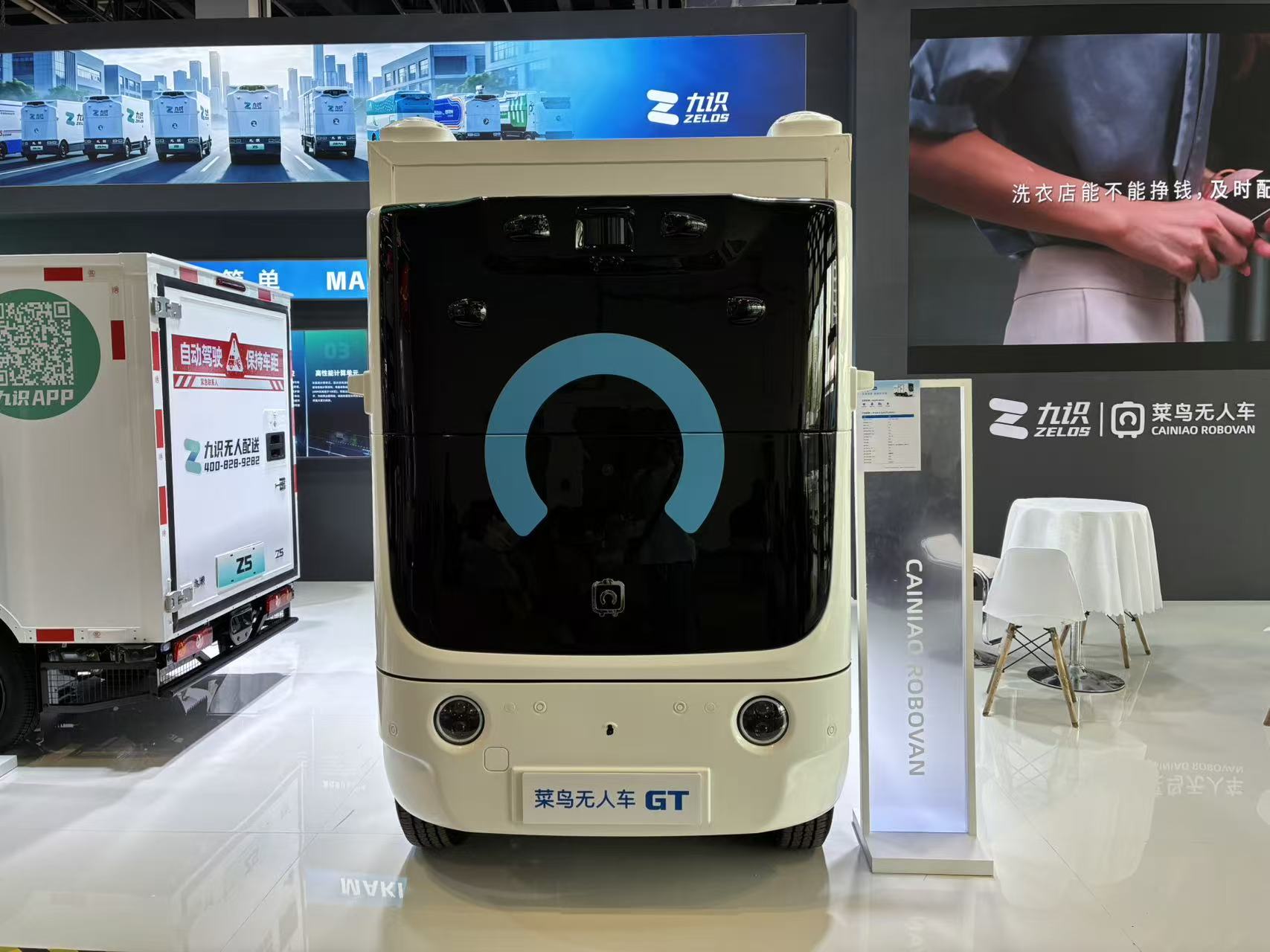
Additionally, in recent years, more and more companies have obtained testing licenses for L3 and L4 autonomous driving, but the timing for true autonomous driving remains uncertain. At WAIC, Jiushi Intelligence announced the world's first mass production of an L4-level mapless solution, significantly reducing costs compared to previous technologies and eliminating reliance on high-precision maps.
(Image source: Dianchetong)
However, Jiushi Intelligence's solution is not for passenger vehicles, nor is it similar to Weride's demonstrated Robotaxi. Instead, it is for Cainiao's autonomous logistics delivery vehicles. Compared to Robotaxis, Cainiao's autonomous vehicles operate in simpler scenarios, making them ideal for testing L4 autonomous driving due to their lower difficulty and risk.
Since this year's exhibition focuses on AI, fewer automotive-related companies are participating, and most exhibits are technology-oriented. Judging by the technologies and products showcased by major companies, the next phase of competition will focus on physical AI, world models, intelligent agents, and end-cloud collaboration.
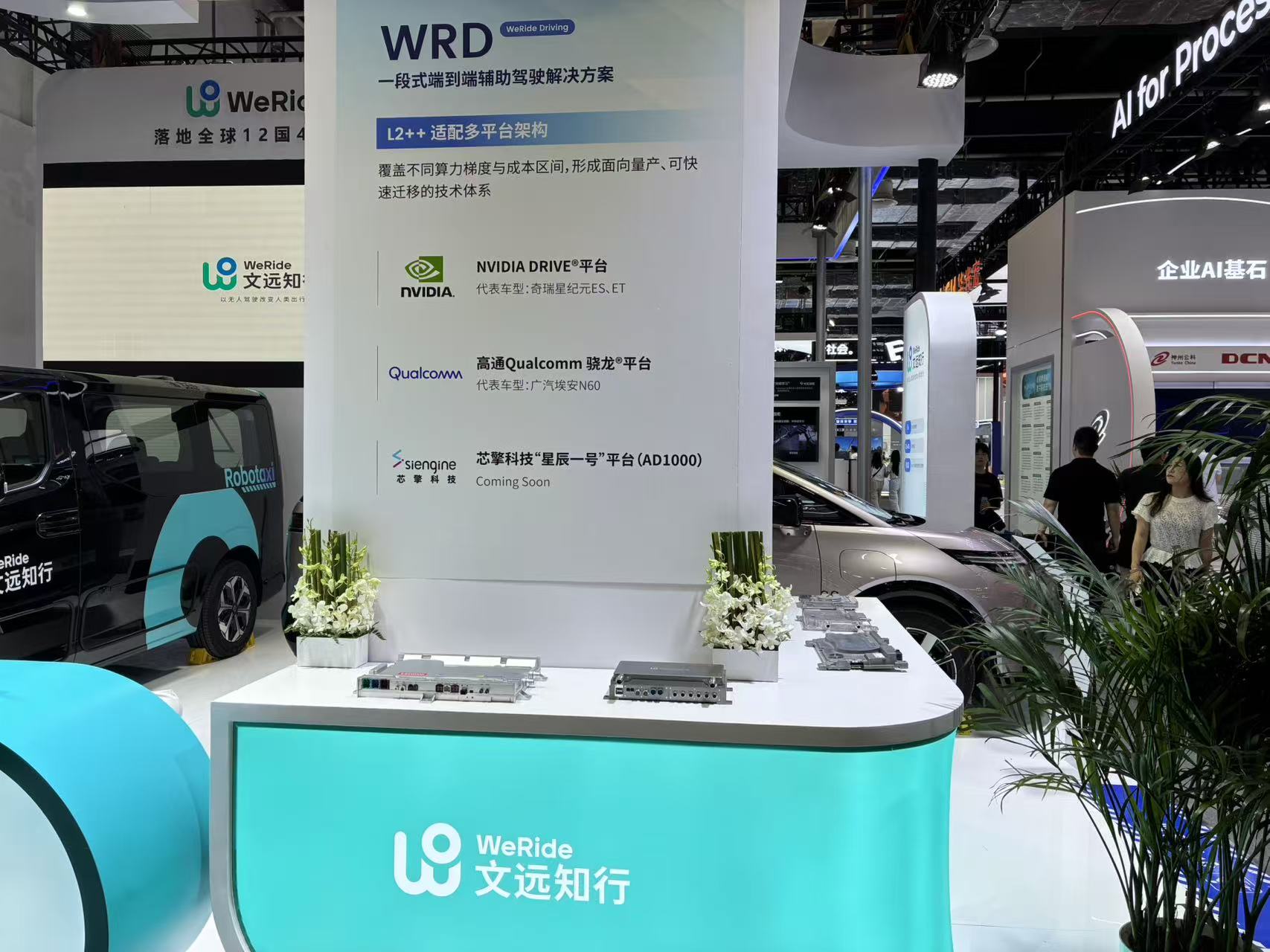
Intelligent cockpits have entered the era of super intelligent agents. The Super Eva, jointly launched by Jieyue Xingchen and Geely, enables proactive task planning through end-cloud collaborative large models, upgrading from understanding commands to autonomous execution, and integrating driving with lifestyle services. Meanwhile, Banjia Spirit and JD's Cami JoyInside target the 366 million existing vehicles with a low-cost aftermarket solution, filling the intelligence gap in low-intelligence models.
In the field of intelligent driving, world models and physical AI have become key breakthroughs. Weride's WITT large model reconstructs cognition using the smallest physical fact units, enabling fact extraction, reasoning, verification, and intelligent data sorting. Paired with GENESIS, it generates high-fidelity simulation scenarios, forming an efficient closed loop of real data—credible facts—virtual training—onboard iteration, significantly reducing data costs and addressing AI hallucinations and long-tail scenario challenges.
(Image source: Dianchetong)
Jiushi Intelligence has taken the lead in achieving mass production of L4 mapless solutions, eliminating reliance on high-precision maps and providing a low-cost, wide-coverage new path for autonomous driving commercialization.
Today, automotive intelligence is no longer about stacking hardware parameters but focuses on "understanding the world and user needs," with dual-track layouts catering to tiered consumer demands. New vehicles feature proactive intelligent cockpits, while existing vehicles are equipped with affordable aftermarket AI. Intelligent driving relies on physical AI to enhance safety and experience, accommodating different scenarios for new vehicles and commercial delivery vehicles, achieving humanized intelligent mobility for all people and scenarios.
However, since WAIC is not primarily an automotive event, further applications of these technologies in the automotive sector and more industry insights may only emerge at next April's Shanghai Auto Show. At that time, Dianchetong (ID: dianchetong233) will also be on-site to provide timely and reliable reports.
WAIC 2026, themed "Intelligent Partners · Co-creating the Future," is in full swing!
The AI narrative has shifted from model parameter stacking to agent productivity implementation. Heterogeneous collaboration and photonic computing continue to push computational limits. Embodied intelligence is accelerating applications, with robots entering homes and factories, making physical AI a reality.
The Leitech WAIC exploration team has arrived in Shanghai to witness the annual peak moment of AI industrialization. Stay tuned!
-
![]()
AI Memory Race Unveils a Stunning Dark Horse: RedBear AI Raises 6 Rounds of Funding in 15 Months, Valuation Soars Close to RMB 3 Billion
-
![]()
WAIC Concludes: The Three-Year Competition for Large Model Parameters Ends, AI Fully Enters the Industrialization and Implementation Phase for Intelligent Agents
-
DRAM, A Disruptive Technological Breakthrough!
-
Robot Army Mobilizes for Action
-
![]()
Electric Vehicle Penetration Soars Past 60%, Yet Seven of Top Ten Brands Hail from Traditional Fuel Vehicle Sector, Casting Doubt on Their Longevity
-
![]()
Conant Optics Clinches R&D and Procurement Framework Deals with Top Tech Firms!
-
![]()
Over 87% Surge in Net Profit for H1 Anticipated! Dongtian Micro Leads in AI Optical Communication
-
![]()
Tech Titans Offload AI Ventures, Tencent Shifts Stakes to Capitalize on Artificial Intelligence Surge