After Reviewing Financial Reports, It Appears the Auto Industry is at the Mercy of Suppliers
 07/20 2026
 378
378

Lead
Introduction
Will car prices rise or continue to decline in the future?
Recently, several automakers have released their performance forecasts for the first half of the year, revealing not only profit declines but also significant year-on-year losses of around 60%. Some have even shifted from profitability to losses.
When it comes to the causes, two main factors stand out: the impact of exchange rate fluctuations and the rise in raw material prices. By now, you should have noticed that this aligns with the warnings issued by many automotive executives earlier.
As early as last year, executives from automakers expressed concerns about the rising prices of raw materials. Going further back to 2022, some executives remarked that automakers were effectively working for their suppliers. By the first half of this year, there were increasing voices about the rising prices of raw materials, and these concerns were confirmed with the release of the semi-annual reports.
Of course, the data is indeed alarming. A few days ago, Chen Shihua, Deputy Secretary-General of the China Association of Automobile Manufacturers, disclosed that the average profit margin in the domestic vehicle manufacturing sector fell to 1.5% in the first half of 2026, marking the lowest level in nearly a decade.
"The prices of upstream raw materials began to rise last year, but the impact only fully hit the automotive industry this year, squeezing the profit margins of vehicle manufacturers."
While automakers are lamenting their situation, a contrasting narrative is emerging from the upstream supply chain. Some suppliers are earning 230 million yuan per day in the first quarter of this year, with profits surpassing the combined profits of ten listed automakers during the same period.
This has sparked a heated discussion: Are suppliers really taking all the profits in the automotive industry?
01 Which Raw Materials Have Seen Price Increases?
Given that so many automakers have cited cost pressures in 2026 primarily due to collective price hikes in upstream raw material markets, let's examine which materials have seen price increases.
Li Bin of NIO stated that aluminum, copper, lithium carbonate, and even plastic pellets are all experiencing price hikes. The cost per NIO ES8 has risen by nearly 20,000 yuan, and a price increase of 30,000 yuan would be needed to maintain the original gross margin.
Zhang Xinghai of Seres mentioned that the price of memory chips has surged by up to five times, while lithium carbonate prices have risen from 80,000 yuan per ton last year to 180,000 yuan per ton. As a result, the manufacturing cost per vehicle for the AITO brand has increased by 15,000 to 20,000 yuan.
He Xiaopeng of XPENG remarked that most of the money earned from technological innovation has been returned to partners supplying memory chips and lithium carbonate.
Lu Fang of VOYAH noted that all raw materials are seeing price increases, including memory, batteries, petrochemical products, aluminum, and steel.
Indeed, the soaring prices of core metal materials such as lithium, copper, aluminum, and tin have plunged the automotive manufacturing industry, which relies heavily on stable raw material costs, into a material-related crisis. Electric vehicles, which use far more metal materials than traditional fuel vehicles, have been the most affected category in this price surge.
Firstly, lithium carbonate, a core material for power batteries, had a spot price of only 75,000 yuan per ton at the end of 2025 but surged past 200,000 yuan per ton by mid-May 2026, marking a cumulative increase of over 160% within the year. Morgan Stanley predicts an 80,000-ton lithium carbonate equivalent shortage in the global lithium market in 2026, while UBS forecasts a 22,000-ton deficit.
According to the latest data released by Shanghai Metals Market on July 14, 2026, the spot price of battery-grade lithium carbonate has indeed fallen to between 150,000 yuan and 158,000 yuan per ton. Although this represents a correction from the high of nearly 200,000 yuan per ton in May this year, it is still significantly higher than the 75,000 yuan per ton recorded during the same period last year.
Copper and aluminum prices have also surged. At the end of 2025, the domestic price of electrolytic copper broke through the 100,000 yuan per ton mark, repeatedly hitting record highs. A typical mid-size intelligent electric vehicle requires about 200 kg of aluminum and 80 kg of copper. In just the first three months of 2026, aluminum and copper increased the manufacturing cost per vehicle by 600 yuan and 1200 yuan, respectively.
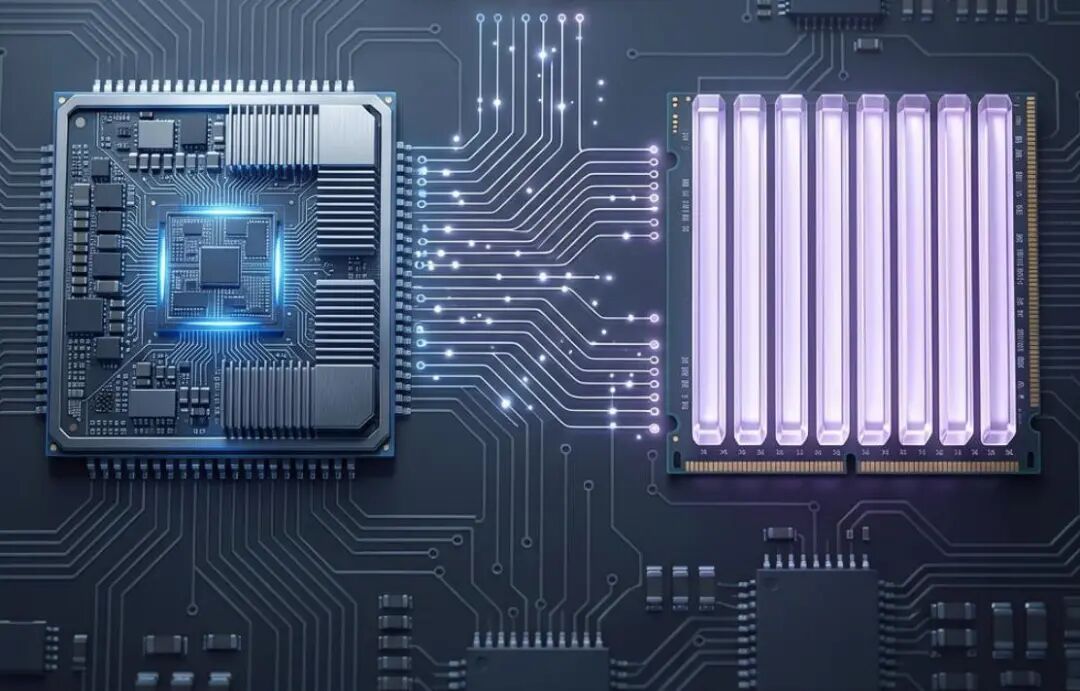
While metal price increases were somewhat predictable, the surge in automotive-grade chip prices starting last year has emerged as a black swan event this year. Essentially, this is a chip war triggered by AI, placing the automotive industry in a passive position of competing with the AI industry for memory.
It is reported that DRAM prices in automotive applications surged by 180% within three months, completely altering the cost structure of intelligent in-vehicle systems. From March to June 2026, automotive-grade memory chip prices continued to skyrocket by approximately 180%, with spot price increases for some high-end DDR5 sub-models exceeding 300%.
UBS research estimates that price increases for just DRAM and NAND Flash chips have directly added 7,000 to 10,000 yuan to the cost per intelligent driving vehicle, an impact even greater than that of lithium carbonate price hikes for battery raw materials. Power semiconductor spot prices have risen by 20% to 50%, increasing the cost per entry-level vehicle by several hundred yuan.
It can be said that almost every aspect of automotive production and manufacturing is bearing the brunt of price increases. As Lu Fang mentioned, car price increases are highly likely.
Indeed, from a market perspective, with rising raw material and chip costs, dozens of automakers, including BYD, Changan, NIO, Zeekr, Tesla, Xiaomi, and Harmony Intelligent Mobility, have already raised prices or adjusted their pricing systems in the first half of this year.
02 Which Suppliers Are Profiting?
Returning to the question at the beginning of the article: Are automotive suppliers really reaping huge profits amid comprehensive raw material price hikes?
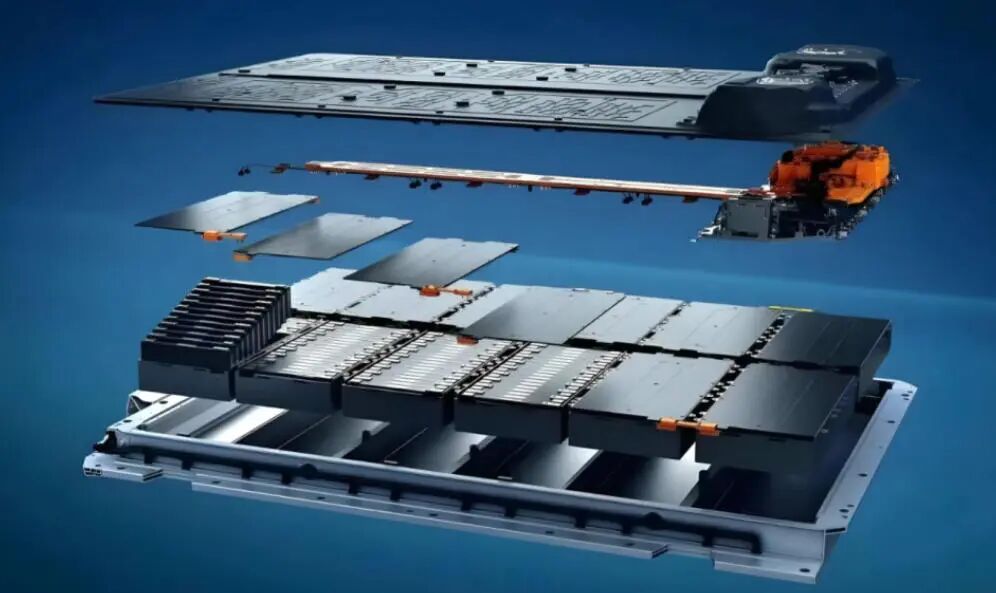
The first suspects might be power battery manufacturers. For instance, in the first quarter of this year, CATL's net profit increased by 48.52% year-on-year, Gotion High-Tech's net profit attributable to shareholders excluding non-recurring items rose by 179.51% year-on-year, CALB's net profit attributable to shareholders increased by 62.1% year-on-year, and EVE Energy's net profit grew by 36.32% year-on-year.
Among 29 listed companies in the lithium battery supply chain, 15 saw year-on-year increases in net profit, and 3 turned losses into profits. Reports indicate that the gross profit margins of leading power battery manufacturers remain around 23.8%, while the net profit margins of mainstream vehicle manufacturers generally range from 2% to 4%. The net profit margin of battery suppliers is more than four times that of their clients.
In reality, besides the positive performance in the battery sector, several automotive component companies also delivered strong results in the first half of 2026: Xinpeng Corporation's net profit is expected to increase by 298.77% to 407.52% year-on-year, Jifeng Auto Parts' net profit is projected to grow by 115.78% to 158.67% year-on-year, Dongfeng Technology's net profit increased by 97% to 109% year-on-year, and Sunrise Group's net profit is expected to rise by 77.34% to 110.44% year-on-year.
However, not all suppliers are celebrating. Data from Choice shows that as of July 14, 2026, 55 listed companies in the A-share automotive components industry sector have released their 2026 mid-year performance forecasts. Among them, 16 companies reported net profit growth, and 8 turned losses into profits. Nine companies experienced a decline in net profit growth rate, and 22 incurred losses.
The reason is that, unlike the booming electric and intelligent vehicle sectors, the traditional fuel vehicle components market is shrinking, with some suppliers facing dual pressures of sharply reduced demand and stagnant technological iteration. Coupled with the dual squeeze of annual price reductions from automakers and high raw material prices, while leading companies may survive on scale and technological barriers, small and medium-sized manufacturers face a shakeout.
This is even more evident abroad. According to Boston Consulting Group's "2026 Global Automotive Supplier Study Report," demand for internal combustion engine powertrain components will decline by 3% by 2030 and further expand to an 8% drop by 2035. In contrast, components related to advanced electrical/electronic architectures, driving assistance, and autonomous driving systems are achieving double-digit annual growth rates.
So, returning to the original question: Are automotive industry profits really going to suppliers? The answer is that some suppliers are indeed reaping profits. Suppliers with core technologies in the electric and intelligent vehicle growth sectors, such as batteries and chips, are aggressively capturing profits. However, suppliers still reliant on traditional technologies are not only failing to make profits but are sinking deeper into losses.
Under such circumstances, automakers find themselves in a precarious position. They must accept the fact of rising prices for some upstream raw materials and core components. Yet, when it comes to selling vehicles to consumers in a mature market, they can only rely on price reductions to boost sales. Thus, automakers, caught in the middle, face the greatest challenges.
This leads to another question: Will car prices rise or continue to decline in the future?
Editor-in-Chief: Cao Jiadong Editor: He Zengrong

THE END
-
Observation of AI Business Models: From Token-Based Payment to Outcome-Based Payment
-
Observations on AI Business Models: From Token-Based Payment to Outcome-Based Payment
-
SpaceX Market Insight: The $1 Trillion 'Fireworks' Fizzle Out, Marking the Start of the Super IPO Gamble
-
![]()
Car Prices on the Rise: Is It Wise to Postpone Your Purchase?
-
![]()
Foxconn's Electric Vehicle Venture Hits a Snag
-
![]()
How Did They Open the Door to Europe by Attacking the Century-Old Stronghold of the Automotive Industry?
-
![]()
Qwen Still Shows Hesitation
-
![]()
Qwen: Still a Bit Short on Confidence