Foxconn's Electric Vehicle Venture Hits a Snag
 07/21 2026
 421
421
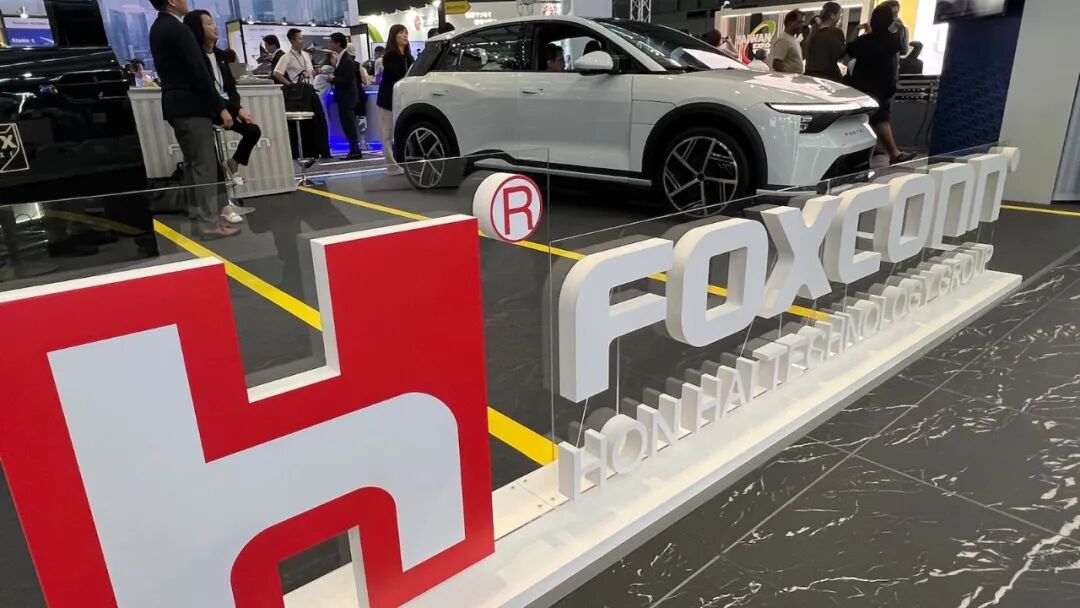
Lead-in
Introduction
It is evident that venturing into the electric vehicle (EV) business is a far more daunting task than contract manufacturing smartphones.
Hon Hai Precision Industry, widely recognized as Foxconn and famed globally for assembling iPhones, is making a strategic shift towards the EV sector. However, its US ambitions have been thwarted by tariffs—an unforeseen 'black swan' event.
The Model C, a mid-size electric crossover initially scheduled for delivery to a US customer by the end of the previous year, has now been put on indefinite hold. The US, once considered by Foxconn as a pivotal market for EVs, has undoubtedly dealt a significant blow to its business.
Consequently, Foxconn has been compelled to redirect its focus towards Poland and Japan. This shift underscores the persistent challenges in cross-border operations, even within a globalized industry such as automotive manufacturing.
01 Setback in the US, Shift Towards the East
Steven Hsu, a sales expert at Foxconn's automotive joint venture Foxtron, acknowledged at the Taiwan Business Expo in Tokyo on July 16: 'The project is currently on hold due to the tariff situation. We remain open to re-evaluating if the political landscape changes.'
He also disclosed that the enigmatic US customer hails from the automotive industry, though Foxconn has kept its identity under wraps.
This delay is not an isolated incident but rather a reflection of how trade policy fluctuations are reshaping the global EV industry.
On one hand, the US market has cooled off due to tariff uncertainties and the gradual withdrawal of federal subsidies, leading many automakers and suppliers to scale back their US production capacities. On the other hand, EV demand in Europe, Asia, and other regions remains robust, further widening the gap.
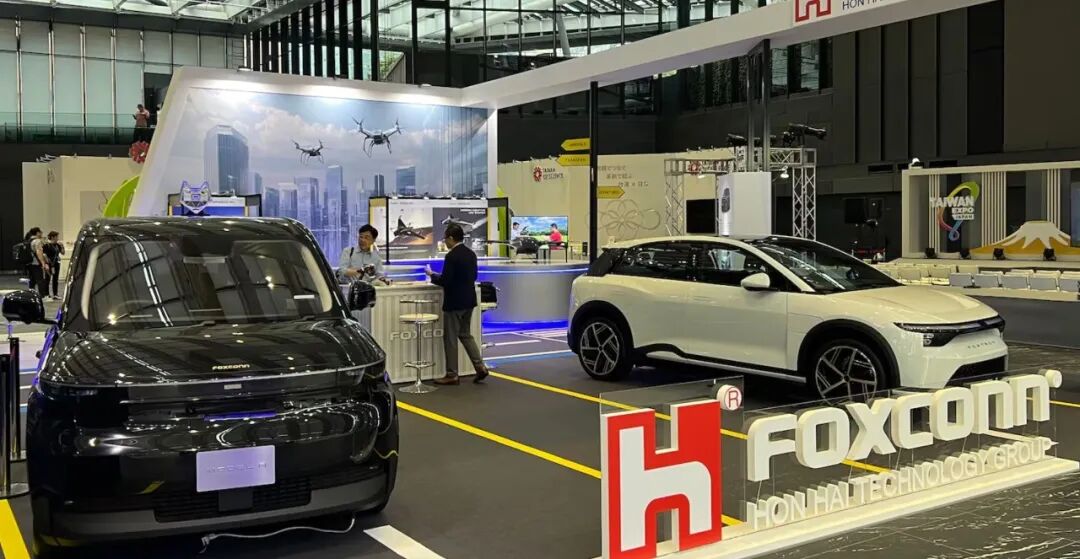
In reality, Foxconn's foothold in the US was never particularly strong. Last August, it announced the sale of the sprawling Lordstown assembly plant in Ohio, which it had acquired from General Motors in 2022—a move that marked Foxconn's most ambitious foray into US vehicle production. The divestiture of this 'bridgehead' cast a long shadow over the Model C's US prospects.
Blocked in the US, Foxconn swiftly changed its strategy. In Poland, it will collaborate with government-backed ElectroMobility Poland to establish an EV production and R&D center.
This partnership, officially unveiled in May, is still in the process of finalizing specific vehicle models and market segments. Hsu estimated that it would take two to three years from project initiation to production.
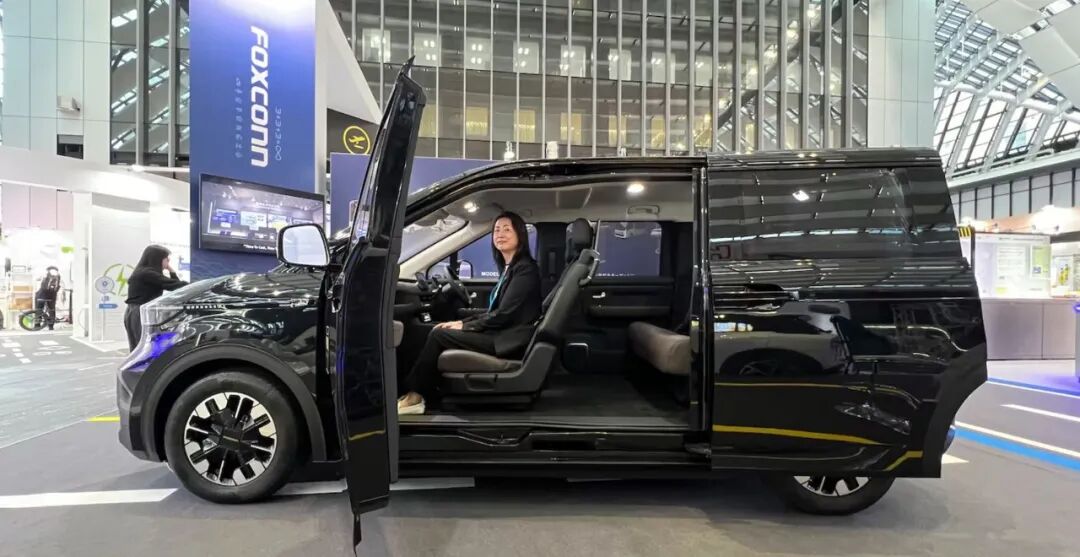
In Asia, Foxconn is setting its sights on Japan's taxi market. Its electric version of the Model A MPV, dubbed 'Fox Taxi,' made a splashy debut at the Tokyo Trade Show, aiming to take on Toyota's JPN Taxi.
The latter is a dedicated model inspired by London's iconic taxi design, dominating Japan's fleet market.
In contrast, the Model A taxi boasts a longer and wider body, ample rear luggage space, a flat floor, a smaller turning radius, and a passenger-side door without a B-pillar for easier access.
However, the Model A has yet to enter mass production.
02 Think It's Luxgen? It's Actually a Foxconn EV
Foxconn, formally known as Hon Hai Precision Industry, has identified EVs as its next growth frontier after its core electronics manufacturing business reached its zenith.
At last year's Hon Hai Tech Day, batteries were elevated to a strategic pinnacle—energy storage not only powers electric mobility but is also poised to underpin the energy infrastructure for cloud computing centers.
Meanwhile, rumors about Foxconn's interest in Nissan have persisted. Last year, Japanese media outlet Nikkei reported that Foxconn had approached Nissan about utilizing its Oppama assembly plant in Japan—slated for closure as part of Nissan's restructuring—to produce EVs. Both parties declined to comment.
Compared to the opaque Nissan negotiations, Foxconn's collaboration with Mitsubishi is a done deal.
Last year, the two sides inked an agreement for Foxconn to supply a version of its Model B compact crossover to Mitsubishi for the Australian and New Zealand markets, with a launch slated for later this year.
In its home base of Taiwan, the Model B, rebranded as the Foxtron Bria, hit the market in December last year, with cumulative sales reaching 1,822 units by May this year. The Model C, rebadged as the Luxgen N7, sold 8,217 units in its debut year of 2024 and 2,997 units the following year.
According to MarkLines data, total vehicle registrations in Taiwan's auto market are projected to reach around 401,000 units in 2025.
Significantly, when Foxconn divested the Lordstown plant last August, it stated that the proceeds would be reinvested in expanding its US business.
But now, with the plant changing hands and tariff uncertainties persisting, the Model C's US launch may be delayed indefinitely.
Editor-in-Charge: Shi Jie Editor: He Zengrong

THE END
-
![]()
Personnel Shuffle: Independent Director Mi Xuming Steps Down from OFILM
-
![]()
Net Profit Anticipated to Skyrocket by 103%: What Gives This Optical Company a Competitive Edge?
-
In Just One Year, China Unveils Unicorns Valued at 10 Trillion Yuan!
-
![]()
6 Park Companies Shine at WAIC: How Hong Kong Science Park Bridges AI from Research to Industry
-
![]()
Wang Wenjing’s Third Act: Can Yonyou Reinvent Itself in the AI Era?
-
![]()
Performance Coupe Entry Threshold Reduced to 170,000 Yuan: Assessing the 2027 Exeed ES's Prospects
-
![]()
Battery "Crisis" for 4 Million New Energy Commercial Vehicles
-
【Focus】Fluorinated Photosensitive Polyimide (FPSPI): A High-End Subdivision of PSPI with Great Potential in High-Tech Industries