Leapmotor Revises Profit Goal to 3 Billion Yuan: Targets 400,000 Overseas Sales in the Coming Year, Forges Symbiotic Alliance with FAW | MINGJINGpro
 08/25 2026
 464
464

Leapmotor, often dubbed the "cost killer," has found itself compelled to temporarily adjust its stance in the face of soaring raw material costs.
On the evening of August 24, during Leapmotor's conference call to discuss its first-half financial results, Li Tengfei, the company's vice president, revealed that Leapmotor had initially set a net profit target of 5 billion yuan for the year. However, attaining a net profit in the vicinity of 5 billion yuan now seems "an exceedingly daunting task," primarily due to the escalation in raw material prices, which has precipitated a decline in gross margin. Li indicated that, based on the company's current assessment, the anticipated annual net profit should hover around 3 billion yuan, with a gross margin of approximately 13-14%.
This announcement signifies that Leapmotor has revised its profit target for the year downward. In the first half of this year, Leapmotor achieved a record-breaking revenue of 38.11 billion yuan for the same period, with a net profit of 210 million yuan, marking its third consecutive half-year of profitability. The gross margin in the second quarter witnessed an improvement to 12.6% on a quarter-over-quarter basis, with operating quality enhancing each quarter. In terms of sales, Leapmotor delivered 356,487 units globally in the first half, representing a year-on-year increase of 60.8%. Overseas exports in the first half reached 96,294 units, a year-on-year surge of 372.6%, outpacing the total exports for the entire year of 2025.
At the outset of this year, Leapmotor established two primary objectives: one was a net profit target, and the other was to achieve sales of 1 million units. At the recent launch event for the Leapmotor A10, Zhu Jiangming, the chairman of Leapmotor, expressed confidence in the high probability of achieving this goal. "We must explore avenues to reach this target," he asserted. It is evident that Leapmotor is resolute in accomplishing its goals this year. Nevertheless, he also underscored that the overall downturn in industry sales volume presents significant hurdles.
Based on the current trajectory, Leapmotor delivered nearly 460,000 units from January to July, accomplishing 46% of the annual sales target of 1 million units, with over 100,000 units delivered in July alone. With five months remaining, Leapmotor can attain its target by selling 100,000 units per month. Zhu believes that the second half of the year will constitute a larger proportion of annual sales. Generally, the sales ratio between the first and second halves of the year in the industry is 4:6. Zhu remarked that everything is progressing according to plan and is generally in line with expectations.
The adjustment of the profit target was within the realm of external expectations. Previously, Zhu had acknowledged that "the comprehensive rise in lithium carbonate, copper, aluminum, and plastics poses significant challenges," but Leapmotor has opted to "surmount difficulties in collaboration with suppliers and has not yet adjusted prices for users." He also stated, "If material prices continue to escalate, we may contemplate minor price adjustments, but recent commodity prices have declined, and we are striving to absorb costs through internal efficiency enhancements." However, in the industry, escalating raw material costs have emerged as a primary factor eroding automakers' profits.

In light of the pressure from rising raw material prices, several automotive executives have made pertinent statements this year. In June, Zhang Xinghai, chairman of Seres Group, provided specific figures at the 2026 China Automobile Chongqing Forum, stating that the manufacturing cost per vehicle for the AITO brand had increased by 15,000 to 20,000 yuan due to this impact. In the first half of this year, Seres, the most profitable automaker, transitioned from profit to loss. However, for Leapmotor, its gross margin performance has been relatively commendable, with the second-quarter gross margin improving to 12.6% on a quarter-over-quarter basis, which is a rarity in the industry.
Leapmotor's executives stated that the primary driver of the gross margin improvement is the scale effect of the products themselves, which has led to further optimization of material costs and manufacturing expenses. "Against this backdrop, achieving this necessitates the unwavering efforts of the entire company," Li Tengfei said. However, despite the adjustment of this year's profit target, Leapmotor believes that raw material prices will ameliorate in the second half of the year. Li stated that after a wave of price increases in the first half, prices have now stabilized and will remain relatively stable moving forward.
This implies that Leapmotor's gross margin could potentially rebound and reach new heights in the second half of the year. This is because its D-series products will enter a full profit contribution period in the second half, with sales volumes anticipated to exceed 100,000 units per month.
In addition to operating performance, Leapmotor's executives also disclosed several key pieces of information. First, at the forthcoming technology launch event in early September, Leapmotor will unveil its new architecture-based assisted driving solution, aiming to "make high-level assisted driving accessible and an integral part of daily travel, rather than a privilege for a select few." Second, there will be a significant upgrade in channels, including an increase in the number of outlets and the establishment of high-end stores.
By the end of June, Leapmotor had 1,064 sales outlets and 562 service outlets, an increase of 258 sales outlets and 101 service outlets compared to the same period in 2025. While continuing to expand its channel scale, Leapmotor is also advancing its brand channel upgrade strategy, officially launching a new multi-functional flagship store model that integrates comprehensive functions such as exhibition, test drives, deliveries, after-sales owner activities, and technology platform displays. Currently, the flagship stores in Shanghai and Shenzhen have officially opened and are operational. From technology to channels, Leapmotor is driving a comprehensive renewal to lay the groundwork for its subsequent high-end brand.
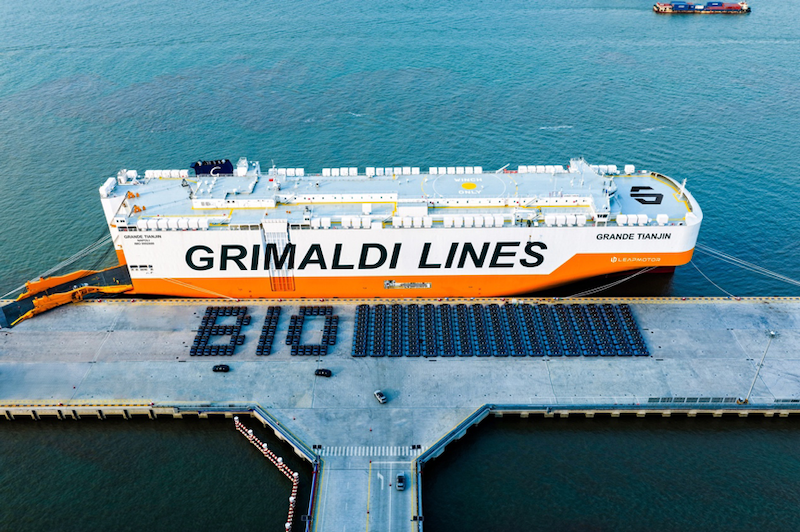
Furthermore, Leapmotor also announced its overseas market target for the coming year. This year, Leapmotor's overseas sales target is 100,000-150,000 units. Li Tengfei stated that surpassing the original challenge target of 150,000 units this year is "basically not an issue." Based on current trends, Leapmotor expects overseas sales to reach 200,000 units this year. Based on this performance, Leapmotor has set ambitious goals for the overseas market in 2027. According to the introduction, Leapmotor's overall overseas target for the coming year is 350,000-400,000 units, but management hopes to challenge the 400,000-unit target.
In addition to soaring sales, Leapmotor's operations in overseas markets have swiftly gained momentum. Leapmotor's management stated that it achieved profitability in international markets last year and that this year's operating performance has been "exceptionally good." However, considering that overseas markets have become a key competitive arena for Chinese automakers and are currently in a period of rapid growth, Leapmotor still aspires to seize market share first.
"We must capitalize on this critical period of development in overseas markets as swiftly as possible. From a profitability standpoint, we of course value profitability, but we will prioritize sales growth," Li said.
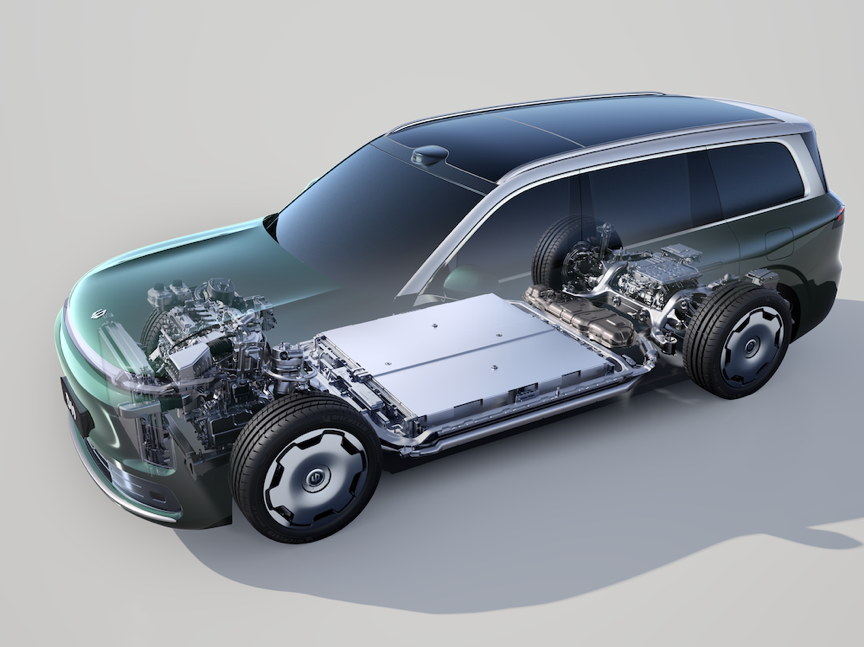
It is noteworthy that on the evening of the financial results announcement, Leapmotor and FAW officially announced further cooperation. FAW stated that the partnership would be comprehensively upgraded to a "strategic symbiosis." According to the new agreement, the two sides will engage in in-depth collaboration in areas such as capital cooperation, new energy vehicles, intelligent driving, powertrains, batteries, intelligent chassis, body process equipment, lightweight components, embodied intelligent robots, and finance, jointly enhancing technological innovation capabilities and market competitiveness. Among these, embodied intelligent robots are a novel addition.
In addition, FAW stated that the first model jointly developed based on the strengths of both sides is poised to enter mass production. This will also add new dimensions to Leapmotor's subsequent development.

-
How AI Changes the Flow of Money: Budget, Self-Development, and the Last Mile
-
![]()
SAIC Volkswagen’s Bold “Self-Revolution”: ID.ERA 5S Targets the Heart of the Fuel-Powered Family Sedan Market
-
![]()
Beyond APIs: Future-Oriented Strategies for AI Global Expansion
-
![]()
Behind the Daily Average of 140 Trillion Token Calls: Who Will Become China's Future New Three Major Operators?
-
![]()
How Many Zhipu Members Were Wrongly Banned?
-
![]()
Leapmotor Revises Profit Goal to 3 Billion Yuan: Targets 400,000 Overseas Sales in the Coming Year, Forges Symbiotic Alliance with FAW | MINGJINGpro
-
![]()
Behind the 140 Trillion Token Calls Per Day: Who Will Become China's New Big Three Operators in the Future?
-
![]()
DPCA Technology Launched, Pioneering a New Era for Joint Ventures: Taking 'Chinese Heritage' Global