Exclusive Interview with Fair Optical: Revealing the Secrets Behind 30% Counter-Trend Growth
 12/26 2025
 599
599
In recent years, the global industrial chain has undergone restructuring, and technological competition has intensified. As a result, the optical industry is experiencing a pivotal transformation, shifting from basic component manufacturing to deeply integrated system solutions that encompass optics, mechanics, electricity, and computing. Currently, China's optical industry has transcended the phase of mere scale expansion and has entered a new development cycle. This cycle is marked by 'technological breakthroughs, domestic substitution, and an upward trajectory along the value chain.'
Amidst the overall market pressure, Fair Optical has maintained a steady operational rhythm and achieved counter-trend growth in key areas. In 2025, in sectors such as photon beauty and photon skin rejuvenation instruments, the company witnessed an approximate 30% year-on-year increase in sales. Its optical business boasted a pure profit margin of around 20%, and it secured a market share of approximately 80%.
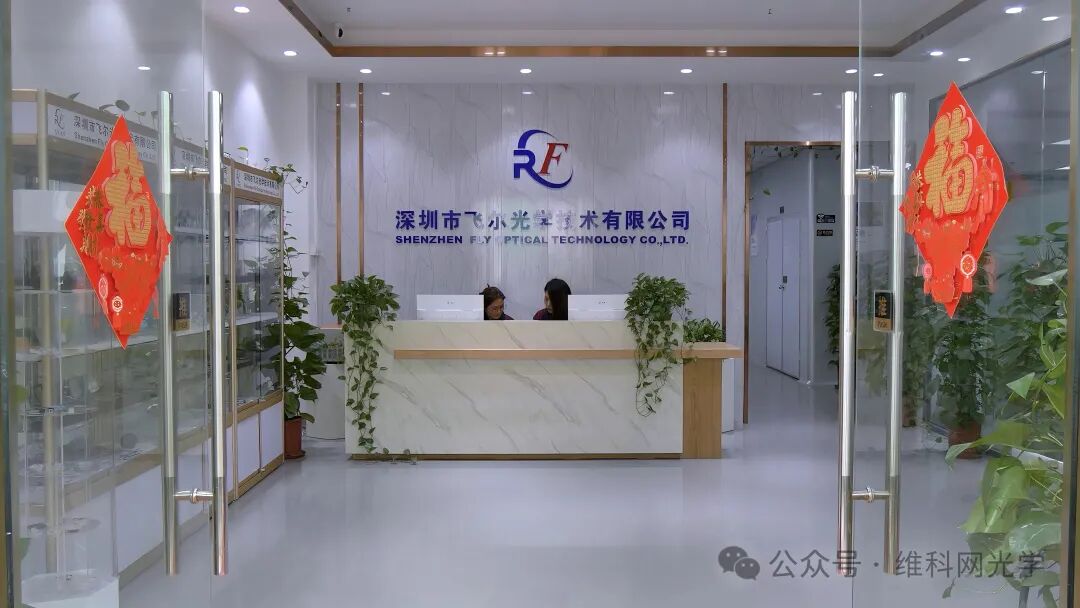
As 2025 draws to a close, OFweek Optical conducted an interview with Xiao Xueyou, the General Manager of Shenzhen Fair Optical Technology Co., Ltd. (hereinafter referred to as 'Fair Optical'). The purpose was to delve into the reasons behind the company's robust profitability and market competitiveness in this new development cycle.
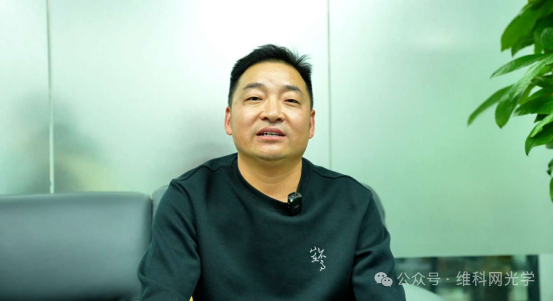
Core Competitive Edge: Full-Chain Process Innovation Rooted in Material Science
In the face of global market volatility and challenges, Mr. Xiao characterized Fair Optical's development approach for the year as one of 'steady progress.' When questioned about Fair Optical's core technological competitive edge, he highlighted deep process innovation based on material science, along with the capacity for rapid iteration and self-evolution.
Unlike many peers who focus solely on optical design, Fair Optical has constructed a more profound competitive edge. It starts with the modification of glass materials and spans the entire chain of processes, from precision cold working to optical coating. This full-chain control capability empowers Fair Optical not only to manufacture products as per customer requirements but also to deliver them with enhanced efficiency, reduced costs, and superior performance. It is this core capability that has garnered the trust of numerous high-quality clients, including Union Laser, Han's Laser, Ulike Technology, Evoc Golden Code, and Songlin Technology.
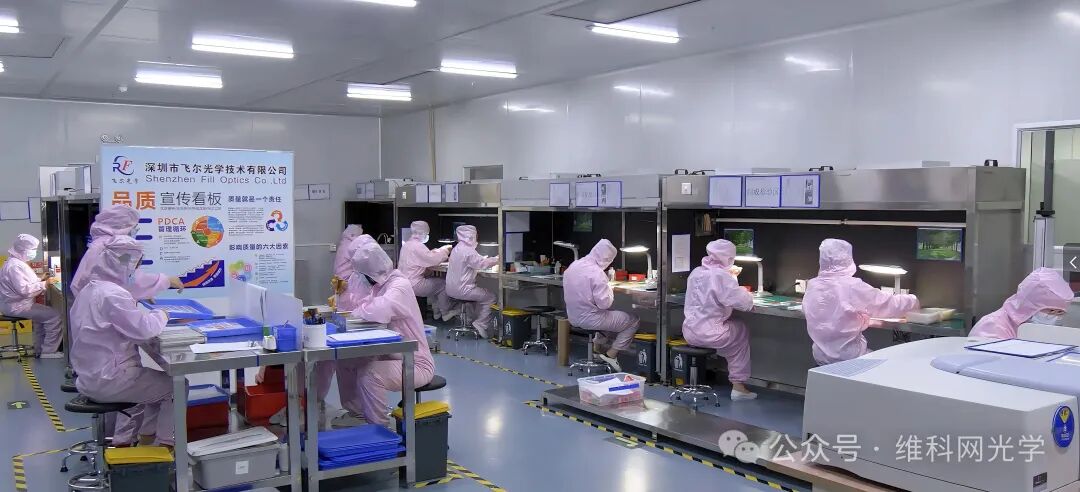
For instance, Fair Optical supplies core optical components to high-power laser equipment manufacturers like Union Laser and Han's Laser, ensuring the stable operation and longevity of their high-power devices. For consumer electronics client Ulike Technology, it provides safe, reliable, and mass-producible optical core components that meet their stringent requirements for optical performance and human safety.
Hard Technology Breakthrough: Defining Uncertainty, Securing High Value
Presently, the demand in the optical industry is undergoing significant structural shifts, with performance requirements soaring from 'usable' to 'high precision, high reliability, and high integration.' Technological competition has evolved from a single-process contest to a comprehensive innovation capability race that encompasses materials, design, coating, testing, and other full-chain aspects. The ability to swiftly respond to downstream needs for rapid iteration has become crucial for optical companies to break through and ascend to the high end.
Mr. Xiao acknowledged that when venturing into cutting-edge application scenarios such as AR/VR and biomedical, the greatest challenge Fair Optical faces is the 'uncertainty in defining needs.' Firstly, products in these domains are often non-standard, lacking industry benchmarks, with vague and evolving demands, making it arduous to precisely pinpoint technical specifications. Secondly, processes that meet cutting-edge performance criteria such as ultra-thinness and ultra-bandwidth are frequently costly, creating a conflict with market acceptance. Thirdly, the interdisciplinary knowledge barriers necessitate the company to rapidly comprehend and integrate professional knowledge from terminal fields, such as medical regulations and algorithm principles, to devise effective solutions.
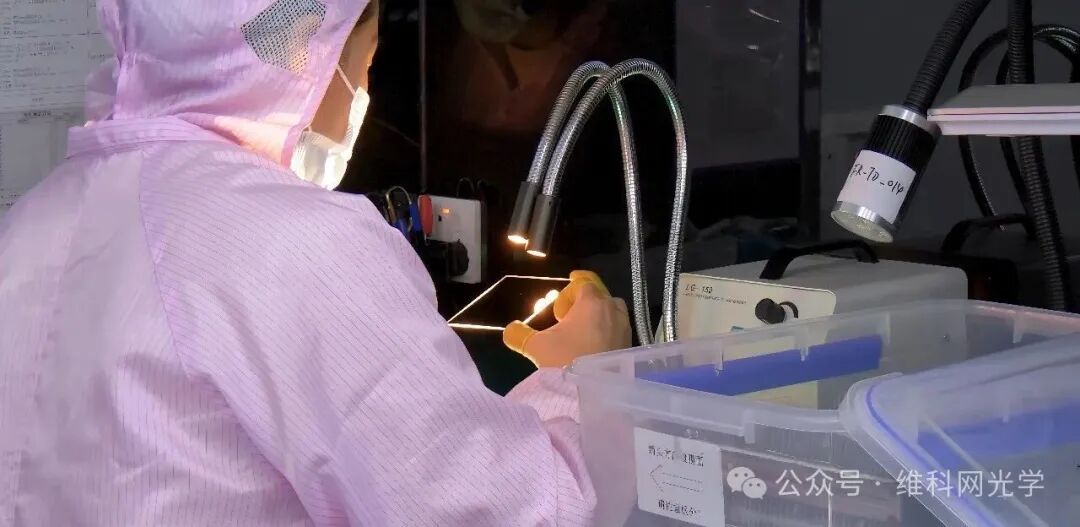
To tackle this, Fair Optical has opted to co-construct an industrial ecosystem with upstream and downstream partners, actively engaging in joint research and development with other equipment manufacturers. Simultaneously, the company is striving to deepen its transformation from a precision component manufacturer to an optical solution and core module supplier. It is bolstering its capabilities in cutting-edge optical design and deep integration of opto-mechatronics, and increasing investment in process R&D.
Summary
Looking ahead, with the ascent of high-end manufacturing, semiconductors, artificial intelligence, and new energy, China's optical industry is poised to usher in a 'strategic opportunity period for domestic substitution and technological transcendence.' Fair Optical will place a strong emphasis on high-value-added hard technology fields, with a particular focus on sectors such as semiconductor integrated circuits, new energy and intelligent driving, new display and consumer electronics, and high-end equipment and scientific research. It aspires to transform the full-chain innovation and ecological collaboration capabilities honed during the process of addressing 'uncertainty challenges' into the initiative to define the standards for the next generation of optical products.
Under the overarching theme of 'steady progress,' Fair Optical is steadily navigating through the new development cycle, leveraging its profound foundation in material science and full-chain process innovation. It is striving to carve out its own niche in the wave of localization and high-endization in China's optical industry.
-
On the Eve of Its IPO, Avatr Finds Itself Embroiled in a 'Farce of Controversy and Belittlement'
-
![]()
Yutong Optics' Japanese Subsidiary Unveiled in Tokyo, Shifting Strategic Focus to Technology-Driven Growth
-
![]()
Half-Year Revenue Outstrips Last Year’s Total! Zhongrun Optics Forecasts 80.2% H1 Revenue Growth
-
![]()
Why Does AI Competition Start with Computing Power?
-
![]()
Apple AI Finally Makes Its Debut in China, Yet iPhone's 'AI Autonomy' Faces Uncertainty
-
![]()
Apple AI and QianWen Make Up Lessons: Alibaba Has Its Own 'Doubao Phone'
-
![]()
QianWen Joins Apple, Signal for Large Models to ‘Fade into the Background’
-
![]()
The ‘Anchor’ Strategy of Google Hidden Behind the Bleeding Financial Report