Can NASA Discover Extraterrestrial Life? UK Invests £3 Million, but First Must Block Out Stars
 08/05 2026
 337
337
Imagine placing our solar system 30 light-years away. Earth wouldn't be a distinct blue sphere but rather a barely perceptible speck, with a brightness just one ten-billionth that of the Sun.
NASA is keen on constructing a space telescope tailored specifically to search for such faint celestial dots. The UK has recently allocated £3 million to manufacture a core instrument for this ambitious project.
However, the initial step in the quest for life isn't about magnifying the planet; it's about making the blindingly bright star 'vanish' from view.
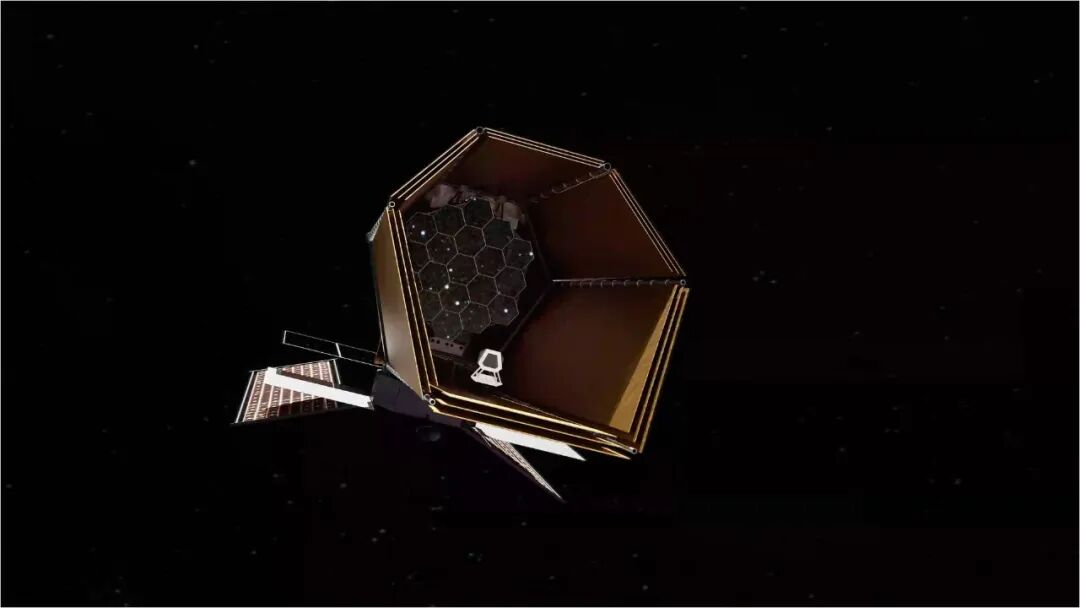
An early conceptual rendering of the Habitable Worlds Observatory. NASA is still evaluating multiple architectural designs, and the final form has yet to be decided.
What exactly does the £3 million investment target?
This device, currently in the conceptual development phase, is dubbed the 'Habitable Worlds Observatory' (HWO). It's envisioned as the next-generation flagship observatory, succeeding the Hubble, Webb, and Roman telescopes. NASA's primary objective is to directly image around 25 potentially habitable planets and scrutinize their atmospheres.
The UK Space Agency's funding won't directly finance the entire telescope's construction but will support the technological advancement of a high-resolution imager and a multi-object spectrometer. The UK team aspires to be in charge of the pivotal cameras and spectral equipment on the focal plane, transforming the minuscule amount of planetary light into discernible images and chemical data.
In essence, this £3 million investment secures a technical edge for the upcoming competitive phase and doesn't imply that the UK's instruments have been officially chosen by NASA.
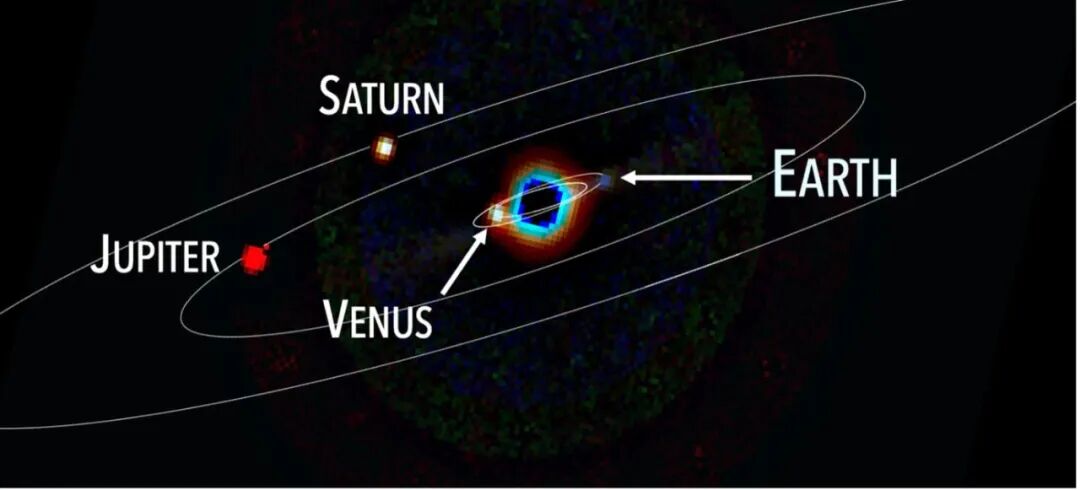
Simulated observational effect when the solar system is positioned 30 light-years away: Earth, Venus, and other planets appear as mere faint pixels.
Why is imaging a planet far more challenging than anticipated?
Thirty light-years equate to roughly 284 trillion kilometers. Even if the target is Earth-sized, the telescope won't discern oceans and continents but rather a minuscule dot of reflected light adjacent to the star.
The true obstacle lies in the brightness disparity. The star could be 10 billion times brighter than the Earth-like planet, akin to spotting a faint ember beside a glaring spotlight. The internal coronagraph must suppress the starlight while permitting the adjacent planetary light to pass through; any slight vibrations, temperature fluctuations, or mirror deformations could cause light leakage, once again obscuring the target.
The proposed solution by the UK team necessitates the telescope to maintain near-atomic-scale stability. However, NASA is still deliberating on mirror size, sensitivity, and stability, with the segmented mirror design merely a candidate concept, not a finalized engineering blueprint.
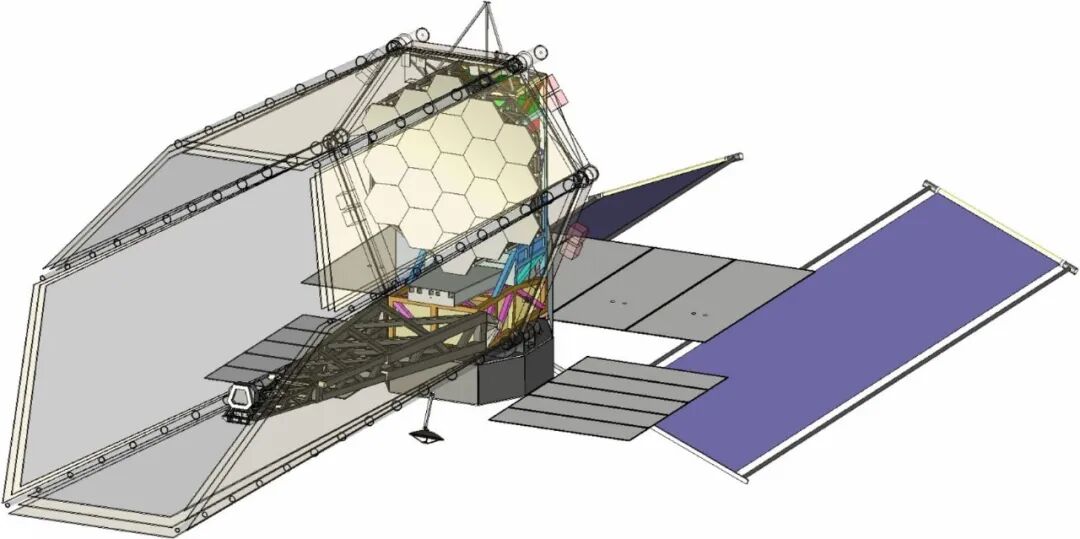
An early engineering layout showcases a segmented primary mirror, light-blocking structure, and solar panels; the actual design may undergo further modifications.
Spotting a planet doesn't equate to discovering life
If the planetary light is successfully isolated, the spectrometer will dissect it into various wavelengths. Molecules like water vapor, oxygen, and methane will leave distinct absorption imprints, aiding researchers in determining whether an atmosphere, liquid water conditions, and potential biological markers exist.
However, 'detecting oxygen' doesn't automatically mean 'discovering life.' Non-biological processes, such as ultraviolet light splitting water molecules or chemical reactions on rocky surfaces, can also generate oxygen. Scientists must concurrently examine multiple gases, stellar radiation, planetary temperature, and geological environments to exclude so-called 'false biosignatures.'
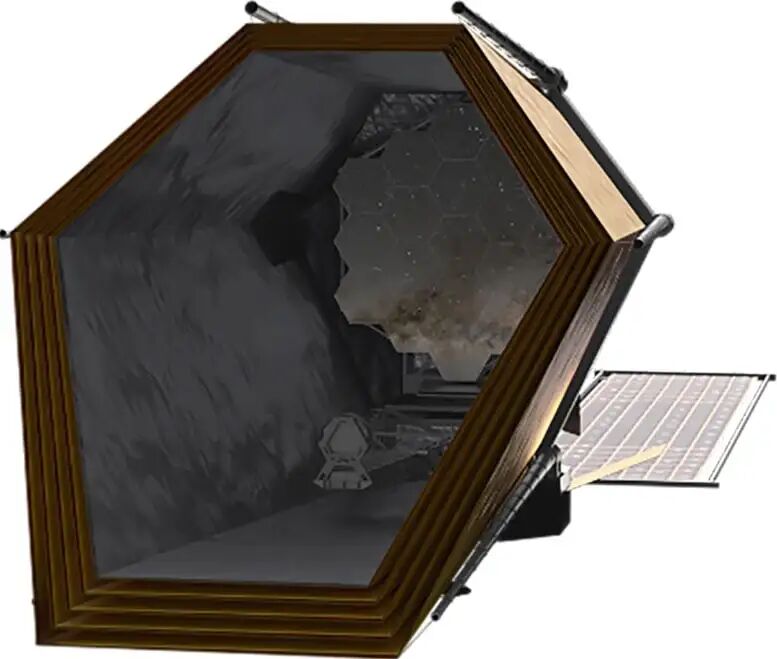
The front conceptual image depicts a segmented primary mirror and a dark light-blocking tube, designed for extremely high-contrast observations.
The true suspense may not be resolved until the 2040s
The HWO is projected to target the 2040s, but the launch date, mirror size, and international collaboration details remain undetermined. The UK's current investment isn't a guaranteed ticket to find extraterrestrials but rather a technological race spanning over a decade.
What it ultimately yields may not be 'photos of alien life' but a set of faint spectra requiring repeated verification. Nonetheless, if one of the 25 candidate worlds simultaneously exhibits a gas combination challenging to explain through geological processes alone, that unremarkable speck could mark a significant turning point in humanity's understanding of its cosmic position.
-
![]()
Ten Years of Feishu: Answers from an Email
-
![]()
Ten Years of Feishu: Answers from an Email
-
![]()
300084 Sets Up Intelligent Computing Tech Firm, Embracing AI Ventures
-
![]()
Unveiling Yin Tongyue's 'No Involution' Stance: Chery's Strategic Maneuvers
-
STO Express Faces Scrutiny: Franchise Model’s Safety Gaps Under the Microscope
-
![]()
The Richest Woman is Going Public Again! Valued at 22.5 Billion, Building an 'Optical Empire' with Her Brother
-
![]()
Buying More GPUs is No Longer Enough: Divergence in Monetization Progress Among the Top Four Cloud Providers
-
![]()
Leapmotor Exceeds 100,000 Units, Li Auto Faces Three Straight Months of Decline: China’s Auto Market Competition Intensifies in the Second Half