Why Has the 'Urban Bulk Commodity Boom' Intensified Over the Past Two Years?
 08/25 2026
 331
331
Shanghai aims to exceed RMB 10 trillion in trade volume, while Hangzhou aspires to become a central hub—cities are not merely competing for goods but also for pricing power.

Chinese cities are transitioning from land-based management to flow-based management, altering their fundamental business logic.
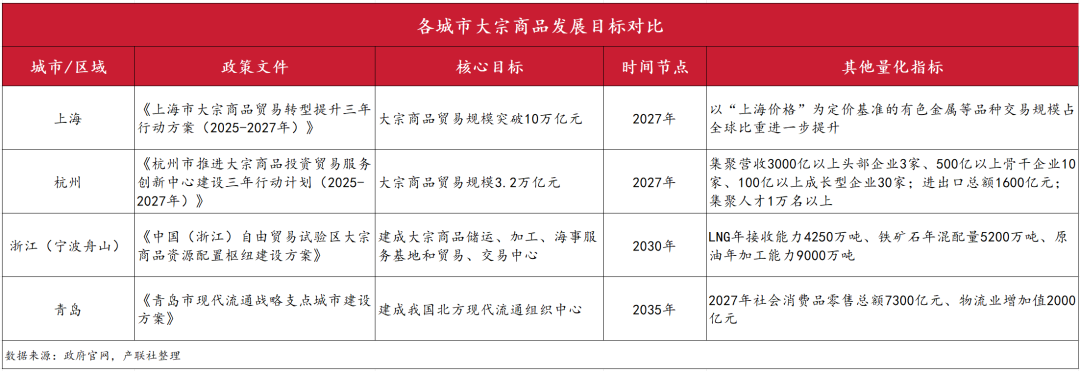
Over the past two years, a series of figures has frequently emerged in local news: Shanghai proposes to surpass RMB 10 trillion in bulk trade by 2027; Hangzhou targets RMB 3.2 trillion, aiming to become the 'national bulk trade hub city'; Zhejiang Province, leveraging its provincial resources, positions Ningbo-Zhoushan as the nation's premier bulk commodity resource allocation hub; Qingdao focuses on crude oil, ores, natural gas, and grains, strategizing to become the northern 'circulation organization center'.
This competition is not merely about port expansion or chasing illusory trade figures. What cities are truly vying for are the five types of power associated with bulk commodities: storage rights, trading rights, settlement rights, risk management rights, and pricing power.
To put it bluntly, the essence of this round of 'urban bulk commodity boom' is a shift in underlying business logic. Previously, a city's assets were primarily land and space; now, cargo rights, warehouse receipts, and supply chain data are being revalued as operable urban resources.

Land Finance Declines, Flows Become New Urban Assets
Over the past two decades, Chinese cities have excelled at transforming space into assets. Building roads, selling land, constructing new towns, and relying on real estate and infrastructure to drive upstream and downstream sectors—this cycle has thrived.
However, the real estate sector has noticeably slowed. According to Ministry of Finance data, nationwide government-managed fund budget revenue reached RMB 6.21 trillion in 2024, a 12.2% year-on-year decline, primarily due to a significant drop in income from the transfer of state-owned land use rights, which totaled approximately RMB 4.87 trillion for the year. By 2025, this figure further decreased to RMB 4.15 trillion, falling by more than half from the historical peak of RMB 8.7 trillion in 2021. The 'land cash flow' that local governments once relied on for expansion is visibly tightening.
At this juncture, bulk commodities offer an alternative logic: transforming flows into assets.
When a shipment of crude oil arrives at port, it generates loading and unloading fees, storage fees, bonded processing fees, transportation fees, trading commissions, settlement handling fees, insurance premiums, and risk management fees. While the trade profit from a ton of iron ore may be minimal, if the cargo can be detained, traded, or processed locally, the city can transform simple 'transit goods' into composite benefits, including enterprises, employment, tax revenue, and financial services.
The past local balance sheet revolved around land. Future hub cities may have their books filled with cargo rights, warehouse receipts, orders, inventories, and supply chain data. This is the underlying reason why bulk commodities have suddenly been thrust into the spotlight; localities are not seeking a 'substitute' for land but an industrial organization method that does not rely on land sales.

Global Upheavals and Technological Breakthroughs Open Up the Bulk Trade Sector
Global supply chains have shifted from prioritizing speed to emphasizing stability. Geopolitical conflicts, Red Sea crises, and trade barriers have made the stable supply of energy, minerals, and grains not just an economic issue but a matter of industrial security.
In the past, 'zero inventory' was seen as a badge of honor for lean production; now, businesses realize that having reserves at critical moments is the real capability. Ports, storage tanks, ore yards, bonded warehouses, and multimodal transport corridors have overnight transformed from 'heavy asset burdens' into 'strategic infrastructure'.
In November 2024, the State Council officially approved the construction of a bulk commodity resource allocation hub in the Zhejiang Pilot Free Trade Zone, explicitly stating in the plan: to enhance the resilience and security of industrial and supply chains. The bulk commodity hub has evolved from a local industrial project to a component of the national supply chain security system.
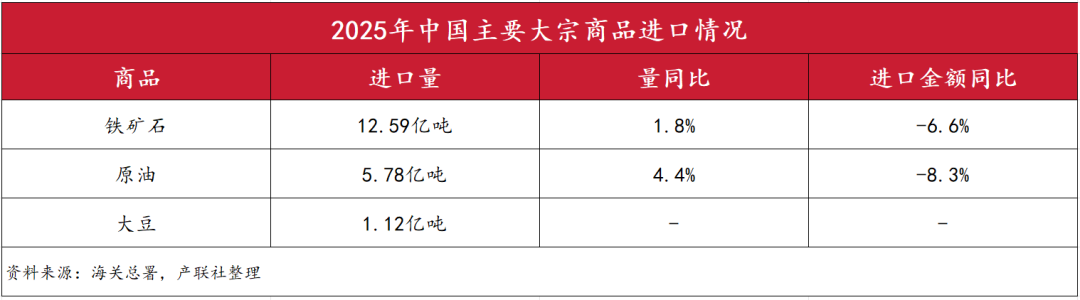
Meanwhile, China's large-scale imports do not equate to organizational capability. National Bureau of Statistics data reveals that in 2025, China imported 1.259 billion tons of iron ore, 578 million tons of crude oil, and 112 million tons of soybeans—all astronomical figures. However, while iron ore and crude oil imports increased by 1.8% and 4.4% respectively, their import values decreased by 6.6% and 8.3%, indicating a passive acceptance of international pricing. China lacks not purchasing scale but the ability to translate that scale into pricing influence, resource allocation capabilities, and supply chain service revenue. By constructing bulk platforms, cities essentially aim to upgrade from 'the world's largest buyer' to 'transaction organizers'—an identity premium far more valuable than saving a few yuan on freight.
Manufacturing Competition Extends from the Factory Floor to the Warehouse
Which industry is not held hostage by raw material prices? When manufacturing margins are razor-thin, a business's survival often hinges on procurement costs, inventory cycles, and logistics scheduling. The logic of local investment attraction has shifted accordingly; merely providing land and factory space is no longer sufficient. If a city can simultaneously offer centralized procurement, bonded inventory, hedging, trade financing, and intelligent scheduling, businesses are willing to take root. Bulk commodity platforms are becoming the 'invisible infrastructure' for manufacturing, ostensibly providing trade services but fundamentally helping entire cities control industrial costs.
Another often-overlooked variable is that digital technology has finally addressed the 'trust Achilles' heel' of bulk trade. The hardest part of bulk trade is not finding buyers and sellers but verifying the authenticity of goods, ensuring warehouse receipts are not repeatedly pledged, clarifying cargo ownership, and verifying logistics. In the past, these issues relied solely on 'acquaintance credit,' limiting scalability. Now, electronic warehouse receipts, the Internet of Things, blockchain certification, and intelligent risk control enable cross-verification of 'cargo flow, capital flow, invoice flow, and information flow'.
Shanghai's action plan explicitly proposes building a 'trustworthy trade environment' by integrating trading platforms, ports, finance, and data systems. This presents an opportunity for non-traditional port cities: they can compete for corporate headquarters, trading data, financial services, and risk management businesses without needing the most docks. Digitalization is flattening the geographical barriers to bulk trade competition.

Five Types of Cities Take Their Positions; Those Who Find Theirs First Gain the Advantage
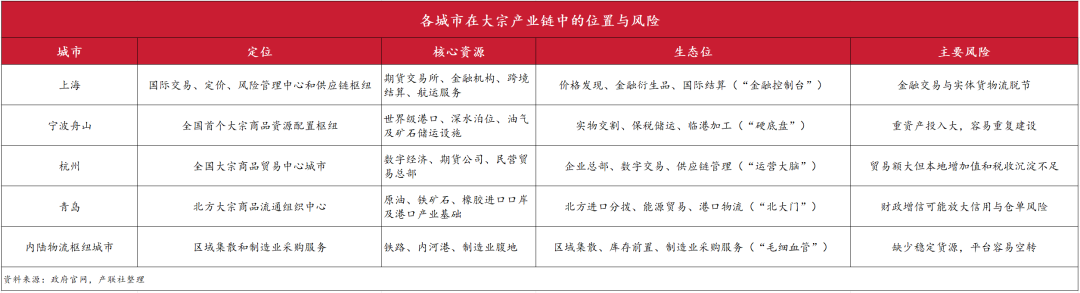
Shanghai sits on the 'judge's seat.' Holding futures exchanges, cross-border settlement, and shipping freight indices, it plays not with goods but with rules. What Shanghai truly aims to sell are risk management solutions and price benchmarks. Global crude oil, copper, and soybeans passing through Shanghai may not unload but would ideally reference 'Shanghai prices' for pricing. However, the risk lies in financial derivatives outpacing the physical infrastructure, potentially creating a 'castle in the air'.
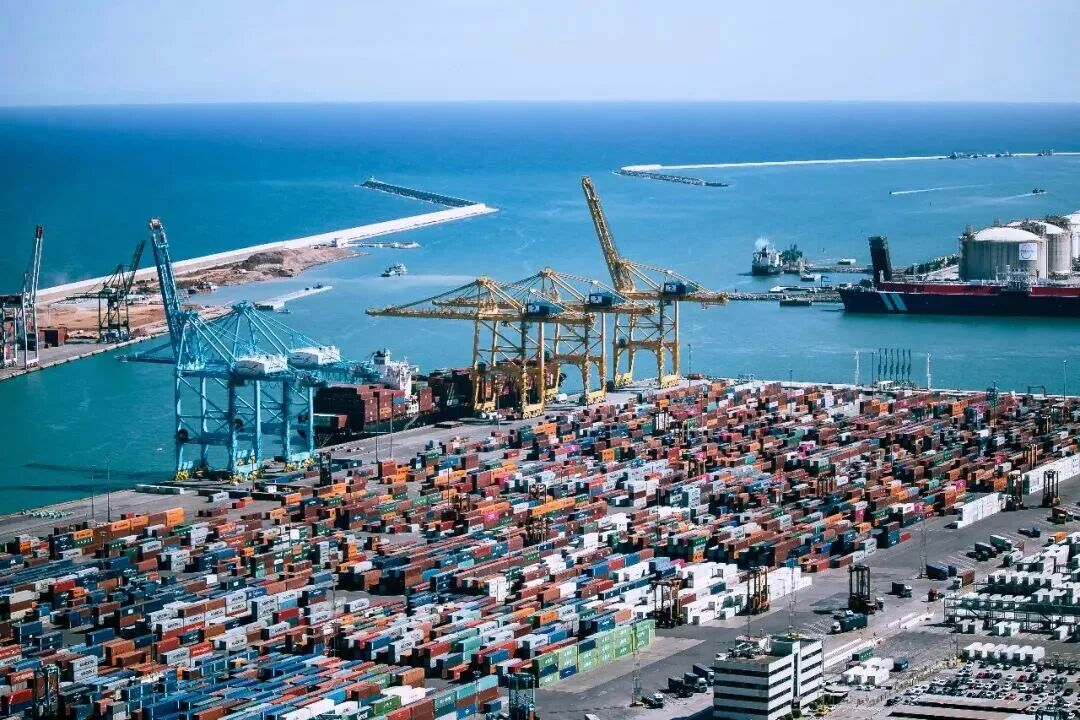
Ningbo-Zhoushan handles the 'hard, gritty work.' Home to the world's busiest port, it has invested heavily in oil tanks, ore yards, and deep-water berths. Its core value is 'reliability'—regardless of geopolitical turmoil, cargo can be unloaded, stored, and transshipped upon arrival. Yet, this is also its problem: heavy asset investments are enormous, and ports may easily engage in homogenized price wars for cargo sources, leading to resource waste.
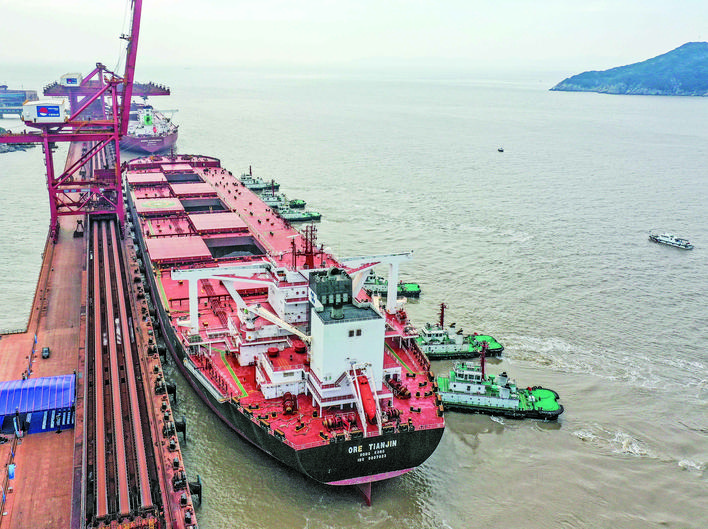
Figure: Two 400,000-ton ore carriers berthing at the Shulanghu Ore Transshipment Terminal in Ningbo-Zhoushan Port
Source: Xinhua News Agency (Photo by Zhang Lei)
Hangzhou plays the 'cloud business.' Lacking a deep-water port, it boasts leading futures firms, private trade headquarters, and a digital economy foundation. Hangzhou aspires to be the 'office' and 'calculator' for traders, where trading decisions are made and supply chain data flows, even if the goods never pass through the city. This model fears 'hollowing out'—achieving RMB 3 trillion in trading volume but failing to retain local tax revenue and employment, ultimately earning only a 'facade' of statistical data.
Qingdao guards the 'northern gateway.' Leveraging Shandong's refining and non-ferrous industrial hinterland, Qingdao aims to be the first distribution gateway for northern imports of crude oil, ores, and grains. Its moat is 'industrial depth,' with real refineries and manufacturing plants consuming these raw materials. The biggest concern is that local governments, to boost trade volume, often use fiscal funds for risk compensation or interest subsidies. If cargo verification and credit management lag, the 'risk compensation pool' could become a 'bad debt landfill'.
As for inland logistics hub cities like Xi'an, Wuhan, and Chengdu, they compete for 'capillary' positions. Relying on China-Europe freight trains or inland waterway shipping, they handle regional inventory pre-positioning and distribution, serving local manufacturing procurement needs. These cities fear 'having stations without cargo'—channels are built, but without sufficiently large industrial clusters to sustain stable cargo sources, platforms may idle upon completion.
The truly healthy pattern is not mutual imitation but Shanghai setting rules, Ningbo managing deliveries, Hangzhou handling data, Qingdao connecting the north, and inland areas linking to hinterlands. Those who first recognize their 'seat' can avoid futile competition in others' home fields.

Beware of the 'Growth Illusion' in Bulk Commodities; Don't Be Dazzled by Turnover Figures
Bulk trade has an inherent 'smokescreen': high turnover, low margins. A trader can generate hundreds of billions in annual revenue through reselling, but the money may circulate locally, leaving only a thin layer of taxes and office rents.
Thus, to assess a city's bulk commodity value, do not be misled by slogans like 'trade volume exceeds RMB 1 trillion.' A more pragmatic approach is to examine its industrial fundamentals.
What happens after the cargo arrives? If crude oil is merely in transit for storage and transport, and ores are shipped out unchanged, the city earns only loading and unloading fees. True industrial value is created through refining, ore blending, sorting, and processing. Each additional local process precipitates another layer of added value.
Is storage truly circulating, or just 'basking in the sun'? Low vacancy rates do not equate to good efficiency; more alarming is 'false full warehousing.' Goods may be repeatedly transferred among affiliated traders, with warehouse receipts changing hands three times while the cargo remains stationary. Such inefficient turnover cannot sustain real storage revenue; warehouses are filled with accounting hype, not hard cash.
Who is driving the transactions? If the platform's buyers and sellers are all traders and speculators, without real refineries, steel mills, or power plants making purchases, the trading volume is 'self-indulgent.' Only when end-users account for a sufficient share does the platform possess pricing anchors; otherwise, the larger the volume, the greater the exaggeration.
Are businesses 'naked' or 'armored'? Observe whether local firms use futures, options, and forward contracts to hedge against price fluctuations. If everyone gambles on unilateral market trends, a downturn in the bulk market will send bad debts reverberating through bank credit chains, directly impacting local finances. Prosperity in good times reveals nothing; only when the tide recedes do we see who lacks swim trunks.
Can platforms survive without fiscal subsidies? Many localities, to boost scale, offer tax rebates to traders and operating subsidies to platforms. Once policies end, firms immediately relocate to the next city with higher subsidies. This highly mobile 'migratory economy' has no loyalty to the locality; when subsidies stop, businesses and jobs vanish.
Especially beware of the 'warehouse receipt game' in supply chain finance. Qingdao's earlier risk compensation fund, intended to help private trade firms secure financing, could backfire if IoT monitoring, price alerts, and credit verification lag. A single false warehouse receipt, pledged multiple times, can transfer bank bad debt risks to local finances.
Digital technology does not automatically eliminate risks; it merely accelerates the triumph of genuine industrial demand and the bursting of inflated bubbles. A city's true capability is not measured by its lofty goals but by whether its warehouse receipts can still secure bank loans during price crashes.

Urban Competition: The Shift from Resource Possession to Resource Organization
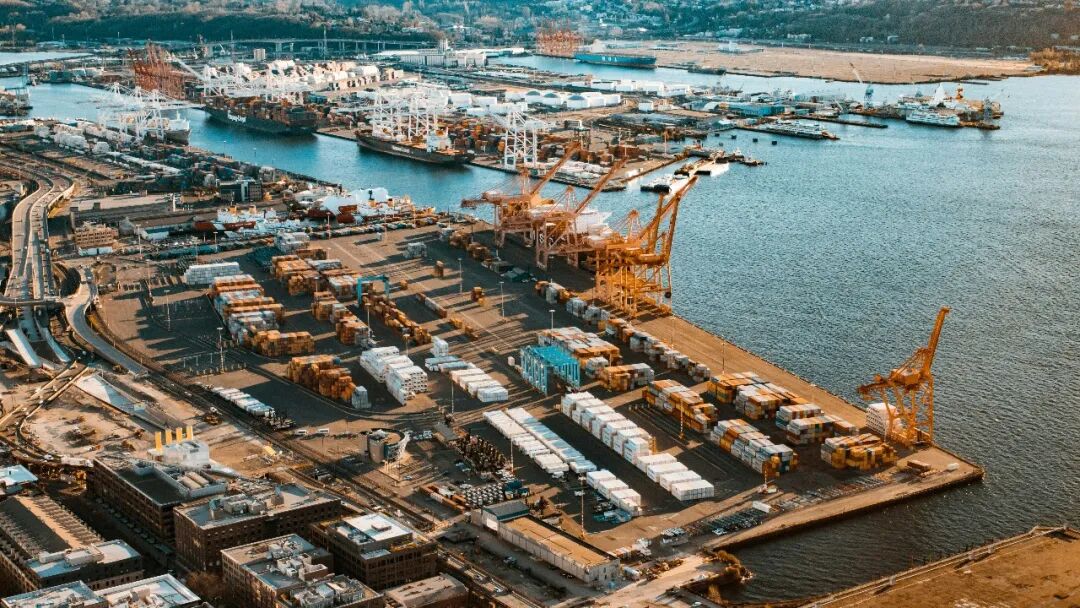
Traditionally, cities have placed a premium on tangible resources such as land, factories, minerals, and population. However, the landscape is evolving. Nowadays, orders, inventories, warehouse receipts, price indices, transportation data, and settlement relationships have emerged as valuable assets that cities can effectively manage.
A city may lack natural resources like oil fields, but it can strategically allocate crude oil through sophisticated warehousing and trading mechanisms. Similarly, a city without iron mines can wield influence over ore pricing and distribution through its ports, indices, and derivatives markets. Even cities without direct ownership of commodities can become pivotal control nodes within the industrial network by leveraging data, finance, and regulatory frameworks.
This transformation is what makes the 'urban commodity boom' so fascinating. The competitive logic among cities has shifted from merely possessing resources to mobilizing them effectively.
The victor in this new era is not the city that boasts the largest quantity of resources, but rather the one that excels in three key areas: the real value extracted from goods in transit, the recognition of warehouse receipts by banks and trading institutions, and the ability to manage risks during price fluctuations, either by bearing them internally or assisting the industry in mitigating them.
The transition from 'selling land' to 'managing cargo flows' and ultimately to 'setting rules' may appear to be a simple change in focus. However, it represents a profound shift in the growth trajectory of Chinese cities. This transformation will not occur overnight, but the direction is unmistakable: cities that master the art of managing 'flows' are poised to secure a competitive edge in the next round of urban reshuffling.
Information Source Description
Data and Announcement Sources:
- Ministry of Finance: "Report on the Implementation of the Central and Local Budgets for 2024 and the Draft Central and Local Budgets for 2025," "Final Account Table of National Government-Managed Fund Revenues for 2024," and fiscal revenue and expenditure data for 2025.
- General Administration of Customs: "Table on the Quantities and Values of Key Imported Commodities Nationwide for December 2025."
- National Bureau of Statistics: "Statistical Communique on the National Economic and Social Development of the People's Republic of China for 2025."
- Shanghai Municipal Government: "Three-Year Action Plan for the Transformation and Upgrading of Shanghai's Bulk Commodity Trade (2025-2027)."
- Hangzhou Municipal Government: "Three-Year Action Plan for Promoting the Construction of an Innovation Center for Bulk Commodity Investment, Trade, and Services in Hangzhou to Drive High-Quality Development of Bulk Commodity Trade (2025-2027)."
- Zhejiang Provincial Government: "Special Implementation Plan for the Bulk Commodity Resource Allocation Hub in the China (Zhejiang) Pilot Free Trade Zone."
- Qingdao Municipal Government: Policy Interpretation of the "Construction Plan for Qingdao as a Strategic Fulcrum City for Modern Circulation" and the "Trial Measures for the Management of the Risk Compensation Fund Pool for Bulk Commodity Trade."
- Ministry of Commerce: "Construction Plan for the Bulk Commodity Resource Allocation Hub in the China (Zhejiang) Pilot Free Trade Zone."
Disclaimer: This article is provided for reference purposes only and does not constitute any form of investment advice.
THE END
Copyright and Disclaimer
- Content Copyright: Unless explicitly stated as publicly available data, policies, or cases, the content of this article is original. Professional data is sourced from authorized databases and government websites, and cases are compiled from real-world events.
- Image Authorization: Some images featured in this article are our proprietary materials or officially licensed, including those generated by AI. For any online images with unclear copyright status, the copyright remains with the original authors, and any infringement will be promptly removed upon notification.
- Reprint Guidelines: Reprinting is strictly prohibited without prior permission. Any reprint must retain the complete source and author information.
- Responsibility Statement: This article represents the author's observations on business figures and industrial commentary, compiled based on publicly available information. The content is for reference only and does not constitute professional advice. Any risks arising from its use are the sole responsibility of the user. Wanlian Wanxiang reserves the final right of interpretation for this article.
-
How AI Changes the Flow of Money: Budget, Self-Development, and the Last Mile
-
![]()
SAIC Volkswagen’s Bold “Self-Revolution”: ID.ERA 5S Targets the Heart of the Fuel-Powered Family Sedan Market
-
![]()
Beyond APIs: Future-Oriented Strategies for AI Global Expansion
-
![]()
Behind the Daily Average of 140 Trillion Token Calls: Who Will Become China's Future New Three Major Operators?
-
![]()
How Many Zhipu Members Were Wrongly Banned?
-
![]()
Leapmotor Revises Profit Goal to 3 Billion Yuan: Targets 400,000 Overseas Sales in the Coming Year, Forges Symbiotic Alliance with FAW | MINGJINGpro
-
![]()
Behind the 140 Trillion Token Calls Per Day: Who Will Become China's New Big Three Operators in the Future?
-
![]()
DPCA Technology Launched, Pioneering a New Era for Joint Ventures: Taking 'Chinese Heritage' Global