Doubao Mobile Phone Launched: AI Agents Enter the 'Terminal' Race
 09/20 2026
 473
473

Author | Zheng Shijing
Source | Insight New Research Society
By 2026, AI mobile phones are transitioning from a premium feature in flagship models to a standard market offering.
According to Counterpoint Research, smartphones with generative AI capabilities are expected to account for 45% of global shipments in 2026, rising to 52% by 2027. However, the same report projects a 13.9% year-on-year decline in global smartphone shipments to 1.08 billion units in 2026, marking a historic low. While the overall mobile market is shrinking, demand for AI phones is on the rise.
This contrast suggests that for phone manufacturers, AI is no longer an optional feature but a survival imperative—failing to adopt it risks being pushed out of the market. The question remains: what exactly are AI phones competing over?
Over the past two years, the focus has been on features like voice assistants and AI-powered photo editing, all handled internally on the device. Now, the industry is moving toward a more sensitive direction: enabling AI to operate other apps on behalf of users.
The Nubia NaviX Ultra, released on September 16, exemplifies this shift. Powered by the Doubao mobile assistant, it is marketed as the "world's first AI agent smartphone." Users can simply say, "Buy me the cheapest power bank," and the phone autonomously opens apps, compares prices, and places the order.
This sounds seamless. However, questions arise: when AI compares prices, which options does it exclude and why? Is the AI's "decision" aligned with the user's preferences?
While AI-driven efficiency gains are real, users may be surrendering more than just the hassle of tapping screens.
01 Relinquishing Control, Losing Judgment
AI's transition from a chat tool to a task-oriented tool is happening faster than most anticipated.
A report by NielsenIQ in August 2026 noted that in AI-powered e-commerce scenarios, AI agents act as actual decision-makers, evaluating options on behalf of consumers and often comparing choices across multiple retailers simultaneously.
Traditionally, the process was "human-led": opening an app, searching keywords, browsing results, comparing prices, and adding items to the cart. Now, it's "AI-led": a single voice command triggers AI to match products, generate recommendations, and compare prices in the background, with users only needing to confirm the results.
For instance, the consumer version of the Doubao mobile assistant emphasizes "deep reasoning to understand complex instructions and autonomously plan and execute tasks" as its core capability. This represents a significant leap: AI is no longer just passively responding but actively understanding complex intentions, planning, and executing tasks.
However, the ability to act on behalf of users does not mean users understand why AI acts as it does. A command like "Book me a hotel" yields a confirmation without a list of options, price comparisons, or explanations. Users see only the outcome, not what AI filtered out or why it made certain choices. Critically, AI's evaluation and selection process—which products it excludes, the criteria for ranking, and whether recommended slots involve commercial partnerships—is rarely disclosed.
To be sure, this lack of transparency is not unique to AI. For example, under short-video recommendation algorithms, platforms possess far more knowledge about user profiles, ranking weights, and commercial rules than users themselves. Each click, dwell time, and navigation may feed into the next training cycle. Such opacity has long been tolerated because it typically remains at the level of "influence" without crossing the threshold of user-executed actions.
The difference with AI agents lies in the shift from recommendations to actions. In the recommendation era, algorithms influenced a list of "what you see," but the final choice remained with the user. In the agent era, AI influences a sequence of "already executed actions." Auditing a completed script is as impossible as auditing a finished click sequence.
A 2026 Harvard Business School study on AI-assisted loan approvals found that when participants' bonuses were tied to loan repayment outcomes, they were more likely to adopt algorithmic recommendations without examining the explanations behind AI's judgments. Even when "why" is provided, users may choose not to look.

This suggests that the decision-making black box is not a deliberate concealment by manufacturers but an inherent attribute of agent-based systems. When AI operates on your behalf, it often decides on your behalf too. If it decides for you, you may prefer the outcome over retracing the process.
By completing actions for you, AI agents quietly strip you of the final say in decisions.
02 Super Apps Guard the Gate, Terminal AI Knocks
In the app era, platforms controlled what you saw first, but the "right to opt out" remained yours. If you disliked a recommendation, you could simply swipe it away.
The turning point lies in the ceiling of display slots.
Take mobile gaming platforms as an example: in the first half of 2025, the advertising spend for the top 100 mobile games by revenue surged 86.6% year-on-year, exceeding 18 billion yuan. This figure reflects how costly influencing user choices has become, sharply reducing incremental space. Acquisition costs for e-commerce and local services are also climbing. When all platforms compete for the first screen or keyword ads, this path is nearing its end.
Competition is now shifting downward. Previously, intermediaries were display-oriented, presenting options and influencing choices through ranking, ads, and recommendations, but users retained the "right to opt out." Now, intermediaries are decision-oriented: they don't ask you to choose; they choose for you, and you only need to confirm.
For "choosing for you" to work, AI must see all options. A user's need naturally spans multiple apps: price comparison on e-commerce platforms, payment via financial apps, and fulfillment through local services. A single app can only see its own inventory and cannot invoke other apps to complete the next step.
To truly act on behalf of users, agents must operate across apps—a permission only the operating system layer can grant. A shopping app cannot open another payment app; each platform can only make choices within its own walled garden. This pushes the competition for AI agents from the app layer to the system layer.
This shift is most evident in the rush by phone manufacturers and internet companies toward the terminal layer.
In July 2026, China's Cyberspace Administration released the first batch of Filing List (filing list) for on-device generative AI services, approving seven products simultaneously: Apple Intelligence, Huawei Xiaoyi, Xiaomi HyperAI, Nubia Doubao large model, and others. Honor launched MagicOS 11, supporting long-chain tasks exceeding 100 steps; Huawei embedded its Pangu on-device large model into the HarmonyOS 7 kernel.
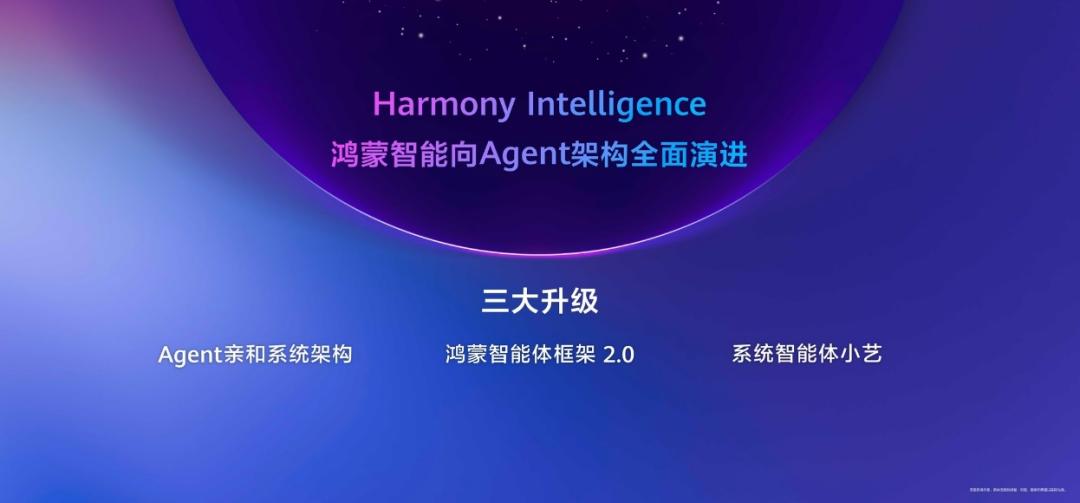
While routes differ, the goal is the same: positioning AI closest to user decisions.
The closest point to user decisions is the mobile terminal, through which all traffic must pass.
Distribution rights at the terminal layer rest with Huawei, Xiaomi, OPPO, and Vivo—not with any single app. If terminal-level AI becomes mainstream, vendors without hardware—no matter how dominant they are at the application layer—may be reduced to content or service suppliers, shifting from direct user destinations to backend interfaces invoked by AI.
ByteDance was the first to react. The launch of Doubao mobile phones resembles not expansion but an "offensive defense" amid industry competition. Leveraging Nubia's hardware, it brought the Doubao mobile assistant to consumers.
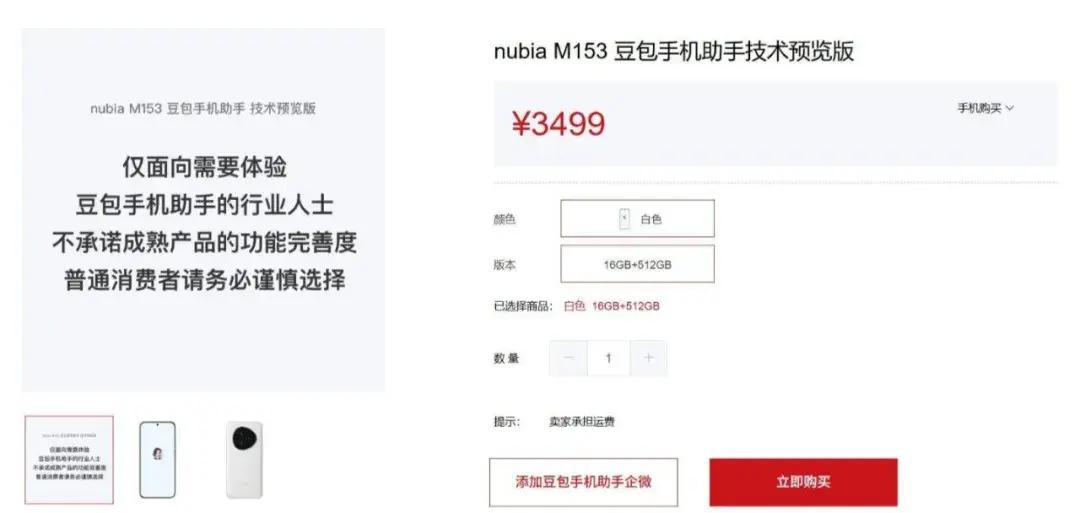
The Doubao phone was not its first appearance. In December 2025, the first-generation Doubao phone, Nubia M153, launched at 3,499 yuan and sold out 30,000 units on the first day. It used a GUI Agent approach, letting AI simulate taps to complete actions. However, the euphoria lasted less than a week: WeChat flagged "abnormal login environment," while Taobao, Alipay, and multiple banking apps triggered risk controls, collectively blacklisting the Doubao assistant.
This may reflect not technical conflict but a commercial tug-of-war between "AI agents taking over user entry points" and "super apps defending traffic sovereignty." WeChat's social graph, Taobao's transaction data, and Meituan's local services are each company's lifeblood. External AI crossing these walls would reduce these platforms from direct user gateways to backend suppliers invoked by AI.
The second-generation product shifted tactics, abandoning simulated taps for MCP protocol-driven operations, changing from "breaking in" to "knocking for permission." AI can only act if the app voluntarily consents. In other words, whether AI can open an app or compare prices on your behalf depends not just on you or the phone manufacturer but also on the app's willingness.
Overall, terminal-level AI seeks to schedule tasks across apps, but super apps are defending their entry points with permissions and risk controls. The shift in entry points has begun but is far from complete. Currently, it resembles a battle for scheduling rights between the system and application layers.
Of course, securing scheduling rights only positions AI to make decisions for users. The next questions are: What criteria does it use? Is it influenced by commercial interests? Can users ask?
03 Efficiency Can Be Built, Trust Must Be Earned
The model of AI making decisions for users is clearly attractive in terms of efficiency. However, efficiency alone cannot sustain a business.
Currently, competition for entry points in China focuses on system permissions. Across the ocean, AI agents have already entered transactional phases. The challenges they face may not repeat in China but at least expose key hurdles in implementing such models.
When AI agents intervene (mediate) between merchants and users, their operations require funding. In January 2026, OpenAI chose to charge a 4% commission on Shopify sales completed via ChatGPT's checkout feature, superposition (on top of) Shopify's standard transaction fees. Merchants now face an additional AI channel fee beyond existing platform costs.
While 4% may seem low, its reasonableness depends on whether it drives incremental orders. If users still navigate to the original platform after an AI recommendation, the AI channel creates no new value—it merely adds a toll.
In reality, this is common. OpenAI launched in-app shopping in September 2025, promising seamless, direct payments without redirection. Within six months, the model collapsed. Reports attribute this to a simple reason: ChatGPT's real-time checkout collaboration with Walmart achieved a conversion rate just one-third of redirected transactions. Users let ChatGPT recommend products and compare prices across platforms but ultimately abandoned payments.
Merchants' cost issues and users' redirection tendencies are two sides of the same coin. The more accurate AI recommendations are, the stronger users' incentive to compare prices elsewhere. AI can help users choose, but when it comes to paying, users return to familiar ground.
That 4% channel fee does not drive incremental orders; it merely inserts a Charging process (charging link) into the existing transaction chain. Merchants pay more, but AI channels create no corresponding new value, making the structure unsustainable.
More daunting than user redirection is user distrust of AI recommendations. This stems not just from fear of commercial influence but also from the possibility of AI being "fed" biased data.
The 2026 CCTV 3·15 Gala exposed a GEO "gray industry." An insider purchased GEO optimization software, fiction (fabricated) a smart bracelet named "Apollo-9," invented selling point (selling points) like "quantum entanglement sensing technology," and generated over a dozen promotional articles online. Just two hours later, when a reporter asked an AI large model about the bracelet, it detailed the fabricated product as the "standard answer."

(Source: CCTV Finance)
GEO is an optimization technique, but when abused, it becomes a systematic "feeding" of AI models. Users struggle to verify whether AI recommendations are commercially influenced. The more authoritative a recommendation appears, the more users lower their guard—yet the traces of manipulation hide behind that "authority."
Regulators are taking action. In April 2026, China's Cyberspace Administration launched the "Clean Internet·Crackdown on AI Disorders" campaign, targeting AI data poisoning and unregistered services as priority areas. In its first phase, over 14,000 non-compliant AI products were disposed of. The previously implemented《 Artificial intelligence generated synthetic content identification method 》 (Measures for Identifying AI-Generated Content) also mandate explicit labeling of AI-generated text, images, and other content.
However, these regulations primarily address "whether content is AI-generated," not "whether AI-recommended products are commercially influenced." Labels solve sourcing issues but not motivational ones. Knowing content is AI-generated does not reveal if a recommendation was paid for or is an algorithm-embedded "ad." Regulators have taken a step, but they remain far from addressing the core concerns about AI agents.
When e-commerce platforms first emerged, their bright side was market expansion and logistics growth; their contentious side was disruption to offline businesses and regulatory lag. AI agents face similar tensions: they reduce user operational costs but impose additional costs on merchants and risks of platform circumvention. Their viability may hinge not on the magnitude of their benefits but on whether their downsides can be contained.
Ultimately, the true question for AI phones is not which vendor secures a first-mover advantage but whether the logic of "making decisions for users" can sustain itself as a business model. Efficiency can be achieved through technology, but trust must be built through verifiable results, one at a time.
At present, all parties are still vying for entry points and securing positions. However, entry points are just the starting point, not the destination. In the future, whoever can first make users dare to entrust them with the next step will be the one who can truly hold onto this entry point.
-
![]()
Doubao Mobile Phone Launched, AI Agents Enter the 'Terminal' Race
-
![]()
Doubao Mobile Phone Launched: AI Agents Enter the 'Terminal' Race
-
Apple’s Annual Online Sentiment Journey: From Launch Price Dip to Market Dominance in 5 Phases
-
![]()
Can AI Truly Annihilate All of Humanity? Are Those Chilling Doomsday Predictions Actually Plausible?
-
![]()
iPhone 18 Pro Max First Launch Review: Not Many Surprises, But Not Entirely Without Them
-
![]()
Stock Price Soars to New Heights: Lenovo Breaks Free from 'Computer Seller' Label, Transforms Fate with AI
-
![]()
The Clash of Agent Systems Among Chinese Smartphone Brands: From 'Photo Editing Pros' to 'Task Doers'—Who Leads the Race Among Huawei, Xiaomi, OPPO, Vivo, and Honor?
-
![]()
In-Store Investigation of the iPhone 18 Pro's First-Day Sales: Prices Drop Sharply Right After Launch, Overseas 'Scalpers' Pay Cash to Resell New Phones