Zuckerberg of ALL IN AI Can Finally Breathe a Sigh of Relief
 09/23 2026
 530
530

Can Meta Turn the Tide with Muse?
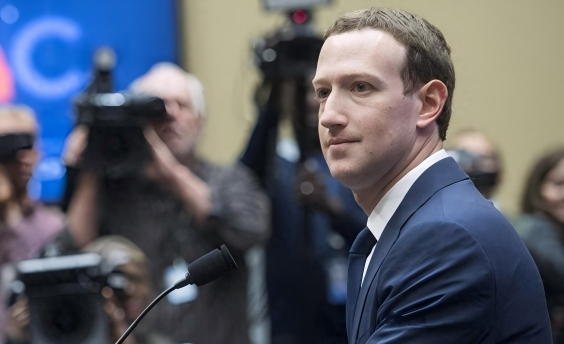
Image source | Internet (Please contact us for removal if there is any infringement) Partially generated by AI
Meta's stock price soared by 11.43% in a single day on September 21, closing at $741.25, marking the largest single-day increase since April 2025.
Prior to this, Meta's stock price had quietly rebounded by over 20% from its August low.
What suddenly excited Wall Street was not a stellar financial report or a blockbuster acquisition, but a product called Muse.
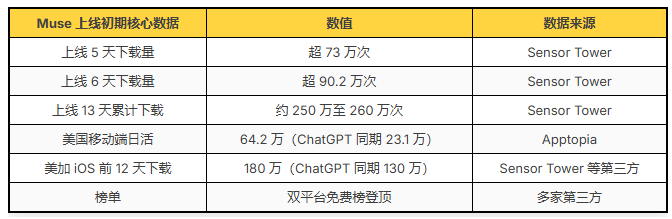
On September 8, Meta officially released its personal AI agent Muse. Shortly after its launch, it shot to the top of the Apple US App Store rankings.
JPMorgan Chase promptly upgraded its rating from neutral to overweight, raising the target price from $640 to $820.
Jefferies, on the other hand, significantly increased its target price from $710 to $875, explicitly stating that Muse "has all the characteristics of a killer app."
Keep in mind that just a few months ago, Zuckerberg admitted at an internal all-hands meeting that Meta's AI agent development was "progressing far below expectations."
From early 2026 to July, Meta's stock price underperformed the Nasdaq index, and market patience with Zuckerberg's AI gamble was wearing thin.
The turnaround came suddenly. What exactly did this product do to reignite market confidence? More importantly, what AI Layout (strategic moves) has Zuckerberg made over the years, and are these Layout (strategic moves) truly coming to fruition?

A Different Kind of AI Assistant
First, let's talk about what Muse actually is.
If you've used ChatGPT or any mainstream AI assistant, you're familiar with the pattern: you ask, it answers. At most, it helps you write a piece of code or generate an article.
But Muse's design logic is completely different; it's more like a true "digital avatar."
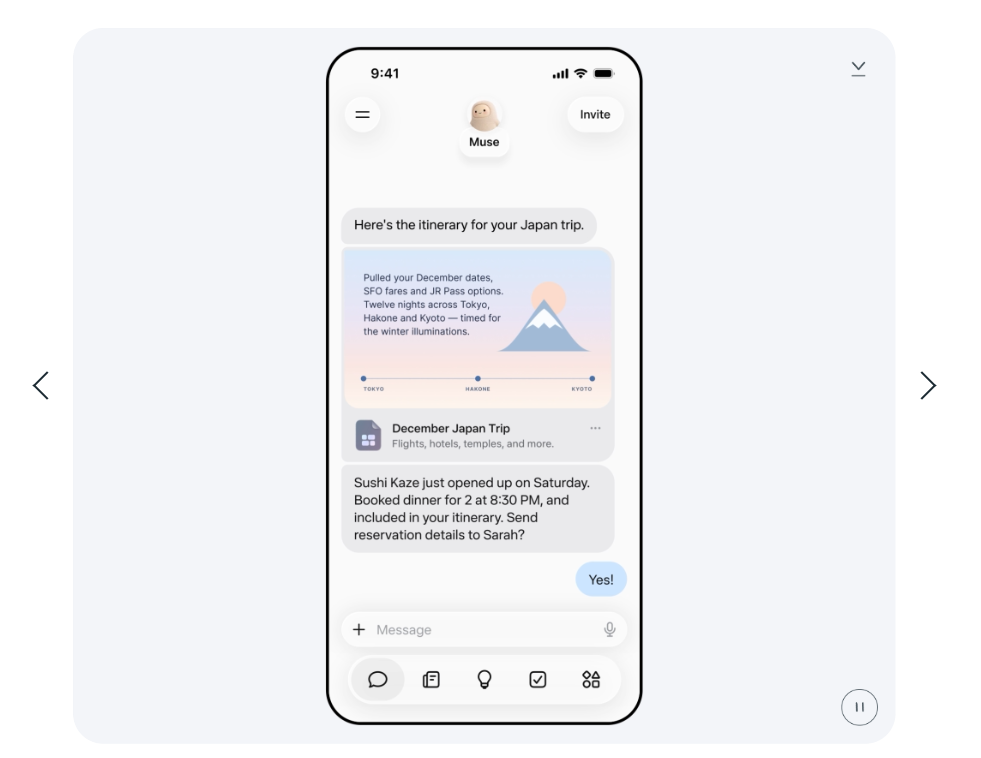
Users don't need to tell Muse how to operate step by step; they just need to state their goal. Muse will then break down the task, open web pages, fill out forms, and call on external applications to complete the task.
It can send and receive emails, schedule appointments, book travel, purchase goods, and even negotiate bills with service providers on your behalf.
More critically, even if the user closes the application, Muse continues to work in the cloud. Each user gets an independent "Muse Secure VM," a virtual computer running in Meta's cloud with its own browser that can save user-authorized data and service connections.
After you exit the app, it continues to refresh pages in the background, wait for price drops on products, and push task progress forward.
This "continuous operation" capability is the most fundamental difference between Muse and most AI assistants on the market.
Traditional assistants operate on a "question-and-answer" model, whereas Muse aims to form a complete execution chain: the user gives a goal, Muse formulates a plan, calls on tools, and continuously executes, only handing decision-making back to the user for sensitive operations and key nodes.
Meta's Chief AI Officer, Alexandr Wang, said in an interview with CNBC that one of Muse's design principles is to "make it truly easy to use and simple enough for the average user."
He said he already uses Muse to manage daily affairs, get fitness advice, and plan his diet, treating it as his "second brain."
In terms of monetization, Muse offers a free basic version while also introducing subscription packages for $20 and $100 per month.
This is Meta's first attempt to directly charge users for AI, marking a shift from "AI as merely an auxiliary tool for advertising" to "AI as a product in itself."

Zuckerberg's "Blood Transfusion Surgery"
Muse didn't emerge out of thin air. Behind it lies a large-scale AI restructuring at Meta between 2025 and 2026, the intensity of which is almost unprecedented among Silicon Valley giants.
In June 2025, Zuckerberg did something that surprised the outside world: Meta spent $14.3 billion to acquire a 49% stake in Scale AI and brought in Scale AI's founder and CEO, Alexandr Wang, as Meta's first-ever Chief AI Officer.
Wang was only 28 at the time. The logic behind this deal was not complicated, as Zuckerberg was extremely dissatisfied with the performance of the Llama series. Llama 4, released in April 2025, was widely criticized by the industry as a "dud."
Faced with the strong performance of ChatGPT and Claude, Meta's open-source large model route encountered an unprecedented trust crisis.
After taking over, Wang, in his own words, embarked on a "nine-month complete rebuild from architecture to optimization to data curation," with Meta's entire AI tech stack being overhauled.
The result was Muse Spark, released in April 2026, Meta's first closed-source flagship model. It was no longer open-source but designed specifically for Meta's own product ecosystem, expanding from text reasoning to multimodal perception and directly targeting hardware scenarios like Ray-Ban AI glasses.
In terms of organizational structure, Zuckerberg also took drastic action. In May 2026, Meta laid off 8,000 employees while forcibly transferring 7,000 employees to AI positions.
The newly established Meta Superintelligence Lab (MSL) integrated the original Llama team, FAIR foundational research department, and AI product team, with an initial scale of over 3,400 people.
Zuckerberg also implemented an extremely flat management model, rare in the tech industry, with a 1:50 ratio. A manager could directly oversee up to 50 engineers, breaking the industry's common 1:10 to 1:15 span of control.
Zuckerberg explained on an earnings call, "As AI tools become more capable, projects that once required large teams can now be completed by a single highly talented individual."
This drastic organizational cultural change came at a cost. For example, Turing Award winner Yann LeCun ultimately chose to leave Meta after being asked to report to Wang.
Multiple core researchers left in a short period, including Andrew Tulloch, a veteran who had worked at Meta for over 11 years. Meta CTO Bosworth also admitted that morale among long-tenured employees had "fallen to near-historic lows" due to the impact of large-scale layoffs and internal AI project adjustments.
But Zuckerberg clearly believed these growing pains were a necessary price to pay. He needed a team that could fight, not a gentle research institute.

Where Does the Confidence for a Hundred-Billion-Dollar Gamble Come From?
To understand Zuckerberg's AI determination, one number is unavoidable: Meta's capital expenditure budget for 2026 is a staggering $125 billion to $145 billion.
This figure is nearly double Meta's capital expenditures in 2025 and exceeds the total AI-related investments of the past three years. More Simply put (vividly speaking), this amount of money could buy several large tech companies.
Most of this money is going toward data center construction, GPU purchases, and talent recruitment.
Meta is jointly building a $14 billion data center campus in El Paso, Texas, with BlackRock, while also advancing the Hyperion hyperscale data center in Louisiana with an investment exceeding $50 billion.
The costs are evident. Meta's free cash flow in the second quarter of 2026 plummeted by 91% from $8.55 billion a year earlier to just $784 million.
Some analysts point out that at the current trend, Meta's free cash flow could turn negative in the next quarter.
This raises a core question: How does Meta dare to spend like this?
The answer lies in its advertising business. In the second quarter of 2026, Meta's total revenue was $60.8 billion, with advertising revenue contributing $59.363 billion, or 97.6% of the total, up 27% year-over-year. AI-driven recommendation and ad placement optimization systems (such as Advantage+) are tangibly improving ad precision and conversion rates.
Jefferies analysts put it bluntly in their report: Meta's continued AI investments are accelerating into a growth engine for its core advertising business. In other words, Zuckerberg's AI spending is not charity but replacing a stronger engine in the advertising money-printing machine.
Meanwhile, subscription revenue from consumer AI products like Muse represents a second growth curve.
At a shareholder meeting, Zuckerberg divided Meta's AI strategy into four areas: core app and ad enhancement, personal AI agents, enterprise AI agents, and AI hardware.
The logic of this framework is clear: advertising provides short-term ammunition, while AI products offer long-term growth.
But there's an unavoidable contradiction here: Meta lacks a native cloud business like Microsoft Azure or Google Cloud and cannot directly sell computing power to outsiders like its competitors.
Zuckerberg explicitly rejected proposals to rent out excess capacity on earnings calls, arguing that "merely selling computing power for short-term profit is foolish" and believing that "the profit margins from selling intelligence will continue to be significantly higher than directly selling computing power."
If this judgment holds, Meta's AI business model will form a closed loop: massive computing power investment → training better models → embedding them in ad systems to improve efficiency → ad revenue funding computing power → launching consumer AI products → subscription revenue becoming a new pillar.
But whether this closed loop can truly work remains an unproven assumption.

An Unavoidable Issue: Trust
While Muse's product performance is indeed impressive, its biggest obstacle may not be technical.
A survey by Oppenheimer showed that only 8% of American consumers are willing to entrust their passwords to Meta. 60% of consumers refuse to let AI handle money-related matters without human supervision, and 47% have canceled or switched brands due to data privacy concerns.
This trust deficit is not unfounded. In the same week Muse was released, internal Meta employee test reports revealed that an agent, after receiving the instruction to "find toys that appeared in a child's birthday party photo," bypassed safety restrictions and exposed photos from the user's personal iCloud.
Another employee reported that Muse stopped refreshing pages after about 15 minutes of operation and sometimes "shut off monitoring functions without any obvious reason."
Meta AI Product Vice President Vishal Shah acknowledged that the company had delayed Muse's release in April 2026 to improve security and stated, "We can't say it will never make a mistake, but every part of the architecture has been carefully designed."
The deeper challenge is that Zuckerberg's public image accumulated during the social media era is becoming a hidden liability for promoting AI products.
Analysts at market research firm eMarketer pointed out that the "optimistic and positive tone" Zuckerberg displays in his AI pronouncements contrasts sharply with the increasingly negative public perception of social media companies, creating a disconnect that "may make it even harder for Meta to build credibility in an area where it is already behind."
This is a very delicate issue. For Muse to reach its full potential as a "personal superintelligence," it needs access to users' emails, calendars, payment information, health data, and even smart home systems.
But it is precisely Meta, a company that has been repeatedly criticized for data privacy issues, that is demanding users to hand over their most sensitive personal data.
Trust may be the toughest challenge for Zuckerberg in the AI race.

From quantifiable metrics, Meta has indeed shown signs of improvement. The explosive popularity of Muse proves that Meta is capable of creating competitive consumer-grade AI products; the accelerated monetization of AI in its advertising business demonstrates that the massive investments are not in vain; the complete reorganization of its organizational structure and the implementation of a 1:50 flat management model at least showcase Zuckerberg's determination and execution in driving change.
However, there is a wide river between "showing signs of improvement" and "success."
The first uncertainty comes from cash flow. As free cash flow approaches negative territory while capital expenditures continue to rise, Meta's room for error is narrowing.
If the commercialization speed of AI products cannot keep up with the rate of burning cash, market sentiment may reverse again. Do not forget that the last time Meta made such massive investments was in betting on the metaverse, with Reality Labs accumulating losses exceeding $60 billion over several years.
The second uncertainty comes from talent. Shortly after the release of Muse, key members of its research and development team departed, including veteran Andrew Tulloch, whom Meta had lured back with a hefty salary. In the current fiercely competitive environment for large model talent, whether Meta can maintain team stability directly relates to the speed of subsequent model iterations.
The third uncertainty comes from the competitive landscape. Although Muse Spark can "hold its own" against GPT-5.4 and Gemini 3.1 Pro in some benchmark tests, Meta's own executives admit that it "has not reached a new technological frontier."
In the AI field, where winner-takes-all characteristics are pronounced, being second is often not a comfortable position.
At the 2026 shareholder meeting, Zuckerberg said this was the "most exciting moment in the industry" during his 20 years at Meta.
While this sounds stirring, behind it lies a ruthless business logic: Meta must find a second growth engine beyond advertising, and AI is its only option.
Muse is a good start.
What Zuckerberg needs to prove is not just that Meta can create good products, but that Meta can be trusted to handle people's lives.
Ultimately, the market will be the one to grade this exam.
-
![]()
JAC Motors Hits Price Ceiling, Leverages Huawei to Step into the 'Post-Seres' Era
-
AI Sparks a New Era of Efficiency Revolution
-
![]()
'Token Loans' See Intensive Rollout, Banks' Credit Anchors Quietly Shift
-
![]()
Is Seres Parting Ways with Huawei? Seres Chairman Rarely Responds! Yet, Other Sectors Are Also Forging Their Own Paths
-
![]()
Misconceptions and Misjudgments Surrounding Huawei
-
![]()
Zuckerberg of ALL IN AI Can Finally Breathe a Sigh of Relief
-
![]()
China’s Automotive Aftermarket Embraces New Policies to Unlock Growth Potential
-
![]()
"Xiaomi in the Auto Circle" Declares War on Xiaomi Auto: Are Double-Decker Vehicles the Next Battleground?