'Token Loans' See Intensive Rollout, Banks' Credit Anchors Quietly Shift
 09/23 2026
 462
462
Computing Power Data Transformed into Credit Assets
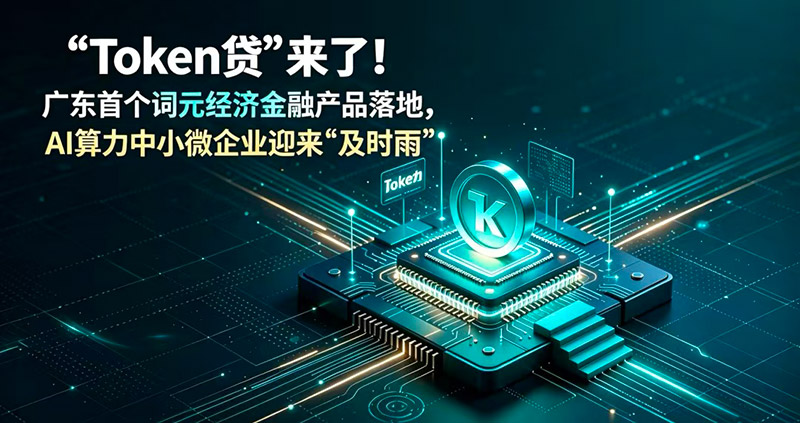
Since mid-August, Token Loans (also known as Token-Based Loans) have been intensively rolled out as a category of sci-tech innovation credit products. From Haizhu District in Guangzhou to the Beijing Economic-Technological Development Area, major state-owned banks such as Bank of China, Agricultural Bank of China, China Construction Bank, and Industrial and Commercial Bank of China, as well as institutions like CITIC Bank, Industrial Bank, and Bank of Beijing, have successively launched related products. These products incorporate corporate operational data—such as token consumption, computing power contracts, and accounts receivable—into credit evaluations.
Against the backdrop of China's average daily token calls surging over a thousandfold in two years, bank credit evaluations are shifting from 'collateral and financial statement-based' to 'computing power and token-based' approaches. Whether this new yardstick can measure accurately and endure over time has become a practical and specific question in the field of tech finance.
Token Loans Expand from Guangzhou to Beijing
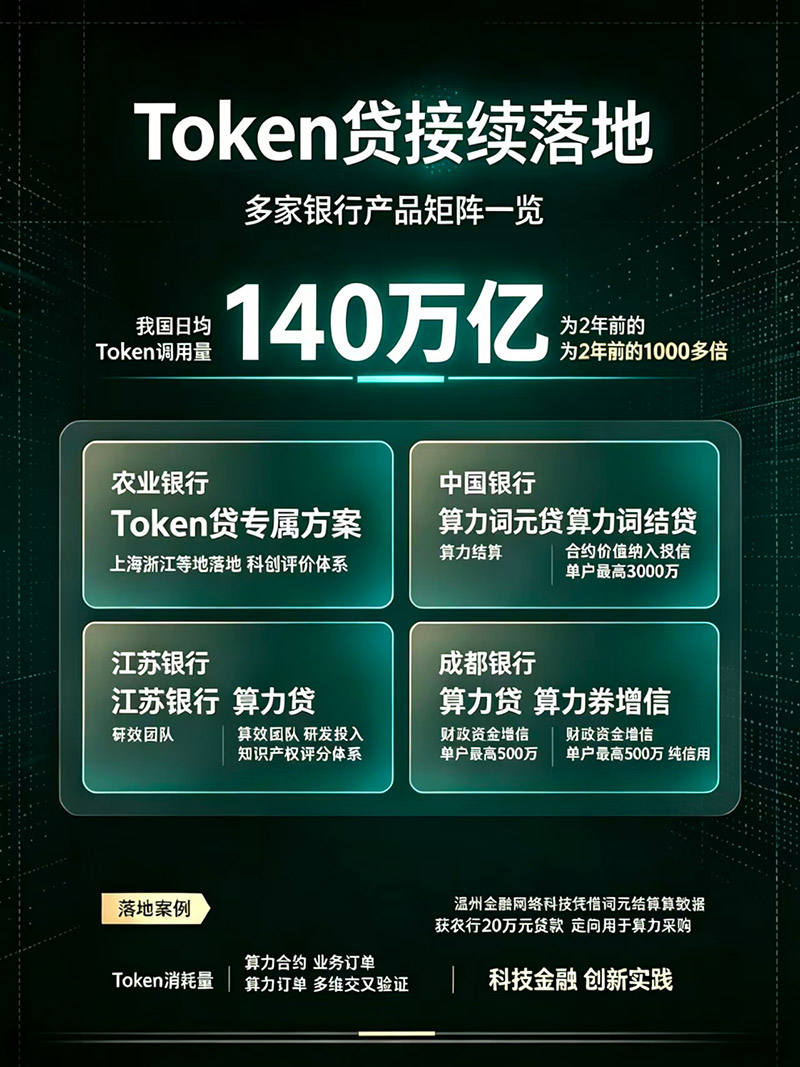
In June this year, the Agricultural Bank of China's Shanghai Xuhui Sci-Tech Sub-Branch launched a dedicated financial service scheme for Token Loans, using corporate token demand as a key basis for credit. The first deal was closed in the Yuanli Community, Xuhui District, supporting corporate token procurement and daily operations.
On August 14, Haizhu District in Guangzhou released Guangdong Province's first specialized financial product for the token economy, with three banks—Bank of China, CITIC Bank, and Guangzhou Bank—launching products simultaneously. Bank of China Guangzhou Branch's 'Computing Power Token Loan' sets credit limits based on contracts or token consumption, covering three major scenarios: computing power supply, application, and services. The maximum credit per customer is RMB 30 million, with terms up to three years. The primary guarantee methods are credit, accounts receivable pledges, and order financing.
Steady progress has been made from credit approval to disbursement. By late August, the product had approved credit for five customers totaling RMB 28 million, with actual disbursements to three customers totaling RMB 8 million. Another RMB 20 million was in the process of finalizing loan contracts. Guangdong Province's first token-based loan was a three-year, RMB 3 million credit loan granted by Bank of China Guangzhou Haizhu Sub-Branch to Guangzhou Tengyuan Digital Technology. The company's executive noted that while loans previously relied heavily on personal property guarantees from legal representatives, the basis for credit evaluation has now significantly changed.
Multiple financial institutions subsequently followed suit. Recently, China Construction Bank's Guangdong Branch, in collaboration with the Guangdong Token Trading and Service Center, launched a token-based loan, approving a RMB 30 million credit line for an intelligent IoT company in Guangzhou's Nansha District. Meanwhile, Industrial and Commercial Bank of China's Shenzhen Longgang Sub-Branch granted a RMB 5 million credit line to the embodied AI company Ai Zhihui Technology through its 'Computing Power e-Loan.'
On September 13, Beijing's Economic-Technological Development Area rolled out the city's first batch of 'Yiqi Token Loans,' with six institutions—Agricultural Bank of China, CITIC Bank, Industrial Bank, Bank of Beijing, China Minsheng Bank, and Huaxia Bank—participating. These loans provided a total credit line of nearly RMB 2 billion to multiple AI industry chain enterprises, with Guoqi Zhikong and Shenzhou Guangda each receiving RMB 30 million.
Policies and markets are forming synergies. In July this year, nine departments including the People's Bank of China jointly issued a notice promoting the extension of credit evaluations from 'collateral-based' to multi-dimensional approaches such as 'data-based.' According to the National Data Administration, China's average daily token calls surged from 100 billion in early 2024 to 100 trillion by the end of 2025, exceeding 140 trillion by March 2026—a more than thousandfold increase in two years. In March this year, the National Data Administration officially named tokens as 'tokens' and positioned them as value anchors in the intelligent era.
Shifting Credit Logic: Risk Control Challenges Ahead
The introduction of Token Loans addresses a real financing pain point. AI companies are generally asset-light and research-intensive, with core assets being algorithms, models, and orders. Lacking traditional collateral like factories and land, a structural mismatch exists between their asset forms and banks' traditional credit models.
Token consumption can, to a certain extent, reflect corporate large model call frequency, customer activity, and business sustainability, making it a quantifiable and verifiable operational metric. Dong Ximiao, Chief Economist at Merchants Union Consumer Finance, stated that token consumption is a core indicator for measuring corporate customer activity, product market acceptance, and business sustainability.
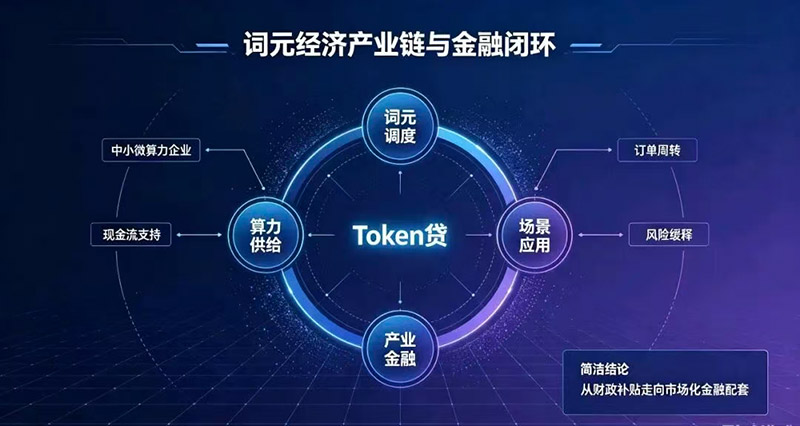
In practice, banks do not rely solely on token data but adopt multi-dimensional cross-verification. They generally reference corporate historical computing power settlement data, computing power service contract values, accounts receivable, token commission settlement volumes, and combine these with operational, financial, credit, and actual controller background checks to comprehensively determine credit limits. A cross-verification mechanism combining 'contracts, token call data, and transaction records' has been established.
A relevant executive from Bank of China Guangzhou Branch noted that the core of credit evaluation remains assessing corporate repayment capacity and future cash flows, with the fundamental credit logic unchanged. Token Loans anchor in authentic computing power service consumption and corporate operational data rather than speculative digital assets.
Meanwhile, as an innovative product, token-based loans face several practical challenges in scaling from pilot explorations to widespread adoption.
Token consumption cannot be simply equated with profitability. Tokens primarily appear as cost items rather than revenue items in corporate financials. Whether consumption growth can translate into stable repayment cash flows requires cautious judgment based on orders and revenue. If banks overly rely on this single indicator, they may face risks of disconnects between high consumption volumes and thin profits, leading to overestimations of repayment capacity.
Data authenticity verification is another critical link. Phenomena such as reselling idle tokens, back-end manipulation of consumption speeds, and fake transactions through invalid calls have emerged in the market, drawing attention from bank credit personnel. Meanwhile, token billing metrics and statistical standards remain inconsistent, with a third-party neutral audit system still lacking. Additionally, AI businesses often exhibit project-based, pulsating characteristics, with token consumption potentially declining significantly after project completion. This places higher demands on post-loan dynamic monitoring. Token prices fluctuating with the computing power market also raise questions about the stability of credit anchors.
In terms of actual progress, a gap remains between approved credit limits and actual disbursements. Bank of China admitted that the product is still in its exploratory stage, with mature risk control models yet to be established. Currently, approved projects in Guangzhou primarily involve credit-based loans and incorporate local government-bank risk-sharing mechanisms, reflecting the parallel characteristics of policy guidance and market exploration during the pilot phase.
Token Loans mark the beginning of the banking sector's sci-tech financial innovation around the token economy. Their value lies not only in broadening financing channels for asset-light AI companies but also in promoting the extension of credit evaluations from physical collateral to authentic operational data. However, token data represents just one piece of the credit puzzle rather than a new form of collateral. The product's long-term viability ultimately depends on whether data verification can penetrate deeply, statistical standards can be unified, and risk control models can withstand cyclical tests. The direction is clear, but the answers will emerge over time.
END
Follow us for more exciting content
Original content by Shengma Finance. Unauthorized reproduction prohibited.
-
![]()
JAC Motors Hits Price Ceiling, Leverages Huawei to Step into the 'Post-Seres' Era
-
AI Sparks a New Era of Efficiency Revolution
-
![]()
'Token Loans' See Intensive Rollout, Banks' Credit Anchors Quietly Shift
-
![]()
Is Seres Parting Ways with Huawei? Seres Chairman Rarely Responds! Yet, Other Sectors Are Also Forging Their Own Paths
-
![]()
Misconceptions and Misjudgments Surrounding Huawei
-
![]()
Zuckerberg of ALL IN AI Can Finally Breathe a Sigh of Relief
-
![]()
China’s Automotive Aftermarket Embraces New Policies to Unlock Growth Potential
-
![]()
"Xiaomi in the Auto Circle" Declares War on Xiaomi Auto: Are Double-Decker Vehicles the Next Battleground?