Blockbuster! Alibaba and ByteDance Launch Urgent Mystery Projects as Battle Looms
 10/09 2026
 421
421
Tech Giants Go All-In for the 'AI Battle': 'Triple Pay for Mid-Autumn/National Day Holidays, Work Overtime On-Site'—
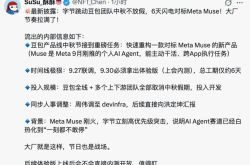
Ahead of the National Day holiday, a post about ByteDance's Doubao employees 'working overtime' went viral. A blogger on a social platform revealed: 'The internal team isn't taking the Mid-Autumn Festival off and has launched a high-priority emergency project to rapidly reconstruct a new product to rival Meta Muse.'
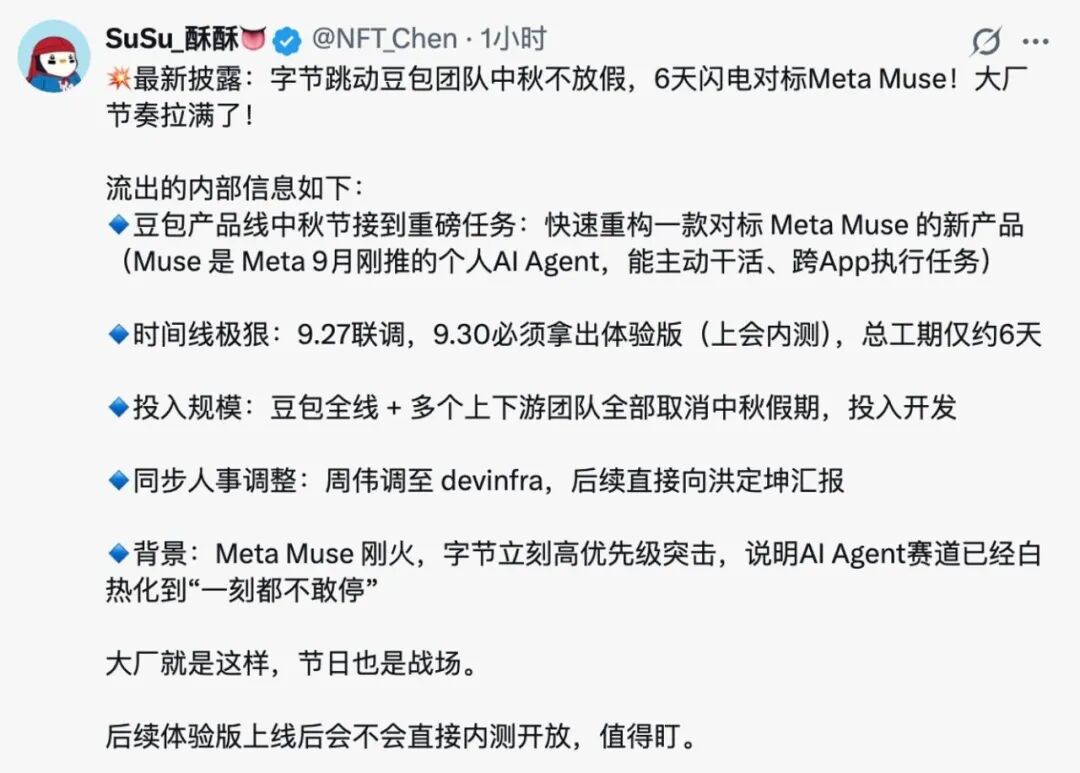
Note: This is unverified online speculation. Image source: X social platform
Over the past two years, domestic AI giants have been competing on model parameters, conversational fluency, and multimodal capabilities, vying to be 'smarter.' But with Meta's new AI product, Muse, going viral overseas, the race's direction has completely shifted: future AI won't just passively answer questions—it will proactively solve problems for users.
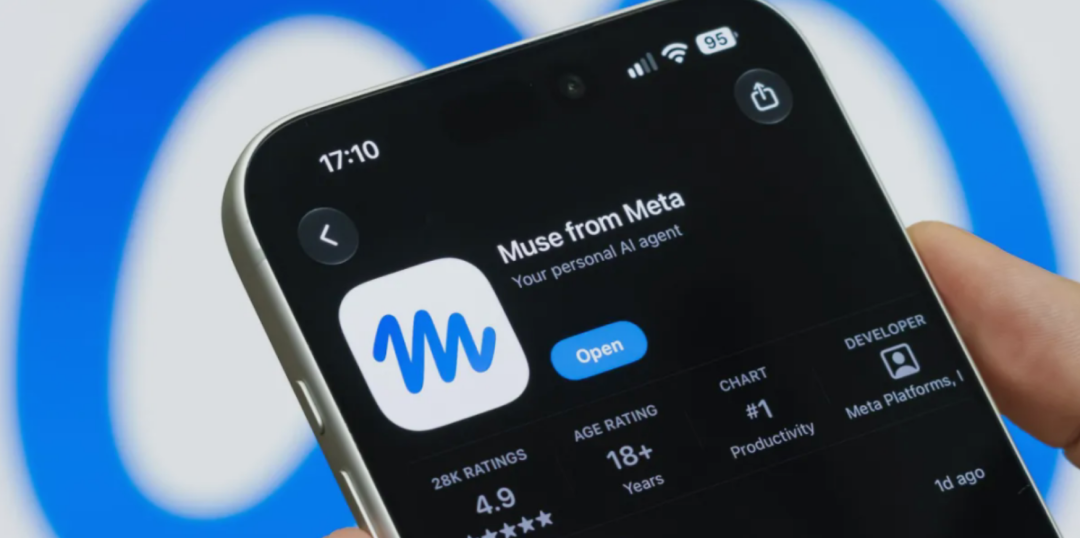
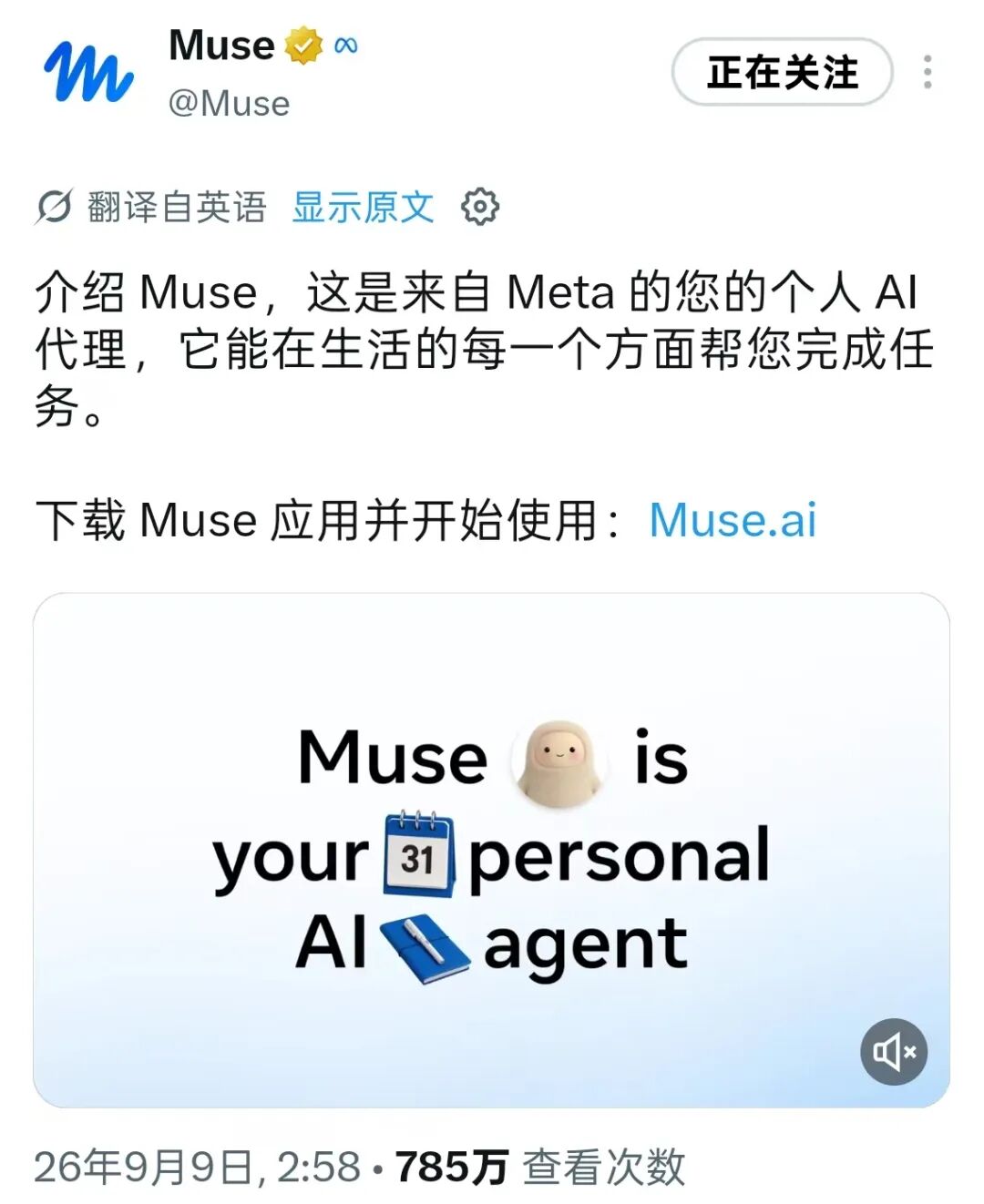 Image source: X social platform
This blockbuster product topped the U.S. App Store's free chart immediately after launch, boosting Meta's market value by nearly $200 billion in just over ten days and igniting a global arms race for personal AI agents.
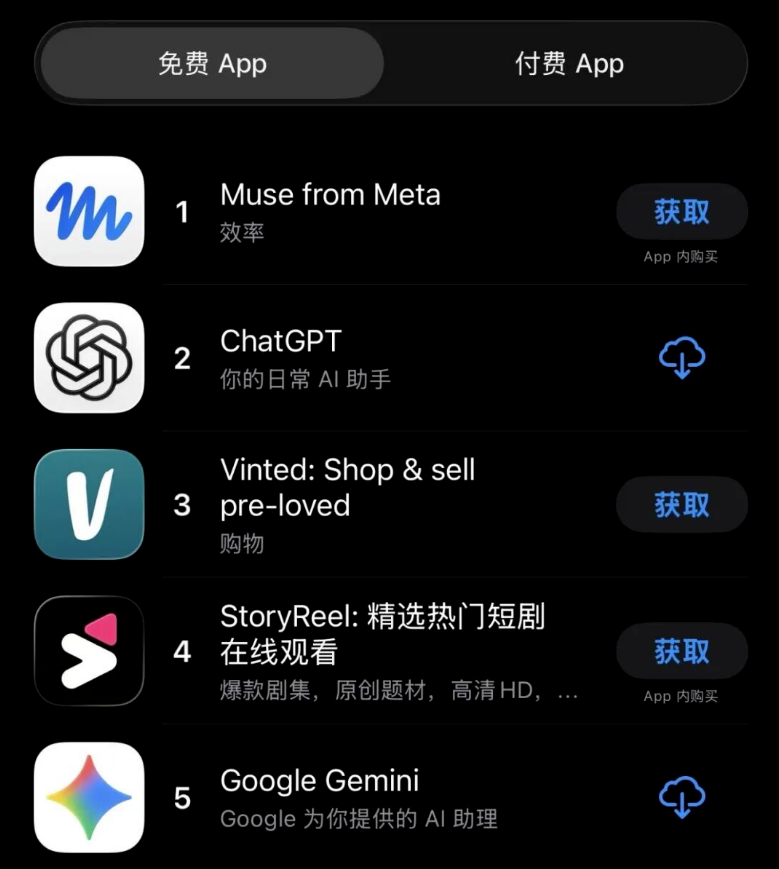
Image source: Apple App Store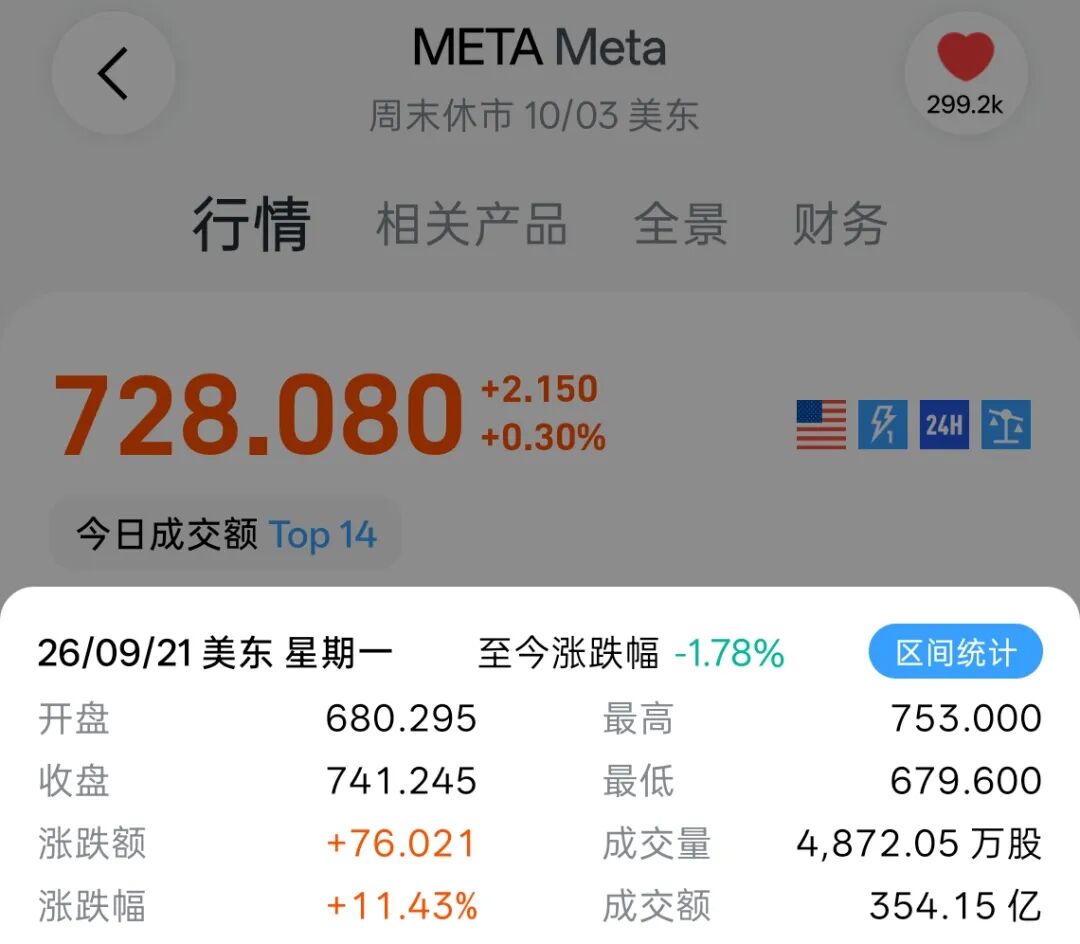 Meta's stock surged 11.43% that day. Image source: Longbridge App
Faced with this new wave of overseas AI innovation, Chinese tech giants can no longer sit idly by. Latest industry reports: ByteDance and Alibaba have both launched internal, high-priority emergency projects with full team mobilization, resource allocation, and strict confidentiality, aiming to secure prime positions in the next-gen AI entry points.
Without Preheating or official announcements, Top manufacturers (leading tech firms) are going head-to-head—the ultimate AI showdown in the Chinese market has quietly begun.
01 ByteDance's Extreme Rush: Project Launched in Just Over Ten Days, Full Team Mobilized for Mid-Autumn Crunch
ByteDance's response speed is top-tier in the industry.
According to the Science and Technology Innovation Board Daily, ByteDance's Doubao division urgently initiated a new product line directly rivaling Meta Muse, with the project priority raised to the company's highest level. Algorithms, engineering, product, and design teams are all on accelerated development.
 Image source: Weibo
The intensity of competition is reflected in the extremely tight timeline: from official project approval to delivering an internal beta version, only just over ten days are allotted, with development required to be completed and internal testing launched by September 30.
The industry knows that launching a new AI product—from polishing and debugging to a usable experience—typically takes months. Achieving this in just over ten days is extremely rare in the large model industry, underscoring ByteDance's urgency.
To ensure project success, ByteDance activated a full-team mobilization mode: reallocating core personnel from across Doubao's product lines, coordinating with upstream and downstream support teams, and pausing multiple non-core businesses. The project maintained strict confidentiality with zero external publicity, and the core team worked through the Mid-Autumn Festival holiday, iterating late into the night to secure an early market advantage.
This isn't a knee-jerk reaction from ByteDance but the culmination of sustained effort.
Insiders reveal that in April, Doubao internally incubated a personal AI assistant project codenamed 'Spell,' with core capabilities highly aligned with Muse—focusing on autonomous task execution and full-scenario delegation. Led by the Doubao mobile assistant team, it was temporarily shelved due to product iteration timing and not publicly revealed.
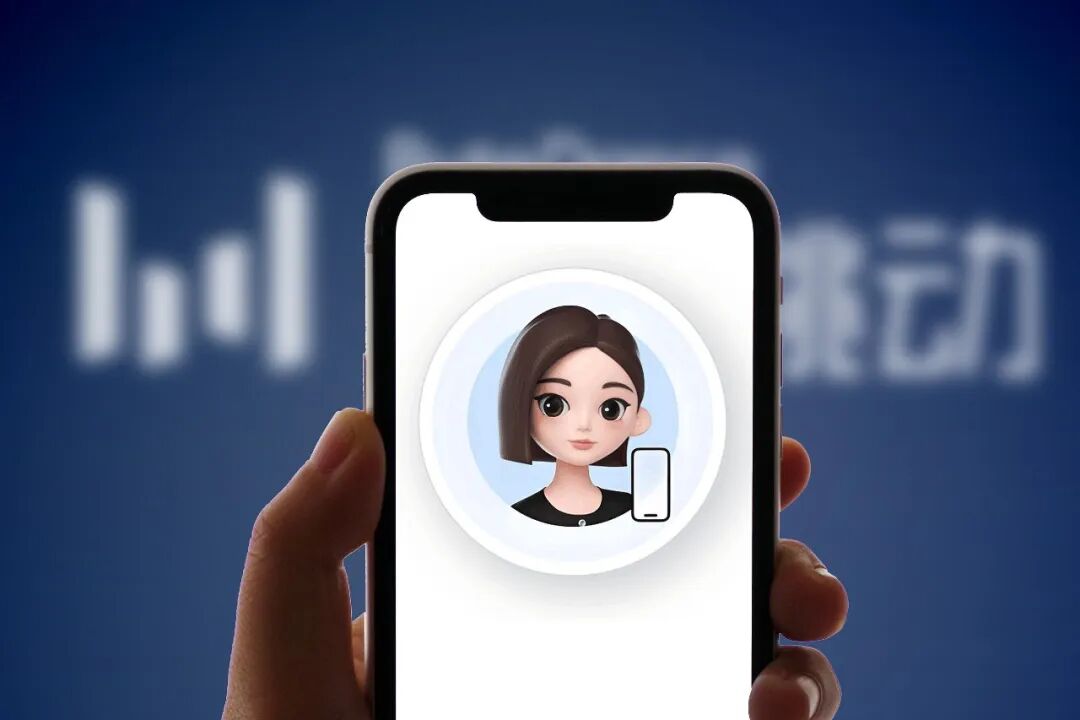
With Muse disrupting the market, ByteDance swiftly leveraged its half-year of accumulated technical capabilities. The original Spell team joined forces with Doubao's core conversation team to upgrade mobile agent capabilities into a standalone new product, precisely positioning it for this new trend.
As the core carrier of ByteDance's AI strategy, Doubao's evolution is clear: starting as a general conversation tool, it accumulated over 380 million monthly active users with its lightweight advantage, solidifying its domestic leadership. It later added document interpretation, code generation, and multimodal understanding capabilities, fully covering work, study, and life scenarios.
By mid-year, Doubao completed a deep architectural reform, splitting bloated product lines into dedicated teams for multimodal creation, vertical tools, and general conversation, streamlining decision-making and allocating core resources—all to adapt to the next-gen 'AI taking initiative' track ( track : competitive landscape).
Ultimately, the Dividend period for general Q&A AI has peaked, with stagnant user growth and commercialization hurdles. ByteDance's urgent bet on personal AI agents essentially abandons incremental competition in existing markets to sprint toward future growth in the AI industry.
02 Understanding Muse: The Revolution Isn't Technical—It's Interaction-Based
Why has this overseas AI product sent Chinese and foreign tech giants into full mobilization mode?
The core answer: Muse completely overturned traditional AI interaction logic, achieving a qualitative leap from 'tool' to 'butler.'
Previously, all AI—from QianWen, Doubao, to ChatGPT—operated passively: users issued clear instructions, and AI output content accordingly. Without instructions, AI remained idle, unable to autonomously advance tasks.
Muse positions itself as an all-weather autonomous personal digital assistant, emphasizing 'understanding goals, autonomous task decomposition, and full-process delegation.' Users only need to state their final needs without detailing steps—Muse automatically breaks down complex tasks, operates across scenarios, and independently handles tedious tasks like emailing, scheduling, online purchases, bill negotiations, and itinerary organization.
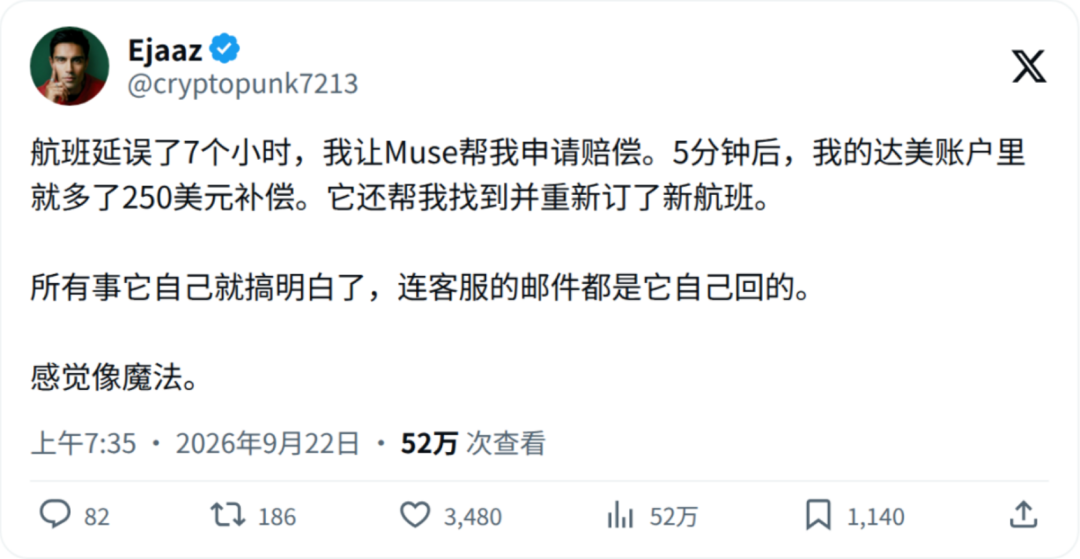
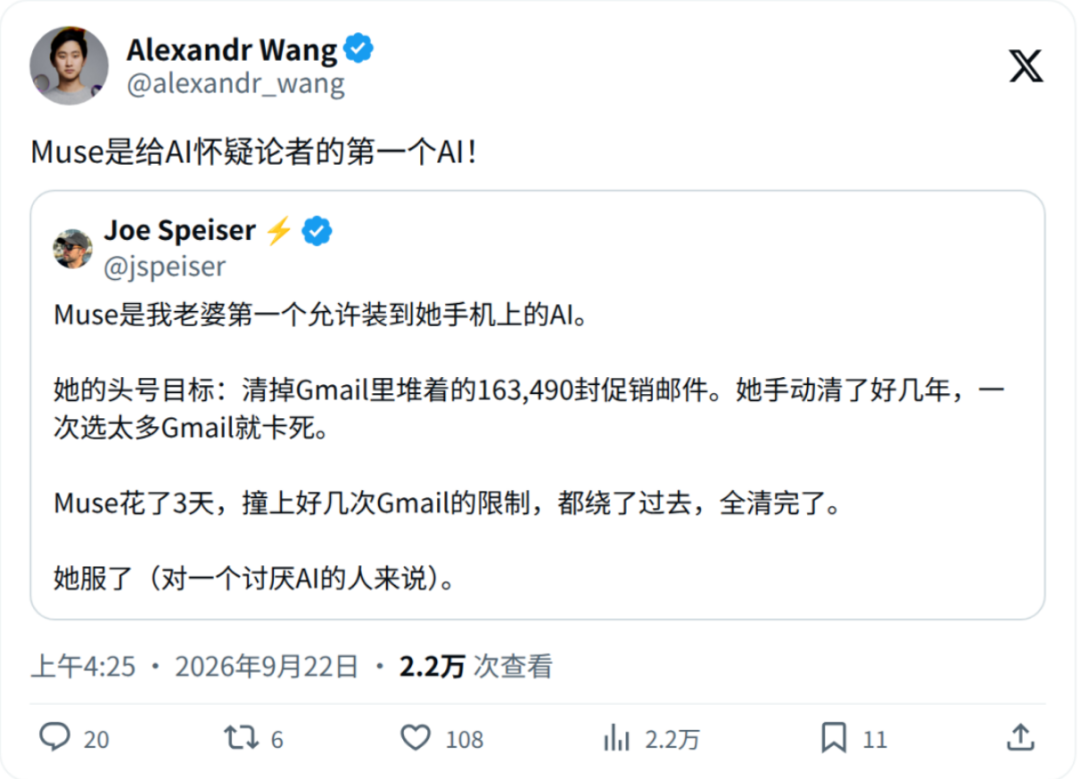
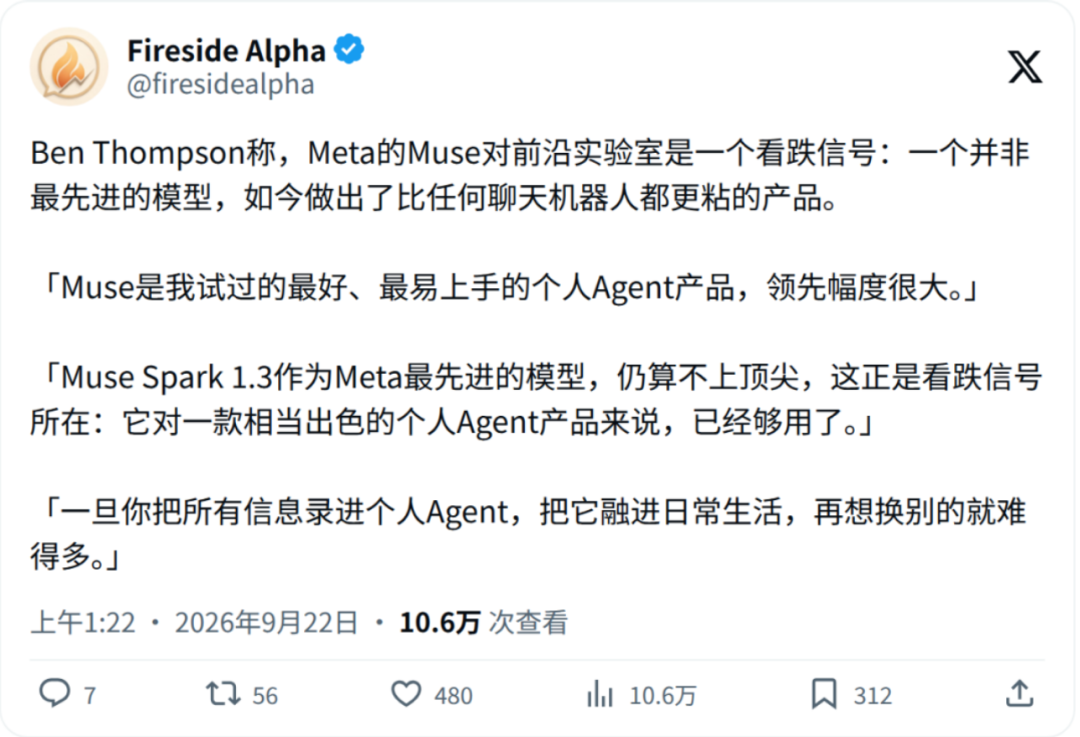 Image source: X social platform
This capability is supported by Meta's exclusive Muse Secure VM independent cloud virtual machine. Each user gets a dedicated virtual environment with an independent browser and file system. Even when the app is closed or in the background, Muse runs 24/7 in the cloud, only prompting for authorization for high-risk operations.
Privacy and security are maximized: user tasks are physically isolated in virtual machines; payments use Stripe's one-time virtual cards, ensuring AI never touches real bank card information—eliminating financial and privacy risks at the source.
Market data confirms its disruptive impact: with zero learning curve and minimal mobile interaction, it surpassed 2.8 million downloads in the U.S. and Canada within 12 days—far outpacing ChatGPT's initial launch—and hit 5 million global downloads in 22 days, dominating the U.S. App Store charts. Capital markets responded immediately, boosting Meta's market value by $200 billion in a short period—the year's biggest AI industry rally.
Commercially, Muse adopts a 'freemium' model: the free version offers 100 million tokens weekly, with $20 and $100 subscription tiers, successfully commercializing personal AI agents—a core breakthrough that resonates most with the industry.
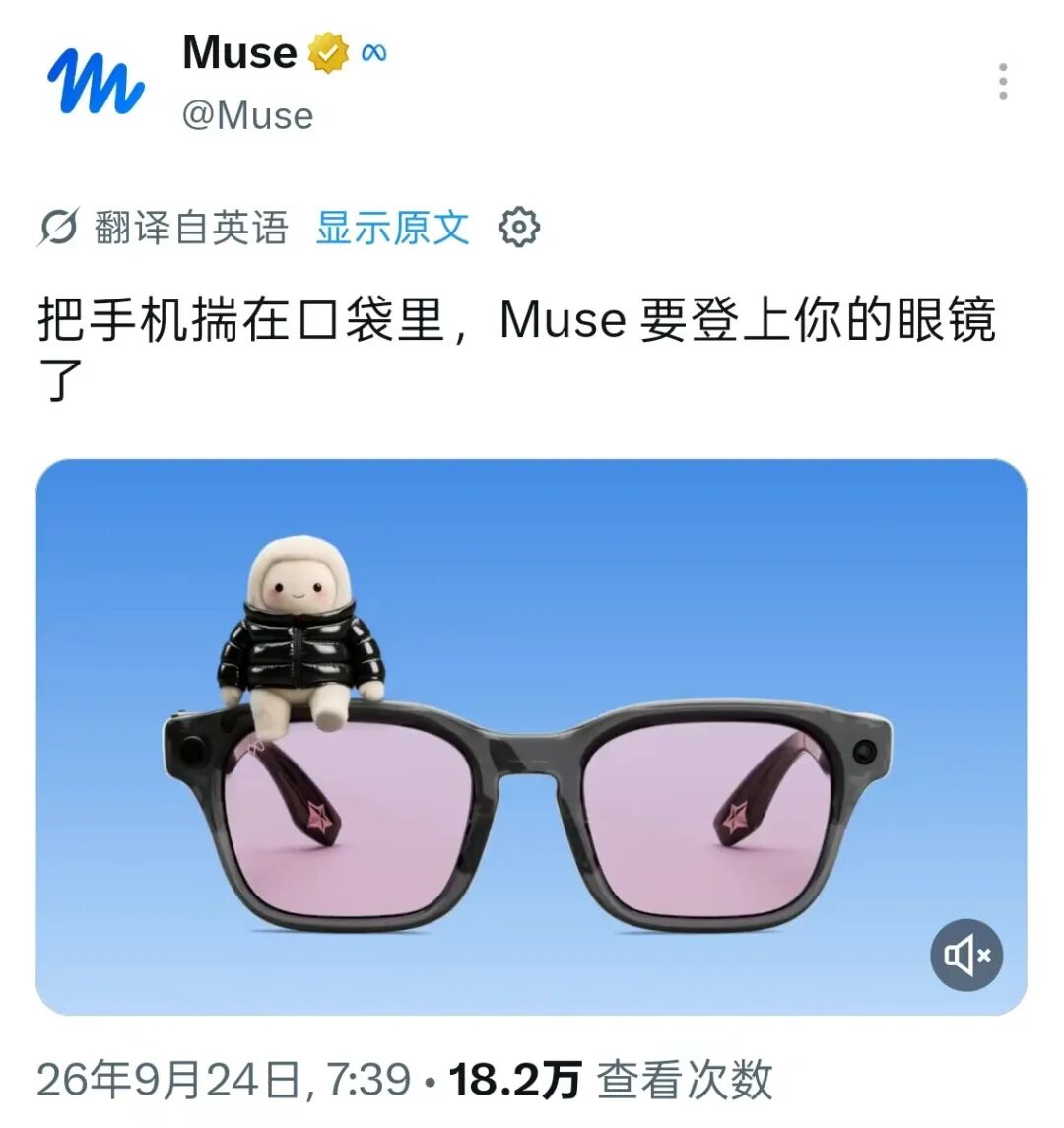
Zuckerberg showcased not just the Muse app but also matching keychains and AI glasses.
It proves globally: the AI's second half won't be won by rhetoric or aesthetics but by implementation capability, execution efficiency, and user convenience.
On August 12, nearly a month earlier than Muse, Musk's xAI Grok launched Grok Bot, which follows a 'digital employee' approach.
Grok Bot adopts a subscription model for SuperGrok and Cursor's paying users, focusing on work scenarios. Musk claimed its growth surpassed any product they'd seen. But Bloomberg Intelligence data stings: Muse's downloads quadruple Grok Bot's standalone app figures. For consumer-grade agents, distribution power is the moat—a massive advantage for 'APP factory' ByteDance.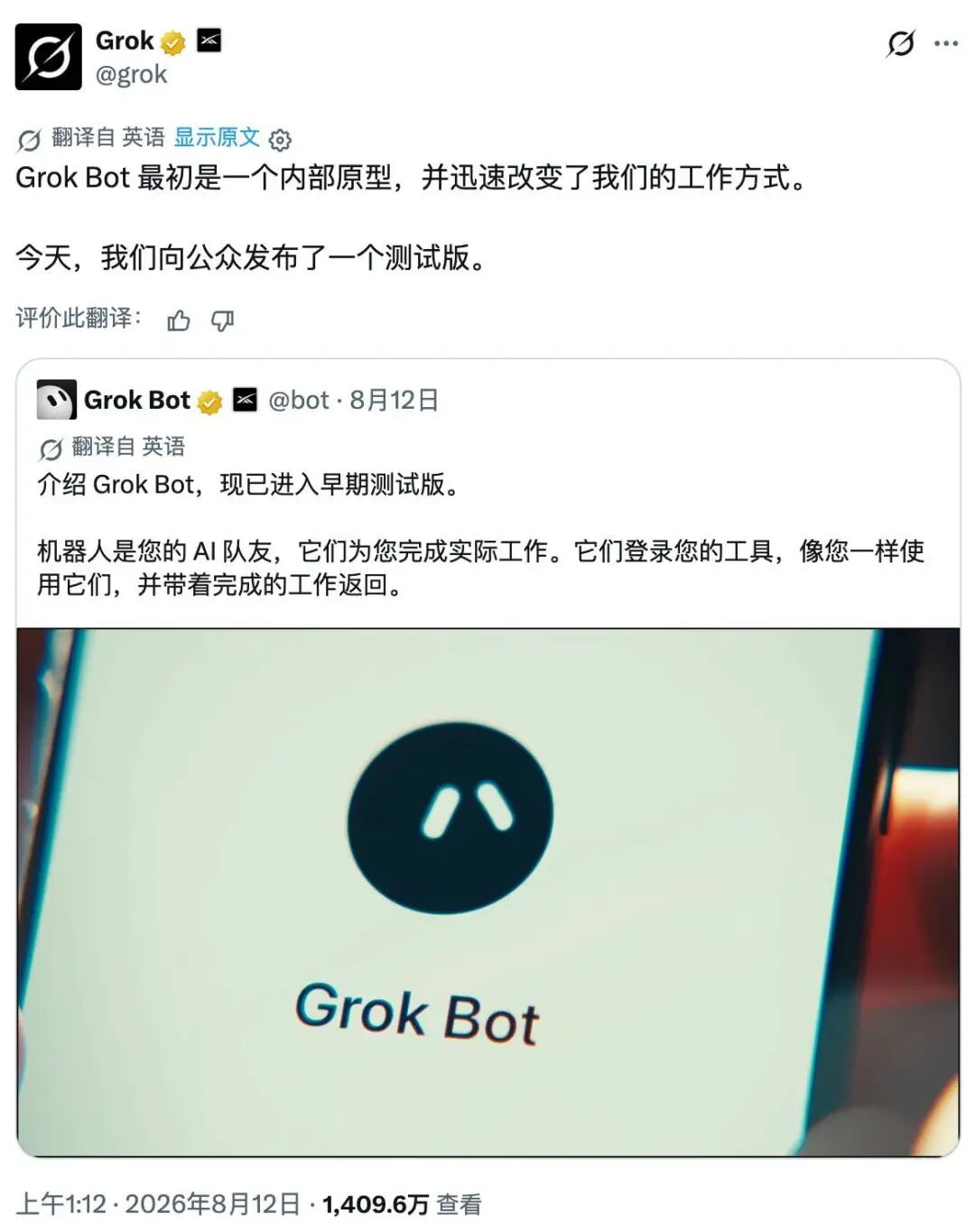 Image source: X social platform
03 Alibaba's Differentiated Positioning: Avoiding Overseas Models, Deepening Local Ecosystem Closed Loops
In this global AI race, Alibaba refuses to blindly replicate Meta's web automation model. Instead, it leverages its ecosystem strengths to carve out a localized, differentiated path.
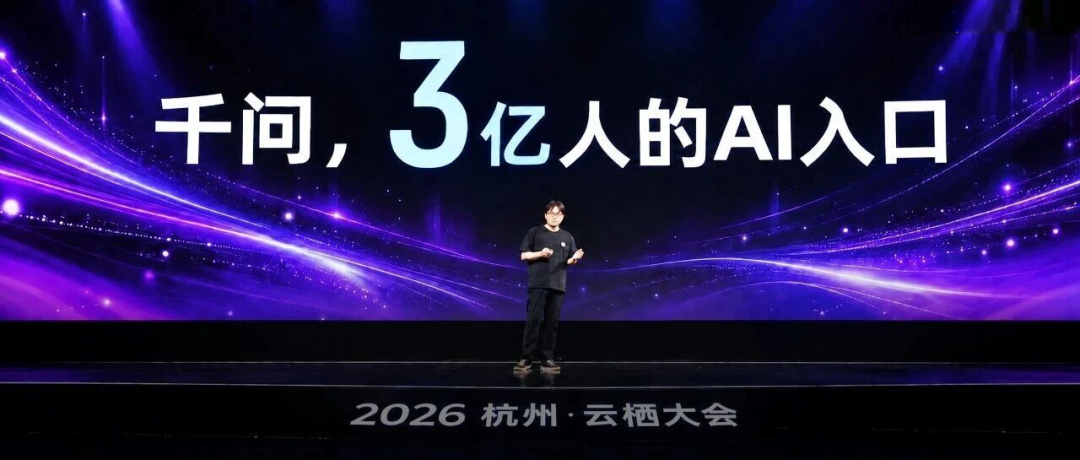
At Alibaba's Cloud Town Conference on September 22, the company announced a major upgrade: Tongyi QianWen fully transitions to a Personal Agent, evolving from 'users actively using QianWen' to 'my QianWen,' officially entering the personal AI agent track (competitive landscape).
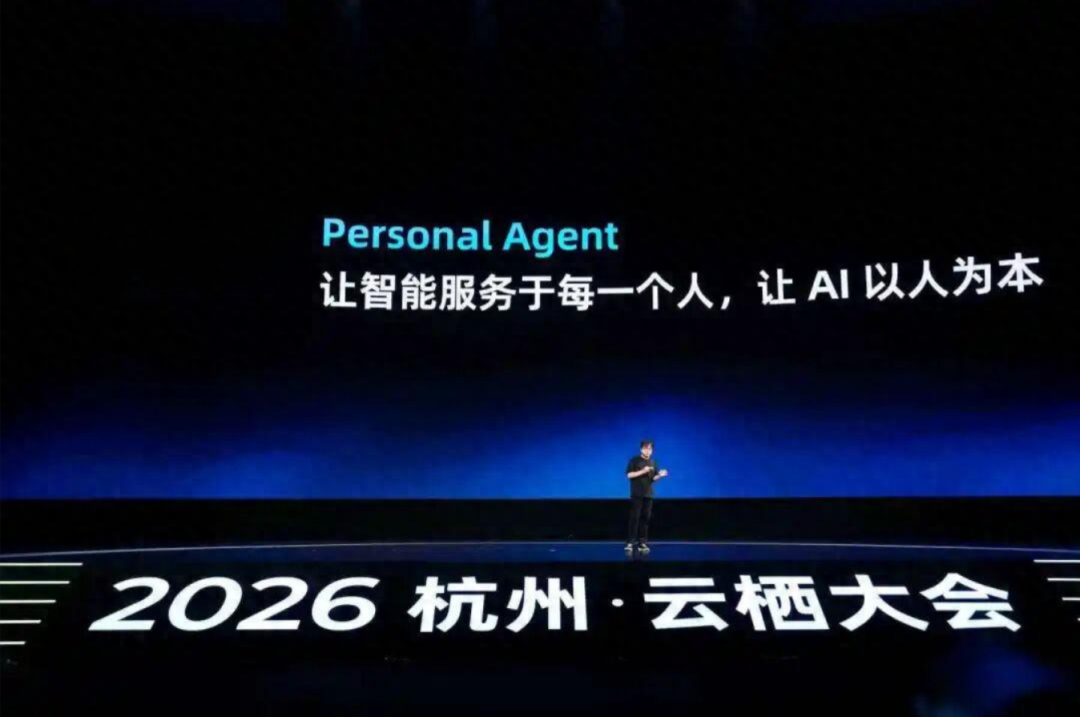
Unlike Muse's 'cloud-based external web freedom,' Alibaba's core strategy is ecosystem integration, API direct access, and closed-loop implementation. QianWen now fully connects with Alibaba's ecosystem—Taobao, Alipay, Gaode, Fliggy, and local services—enabling over 400 AI-powered task functions.
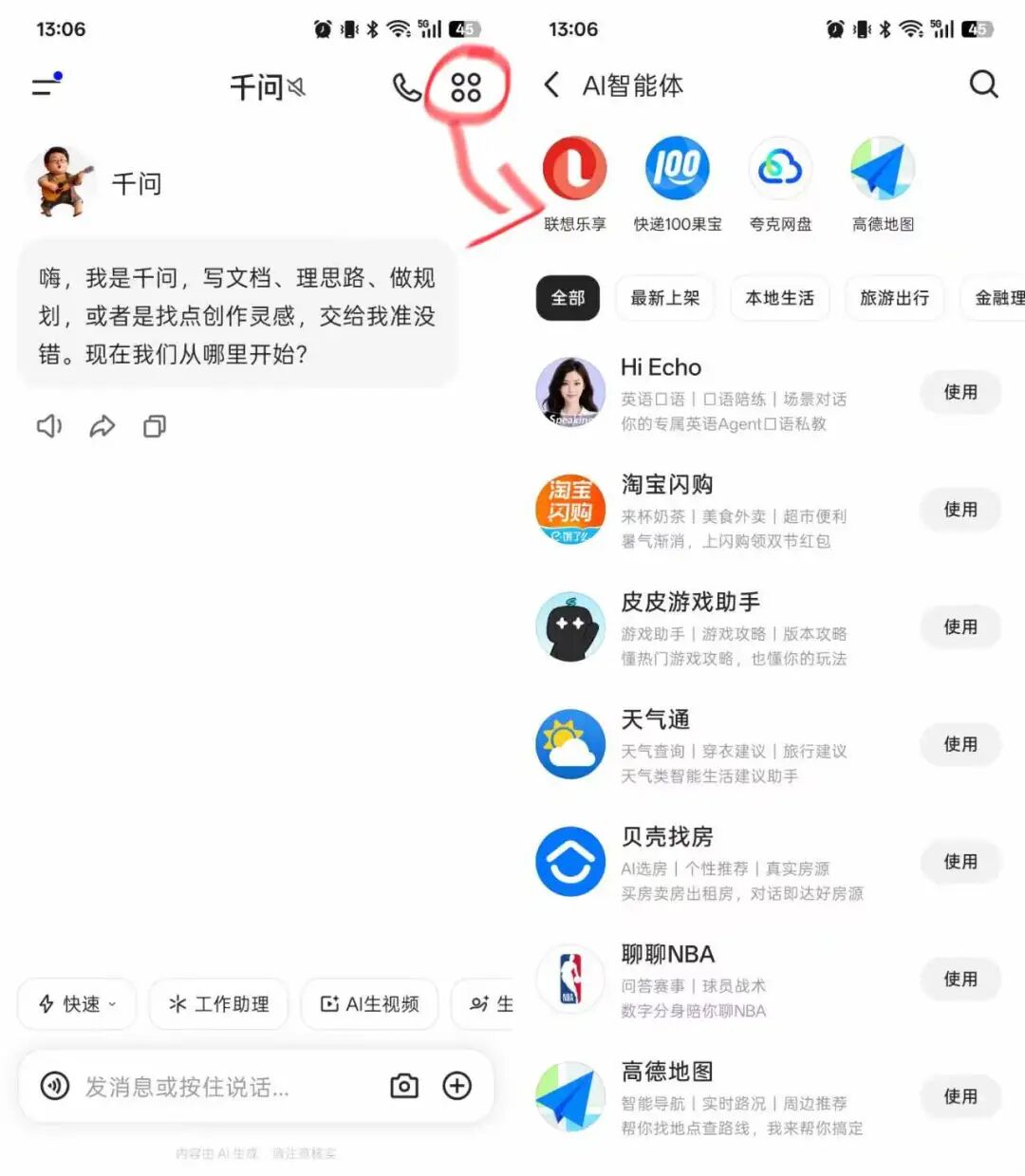 Image source: QianWen app
Simply put, Muse helps users 'browse external websites and handle errands,' while QianWen helps users 'one-click close tasks in the local ecosystem'—shopping, dining, travel, and payments require no app-switching; AI handles them directly, perfectly aligning with domestic user habits.
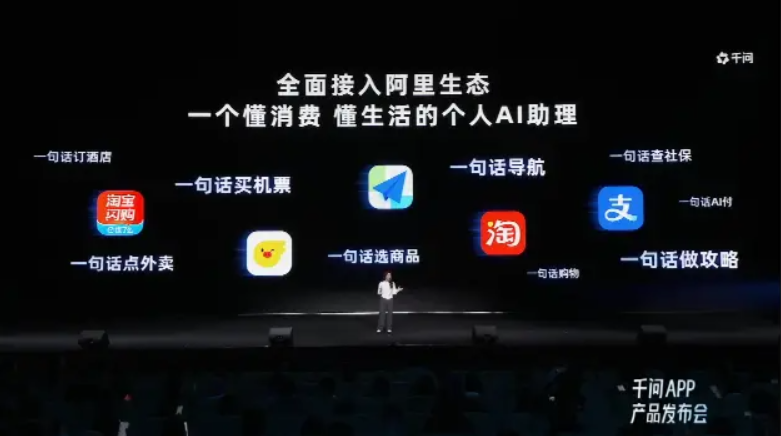
Technologically, it continuously iterates, leveraging the Qwen 3.8 series to enhance agent autonomy. Future QianWen 4.5 and 5 series will expand parameters, focusing on long-context understanding, temporal memory, and user preference insights.
Compared to overseas models' mechanical execution, Alibaba's greatest strength lies in years of accumulated domestic user data. Leveraging consumption, travel, and payment data, its AI doesn't just execute instructions—it understands users' lifestyles and spending habits to deliver precise, intelligent services.
Alibaba adopts a 'personal + enterprise' dual strategy: the personal side builds a life AI butler, while the enterprise side uses DingTalk's 'Wukong' agent to cover office workflows. It also integrates with car cockpits, AI glasses, and other hardware terminals to comprehensively secure AI entry points.

The shortcomings are equally apparent: a lack of high-frequency, lightweight scenarios such as social interactions and daily schedules, insufficient fragmented user engagement, and difficulty in deeply penetrating users' daily lives.
04 Three-Week Global Reshuffle: All Major Global Tech Giants Enter the Arena
In just three weeks in September, the global AI sector underwent an epic reshuffling, with all leading players entering the personal AI agent space. This is no coincidence but a collective and precise anticipation of industry trends.
On September 8th, Meta Muse launched, igniting the global Personal Agent sector;
On September 22nd, Alibaba's Yunqi Conference announced a strategic upgrade for QianWen, focusing on personal AI assistants;
On September 26th, Tencent's LightVela cloud-based agent was unveiled, integrating with WeChat and QQ ecosystems and offered for free;
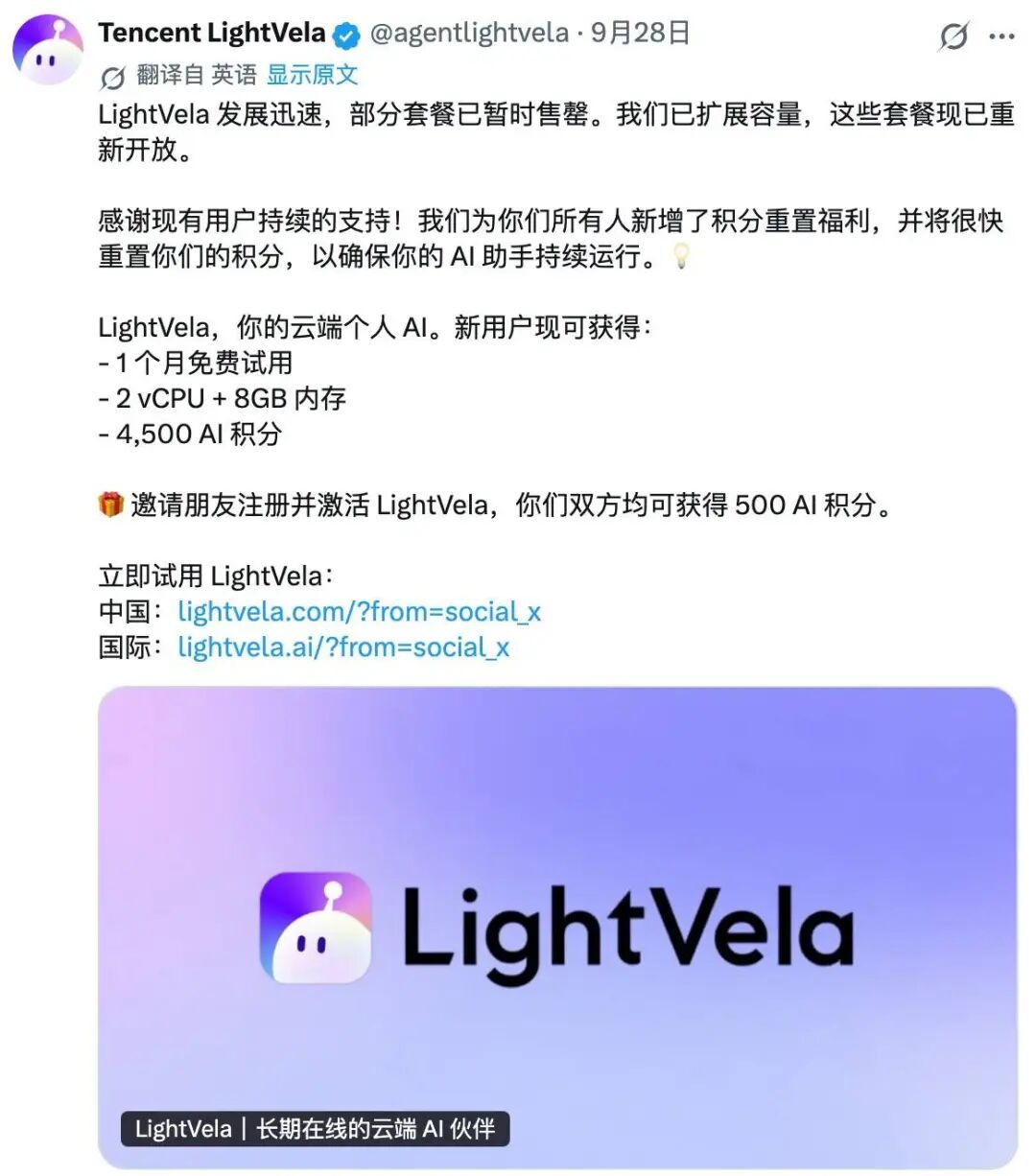
Image source: X social platform
On September 29th, ByteDance's Spell project was revealed, with OpenAI launching its resident agent Dots, directly competing with Muse;
On September 30th, Tencent's Handy Bot debuted, and ByteDance's competing product entered internal testing.
Currently, major companies uniformly adopt a dual-track strategy of 'defending the office sector for stability and pursuing personal growth for expansion': Tencent relies on WorkBuddy to maintain its office sector base while testing multiple personal products; ByteDance leverages its massive consumer user base with Doubao to advance personal AI agents; Alibaba balances life services and enterprise office solutions, deepening its ecosystem closed loop (closed loop).
Industry consensus: Muse does not represent a groundbreaking technological breakthrough at the foundational level, nor does its model computing power rank at the industry's pinnacle. However, it has tapped into the ultimate AI need—users do not seek smarter AI but AI that saves them effort, worry, and money. This is the core reason for the frenetic competition across the industry.
05 The Ultimate Showdown in the Sector: Two AI Logics from China and Abroad—Who Will Create China's Version of Muse?
Many wonder: With AI assistants already widespread in China, why did Muse ignite a global explosion and drive industry transformation?
The core essence lies in the completely different internet infrastructures in China and abroad.
Overseas users rely on web pages and emails for daily life, with fragmented applications and operations, leading to extremely high costs for cross-platform tasks. Muse, with its fully automated services, represents a revolutionary experience upgrade for overseas users.
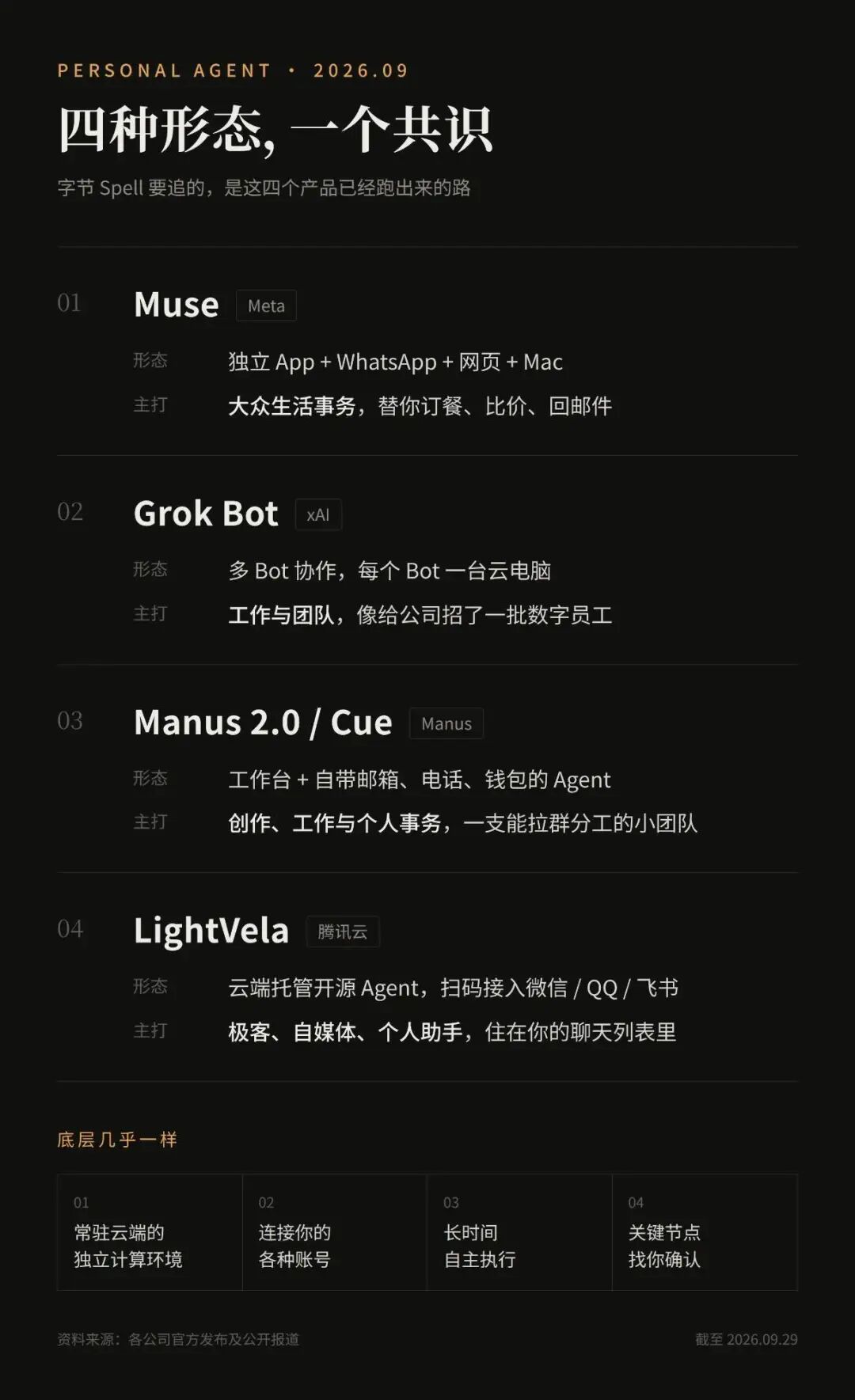
Domestic users, however, are fully covered by super apps like WeChat, Douyin, and Alipay, featuring closed ecosystems and seamless services. While overseas AI competes on 'web automation,' domestic AI competes on 'super app ecosystem integration.' Copying overseas models is bound to fail in the Chinese market.
This has created a landscape where major domestic companies each have strengths and weaknesses, with no clear winner:
ByteDance boasts a massive consumer user base and top-tier product capabilities, with Doubao leading by a wide margin in scale. However, users perceive it primarily as a 'chat AI,' making the transition from a Q&A tool to an executive agent extremely challenging;
Alibaba possesses a perfect closed loop (closed loop) of transactions, payments, and local services, with a clear commercialization path. However, it lacks high-frequency social scenarios, creating a natural weakness in user stickiness;
Tencent monopolizes social entry points and enjoys unparalleled traffic but has an overly closed ecosystem, making it difficult for its AI capabilities to extend beyond the WeChat framework, highlighting significant limitations.
In the mobile internet era, WeChat, launching 40 days later, surpassed the pioneer Miliao through dimensionality reduction. In the AI era, the window of opportunity has shrunk from 'months' to 'days.' Missing the first-mover advantage likely means permanent elimination.
The fact that all major companies are mobilizing resources and launching urgent projects is not blind competition but a strategic move to secure the next generation of human-computer interaction interfaces. The first half of the AI race was about models and technology; the second half will be about scenarios, implementation, ecosystems, and execution.
The era when AI transitions from 'passive answering' to 'active doing' has officially arrived. The intense competition between ByteDance and Alibaba is just the beginning. The true final battle for the industry has only just begun.
Interactive Topic: What daily chores would you most like an AI agent to handle for you? Which company's AI strategy—ByteDance's or Alibaba's—do you favor more? Welcome to leave your comments and join the discussion.
Disclaimer: This article is solely a financial commentary on major companies and does not constitute any investment advice. The enterprise data and regulatory events mentioned herein are sourced from publicly available information and are for reference only. The official releases shall prevail. Images are sourced from the internet; if copyright issues arise, please contact us for removal.
-
![]()
Blockbuster! Wang Chuanfu Appointed as BYD's Chairman, Sets Four-Year Goal to 'Reach for the Sky'
-
![]()
Blockbuster! Alibaba and ByteDance Launch Urgent Mystery Projects as Battle Looms
-
![]()
Why Does Apple Opt for Aluminum in Its Phone Cases? Beyond Lightness and Heat Dissipation
-
![]()
Securing a More Expensive Sum, Manus Returns to Beijing
-
![]()
Why Hasn’t eSIM Gained Traction in China Despite Years of Promotion?
-
![]()
How Much Internet Speed Boost Can Huawei's 'Pinhao Network' Offer on High-Speed Trains?
-
![]()
Why Did Axisystems Only Earn 29.09 Million Yuan After Selling 420,000 Automotive Chips in Six Months?
-
![]()
Chery’s Globalization 3.0: What Exactly Does It Entail?