How Much Internet Speed Boost Can Huawei's 'Pinhao Network' Offer on High-Speed Trains?
 10/09 2026
 506
506
On October 1, 2026, Huawei officially unveiled its Mate 90 series, comprising five models that mark a return to flat-screen design and offer storage capacities of up to 2TB.
However, the real game-changer isn't the chipset or the camera; it's a communication feature dubbed 'Pinhao Network' by netizens.
01 What Exactly is Pinhao Network?
Huawei officially describes it as multi-person mutual assistance communication sharing.
The underlying principle is to harness the combined network capabilities of multiple nearby Mate devices. When a single device's signal is weak, nearby devices collectively supplement the network, supporting up to four phones simultaneously.
Devices registered under the same account can be interconnected, and those under different accounts among friends and family can also form groups.
Official demonstration data released at the launch event revealed a 40% improvement in file download speeds at high-speed rail stations and a 30% improvement in uploading concert videos.
Additional test data from Huawei's labs showed a 70% reduction in the time taken to upload concert videos, a 30% decrease in stuttering during outdoor live streams, and a 60% reduction in stuttering during high-speed rail video conferences.
These two sets of data differ in context; the former represents real-world demonstration scenarios at the event, while the latter reflects test results under ideal laboratory conditions. Actual performance may vary depending on factors such as device and network environment.
02 Three Key Questions
Netizens have raised several questions about this feature.
The first question pertains to its applicability in various scenarios.
The improvement data presented at the event is clearly limited to specific scenarios, namely high-speed rail stations, concerts, and outdoor hiking live streams.
These scenarios share a common trait: there is a signal, albeit a weak one.
In extreme scenarios where communication is truly essential, such as underground garages, remote mountainous regions, and elevators, there is often no signal at all.
If multiple devices lack a signal, aggregation becomes futile.
The second question concerns the practicality.
Where can you find four friends all equipped with Mate 90s?
This question has been raised repeatedly. The feature supports up to four phones simultaneously, but it requires a sufficient number of Huawei Mate devices in the vicinity. 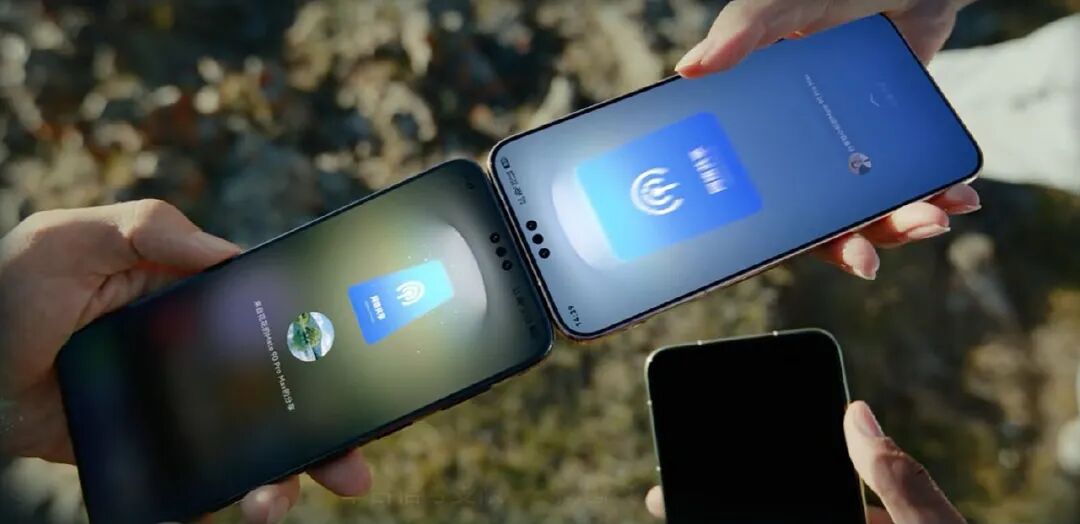
Image source: Internet
The third question delves into the technical principle. The essence of multi-device aggregation is to optimize channel quality.
Traditional hotspot sharing involves one phone sharing its network with other devices, relying on a single data source. If the host's signal is poor, everyone experiences stuttering.
In contrast, multi-person mutual assistance communication sharing allows multiple phones to connect independently to the base station, with the system intelligently splitting data packets and aggregating multiple cellular links for joint transmission.
However, if the base station itself is overloaded, the effectiveness of aggregation will be compromised.
Some analysts note that this feature aims to provide a baseline experience in specific weak network scenarios rather than universally accelerating all network environments.
03 Is It Useful for the Average Consumer?
So, is this feature beneficial for the average consumer?
If your daily routine involves commuting by subway, shopping in malls, and working in offices with already sufficient signals, the value of network aggregation is limited.
If you frequently travel by high-speed rail for business, attend concerts, or engage in outdoor live streaming, these scenarios are indeed hotspots with weak but present signals, and network aggregation could potentially elevate your experience from usable to excellent. 
Image source: Internet
However, there's an unavoidable prerequisite: you need a sufficient number of Huawei Mate devices nearby.
This isn't a feature that can be utilized simply by purchasing a phone; it requires persuading those around you to do the same.
The essence of Pinhao Network is to transform the network capabilities of a single device from shouldering the load alone to doing so as a team.
The direction is correct, as there is indeed room for improvement in weak network environments.
However, its actual value hinges on how many Huawei users are in your social circle and whether the weak network scenarios you encounter have poor signal or no signal at all. #HuaweiPhones #MultiPersonMutualAssistanceCommunicationSharing
-
![]()
Blockbuster! Wang Chuanfu Appointed as BYD's Chairman, Sets Four-Year Goal to 'Reach for the Sky'
-
![]()
Blockbuster! Alibaba and ByteDance Launch Urgent Mystery Projects as Battle Looms
-
![]()
Why Does Apple Opt for Aluminum in Its Phone Cases? Beyond Lightness and Heat Dissipation
-
![]()
Securing a More Expensive Sum, Manus Returns to Beijing
-
![]()
Why Hasn’t eSIM Gained Traction in China Despite Years of Promotion?
-
![]()
How Much Internet Speed Boost Can Huawei's 'Pinhao Network' Offer on High-Speed Trains?
-
![]()
Why Did Axisystems Only Earn 29.09 Million Yuan After Selling 420,000 Automotive Chips in Six Months?
-
![]()
Chery’s Globalization 3.0: What Exactly Does It Entail?