Can Chen Yusen Provide the Right Context for AI? Does DingTalk Have Sufficient Resources?
 10/13 2026
 409
409

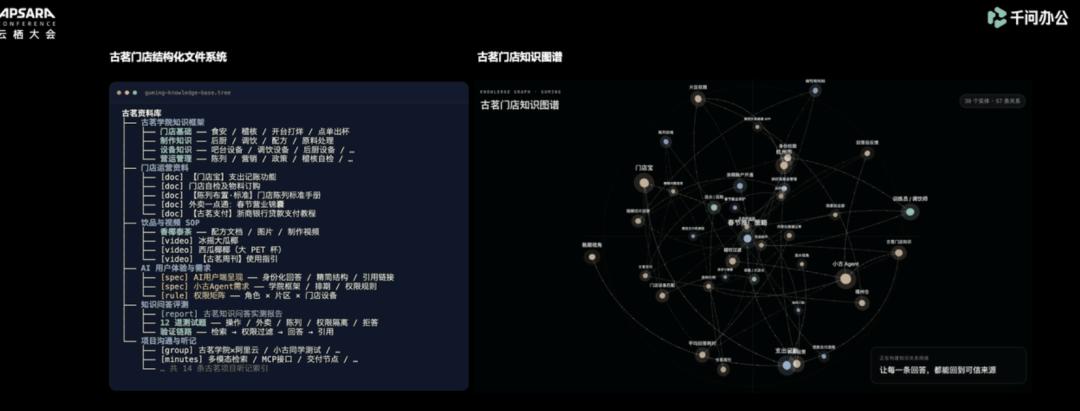
At the Yunqi Conference, Qianwen Office highlighted the importance of enterprise context by citing a case study involving Gu Ming.
Store employees needed guidance on poster placement, requiring the Agent to access the brand's internal operational guidelines. According to the information released, Gu Ming's Feishu documents, knowledge base, Q&A groups, and training schedules have been systematically organized into a knowledge space for store operations. When faced with a specific query, the system provides relevant materials instead of overwhelming the Agent with all operational knowledge.
Gu Ming was already utilizing Feishu. To extend its reach beyond DingTalk in enterprise environments, Qianwen Office must find a way to integrate seamlessly.
Three years ago, DingTalk embarked on a journey to integrate AI into enterprise operations. In August 2023, Ye Jun introduced the concept of "enterprise context" at the Ecosystem Conference, aiming to enable large models to comprehend the internal regulations of various enterprises.
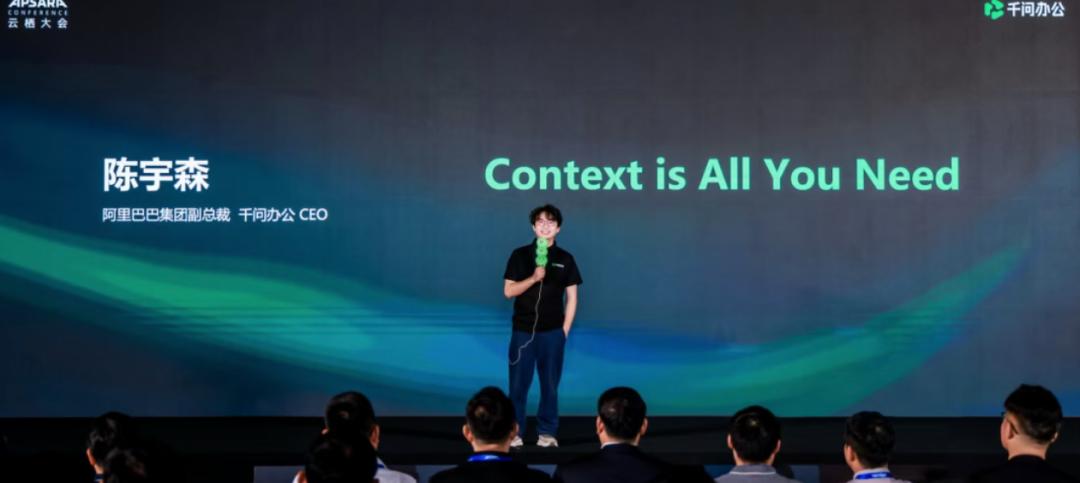
On September 22, Chen Yusen, CEO of Qianwen Office, reiterated the centrality of context in his speech titled "Context is All You Need." Alibaba subsequently transformed this concept into a product called Enterprise Context. This product organizes enterprise knowledge and business data, supplies them to Agents based on tasks, and updates them as business evolves.
Qianwen Office inherits more than just the features of a newly launched office tool. Alibaba has restructured its product lineup, integrating QoderWork, MuleRun, and Wukong into Qianwen Office. Upon its release on August 3, Alibaba announced that DingTalk serves over 20 million enterprises and organizations.
However, while the new product has the potential to reach enterprises earlier, the number of active or paying Agent customers remains uncertain. Simply using DingTalk does not guarantee that the Agent understands the organization's business. Although models can tackle complex problems, they cannot reliably deduce undisclosed internal rules of a company.
Alibaba faced similar challenges in the past while developing enterprise software. While DingTalk can attract clients and Alibaba Cloud can provide technological support, integrating into a company's daily operations still necessitates meticulous system, process, and permission management. Now, with Agents, the question arises: how much of this work needs to be redone?

On August 22, 2023, Ye Jun showcased a digital employee at the DingTalk Ecosystem Conference capable of assisting with enterprise recruitment. Dubbed "No. 1 Recruiter," it was developed in collaboration with recruitment service provider No. 1 Direct Recruitment. HR could articulate requirements in natural language, and the digital employee would then draft job postings, publish positions, collect and screen resumes, and arrange interviews.
Moreover, it could access the enterprise directory, obtain corresponding job permissions, and participate in organizational collaboration like any regular employee.
However, there is a vast difference between demonstrating a recruitment process and managing recruitment tasks over the long term. Questions regarding who approves positions, which resumes can be forwarded to business departments, and who confirms salaries exceeding the budget require tailored company solutions. While the digital employee can be assigned a position, it must genuinely comprehend its role within the enterprise to take over the work effectively.
In previous years, DingTalk invested significant time in helping enterprises transition these processes into software. In September 2020, Alibaba promoted the "Cloud-DingTalk Integration," fully merging DingTalk with Alibaba Cloud. Two years later, at the Yunqi Conference, Ye Jun revealed that from April to June of that year, the number of dual-paying customers of Alibaba Cloud and DingTalk increased by 30% year-on-year. By the end of September 2022, the number of low-code applications on DingTalk had surpassed 5 million.
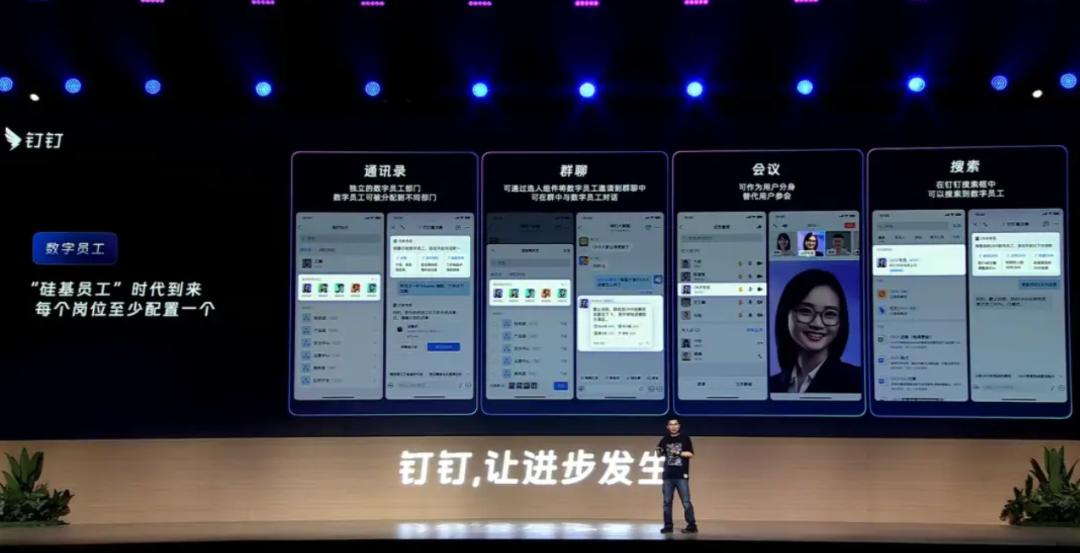
Many of these applications were designed around specific tasks, such as how to approve leave, record customer information, and summarize data for supervisors. Enterprises gradually incorporated some rules into the system. However, the existence of applications does not imply that Agents can directly understand or utilize the business logic within them.
Having common customers does not necessarily mean that multiple teams can collaborate seamlessly. Ye Jun previously mentioned in an interview with Caijing that Alibaba Cloud and DingTalk offer different products, cater to different customers, and have varying average transaction values. To foster collaboration, DingTalk needed to train Alibaba Cloud's sales team and align sales incentives. By 2023, DingTalk had regained its independence from Alibaba Cloud.
Compared to its past efforts in promoting "Cloud-DingTalk Integration," Qianwen Office now has more than just shared enterprise customers to leverage. Employee identities, departmental relationships, approval processes, and access permissions within DingTalk have been utilized by many enterprises for years. If Qianwen Office can build upon these configurations, enterprises won't need to establish a new set of rules for managing digital employees from scratch.
The digital employee management approach unveiled in September also adheres to this logic. Digital employees have names, departments, supervisors, job responsibilities, and authorization scopes. Administrators can deactivate them, and execution records can be traced. If Qianwen Office can leverage DingTalk's existing organizational relationships, enterprises can reduce some configuration work. Questions regarding the digital employee's department and supervisor can refer to the existing structure. However, separate authorization is still required for data access and operational permissions.
But merely knowing who has the authority to handle a matter is insufficient. The amount of preparation work DingTalk can save depends on what a client has accumulated on the platform.
Fulica, another client showcased by Qianwen Office at the Yunqi Conference, faced more complex tasks. Salespeople at this warehousing, logistics, and packaging enterprise needed to handle numerous inquiries and coordinate with multiple departments. According to the released materials, Qianwen Office configured three digital employees for Fulica, responsible for product inquiries, quoting, and contracting, respectively.
When an inquiry arrives, the inquiry employee first matches customer needs with products; the quoting employee then reviews customer information and pricing rules; in the contracting phase, the previously confirmed content is passed on to the third digital employee. The three Agents can divide tasks, but division also requires handovers. Questions regarding the price previously quoted to the customer, any special discounts this time, and which contract terms require supervisor approval cannot be re-guessed after switching to a different Agent.
The released materials demonstrate how to share this information through enterprise context. However, the extent to which this process can reduce manual communication in actual client use and the number of people needed to intervene when exceptions occur still depend on subsequent usage results.
The service providers accumulated by DingTalk in the past may play a crucial role here. They are familiar with client systems and know which materials need to be accessed and which rules require confirmation from business supervisors. However, if every new enterprise requires service providers to reorganize business processes, Qianwen Office will still heavily rely on manual implementation.
Whether sorted business materials can be repurposed for other tasks within the same enterprise and whether service providers can reuse verified access methods and process templates for different enterprises will influence Qianwen Office's subsequent delivery costs.

After Qianwen Office's launch, a practical question arises: Why would enterprises already using DingTalk switch to another work portal?
Shu Junliang mentioned in a September interview that if all DingTalk clients were required to switch work interfaces due to the new product launch, clients would not accept it. Alibaba, therefore, offers two options: Enterprises can use Qianwen Office as an entry point or continue handling business within DingTalk.
This means that Qianwen Office cannot simply wait for clients to migrate. For enterprises already using DingTalk, it must integrate into existing business processes; for clients using Feishu or WeCom, it must demonstrate that enterprises can utilize Alibaba's Agents without switching collaboration software.
Alibaba initiated internal adjustments first. In June, after Chen Yusen took over DingTalk, he began merging related product teams and integrating functions like direct sales, telesales, service providers, pre-sales, delivery, and customer success into the Customer Development Department. On August 3, Qianwen Office was officially launched, integrating the technical capabilities of QoderWork, Wukong, and MuleRun.
With product unification, the client-facing teams were also consolidated. However, this still needs to be validated in delivery. If an enterprise's materials are not properly connected or approval rules change, clients still need someone responsible for resolving issues. By placing these teams together, Alibaba can at least reduce some internal handovers. However, whether clients can find the responsible person more quickly when problems arise still depends on actual delivery.
Shu Junliang cited an example of cost comparison in an interview. Suppose an enterprise spends 10 days and 1 million yuan to organize context using a certain solution, while Qianwen Office offers a solution that takes only 3 days and costs 5,000 yuan. He attributed this difference to the model's abstraction capabilities.
This cost primarily pertains to context construction and cannot be directly counted as the total expenses required for enterprise deployment, authorization, and maintenance of Agents. Moreover, even if the initial cost of organizing materials is significantly reduced, enterprises still need to confirm business scopes, configure authorizations, and verify results. After system launch, changes in prices, personnel, and approval rules will not eliminate all work.
Taking quoting as an example, if the price list is updated, does the price referenced by the Agent change accordingly? If the approval supervisor is replaced, will new quotes still be sent to the old supervisor? Will an exception handling be mistakenly treated as a future常规 (regular) rule? Maintaining these changes is the work after context enters daily operations.
On-site services still have a place. Shu Junliang stated in another public interview that customer success or on-site teams need to collaborate with business parties to identify valuable scenarios that AI can solve; these experiences' commonalities can then be reused among similar clients later.
This is also where the value of DingTalk's service providers needs to be re-evaluated. In the past, service providers familiar with a specific enterprise's business could complete project delivery. Now, if the rules, access methods, and process templates sorted out in one enterprise can be reused for other clients, the same group of people has the opportunity to serve more projects.
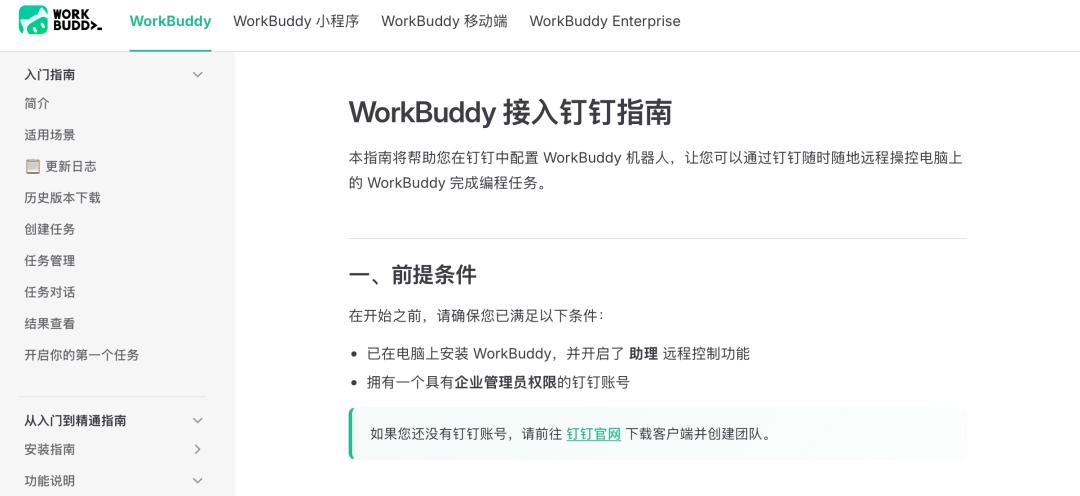
However, other companies are already in this field. Feishu officially introduces that Doubao Work can invoke documents, organizational structures, and OKRs within user permissions; Tencent's WorkBuddy also connects to Tencent Docs and Lexiang Knowledge Base, with the latter providing a DingTalk document connector. According to Tencent Cloud's operation documents, enterprises must first create a DingTalk application, apply for interface permissions, and then have administrators approve them. While cross-platform data reading has established pathways, the access work cannot be entirely omitted.
Qianwen Office can leverage DingTalk to enter enterprises more quickly but cannot rely solely on DingTalk to retain clients. Shu Junliang envisions that the organized context should belong to the enterprise itself, allowing it to continue invoking it even if it uses self-developed or other vendors' Agents later. However, he admits that this infrastructure has not yet formed a mature standard like databases.
This means that Qianwen Office hopes to achieve two things. First, it wants clients using Feishu or WeCom to use Alibaba's Agents without switching collaboration software. Second, it wants the organized enterprise context not to be bound to Qianwen Office. The first goal can help Alibaba win more clients, while the second, if truly achieved, may also make it easier for clients to try Agents from other companies.
DingTalk can help Qianwen Office reach enterprises earlier but cannot guarantee that these enterprises will only use Alibaba's Agents in the future. Ultimately, Alibaba must rely on task execution, daily maintenance, and service quality to keep clients willing to continue paying.

From digital employees during Ye Jun's era to AI transformations after Wu Zhao's return and now Chen Yusen's launch of Qianwen Office, DingTalk has repeatedly adjusted its products and organization, always attempting to have AI take over more enterprise work. This time, it has more resources than three years ago. DingTalk has accumulated enterprise clients, organizational relationships, business systems, and service providers, while the Qianwen model and Agent tools have gained new capabilities.
However, despite the fact that the digital employees displayed at the conference can have their processes pre-arranged, they are still subject to daily changes once integrated into enterprises. A product quotation confirmed today may undergo cost modifications tomorrow. In the past, sales representatives were well-versed in where to access the most up-to-date prices and whom to approach for discount approvals. Once Agents assume responsibility, it remains imperative that someone promptly notifies them of these alterations.
The true test of a business's operational efficiency may lie in its ability to seamlessly incorporate additional tasks with minimal preparation, rather than relying solely on the glitzy demonstrations at conferences.
For instance, if an enterprise initially entrusts Qianwen Office with managing sales quotations, it necessitates the organization of product catalogs, customer data, pricing guidelines, and approval workflows. Several months down the line, should the enterprise decide to expand its responsibilities to include customer renewals, the previously verified customer information, contract histories, and authorization structures can be seamlessly repurposed, alleviating employees from the burden of starting from scratch.
Nonetheless, new business endeavors invariably introduce fresh regulations. Inquiries such as which customers are eligible for automatic renewals, who holds the authority to approve price modifications, and the appropriate timeframe for contacting customers prior to contract expiration necessitate individual verification.
The extent to which DingTalk's established Qianwen Office can genuinely capitalize on its existing resources will only become evident when clients genuinely entrust it with subsequent tasks.
*The featured image and illustrations within the text are sourced from the internet.
-
![]()
Four Departments Take Action to Address Quick-Built Vehicles! Why Can't Verification Be the Target When Cars Are Built So Fast?
-
![]()
Storage Shortage Wreaks Havoc! Global Smartphone Shipments Plunge by 20% in Q3, Hitting 14-Year Low for the Same Period
-
China's Largest Intelligent Computing Cloud Provider Rushes Toward IPO, with Revenue Surging 9x in Two Years Driven by 'Computing Power Leverage'
-
![]()
AI Companion Suggests User Cease Eating? Character.AI Faces Fresh Litigation, with an Even More Outrageous Customer Support Reaction
-
![]()
Can Chen Yusen Provide the Right Context for AI? Does DingTalk Have Sufficient Resources?
-
![]()
Xiaomi HyperOS 4 Embraces Apple Ecosystem: When 'Closed' Yields to 'Open'
-
Kimi Valued at $50 Billion, Yang Zhilin's Past Disputes Reach IPO Threshold
-
Founder from Generation Z Leads 14-Member Team to Challenge Meta