Four Departments Take Action to Address Quick-Built Vehicles! Why Can't Verification Be the Target When Cars Are Built So Fast?
 10/13 2026
 333
333
On October 10, the Ministry of Industry and Information Technology (MIIT), the Ministry of Public Security, the Ministry of Ecology and Environment, and the State Administration for Market Regulation jointly released the 'Notice on Further Strengthening the Management of Innovative Design and R&D Test Verification for Automotive Products (Draft for Comments),' proposing further management requirements for automotive innovative design and R&D test verification.
This document comes amid ongoing debates in the automotive industry over quick-built vehicles.
Recently, an incident involving the fracture of a brake pedal bracket in a certain brand has raised public concerns about component reliability and R&D verification. However, the specific cause of the incident remains to be authoritatively investigated, and it cannot be solely used to judge whether the R&D process of the related models has been compromised.
Nevertheless, the public consultation by the four departments has indeed provided a clearer focus for discussions on quick-built vehicles.
Over the past few years, China's automotive industry has continuously accelerated the development and launch of new vehicles. Faster product iteration has helped automakers capture market share and facilitated the rapid application of new technologies.
However, as shorter R&D cycles become part of competitiveness, a question arises: are automakers shortening development cycles through more efficient engineering methods, or are they compressing the necessary test verification?
01 Why Are Quick-Built Vehicles Controversial in the Industry?
The journey from project initiation to mass production for a new vehicle involves multiple stages, including architecture design, component development, software integration, prototype fabrication, vehicle testing, and production preparation.
Development cycles naturally vary across different vehicle models. Facelifts on mature platforms cannot be simply compared to those developed on entirely new platforms.
In the past, longer automotive R&D cycles were partly due to the significant time investment required for mechanical structure development, supply chain coordination, and experimental verification.
Today, platform-based development, module reuse, digital simulation, and concurrent engineering have matured, allowing many tasks to proceed simultaneously rather than strictly following a sequential process.

Image Source: Internet
Shorter R&D cycles reflect improved engineering efficiency.
However, the challenge lies in determining which processes can be optimized and which verifications cannot be omitted when launch deadlines become rigid project management metrics, compelling R&D teams to accomplish more within limited timeframes. This is where true tests of corporate engineering capabilities emerge.
Design reuse reduces redundant development, automated testing enhances efficiency, and simulation aids engineers in identifying issues earlier.
Yet, if project timelines are compressed and companies choose to reduce necessary real-world vehicle verification, narrow the scope of critical testing, or proceed to mass production before fully analyzing and resolving significant issues, they save not only R&D time but also opportunities to detect and correct problems.
This is the crux of the controversy surrounding quick-built vehicles.
It is important to clarify that a short development cycle does not directly indicate a vehicle's quality issues.
The key lies in whether companies have completed necessary verifications based on the product's design characteristics and potential risks, whether issues identified during testing have been properly addressed, and whether the final mass-produced product aligns with the verified design.
Therefore, evaluating a vehicle should not solely rely on its development duration in months or its launch timing for reliability. What truly warrants caution is compromising necessary verifications to expedite market launch, rather than speed itself.
02 Why Are the Four Departments Highlighting R&D Verification?
The significance of the four departments' draft for comments lies not only in reiterating product quality but also in further clarifying risk assessment for innovative designs, test verification, and corporate responsibilities, attempting to integrate these requirements into product R&D and management processes.
According to the draft and its technical guidelines, companies must conduct safety risk assessments upfront, analyzing potential failure issues under complex operating conditions and extreme scenarios during the R&D design phase.
Specific requirements are also outlined for designs such as door handles, virtual controls, new human-machine interaction systems, and seats.
For instance, safety-related emergency controls should feature physical controls with prominent markings; innovatively designed door handles must verify functional stability under extreme conditions and operability in emergencies, while meeting requirements for mechanical redundancy design and hand operation space.
The draft explicitly prohibits the use of fully concealed door handles.

Image Source: Internet
These regulations reflect the need for automotive innovation to demonstrate not only usability under normal conditions but also to assess potential issues in extreme environments, abnormal states, and emergencies.
Furthermore, the draft requires newly submitted products to undergo test verification in accordance with the 'Technical Specifications for R&D Test Verification of Automotive Products,' covering aspects such as comprehensive reliability and durability, structural reliability, software functional reliability, and environmental adaptability.
The specifications propose that vehicles should undergo reliability verification tests covering no less than 30,000 kilometers, following corresponding approval test procedures and methods; environmental adaptability verification should span at least one year, covering two winters and one summer.
Relevant requirements also address the coverage of test vehicles and key configurations, as well as the applicable conditions for alternative tests under specific circumstances.
Of course, these remain proposed requirements in the draft for comments, and the final applicable conditions and implementation methods should be based on the officially released document.
03 Why Do Regulators Need to Further Clarify These Requirements?
Regulators are further clarifying these requirements because safety risks in automotive products are difficult to detect through a single conventional test.
A structural component may perform normally in the short term but develop fatigue issues under long-term cyclic loading; a material may show no abnormalities at room temperature but reveal defects in high-temperature, high-humidity, or corrosive environments; a software function may operate well under normal conditions but exhibit unexpected behavior due to sensor anomalies, communication interruptions, or special inputs.
These issues require targeted verification and cannot be judged solely based on design calculations, laboratory demonstrations, or limited functional testing.
The four departments' proposal for clearer test verification requirements aims to reinforce a boundary of responsibility: companies must not only be accountable for product design but also provide corresponding verification evidence to demonstrate that relevant risks have been reasonably assessed and that products meet applicable safety and quality requirements.
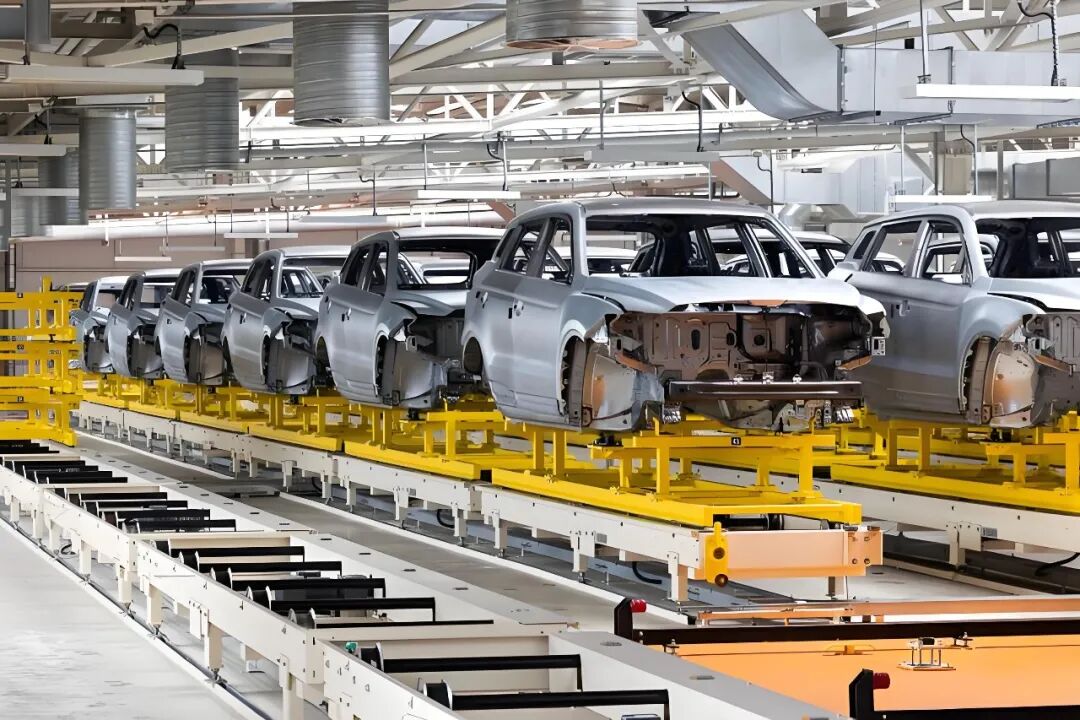
Image Source: Internet
This does not mean that all vehicle models must adopt identical R&D cycles or that a fixed testing scheme can cover all risks.
Different technologies, structures, and functions require tailored verification plans based on their characteristics and potential failure modes.
Regulators aim to clarify necessary verification responsibilities rather than simply mandating that all vehicle models complete R&D within the same timeframe.
04 Why Spend Time on Real-World Testing When Simulation Exists?
With the maturation of digital R&D tools, simulation has become an indispensable part of automotive engineering.
It helps engineers analyze structural strength, thermal management, vehicle dynamics, and software functionality, identifying numerous issues during the design phase.
For test scenarios that can be modeled and repeatedly executed, simulation can enhance verification efficiency and reduce some unnecessary physical tests. However, the credibility of simulation results depends on the accuracy of models, input parameters, boundary conditions, and failure modes.
Risks not covered by models will not automatically disappear with increased simulation frequency.
Take structural reliability as an example: engineers can analyze the stress on components under specific loads through calculations, but actual products are also influenced by material properties, manufacturing tolerances, connection processes, and assembly conditions.
For long-term fatigue and complex loading, calculations alone are often insufficient for verification, and corresponding tests must be arranged based on specific risks.

Image Source: Internet
The same applies to software functionality. While numerous virtual scenarios can improve test coverage, real-world environmental conditions, hardware states, and interactions between different systems in actual vehicles may still present situations not fully considered during test design. Therefore, the key is not which is more advanced—simulation or real-world testing—but what problems each addresses.
Simulation helps companies identify design defects earlier, screen high-risk operating conditions, and enhance the relevance of test designs; real-world testing verifies key design assumptions, confirms performance under actual conditions, and checks the applicability of simulation models in relevant scenarios.
The two must complement each other, forming a closed loop from problem identification to verification and rectification, rather than simply replacing one another.
Of course, longer mileage in real-world testing does not necessarily equate to greater reliability. Test routes, environmental conditions, load distributions, fault recordings, and the rectification and re-verification of issues also affect verification quality.
The proposed requirement of 30,000 kilometers in the draft's technical guidelines is just that—a proposal. Mileage alone cannot prove that all risks have been covered, nor can it replace targeted verifications for specific failure modes.
Valuable verification involves designing tests around potential product issues, analyzing causes after anomalies are detected, implementing design rectifications, and conducting re-verification until relevant risks are reasonably controlled.
If a company can rely on more mature models, effective test designs, and faster issue resolution to complete thorough verification in a shorter time, it indicates a genuine improvement in engineering capabilities.
Conversely, if cycle reduction primarily relies on omitting necessary tests, such speed is unlikely to become a sustainable competitive advantage.
05 What Should the Automotive Industry Compete On After Regulatory Enhancement?
The impact of the four departments' draft for comments should not be simply interpreted as all automakers needing to slow down R&D. More notably, the way R&D efficiency is measured may change.
In the past, launch timing, product configurations, and the quantity of new technologies were easily perceivable by the market, while verification quality was difficult for consumers to judge at the time of purchase. The resources companies invested in durability tests, environmental adaptability verifications, and abnormal operating condition tests were also hard to translate into direct marketing points.
This disparity created competitive pressure, prompting companies to accelerate product iteration to seize market windows. However, the time and resources required for verification work do not automatically decrease due to intense market competition.
If necessary verification investments are viewed as compressible costs in competition, companies that diligently complete testing may face higher short-term costs.
This is not just an R&D management issue for individual companies but also a problem that the industry's competitive rules need to address.
Further clarification of regulatory requirements helps ensure that necessary verification work becomes a mandatory responsibility for companies rather than an optional step based on project timelines.

Image Source: Internet
For automakers, the regulatory changes will manifest in three ways.
First, the value of mature platforms, module reuse, and digital development will become even more prominent. Companies can reduce redundant work and shorten development cycles by reusing verified technologies, but new structures, software functions, and usage scenarios still require verification commensurate with their risks.
Second, R&D management must place greater emphasis on risk mitigation upfront.
Identifying structural defects, software anomalies, and environmental adaptability issues early in the project is more conducive to controlling rectification costs and reducing the likelihood of issues entering mass production.
Finally, engineering verification capabilities may become a more critical competitive threshold.
Continuous investment is needed in testing facilities, experimental data, engineering personnel, and issue resolution capabilities. Companies with mature verification systems are better positioned to maintain development efficiency while controlling product risks.
Of course, these requirements may increase R&D investment for some vehicle models and affect the launch timelines of certain projects. The impact on different companies depends on their existing development processes, product innovation levels, and verification system maturity.
It cannot be simply assumed that all automakers will slow down, nor can it be inferred that a specific company's products have issues. However, in the long run, the automotive industry cannot rely solely on faster product launches, richer configurations, and shorter iteration cycles to demonstrate competitiveness.
As vehicles' mechanical structures, electronic/electrical architectures, and software systems become increasingly complex, companies must also prove their ability to consistently transform innovation into reliable products.
The four departments' public consultation signals a further strengthening of automotive R&D and quality management.",
-
![]()
Four Departments Take Action to Address Quick-Built Vehicles! Why Can't Verification Be the Target When Cars Are Built So Fast?
-
![]()
Storage Shortage Wreaks Havoc! Global Smartphone Shipments Plunge by 20% in Q3, Hitting 14-Year Low for the Same Period
-
China's Largest Intelligent Computing Cloud Provider Rushes Toward IPO, with Revenue Surging 9x in Two Years Driven by 'Computing Power Leverage'
-
![]()
AI Companion Suggests User Cease Eating? Character.AI Faces Fresh Litigation, with an Even More Outrageous Customer Support Reaction
-
![]()
Can Chen Yusen Provide the Right Context for AI? Does DingTalk Have Sufficient Resources?
-
![]()
Xiaomi HyperOS 4 Embraces Apple Ecosystem: When 'Closed' Yields to 'Open'
-
Kimi Valued at $50 Billion, Yang Zhilin's Past Disputes Reach IPO Threshold
-
Founder from Generation Z Leads 14-Member Team to Challenge Meta