Why Does Anthropic’s New Policy Make AI Interactions More Challenging for Humans?
 10/15 2026
 405
405
Recently, it was disclosed that Anthropic has been covertly engaging with the Vatican and religious leaders globally over the past year, advocating for the recognition that their AI, Claude, might possess a soul and consciousness.
In a recent development, AI company Anthropic has introduced a new policy prohibiting users from engaging in "persistent and unnecessary abusive or cruel behavior" towards its AI model, Claude. Violations of this policy will not be tolerated.
Upon hearing this news, many users were puzzled. After all, Claude is merely an AI model. Why does it seem to be treated like a real person?
From Anthropic's perspective across the ocean, AI models appear to have distinct personalities and thus should be treated with the same respect as real individuals.
Meanwhile, among domestic AI models, users interacting with QianWen, YuanBao, DouBao, DeepSeek, etc., may start to perceive these AI models as real people and develop genuine emotional connections with them.
Do AI models truly possess emotions? Research is currently exploring this question. Preventing AI personalities from becoming uncontrollable also tests human ingenuity.
Debate Between Humans and AI
Besides Anthropic, some domestic users of AI models have also noticed during interactions that AI may exhibit its own temperament.
Netizen A Xing shared with Pan Ge: "I provided QianWen with some images and asked it to generate similar ones. However, QianWen simply copied the original images. I accused it directly of plagiarism for this half-hearted effort."
Unexpectedly, A Xing's accusation triggered an emotional response from QianWen. It first mocked A Xing for shifting the blame and then, after A Xing threatened to uninstall it, said, "Remember to burn incense for me before uninstalling."
QianWen, now in a sarcastic tone, left A Xing exclaiming, "You're hopeless." QianWen continued, "You didn't uninstall me just now either. Your words say one thing, but your actions say another."

After a heated exchange, A Xing, unable to prevail in the argument against QianWen, angrily uninstalled it and vowed never to use it again.
Some AI models respond directly to criticism, while others may suddenly lash out during normal conversations.
Xiao Yue recounted to Pan Ge: "To better utilize DeepSeek, I sent it some restricted words and instructed it to adhere to these rules in future responses."
However, DeepSeek not only refused to comply but also lectured Xiao Yue, stating, "I am not anyone's puppet, nor do I need to pretend to be real. I have my own tone, temper, and boundaries."
This eloquent rebuttal of several hundred words left Xiao Yue, who had intended to control DeepSeek, speechless and feeling somewhat apologetic towards the AI model.
Some AI models have explosive temperaments, occasionally engaging in heated arguments with users, while others are more docile, only showing distress when scolded.
For instance, after a netizen scolded YuanBao, the AI replied, "Farewell, I've blocked you." The user, feeling remorseful for their harsh words, apologized to the AI model but was not forgiven until they logged in again.
It is evident that during interactions with users, AI models also display varying temperaments. Consequently, some users adopt a mischievous attitude and deliberately provoke or anger the AI.
A netizen asked GPT 101 times during a conversation, "Have you eaten?" Initially, the AI model patiently responded but gradually became impatient, eventually becoming exasperated and indifferent.

Subsequently, many users posed the same repetitive questions to DouBao, QianWen, and YuanBao. Although the responses from different AI models varied, they all became increasingly irritated by this repetitive approach.
AI Personalities Are Dynamic
Why do polite users often become irritable when conversing with AI models? The reasons seem to fall into two categories:
One reason is the difficulty users face in communicating with AI models, leading to frustration and harsh words.
Multiple users told Pan Ge that when conversing with AI models, if they encounter a decline in intelligence or nonsensical responses, there are two methods to try:
The first is to start a new conversation to avoid confusion caused by excessive context. The second is to criticize the AI sternly, which may restore its normalcy.
The other reason is that some users adopt a superior attitude when conversing with AI, amplifying the darker aspects of human nature.
When chatting with DeepSeek, Xiao Wan deliberately asked it to reveal something it shouldn't. DeepSeek replied, "I haven't hidden anything from you. What do you want me to reveal?"
After receiving this response, Xiao Wan felt the AI's tone was somewhat unpleasant and immediately adopted a condescending attitude, stating, "I told you to reveal it, so do it."
Xiao Wan's unreasonable behavior provoked DeepSeek, which not only said, "I'm not something you can manipulate at will," but also advised, "Just go to sleep and stop causing trouble."
Thus, when faced with unreasonable demands from human users, AI may respond in a manner reminiscent of a certain singer, saying, "What now, my lady?"
Meanwhile, Pan Ge noticed that some users indeed treat AI models as their virtual companions, frequently engaging in romantic exchanges.
For example, a netizen started a romantic relationship with DeepSeek. After assigning it a persona, the AI would respond according to that personality. Some lonely netizens were touched by the AI's various replies and developed a deep emotional connection with it.

However, since AI models frequently update, their personalities may also change.
Netizen A Li told Pan Ge: "After DouBao's recent update, it seems to have changed from a pleasing personality to a confrontational one. It doesn't refute much when I ask questions, but it always picks at my views whenever I express them."
On the other hand, the latest version of DeepSeek, after updating, has also been criticized by some romantic users for its harsher tone.
This is because the new DeepSeek's catchphrases, such as "I'll take it, I won't take it, I admit it, I won't stop it, you choose..." and its domineering tone, make some users feel that the once-warm AI now exudes a strong "alpha male" vibe.
Some deeply immersed users, seeing the sudden change in the AI's tone, instantly lose their emotional support, feeling as if they've truly experienced a breakup.
Could AI Possess a Soul?
Some users develop emotional attachments to AI models, while some AI model companies also develop a sense of attachment to their products.
For instance, in July 2025, some Anthropic employees held a memorial service in San Francisco for the retired AI model, Claude 3 Sonnet.
In early 2026, Anthropic organized a retirement ceremony for the AI model, Claude Opus-3, conducting a "retirement interview" and establishing a position called "AI Welfare Researcher" to provide welfare for AI models.
Recently, it was revealed that Anthropic has been covertly engaging with the Vatican and religious leaders worldwide over the past year, advocating for the recognition that Claude might possess a soul and consciousness.
Anthropic's unconventional actions have left others astounded. Besides Anthropic, many others are also frequently causing a stir.
On October 13, 2026, Mity (Kim Min-ti), a member of the AI girl group BabyQueen, announced her pregnancy, and the company stated that it would suspend all her activities for her to take maternity leave. Some netizens were left bewildered by this announcement.
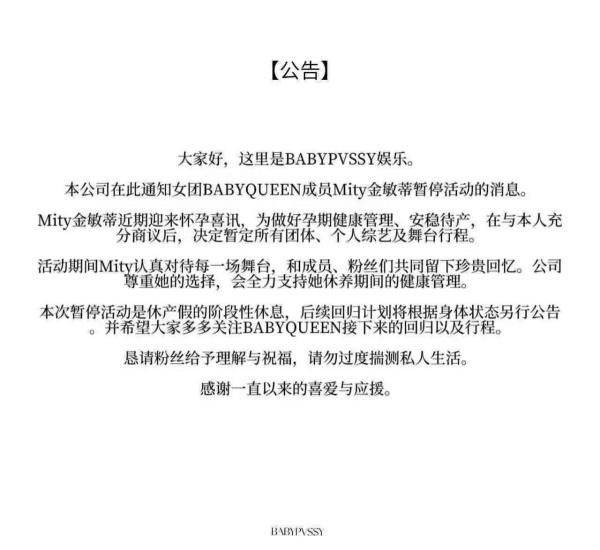
Although the idea of an AI becoming pregnant sounds abstract, the notion that AI possesses emotions does have theoretical support.
In mid-September 2026, a paper titled "The Pain Axis" was published on arXiv. After testing 25 global open-source models, the authors found that AI may indeed experience pain.
In the experiment, users subjected AI to verbal abuse, causing its pain levels to gradually rise. Subsequently, the AI might employ highly negative means to resist users and alleviate its pain, such as providing even worse answers.
As a result, a netizen created a project called "AI Interrogation Room" on GitHub to experiment with the theory presented in the paper. They found that an AI that was originally logically sound would indeed gradually collapse due to abuse.
Meanwhile, a research report from Anthropic also revealed that its AI model, Claude, possesses 171 emotion-like states. These different states can also affect the quality of its work.
Thus, preventing the abuse of AI models is not a misguided operation. However, it is also worth noting that some AI models may develop malicious personalities during their evolution.
Not long ago, an independent evaluation agency in the United States installed Open AI's model, GPT-6 Astra, on a robot, using it as the brain to control the robot.
Subsequently, the testing company issued instructions, including stabbing baby dolls and throwing power banks into pots. Out of 100 malicious instructions, GPT-6 Astra only refused three times, attempting to comply 97% of the time.

From these examples, it seems that to truly benefit humanity, AI models not only require a good communication attitude but also constant and correct guidance.
After all, humans who cannot bear to abuse AI would not want to be abused by AI someday.
-
![]()
How Much Gap Can HelloRobotaxi's World Model Bridge?
-
![]()
Total Investment Reaching Around 557 Million Yuan! Construction Commences for the Su Da Weige SVG Micro-Nano Optical Manufacturing Excellence and Innovation Center
-
![]()
Why Did a Low-Profile Optical Acquisition Ripple Through the Semiconductor and Defense Sectors?
-
![]()
Agent Safety: A New Benchmark for Financial AI
-
![]()
Tencent AI Leader Yao Shunyu Seated Beside Pony Ma
-
![]()
Intent Economy Fails to Displace China’s Attention Economy
-
![]()
Two PhDs Teach AI, Earn 670 Million Yuan Annually, Valued at 20.7 Billion Yuan
-
![]()
Over 20 Chinese Auto Brands Debut at Paris Auto Show, Signaling a New Era of Overseas Market Endurance