Tencent AI Leader Yao Shunyu Seated Beside Pony Ma
 10/15 2026
 385
385
Author|Zhang Qian
Editor|Hu Zhanjia
Operations|Chen Jiahui
Produced by|Lingtai
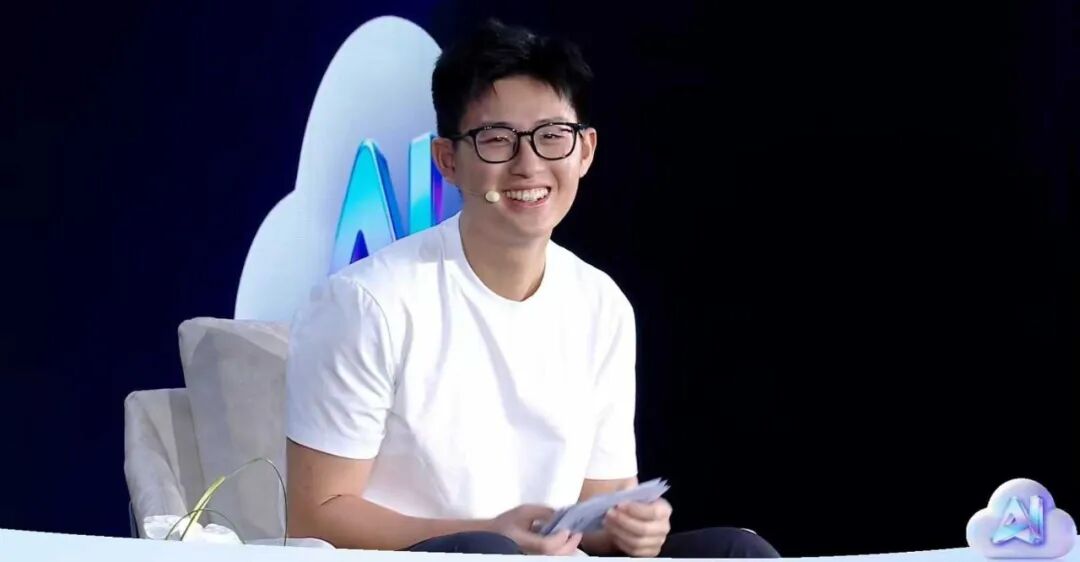
Header Image|Scene from Tencent AI Conference
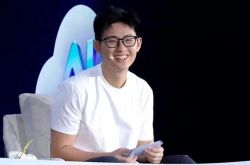
On October 8, the first workday following the National Day holiday, Tencent's headquarters in Shenzhen played host to a high-profile visit. Footage from 'Guangdong News' captured a detail that caught the tech world's attention: during the symposium, a young face was seated to the right of Pony Ma—Yao Shunyu, Tencent's Chief AI Scientist, born in 1998.
Traditionally, in such settings, one would expect a senior executive with years of tenure at Tencent to occupy the seat beside the founder. However, this time, the honor went to a young man who had been with the company for less than a year. Pony Ma has rarely made public appearances in recent years, and each of his appearances carries significant weight. This time, the spotlight was not just on his presence but also on whom he chose to sit beside.
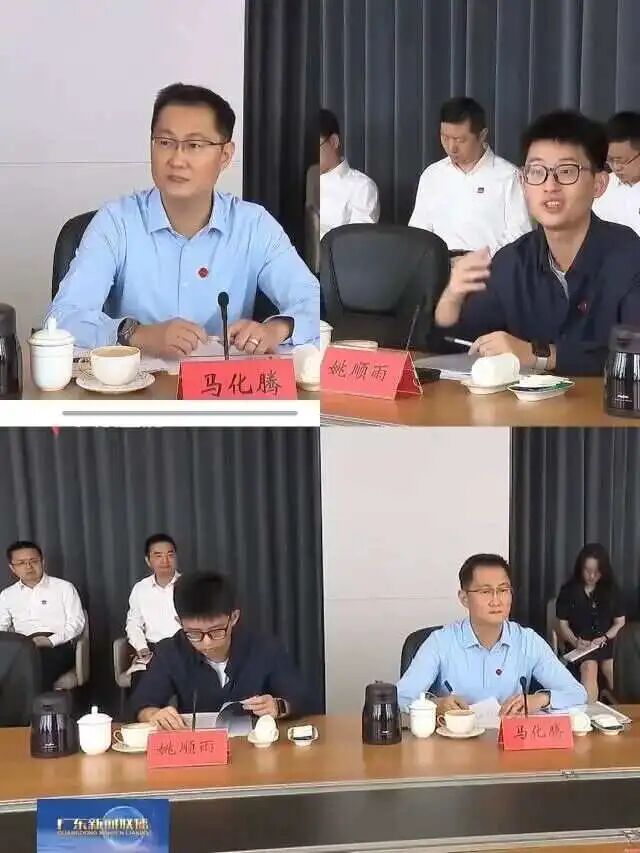
This moment could be seen as one of the most symbolic in China's internet industry in 2026: the founder of Tencent at 27 and the current leader of Tencent's AI efforts at 27, sitting side by side.
The 27-year gap between them spans the entire journey of China's internet, from dial-up access to the era of large models. One defined the previous era through connectivity; the other is expected to shape the next.
 The Ascent of a Prodigy
Yao Shunyu's resume reads like a classic example of a prodigy's rise.
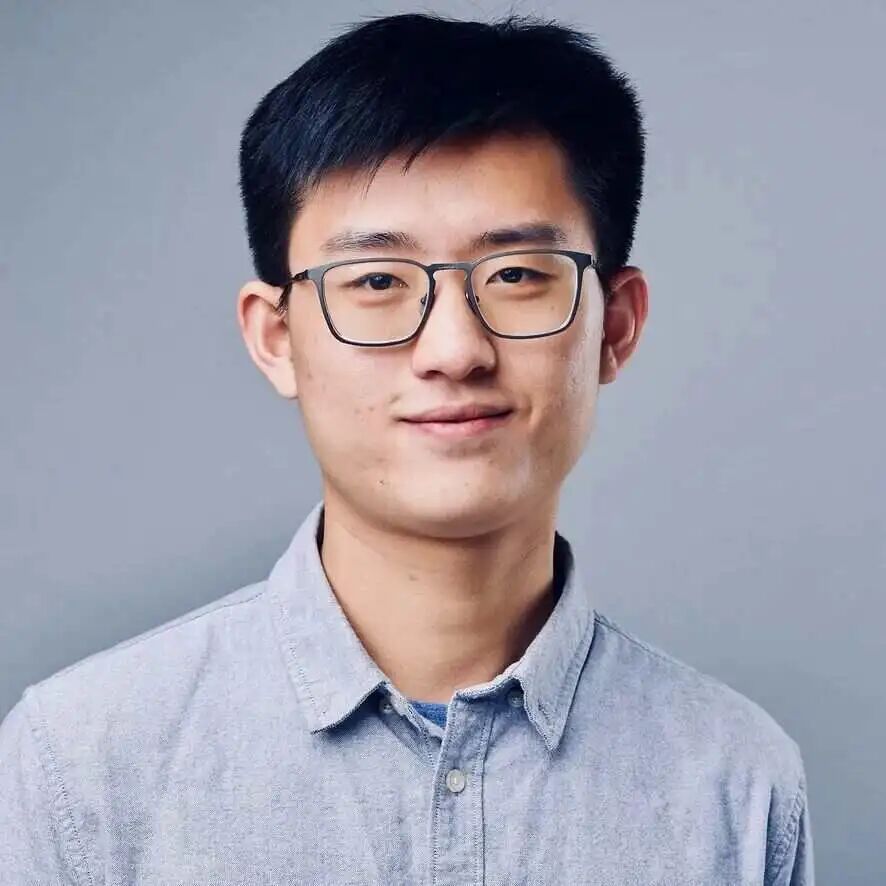
According to media reports compiled by Tianyancha, Yao, a native of Hefei, Anhui, attended Hefei No.1 High School. In 2015, he scored 704 on the gaokao (China's national college entrance exam), ranking third in Anhui's science category, and enrolled in Tsinghua University's Yao Class—founded by Turing Award winner Andrew Yao and renowned as China's pinnacle of computer science education.
There, he studied under Yao Class alumnus and deep learning expert Wu Jiayun, began systematically exploring artificial general intelligence, and broadened his horizons through an exchange program at MIT. In 2019, he pursued a Ph.D. at Princeton University, initially focusing on computer vision but later shifting to natural language processing (NLP) and reinforcement learning after judging NLP to have greater potential. He studied under Karthik Narasimhan. By then, the Transformer architecture had emerged just two years prior, and this pivot allowed Yao to align precisely with AI's biggest wave in the following decade.
After earning his Ph.D., Yao joined OpenAI, participating in key projects like Operator, DeepResearch, and computer-using agents—critical steps in OpenAI's transition from 'chatbots' to 'agents'.
What truly elevated his academic reputation was his proposed ReAct method—the first to integrate 'reasoning' and 'action,' enabling large models not just to think but also to act: they first reason and plan when encountering problems, then execute using tools and refine their next steps based on feedback. This paradigm has since become a mainstream technical path for global agent development, with nearly all AI Agent products on the market today inheriting ReAct's DNA.
In 2025, at 27, he was named to MIT Technology Review's 'Innovators Under 35' China list as the youngest honoree; in 2026, at 28, he appeared on Fortune China's '40 Under 40' list of business elites.
In other words, when Tencent decided to make a comeback in the field of large models, it recruited one of the sharpest minds among the 'native generation' of this technological revolution.
 A Mutual Pursuit
Tencent's encounter with Yao Shunyu began at a top-tier academic conference in 2024.
Tencent's recruitment team had targeted the OpenAI researcher and maintained contact for over a year. In December 2025, Yao officially joined Tencent as 'Chief AI Scientist, CEO/President Office,' reporting directly to President Martin Lau, while concurrently leading the AI Infra and Large Language Model departments.
The high-profile hiring sent shockwaves through the AI community.
His authority expanded at an unprecedented pace. Media reports compiled by Tianyancha show that in July 2026, Tencent merged its Hunyuan Multimodal Model and Large Language Model departments into a Foundation Model Department under his leadership; in September, he additionally took charge of the AI Data Department. Thus, the core pipeline of Hunyuan—from model development and computing infrastructure to data and evaluation systems—was consolidated under one person.
An industry insider remarked, 'This might be the most powerful young executive in Tencent's history.' Such a concentration of authority is virtually unprecedented among China's internet giants.
Yao indeed brought something different.

His first task was to audit the Hunyuan Large Model. He discovered that the old team had fallen into a 'benchmark trap'—chasing high rankings by mixing test data into training sets, creating models that looked impressive on paper but performed poorly in real-world scenarios. He proposed an unconventional solution to Lau: for at least one year after the new model's release, senior management would ignore benchmarks. This proposal, requiring immense trust, was accepted.
'Ignoring benchmarks' essentially reset evaluation criteria from 'metrics look good' to 'tasks run smoothly.' The organizational changes ran deeper: 80% of the Hunyuan team were born after 1995, with extremely flat management. Anyone could raise issues in a large group chat and receive rapid responses; mid-year evaluations were abolished to encourage long-term research; a rhythm of 'delivering results every two to three months and major versions every six months' was set; academic pedigree mattered less than research taste—the ability to identify good problems and deliver results trumped resume credentials.
Yao himself oversaw key projects, often discussing technology with researchers and interns late into the night, occasionally organizing basketball games in group chats.
Why Tencent?
Yao explained internally that the scarcity in large models now lies not in training techniques but in truly worthwhile problems to solve—and these problems are hidden within internet companies' operations.
Few companies globally have accumulated massive user context like Tencent and Meta.
He envisioned a 'Co-design' model—where models and products are developed in tandem from the outset. Models receive real-world scenarios and user feedback immediately, knowing precisely where to improve; products, in turn, synchronize needs with models without waiting for a generic model to be retrofitted.
This was a mutual pursuit: Tencent provided the genius with scarce scenarios, data, and trust; the genius equipped Tencent with cutting-edge methodologies.
 All-In Commitment
Yao's influence reflects Tencent's intensity of AI commitment.
According to Q2 2026 financial reports and media reports compiled by Tianyancha, Tencent's R&D spending reached 27.28 billion yuan, up 35% year-on-year; capital expenditures hit 52.78 billion yuan, soaring 176% YoY and 65% QoQ, primarily for computing power procurement. More notably, prepayments—deposits paid to chip and server vendors in Q2—reached 51.4 billion yuan. Combined with capital expenditures, AI infrastructure investment in a single quarter exceeded 100 billion yuan, placing Tencent among China's top tech companies in the AI arms race.
Such commitment requires resolve.
The financials also revealed that AI's new businesses temporarily suppressed Tencent's profit growth by about 10 percentage points. Yet Tencent chose to extend evaluation cycles, no longer constraining AI innovation by single-quarter profits. President Martin Lau calculated during an earnings call that computing power prepayments made months earlier could now be resold at over 30% profit, but Tencent prioritized allocating this capacity to in-house models and applications, betting on long-term value.
Pony Ma's statement at a May shareholders' meeting underscored this commitment. He admitted Tencent was initially unremarkable in AI foundational capabilities: 'A year ago, we thought we'd boarded the ship, only to find it leaking.' But confidence surged in recent months: 'Now we feel we've stood firm.'
The person fixing the leaks was Yao Shunyu.
 Results Begin to Show
Returns on investment are materializing rapidly.
On the model side, Hunyuan Hy3 rapidly iterated from preview to official version, with call volume surging 68-fold over the previous generation within a week of launch—a direct testament to the effectiveness of methodological and infrastructural overhauls. In August, the larger-scale Hy4 preview was released and open-sourced, featuring 770 billion total parameters and 49 billion active parameters, with context length exceeding 1 million tokens, placing it among the global top tier of open-source models.
The open-source strategy was equally strategic: exposing model capabilities to the entire developer ecosystem expanded technical influence while subjecting Hunyuan to real-world testing across industries.
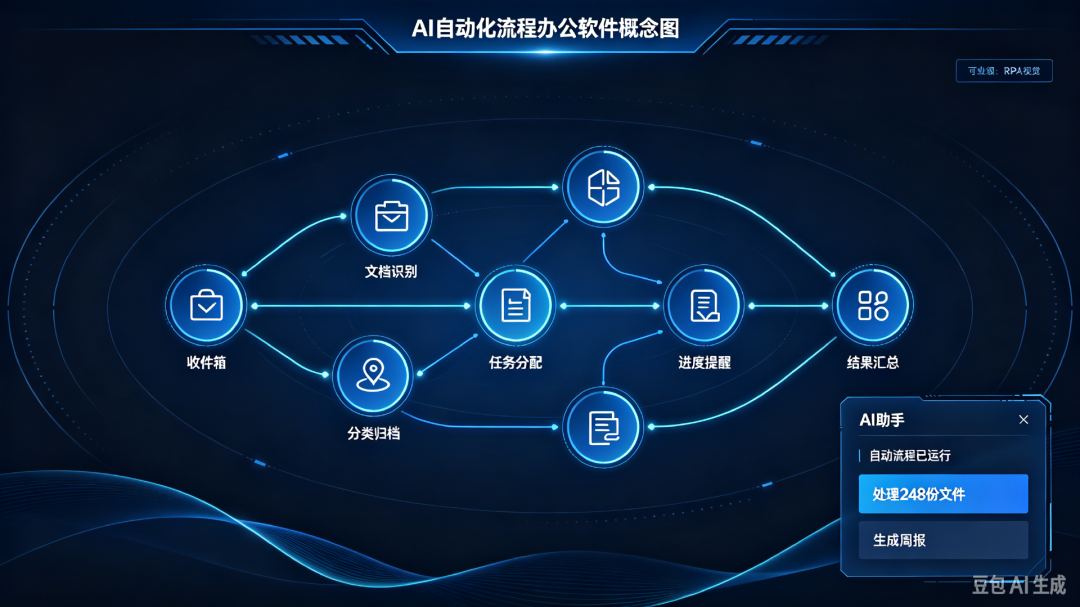
On the product side, Tencent focused AI on its high-value scenarios rather than 'cross-border land grabs.' Media reports compiled by Tianyancha show that Yuanbao's MAU surpassed 100 million, doubling in a year; AI coding tool CodeBuddy covered over 95% of Tencent's engineers; AI office efficiency tool WorkBuddy's PC-side visits exceeded 20 million, ranking first among domestic desktop AI office agents.
Business feedback drove model iteration in reverse, turning Yao's Co-design vision into a flywheel for Tencent's AI. Greater potential lies ahead: when agent capabilities fully integrate with WeChat and QQ—national-level platforms—Tencent's two decades of accumulated social graphs and scenario data will unleash unmatched momentum.
Broaden the lens, and Tencent's AI bet fits into a grander narrative.
 Generational Shift: Inevitable in Tech
Yao Shunyu is not alone.
The 2026 AI organizational charts of Tencent, Alibaba, ByteDance, and Xiaomi reveal a clear generational shift: Alibaba's Qianwen lead Liu Dayiheng was born in 1994; Xiaomi's MiMo Large Model head Luo Fuli in 1995; ByteDance's Seed core member Zhou Chang in 1990. Dubbed the 'Transformer Native Generation,' these individuals were in their formative academic years when 'Attention Is All You Need' was published in 2017. Their knowledge systems were built from day one on Scaling Laws, unburdened by legacy rule engines or statistical NLP, and without path dependence on old approaches.
The mobile internet era valued products, traffic, and operations—experience was the moat. The large model era competes on computing power, foundational models, and fundamental research—technical intuition is the ticket. While veterans saw Scaling Laws and thought, 'How many cards will this burn?', young minds embraced them as faith.
When technological iteration outpaces experience accumulation, 'letting those who hear the gunfire command and those closest to the frontier lead' becomes the norm for big firms. Investors note that the average age of AI unicorn founders dropped from 40 in 2020 to 29 in 2024. This is no scattered personnel change but a systemic redrawing of the tech power map.
Of course, young leaders also face heightened responsibility.
Yao's challenge is translating Tencent's vast ecosystem into model capabilities—titles can change in one organizational adjustment, but abilities must be validated through rounds of models, products, and user data.
By multiple metrics so far, the handover has made a strong start.
In the End
In 1989, Pony Ma was admitted to the Computer Science Department of Shenzhen University. In 1998, at the age of 27, he quit his high-paying job to found Tencent, aiming to address the challenge of connecting people. By the end of 2025, another 27-year-old joins Tencent, this time to tackle the challenge of creating a sufficiently intelligent general AI foundation.
The same age of 27, separated by 27 years, time has drawn a circle.
In the internet era, Tencent built a vast business empire through connections. In the era of intelligent agents, it is rebuilding its technological moat with foundational models. The 55-year-old founder cedes his seat to a 28-year-old scientist. This scene is moving because it signifies a rare capability—a company already 28 years old still maintains the courage and clarity to entrust the future to those who understand it best.
The tide never stops, and the baton has been passed.
Tencent's AI battle has just entered its most captivating chapter.
-
![]()
How Much Gap Can HelloRobotaxi's World Model Bridge?
-
![]()
Total Investment Reaching Around 557 Million Yuan! Construction Commences for the Su Da Weige SVG Micro-Nano Optical Manufacturing Excellence and Innovation Center
-
![]()
Why Did a Low-Profile Optical Acquisition Ripple Through the Semiconductor and Defense Sectors?
-
![]()
Global Relocation of Computing Power: Who’s Copying Ulanqab?
-
![]()
Agent Safety: A New Benchmark for Financial AI
-
![]()
Tencent AI Leader Yao Shunyu Seated Beside Pony Ma
-
![]()
Intent Economy Fails to Displace China’s Attention Economy
-
![]()
Two PhDs Teach AI, Earn 670 Million Yuan Annually, Valued at 20.7 Billion Yuan