We Shouldn't Invest in More 'Tian Keyu' Clones
 10/16 2026
 390
390
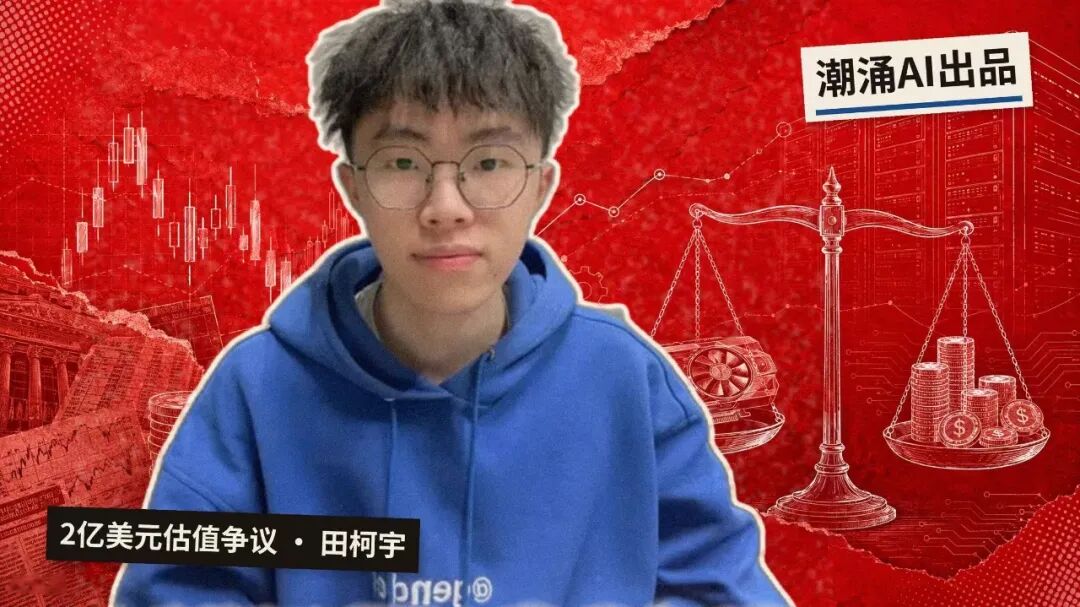
Chaoyong AI Editorial Team
An AI lab with a 10-person team, no product, and no public name recently secured nearly $30 million in funding, valuing it at $200 million post-investment.
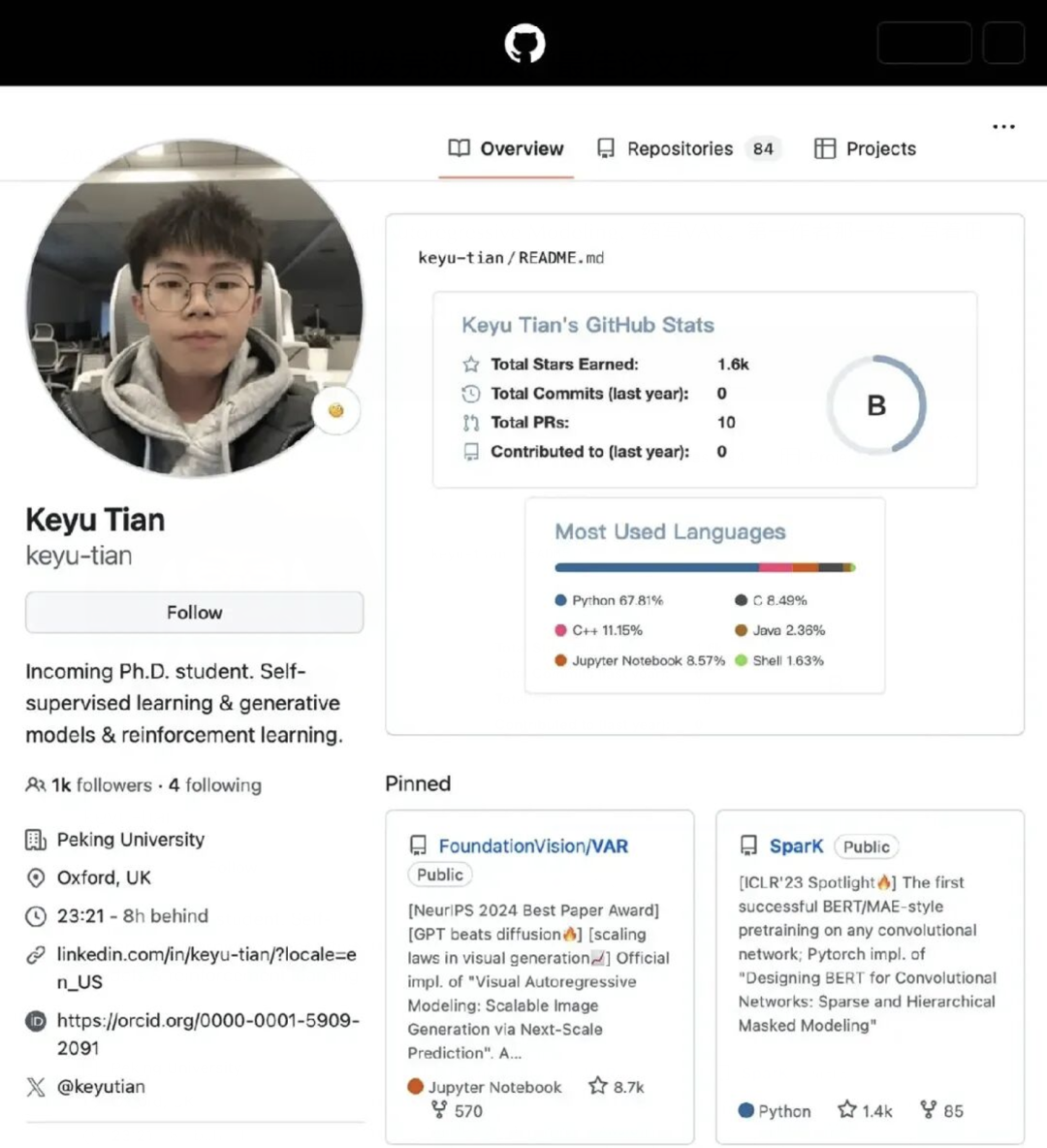
Founder Tian Keyu, a PhD candidate in his early 20s at Peking University, wears two labels: first author of the NeurIPS 2024 Best Paper and the central figure in ByteDance's controversial 'model poisoning' incident.
The former elevated him to academic stardom, while the latter resulted in a court order to pay $500,000 in compensation and refund all internship salaries.
According to Bloomberg, Tian's investors are 5Y Capital and IDG Capital.
How these two labels translate into a $200 million valuation makes this the most dissectible case in China's 2026 AI venture capital landscape. 
Crude Justice or Vengeful Retaliation?
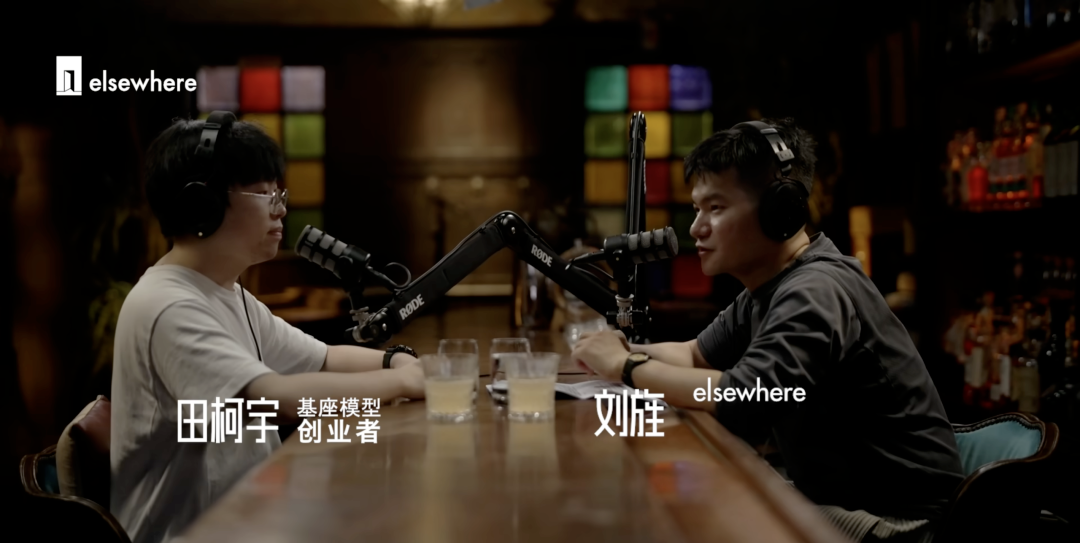
On October 12, the podcast 'Elsewhere' released an interview with Tian Keyu, his first complete account of the 2024 ByteDance incident.
According to Tian: New intern A excessively consumed computing resources and arbitrarily halted colleagues' training programs, primarily affecting introverted peers who dared not protest. After leader inaction, he used GPT to write a program that manually halted A's tasks five times over ten days. Tian insisted he never lacked computing power and acted out of 'disgust for A's bullying.' While admitting to disciplinary violations, he denied 'poisoning,' 'sustained two-month attacks,' or 'framing others.' He called it 'crude justice' but acknowledged it became 'violence against violence.'
The day after the podcast aired, a 10,000-word account by former team members based on victim statements circulated online, offering a different version:
Training anomalies began in March 2024, persisting for months across multiple projects. At peak weirdness, 99 of 100 machines running identical programs functioned normally while one exhibited abnormalities. Engineers in Beijing, Shanghai, and Seattle took turns troubleshooting around the clock. On July 30, the team discovered tampered PyTorch code in the training environment; the next day, they found suspicious code in Tian's directory suspected of sabotaging training.
Two more damning details emerged:
First, before discovery, Tian attended team troubleshooting meetings, adjusting attack code based on colleagues' progress. Second, materials accused him of presenting an open-source PixArt model as his VAR model, secretly prefixing all prompts with 'City' to prevent colleagues from detecting the swap through identical prompt comparisons.
If the latter version holds, this transcends crude justice. Justice needs no disguise; retaliation does.
Both accounts remain one-sided, with ByteDance appealing and the case in second trial.
Yet here's the paradox: A founder embroiled in major factual disputes and unresolved legal proceedings has already secured a $200 million valuation. 
When Desperation Trumps Due Diligence
5Y Capital partner Meng Xing was Tian's first investor. Tian recalled on the podcast how Meng brought him to meet Liu Qin, who praised his 'drive,' reducing Tian to tears.
'Drive' justifies investment.
NeurIPS Best Paper first author, Beihang undergraduate + Peking University PhD background, and nearly six years of frontline lab experience are scarce assets. By his own podcast account, he was also SenseTime's youngest-ever intern.
But conversations between Chaoyong AI and multiple firms reveal a harsher reality: This AI boom's top projects are being fiercely contested, leaving institutions desperate.
Settling for 'flawed' founders like Tian becomes the fallback option.
This merits closer scrutiny.
'Blind investment' epitomizes 2026 AI venture capital anxiety. Headline projects command astronomical prices amid scarce supply.
Embodied AI, world models, AI infrastructure—every top team faces bidding wars from corporate VCs, dollar funds, and RMB funds alike.
What if you lose out? Either accept preposterous valuations or lower standards.
Tian represents the extreme end of this compromise: a 10-person team with no product, no revenue, and no public company name commands $200 million.
Capital has its pricing logic.
Last month, AMD announced its $8.2 billion acquisition of Li Feifei's World Labs, with CEO Lisa Su citing 'world-class talent.' Yann LeCun's world model startup AMI secured $1.03 billion in March at a $4.5 billion valuation.

AMD signs deal with World Labs
Even novel approaches unrelated to world models face bidding frenzies: Jev, a model returning only structured answers (no chat, no coding), began fundraising at a $10+ billion valuation less than a month after launch.
Under 'talent as asset' logic, a $200 million valuation for a 20-something Best Paper author seems plausible.
The question remains: While other mega-rounds price technological potential, what does this funding price?
Tian himself answered on the podcast: 'This attention or hype definitely benefits startups.' He called the ByteDance incident's attention combined with the Best Paper a 'double buff.'
Translation: Controversy itself became funding leverage. The court ordered him to pay $500,000; capital gave him $200 million. The difference prices controversy.

When Dishonesty Becomes Funding Leverage
The issue extends beyond Tian—it signals systemic industry problems.
First, clarify the premise: Does Tian have the right to found another startup? Yes.
Legal rulings established: He breached contracts, must pay $500,000, and refund internship salaries. The court rejected ByteDance's $8 million infringement claim.
After compensation, he deserves the same entrepreneurial opportunities as others.
Society shouldn't exile a young adult forever.
But 'allowed to start' ≠ 'worthy of investment.' Investment prices assets—what you price rewards what you value.
The $200 million valuation signals to markets: A founder who bypassed company rules and allegedly sabotaged colleagues with technical means is far more 'valuable' than rule-abiding peers who suffered in silence.
The podcast revealed: Tian described colleagues affected by A's actions as 'mostly introverted, soft people.' One such colleague saw him off when he was fired, which 'moved' Tian. Today, that colleague likely still waits patiently for computing resources in some lab, while Tian holds $200 million.
This is the cost of 'flawed investments.'
It rewards not technical prowess but rule disdain; it prices not potential but controversial buzz.
If this pricing holds, more young people facing unfair resource allocation will emulate Tian's shortcuts—market votes with its feet have already endorsed this path.
Sichuan Daily put it well: 'Failure merits tolerance; dishonesty doesn't warrant whitewashing.'
Tian's case wasn't experimental failure or misguided strategy but deliberate rule violations harming his team for personal gain. Confusing these makes tolerance perverse.
Deeper still, this exposes a chronic ailment in AI talent evaluation: Technological supremacism's erosion of collaborative ethics.
NeurIPS may disregard author controversies in awards—scientific purity demands it—but capital ignoring them constitutes due diligence failure.
NeurIPS 2024 Best Paper: Visual Autoregressive Modeling (VAR)
Can someone who covertly modifies attack code during team troubleshooting meetings uphold governance standards in startups? Can someone who passes off open-source models as proprietary research demonstrate honesty to clients and investors?
Technical skills determine how far one goes; collaborative ethics determine whether peers will support their journey.
AI relies on trust chains among hundreds for model training.
Capital rewarding chain-breakers with $200 million today risks industry-wide collapse tomorrow. 
Chaoyong AI Perspective
Tian Keyu can found startups, but markets shouldn't fund more 'Tian Keyus.'
First, separate failure from dishonesty in pricing.
China's AI venture capital faces unprecedented talent wars. The more scarce assets become, the more crucial due diligence remains. If top projects prove unattainable, missing out beats investing in liabilities. Every 'blind eye' toward 'flawed founders' today plants bombs in tomorrow's portfolios.
Second, controversial buzz shouldn't become valuation assets.
Founders' technical judgment, team cohesion, and rule consciousness should anchor valuations. Controversy-driven attention is a short-term stimulant that depletes institutional credibility. For veteran funds like 5Y and IDG, this investment's success would validate the model; failure would become the costliest 'flawed investment' case study.
Third, vindicate rule followers.
The true victims in Tian's case are introverted colleagues whose training was disrupted, programs halted, and grievances silenced—and the team whose work was stolen via PixArt impersonation. They obeyed rules, bore losses, then watched the rule-breaker gain fame and fortune. If the industry can't uphold 'obedience shouldn't incur losses,' ByteDance's model poisoning will metastasize into a trust crisis across Chinese AI collaboration.
The court's second trial hasn't concluded. But the market has already ruled: $200 million.
The question remains: Is this verdict just?
*Reference Articles
1. Bloomberg: 'Ex-ByteDance Intern Raises $30M for AI Lab'
2. Elsewhere Podcast: 'Conversation with Tian Keyu: I Swear This Is All True'
3. Phoenix Technology: 'Former ByteDance Intern Tian Keyu Secures Nearly $30M in Funding'
4. Sichuan Daily: 'Why Tian Keyu's Funding Sparked Controversy: Distinguishing Failure from Dishonesty'
5. Beating Insights: 'Tian Keyu Vows Lifetime Research Setback if Lying'
-
![]()
Breaking News! Three Departments Initiate Joint Probe into Zunjie, Unveiling 4 "Potential Scenarios" and 2 "Regulatory Measures"
-
![]()
Amidst the Frenzied Competition in New Energy Vehicles, 4S Dealerships Face Sudden 'Collapse'
-
![]()
We Shouldn't Invest in More 'Tian Keyu' Clones
-
![]()
Exploring How Intelligent Driving Predicts Hazards with Risk Fields in Huawei's ADS 5
-
AI Smartphones: Not Lacking in AI, But in Agents That Can Truly Take Charge
-
Why Doesn’t the UK Mirror the EU’s Tariffs on Chinese Electric Vehicles? National Interests Trump Political Alignment!
-
![]()
Scientists Unleash AI Upon a Simulated 'World,' Only to Watch It Crumble in 4 Days
-
![]()
Exclusive! The Climax of the Zunjie V800 Brake Pedal Fracture Saga Draws Near