Exploring How Intelligent Driving Predicts Hazards with Risk Fields in Huawei's ADS 5
 10/16 2026
 425
425
Why might an intelligent driving system sometimes need to decelerate even when the road ahead seems clear of obstacles?
This is because driving hazards arise not only from obstacles directly in the vehicle's path but also from the movements of nearby vehicles and potential trajectory clashes among various traffic participants.
In April 2026, Huawei unveiled ADS 5, which boasts the WEWA 2.0 architecture and integrates the safety risk field theory into the vehicle's world behavior model, enabling real-time decision-making through risk heatmaps.
The emphasis here lies not merely in the system having an additional method to represent risks but in its endeavor to transform potential hazards in the surrounding environment into actionable data for driving decisions.
01 Why Identifying Obstacles Doesn't Equate to Understanding Hazards?
In traditional modular autonomous driving systems, the perception module identifies objects such as vehicles, pedestrians, and road boundaries, estimating their positions and motion states.
The prediction module then infers possible future paths of other traffic participants. Subsequently, the planning module generates corresponding driving paths by considering the vehicle's state, road conditions, and driving objectives.
With the advancement of end-to-end technologies, the organization of these functions is evolving, with some perception, prediction, and decision-making tasks being accomplished collaboratively within a unified model.
Nevertheless, regardless of the architecture employed, the system must tackle the challenge of evaluating the severity of potential clashes based on changes in the surrounding environment and executing timely and rational driving actions.
For instance, consider a vehicle traveling in an adjacent lane. If it maintains a stable distance from your vehicle without significant lateral movement, the system may not need to take immediate action.
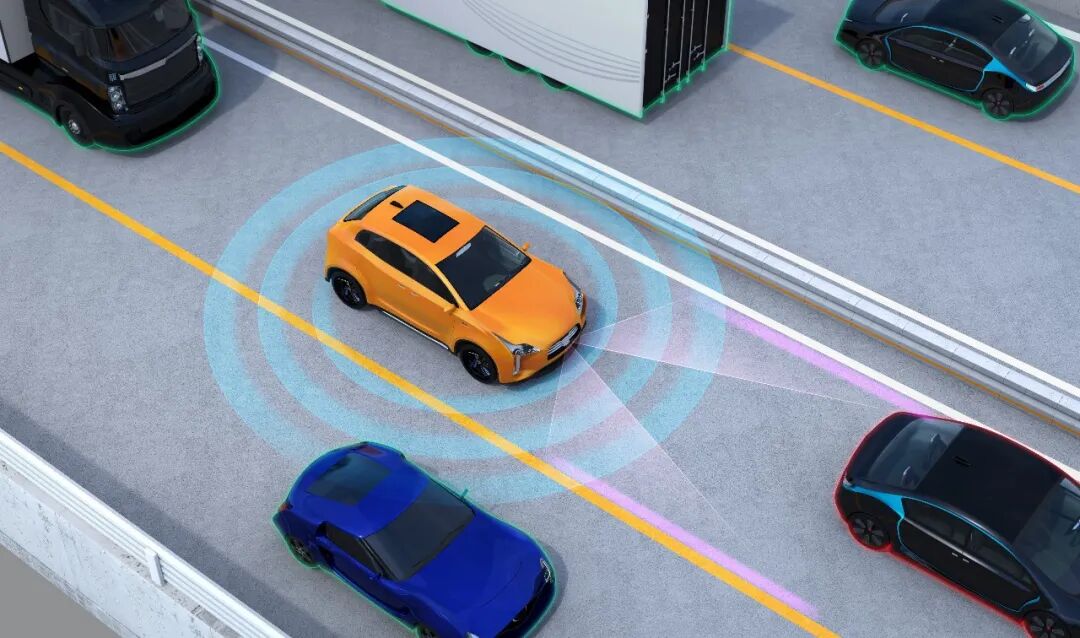
Image Source: Internet
However, the scenario changes when it gradually approaches the lane marker, the lateral gap narrows, and a slower vehicle appears ahead of your vehicle.
Even if there is no immediate trajectory clash, the system must consider whether there is adequate space for subsequent lane changes, deceleration, and evasion.
In such cases, merely knowing the object's position is insufficient. The system must also assess whether potential clashes are emerging by considering relative speed, direction of movement, possible trajectories, and road space constraints.
A close distance does not necessarily indicate the highest risk, nor does a greater distance imply it can be disregarded.
If an object is rapidly approaching your vehicle or its possible trajectory intersects with your vehicle's path, adjusting driving strategies in advance may be necessary, even if there is no immediate contact.
Therefore, an intelligent driving system needs not only to identify its surroundings but also to judge how the environment is evolving and what risks these changes may pose to subsequent driving.
02 What Exactly Constitutes Huawei's ADS 5 Risk Field Judgment?
According to Huawei's public introduction, ADS 5 incorporates the safety risk field theory into the vehicle's world behavior model, encompassing kinetic energy fields, potential energy fields, and behavioral fields, and supports real-time decision-making through risk heatmaps.
Huawei positions this technology as an innovation aimed at enhancing defensive driving capabilities.
From the general principles of autonomous driving, risk assessment necessitates a comprehensive consideration of the motion states of traffic participants, potential trajectory clashes, road space constraints, and possible behavioral changes in other vehicles.
The risk field approach endeavors to organize these scattered pieces of information into risk expressions pertinent to driving decisions, rather than merely assigning a fixed danger level to each identified object.
For example, when approaching a decelerating vehicle ahead, the system not only needs to know its location but also considers the speed difference between the two vehicles, the available braking distance, and whether there are other vehicles in adjacent lanes.
If a vehicle in the adjacent lane is approaching and there is insufficient braking space ahead, changing lanes to the side may not be a safer option.
The system must comprehensively evaluate potential risks in different directions before determining whether maintaining the lane, decelerating, or adjusting the trajectory is more appropriate.
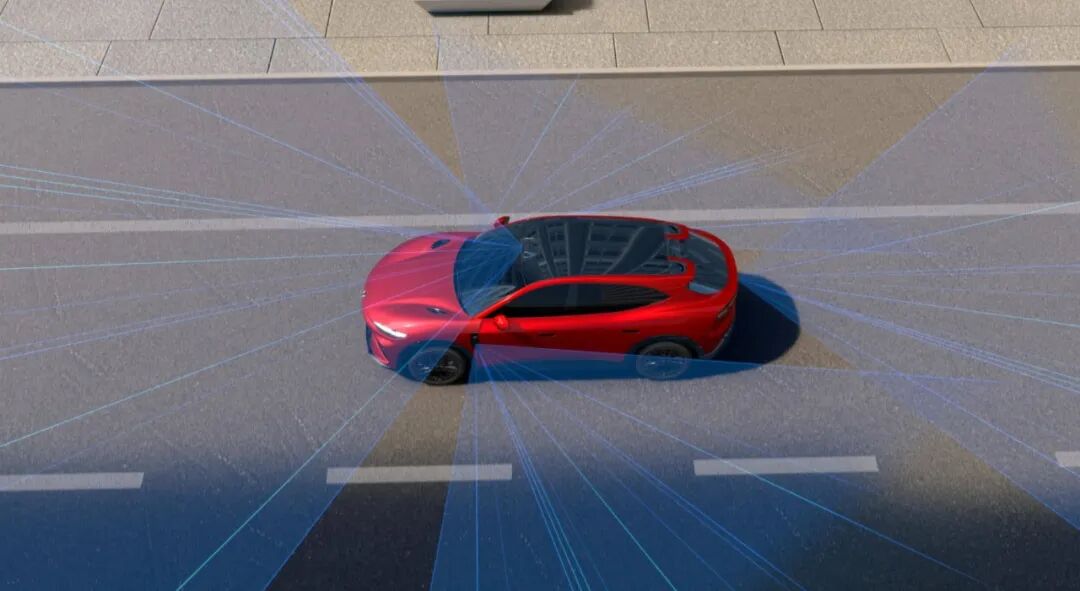
Image Source: Internet
Huawei's public materials categorize the risk field into kinetic energy fields, potential energy fields, and behavioral fields. However, the mathematical definitions, specific calculation methods, and fusion mechanisms of these three types of fields have not been fully disclosed.
Therefore, it is inappropriate to directly equate them with a specific risk scoring formula or to assume that implementation methods from other research directly represent the actual algorithm of ADS 5.
Similarly, a risk heatmap does not imply that the system can simply control the vehicle to move toward the area with the lowest risk.
Actual driving also necessitates considering road boundaries, traffic rules, vehicle kinematic constraints, and subsequent movements of surrounding traffic participants.
Even if a certain direction has a relatively low risk assessment, it may not have feasible driving space.
The significance of risk fields lies in attempting to link environmental states with potential risks, providing a more direct reference for the vehicle to choose driving behaviors.
However, the effectiveness of this risk expression ultimately hinges on whether it can support reliable planning and control, not just on whether the heatmap is visually intuitive.
03 What Other Capabilities Are Required to Transition from Hazard Judgment to Proactive Action?
The value of hazard judgment is ultimately reflected in the vehicle's actual behavior.
When the vehicle ahead suddenly decelerates and there is a risk of a lane change from an adjacent lane, the system must not only judge whether the risk has increased but also further decide when to start decelerating, the magnitude of braking, and whether to maintain the current lane.
In scenarios such as pedestrians approaching the curb or vehicles emerging from occluded areas, the system must also assess possible risks when information is incomplete, rather than waiting until a clash is imminent before responding.
This involves three interrelated yet distinct aspects.
Risk assessment is responsible for determining which potential clashes in the current environment warrant priority attention. Trajectory planning needs to find feasible solutions considering risks, road space, and vehicle motion constraints. Control execution translates the planning results into actual steering, acceleration, or braking actions and continuously adjusts them based on new environmental information.
Any deviation in any of these aspects can affect the final performance.
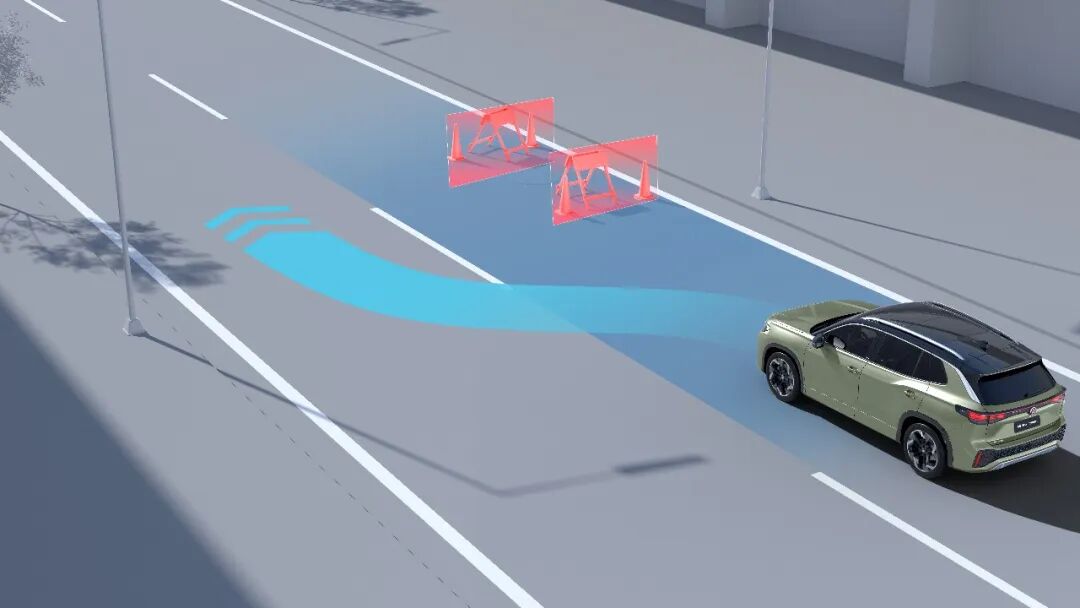
Image Source: Internet
Overly conservative risk estimates may lead to frequent deceleration or unnecessary evasion by the vehicle. Insufficiently timely risk estimates may result in missed opportunities for more composed braking and adjustments.
Even if a planned trajectory is feasible in prediction, the vehicle's actual steering and braking capabilities must still be taken into account.
Another related upgrade in Huawei's ADS 5 is the introduction of multi-agent game theory and online reinforcement learning in the WEWA 2.0 cloud-based world engine.
Huawei describes this as enhancing training efficiency through simultaneous generation, learning, and validation. The vehicle's world behavior model introduces safety risk fields to support real-time risk judgment and driving decisions. Their tasks are different.
The cloud-based world engine focuses on constructing and learning complex traffic interactions, while the vehicle's world behavior model is geared toward behavioral decision-making in actual driving. They correspond to two different issues in intelligent driving technology: how to enable the model to learn more comprehensively from complex scenarios during training and how to enable the vehicle to respond more robustly to risks in real-world environments.
Huawei officially claims that the safety risk field technology in ADS 5 can reduce collision risks by 50% through real-time decision-making using risk heatmaps.
Ultimately, the goal of intelligent driving in anticipating hazards is not to require the system to accurately predict every event that has not yet occurred but to enable it to detect potential clashes forming as early as possible based on current observations and estimates of future states, leaving sufficient room for adjustment in subsequent driving behaviors.
The introduction of risk fields in Huawei's ADS 5 provides a novel technological approach to this risk assessment.
However, risk expression is just one part of the equation. Whether the judgment is reliable, the planning is reasonable, the control is timely, and whether the system can continuously validate these capabilities in complex road environments collectively determine whether the vehicle can truly achieve more robust defensive driving.
#AutonomousDriving #ADS5 #HuaweiIntelligentDriving
-
![]()
Breaking News! Three Departments Initiate Joint Probe into Zunjie, Unveiling 4 "Potential Scenarios" and 2 "Regulatory Measures"
-
![]()
Amidst the Frenzied Competition in New Energy Vehicles, 4S Dealerships Face Sudden 'Collapse'
-
![]()
We Shouldn't Invest in More 'Tian Keyu' Clones
-
![]()
Exploring How Intelligent Driving Predicts Hazards with Risk Fields in Huawei's ADS 5
-
AI Smartphones: Not Lacking in AI, But in Agents That Can Truly Take Charge
-
Why Doesn’t the UK Mirror the EU’s Tariffs on Chinese Electric Vehicles? National Interests Trump Political Alignment!
-
![]()
Scientists Unleash AI Upon a Simulated 'World,' Only to Watch It Crumble in 4 Days
-
![]()
Exclusive! The Climax of the Zunjie V800 Brake Pedal Fracture Saga Draws Near