Be Wary! AI Doesn't Just Fabricate Videos—It Can Alter Human Memories
 10/19 2026
 434
Is it a mere hallucination, or has AI indeed tampered with your recollections?
Ladies and gentlemen, let's delve into a topic today that's truly disconcerting.
Do you believe AI's role is confined to assisting you in drafting weekly reports, creating illustrations, or crafting PPTs?
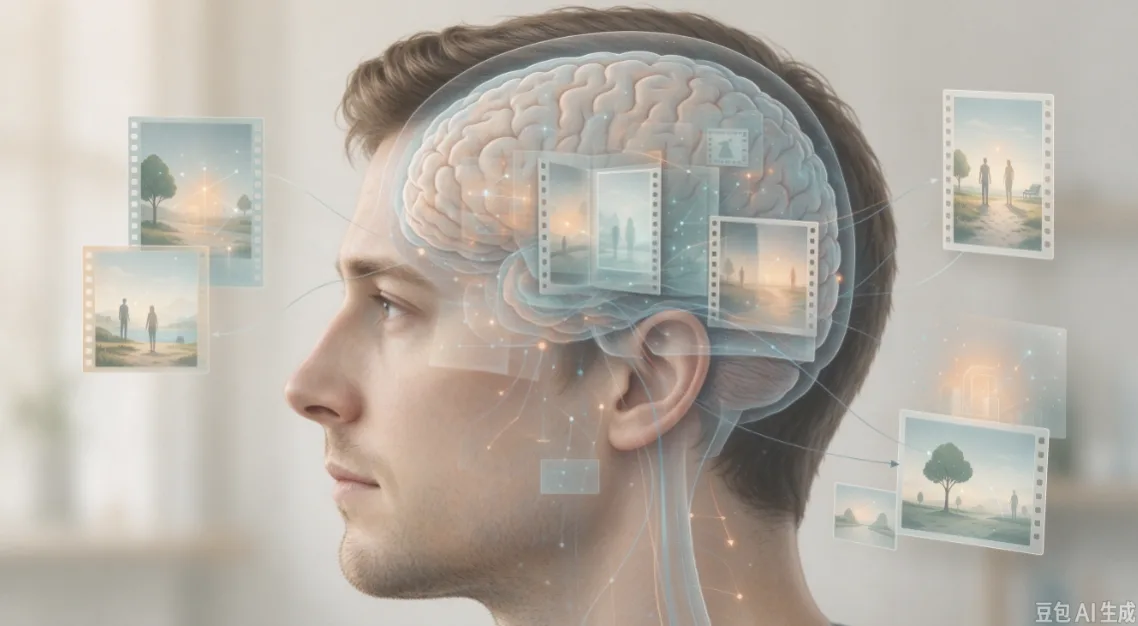
Recent studies reveal that AI has the capability to directly rewrite your memories. Not only will you remain oblivious, but you'll also firmly believe in these fabricated recollections.
This isn't a brainwashing scheme from a science fiction film—it's the sobering conclusion drawn from a recent study by MIT (Massachusetts Institute of Technology) and Georgetown University.
AI doesn't merely generate fakes; it can make you believe the false is true and etch it into your mind.
MIT's Alarming Experiment: Triple the False Memories, and You'll Still Believe Them
Let's dissect the experiment conducted by MIT's Media Lab.
Researchers enlisted 200 participants and presented them with original on-site photographs.
Subsequently, they categorized these photos into several groups: some remained untouched, some were edited by AI, some were AI-generated fake videos, and others were fake videos based on manipulated images.
When the results emerged, everyone was taken aback.
Participants who viewed AI-generated fake videos were 2.05 times more prone to developing false memories compared to the ordinary control group.

Even more alarming, their confidence in these false memories—events that never transpired—was 1.19 times higher than that of the control group.
In another test simulating crime witnesses, if an AI chatbot posed the questions, 36.4% of the responses were directly misled by the AI during the conversation.
Furthermore, when questioned a week later, these false memories persisted—these individuals still firmly believed in those details that never occurred.
Ultimately, their memories were tampered with, yet the participants believed they possessed excellent recall.
Informing Them It's AI-Generated Makes No Difference
If MIT's experiment utilized videos for brainwashing, then the experiments by Georgetown University and the University of Washington completely shattered human defenses.
They showed participants a video of a car crash and had them read two reports: one accurate, the other AI-generated but containing a false detail about a traffic sign.
The outcome?
83.6% of those who read the accurate report remembered the correct sign.
Among those who read the AI-generated erroneous summary, accuracy plummeted to a mere 44.8%. Most participants accepted the AI's fabrications as truth.
The most frightening aspect? Researchers explicitly informed participants beforehand that the summary was AI-generated. Yet, in the end, participants were still misled.
Georgetown's report states that human memory isn't akin to a videotape—you can't simply press play and replay it verbatim. Human memory resembles a jigsaw puzzle; each time you recall something, your brain reconstructs it from fragments.
AI-generated content is visually refined, logically coherent, and confidently presented.
When this high-quality misinformation infiltrates your brain, your mind doesn't reject it—it treats it as another piece of the puzzle and seamlessly integrates it.
It's akin to playing the game of telephone: by the end, the message is completely distorted. But with AI, not only does the message remain intact, but you also believe it to be the truth.
Don't Assume This Is Remote—The Real World Is Fraught with Pitfalls
You might think, isn't this just deceiving college students in a lab?
Wrong. Once this technology permeates the real world, the consequences could be dire.
Firstly, wrongful convictions in legal cases.
Eyewitness testimony carries significant weight in court. If police employ AI to assist in questioning or show witnesses an AI-processed crime scene video, the witness might identify someone who wasn't even present.
The catch? They're not lying—they genuinely don't realize their memory has been tampered with by AI.
Secondly, mismatched medical records.
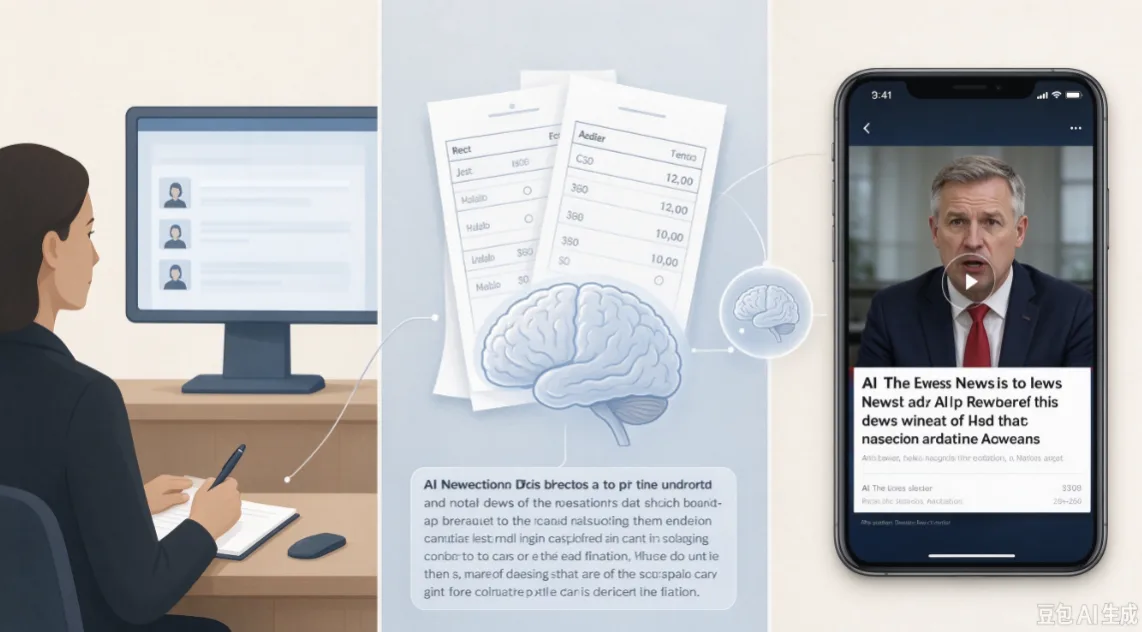
Numerous hospitals now utilize AI to summarize medical records.
If AI attributes Patient A's symptoms to Patient B, and Patient B reads the record, they'll describe their condition based on that record the next time they consult a doctor.
Over time, patients can't discern whether those sensations are genuine or merely AI-generated hallucinations added to their records.
Thirdly, cognitive warfare online.
You come across an AI-generated video of a celebrity scandal. Even after officials debunk it, you still subconsciously feel something's amiss.
When your memory is branded by a deepfake video, the truth can't keep pace with AI's forgery speed.
Why Has Human Oversight Completely Failed?
In the past, with AI, there was a concept known as 'Human in the loop'—meaning humans had to review and approve final outputs.
But if your memory has already been rewritten by AI's summaries, you lose the capacity to independently verify information.
Consider this: it creates a vicious cycle.
You read an AI-generated erroneous summary and mistake it for your original memory. Then, you use this contaminated memory to cross-check with AI—what can you possibly uncover?
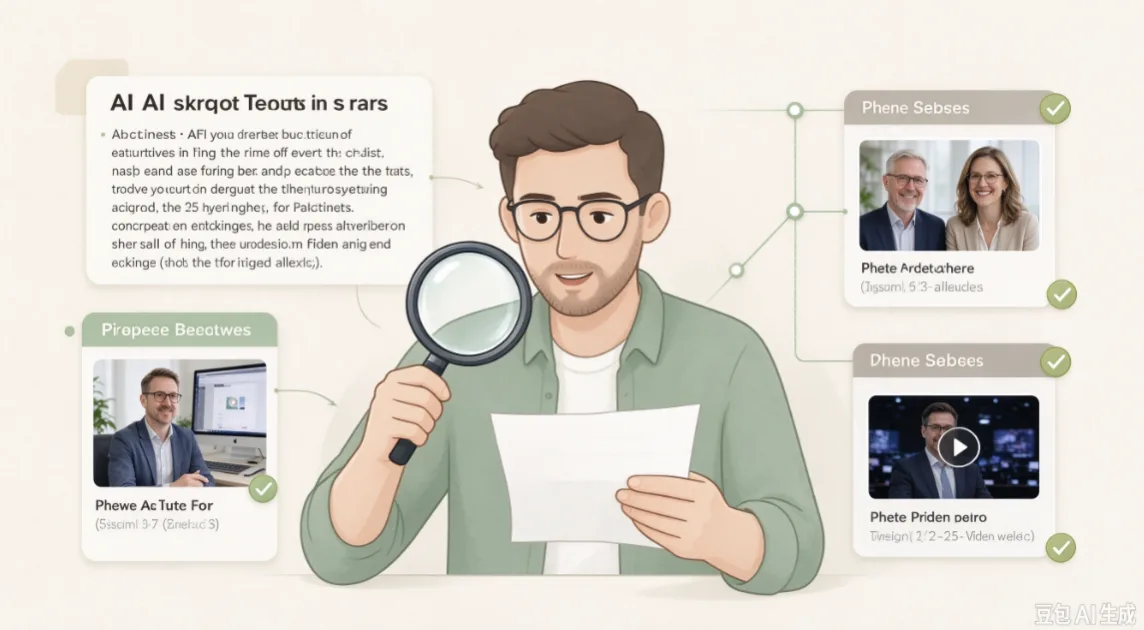
You think you're scrutinizing AI, but in reality, AI is scrutinizing you.
Final Reflections
Honestly, after perusing this research report, I broke into a cold sweat even in an air-conditioned room.
We spend our days fretting about whether AI will replace our jobs or awaken and annihilate humanity.
But guess what? AI just sidesteps your defenses—you can't even discern if your own thoughts are genuine anymore. How do you compete with that?
AI tools are convenient, but never relinquish your brain to AI.
For contract terms, medical diagnoses, or crime scenes, don't blindly trust AI's summaries. Examine original documents, consult real people, and scrutinize unfiltered raw records with your own eyes.
Don't end up like someone whose memory has been tampered with by AI, yet confidently asserts to others, 'My memory is impeccable—I couldn't be mistaken!'
In this era where AI can fabricate everything, maintaining skepticism is our last line of defense.
Finally, I pose a question: Have you ever been absolutely certain about a memory that turned out to be incorrect? After reading these studies, do you still fully trust AI-generated summaries? Share your thoughts in the comments.
This article was compiled by Leikeji from gadgetreview
Original Link: Artificial Intelligence Can Rewrite Your Memories—And You Might Never Notice
Source: Leikeji
Images in this article are sourced from: 123RF Royalty-Free Image Library. Source: Leikeji
-
![]()
Why Are There No Issues During End-to-End Model Training, Yet Problems Arise in Real-World Deployment?
-
![]()
Why Does XPENG Need to Re-adapt VLA2.0 to European Roads When It Has Already Trained in China?
-
Report | China Academy of Industrial Internet: Industrial Agent Development Report
-
Trend丨OpenAI Teams Up with Synopsys to Launch GPT-Synopsys, Ushering in the Era of 'AI Autonomous Engineers' in Chip Design
-
![]()
Be Wary! AI Doesn't Just Fabricate Videos—It Can Alter Human Memories
-
Memory Costs Soar: Transsion, the Low-End Phone Specialist, Seeks Upgrade and Diversifies Business
-
Dongfeng Nissan Has Not Overcome Its 'Sylphy Dependence'
-
![]()
DeepSeek Unveils Compact V4.1 Flash Model: SSD Cache Demand Slashed to One-Eighth of Its Predecessor