Why Does XPENG Need to Re-adapt VLA2.0 to European Roads When It Has Already Trained in China?
 10/19 2026
 373
During the Paris Motor Show in October 2026, XPENG will bring its NGP equipped with VLA 2.0 to European public roads for large-scale trial rides.
Participants can ride in the XPENG L03 and experience, under the supervision of a safety officer, how the system handles scenarios such as Parisian roundabouts, narrow streets, motorcycles, and pedestrians.
This marks XPENG's first large-scale public trial ride of NGP in Europe.
This is not the first time XPENG has validated this technology in Europe.
According to XPENG, on July 14, He Xiaopeng participated in the localization acceptance testing of the second-generation VLA model in Germany. By October, XPENG had launched public trial rides in Paris.
The purposes and formats of the two events differed. The German testing was part of localization verification, while the Paris experience allowed media and the public to observe the system's performance on Parisian roads.
From German testing to Parisian public experiences, XPENG is advancing the application of intelligent driving technology across diverse road environments.
This raises a question worth considering: Why does the model, having accumulated extensive driving experience on Chinese roads, still require continuous localization adaptation and verification upon entering the European market?
01 Why Can't Capabilities Developed on Domestic Roads Be Directly Applied?
The experience accumulated by an intelligent driving system in China does not mean it can be applied to other markets without verification.
This is not only because road signs and traffic rules vary across countries but also because road structures, the behavior of traffic participants, and driving decision requirements in different scenarios all differ.
Take roundabouts as an example. Vehicles must not only recognize the road structure and lane markings of the roundabout but also judge the relative positions of vehicles inside and outside the roundabout, the timing of entry, and the exit path.
When navigating narrow streets, the system must consider road width, parked vehicles, oncoming traffic, and available passing space. In scenarios involving mixed pedestrian, bicycle, and motorcycle traffic, the system must continuously assess the movements of different traffic participants and decide when to slow down, wait, or adjust its trajectory.
These tasks cannot be resolved simply by switching maps. While maps provide road structure, route, and navigation information, they cannot replace the vehicle's understanding of real-time traffic conditions or directly determine the appropriate driving actions in complex scenarios.
This explains why intelligent driving systems going overseas cannot focus solely on whether the model can recognize local road signs. For such systems, environmental understanding must ultimately translate into driving decisions.
The system must not only comply with local traffic rules but also make reasonable choices within the bounds of those rules based on real-time road conditions.
02 Where Does VLA 2.0's Generalization Capability Lie?
The NGP XPENG brought to Paris is based on VLA 2.0.
According to XPENG's official disclosures, the model supports 4D spatiotemporal understanding, retaining contextual information for up to 30 seconds and predicting how a scenario might unfold over the next approximately 6 seconds.
These capabilities aim to help the system combine previous scenario information to judge potential movement changes among traffic participants.
It should be noted that the 30 seconds refer to the contextual information the model can retain, not that it fully preserves 30 seconds of raw video. The approximately 6-second future prediction is the officially disclosed timeframe and should not be interpreted as the system accurately predicting traffic conditions 6 seconds later in all scenarios.
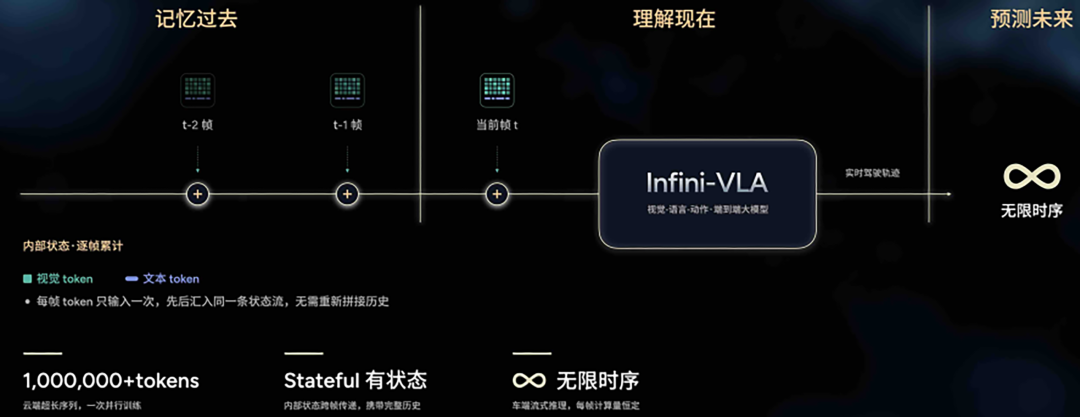
Image Source: Internet
While these capabilities significantly aid overseas road adaptation, they are not simply equivalent. Contextual information helps the system understand the previous movement states of traffic participants, while spatiotemporal prediction assists in judging how vehicles, pedestrians, and other traffic participants might act next.
However, whether the prediction results support safe decision-making depends on whether the system can combine local traffic rules, road relationships, and specific scenarios to translate judgments into appropriate driving actions.
A media participant in the trial ride noted that the vehicle could generally handle local traffic signs, roundabouts, narrow roads, and scenarios involving pedestrians and two-wheeled traffic participants on the test route. However, there was room for improvement in lane-changing decisions and merging into traffic. Public reports also documented instances where safety officers intervened in boundary scenarios such as temporary construction zones and bridges.
Furthermore, evaluating a model's generalization capability cannot focus solely on whether it can complete a journey on unfamiliar roads. Vehicle recognition of a scenario is just the starting point. It is also necessary to observe whether it can continuously make reasonable and stable decisions under different traffic conditions and adopt appropriate driving strategies when faced with uncertainties.
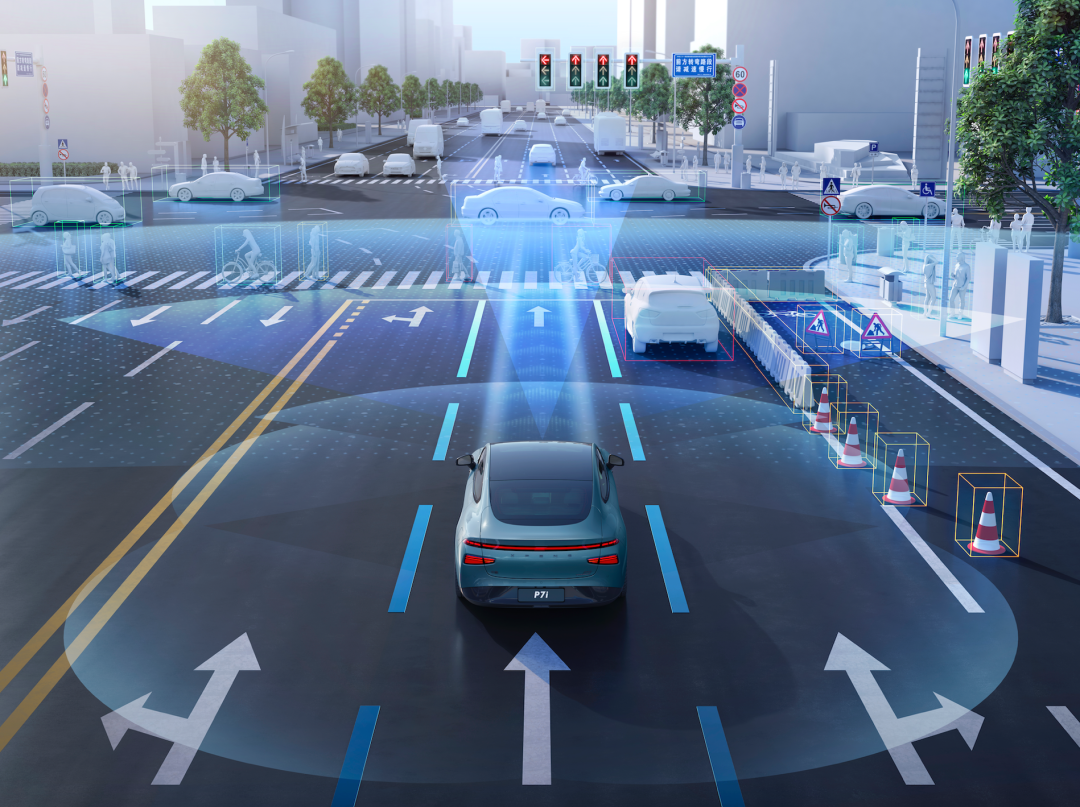
Image Source: Internet
Thus, model generalization capability and localization verification are related but distinct issues.
The former focuses on whether existing capabilities can transfer to unfamiliar environments, while the latter requires confirming, through local road testing, scenario validation, and problem iteration, whether the system meets actual requirements in a specific market.
Issues identified during verification may relate to model capabilities, driving strategies, system configuration, or local regulatory requirements. Not all problems must be resolved by retraining the model.
03 What Validations Remain Before Official Deployment?
Public road experiences allow external observation of an intelligent driving system's performance in real traffic environments but do not equate to the same capabilities in mass production. Predefined routes, limited experience durations, and safety officer supervision mean such activities can only cover partial scenarios and cannot replace more systematic testing.
The European market also involves regulatory compliance and product access requirements.
XPENG stated during the Paris Motor Show that it aims to become one of the first automotive enterprises to meet the requirements of the United Nations Economic Commission for Europe Regulation No. 171, Series 02, and obtain corresponding approval.
For context, UN R171 positions DCAS as SAE Level 2 driving assistance, not autonomous driving.
The regulation emphasizes that the driver remains the responsible party and translates this responsibility into testable system obligations through hands-on/eyes-on monitoring, HOR→EOR→DCA graded warnings, and eventual risk-mitigation stopping.
It explicitly states that DCAS only assists and never replaces the driver, with no transfer of control responsibility. Series 02 further requires the system to operate only when the driver is in control and strengthens disengagement monitoring and safety incident reporting.
Thus, obtaining UN R171 approval does not legally or technically mean the vehicle has autonomous driving capabilities or that the driver is exempt from continuous supervision and readiness to take over.
For driving assistance systems, technical performance, regulatory compliance, and market access are distinct requirements. No single public road experience can replace any of these.
Image Source: Internet
Expanding from China to Europe, intelligent driving enterprises must address more than just algorithmic adaptation. Local road testing, traffic rule adaptation and verification, vehicle configuration, functional boundaries, and regulatory compliance can all influence when and how the system enters the local market.
XPENG's prior localization acceptance testing in Germany and subsequent large-scale public experience in Paris reflect verification work at different stages. However, this does not mean the system has covered all road conditions in the European market. For Chinese intelligent driving enterprises, overseas roads serve as both a test of model generalization capability and an important environment for identifying new issues and improving the system.
However, a vehicle completing a journey on unfamiliar roads does not mean it has adapted to local roads. A single positive experience cannot replace validation of long-term safety and stability.
What intelligent driving systems going overseas must truly prove is not just whether the model can cross geographical boundaries but whether the system can continuously make safe and reasonable decisions under different traffic rules, road structures, and driving environments.
This is not only an issue XPENG must continue to verify but also an engineering requirement Chinese intelligent driving enterprises must face when entering global markets. #AutonomousDriving #XPENGMotors
-
![]()
Why Are There No Issues During End-to-End Model Training, Yet Problems Arise in Real-World Deployment?
-
![]()
Why Does XPENG Need to Re-adapt VLA2.0 to European Roads When It Has Already Trained in China?
-
Report | China Academy of Industrial Internet: Industrial Agent Development Report
-
Trend丨OpenAI Teams Up with Synopsys to Launch GPT-Synopsys, Ushering in the Era of 'AI Autonomous Engineers' in Chip Design
-
![]()
Be Wary! AI Doesn't Just Fabricate Videos—It Can Alter Human Memories
-
Memory Costs Soar: Transsion, the Low-End Phone Specialist, Seeks Upgrade and Diversifies Business
-
Dongfeng Nissan Has Not Overcome Its 'Sylphy Dependence'
-
![]()
DeepSeek Unveils Compact V4.1 Flash Model: SSD Cache Demand Slashed to One-Eighth of Its Predecessor