Post-85s AI Meteorology Entrepreneur from Changzhou, Jiangsu: Secures Multi-Million Funding
 10/22 2026
 471
This joint column is brought to you by Pencil News and Houxue Capital. Houxue Capital is a forward-thinking, young investment fund actively seeking entrepreneurs who believe in the transformative power of technology and are eager to shape the future.
Cover Image | Produced by Pencil News
An AI meteorology company, established just two years ago, has recently secured multi-million yuan in funding.
In a modest office space of about 70-80 square meters on the 7th floor of Daheng Science and Technology Building in Beijing's Haidian District, a dozen team members once worked in close quarters.
Every Monday afternoon, Liu Li and several partners would head downstairs for coffee. Their purpose was not relaxation but to brainstorm contingency plans in case the company faced financial difficulties. The initial round of funding was nearly exhausted, business operations were still finding their footing, and the next installment of funds had yet to arrive.
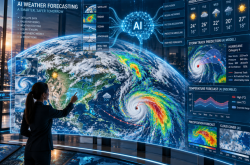
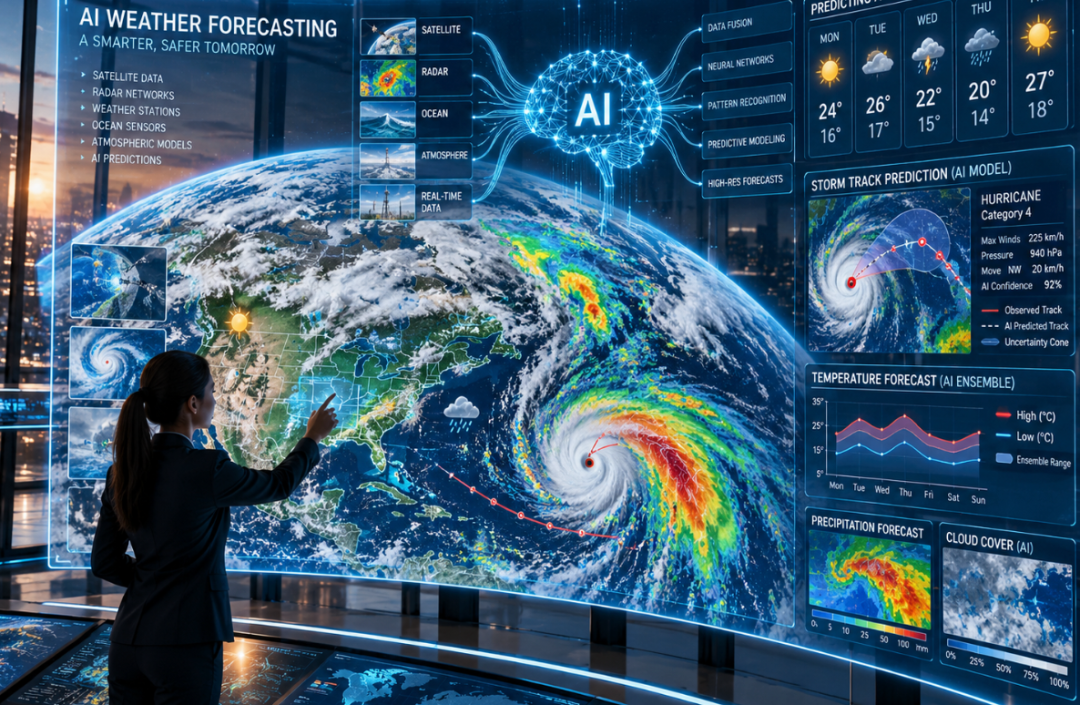
The company they founded, Tianxu Intelligence, specializes in AI-driven weather solutions.
Liu Li, a Changzhou, Jiangsu native, holds a doctorate in meteorology. In October 2024, he and his partners launched Tianxu Intelligence, focusing on using AI to predict wind and solar conditions. Their goal is to help wind and photovoltaic companies accurately forecast future power generation, minimize assessment losses, and facilitate power trading.
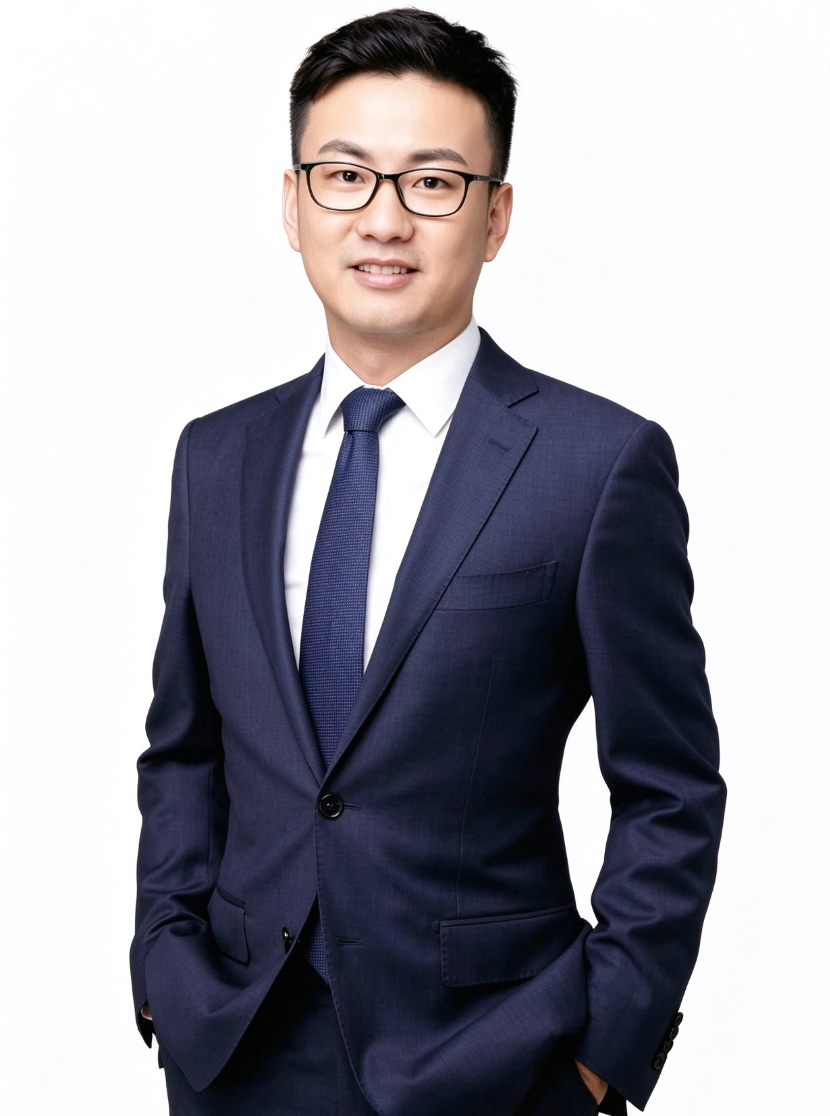
Liu Li, Founder of Tianxu Intelligence
On January 17, 2025, the company successfully completed its first round of funding. By October 2026, it had secured tens of millions in Pre-A+ round funding, exclusively from Houxue Capital. By 2026, Tianxu had completed two rounds of funding—a rare feat in the industry.
How did this 'weather business' grow from a small office of a few dozen square meters?
Disclaimer: The following account is based on Liu Li's verbal narrative, with all information confirmed for accuracy. Pencil News stands by the trustworthiness of its content.
- 01 - The Turning Point for AI + Meteorology
Is AI meteorology a viable business?
After resigning in 2024, I discussed entrepreneurship with several close friends.
No one opposed the idea, but no one took it too seriously either. We had collaborated on projects before and had long agreed to seize opportunities for joint ventures. However, over the years, I had often shared my visions of the future with them. This time, they probably thought I was just 'talking big' again.
Born in 1988 in Changzhou, meteorology is my field—I pursued my master's and doctoral studies at the Chinese Academy of Meteorological Sciences. After years in the field, I often thought: 80% of the national economy is influenced by meteorology. Agriculture depends on weather, wind power relies on wind, photovoltaics on sunlight, and aviation and insurance are also weather-dependent.
It seemed like a massive business opportunity. Yet, for a long time, few domestic meteorology companies successfully commercialized their services.
The issue wasn't a lack of demand but rather three missing pieces: data, client awareness, and technology.
First, meteorological data was previously hard to access—without open data, commercial services were impossible. Second, client awareness: many enterprises didn't understand the benefits of more accurate forecasts. Third, technology: even if there was demand, traditional methods couldn't meet accuracy requirements.
The turning point came after 2023.
Meteorological authorities gradually opened up data, and businesses began to realize that weather wasn't just for deciding what to wear tomorrow but also for scheduling production and reducing losses.
Meanwhile, on November 30, 2022, ChatGPT was released, and AI suddenly became a buzzword across industries.
Our sector caught fire too. In 2023, AI meteorological models dominated academic circles: for the same forecasting tasks, AI outperformed traditional methods in accuracy.
For us, this wasn't just technological progress—it signaled potential business opportunities.
Technology moved out of the lab, and clients started calculating: more accurate predictions meant fewer penalties and higher profits. With all these factors aligning, I felt we couldn't wait any longer.
The obstacles that once held back this business were now loosening simultaneously.
Just because no one was willing to spend money before didn't mean no one would in the future. If we waited any longer, the opportunity might slip away to others.
In fact, this field started earlier abroad. I understand that Europe accumulated meteorological data much earlier, while China's modern observation system was established relatively late. Economic development also played a role—only when businesses had the financial means did they focus on refined operations and meteorology.
I didn't rush in but spent more time 'lurking' in the industry, learning about upstream and downstream dynamics. By October 2024, the timing felt right: let's roll up our sleeves and get to work.
But entrepreneurship required one final ingredient: money. Without it, we couldn't move forward.
Later, my partner Huang Ning helped us connect with investors, and things finally took shape. As a first-time founder, I assumed the funds would arrive immediately after signing the investment agreement. Instead, processes took nearly a month or two.
During that waiting period, we were truly anxious. Although we had discussed entrepreneurship for a long time, recruiting and product development depended on this money. The agreement was signed, but operations couldn't start immediately—I felt uncertain.
Fortunately, the funds finally arrived. Coincidentally, it was Huang's birthday that day. We still remember it.
With money secured, problems didn't end. The next challenge was more practical: who would actually pay for slightly more accurate weather forecasts?
- 02 - AI + Wind Power + Photovoltaics
We first targeted wind and photovoltaic companies.
The reason was simple: inaccurate weather forecasts here directly resulted in financial losses. A wind farm must estimate tomorrow's power generation and report it to the grid. However, wind doesn't blow on schedule—if actual generation deviates too much from predictions, penalties may apply. The same goes for photovoltaics, where solar radiation changes affect output.
So, we didn't just sell 'tomorrow's wind speed' but converted wind and sunlight into power generation forecasts, minimizing errors.
A case study in Shanxi gave me a clearer understanding of this business. After applying our AI predictions, meteorological forecast accuracy improved by about 20%. When further converted into power generation forecasts, accuracy rose by another 3–5 percentage points.
With these few percentage points, we estimated that one facility could avoid over 3 million yuan in annual penalties. For sites with particularly strong improvements, losses could be reduced by over 10 million yuan. Of course, results varied by site conditions and assessment criteria—not every client would save this much.
But the key was that clients could calculate these benefits.
Moreover, the same data had a second application: power trading.
We previously participated in related operations for a regional company in Shanxi. With more accurate generation estimates, clients could better arrange transactions. From what I recall, one month's additional revenue approached 3 million yuan.
Predicting weather helped clients both reduce losses and increase profits. This was why we chose new energy.
However, breaking into major clients wasn't easy.
The primary buyers were central and state-owned enterprises, whose procurement depended on qualifications. As a new company, we lacked credentials and had to secure orders through compliant partnerships—a complicated process. Hiring was also tough; I remember nearly signing our first power trading deal, only to lose it at the last minute due to various reasons—a major setback.
Money was being spent daily, but orders weren't guaranteed to arrive on time.
The period between the first and second funding rounds was the toughest. Our team started with just over ten people crammed into a 70-square-meter office on the seventh floor. We held weekly meetings to discuss worst-case scenarios: what if funds didn't arrive? What if business didn't pick up?
Looking back, it was quite disheartening. Fortunately, the second round of funding finally came through, and we survived.
Technologically, there were no shortcuts. In 2025, our model covered only a few provinces, so we focused on flagship clients first. Later, the National Meteorological Administration's Public Service Center noticed our results and began discussing collaborations. Initially, our model versions performed poorly, and I had to explain to them why predictions were inaccurate and how we planned to improve.
Professional clients understood that predictive models required iteration, but simply saying 'we have AI' wasn't enough. We needed repeated testing and results.
By 2026, our model expanded from regional to national coverage, and clients grew from local companies to power generation groups. Among the five major power generation groups, two were our clients; additionally, two or three other large groups were also customers. State Grid was on our client list as well.
We completed projects in Guangdong, Shanxi, and Shandong.
Our strategy was premeditated: avoid purely customized projects for every client or weather apps with minimal user payments. Instead, we aimed to serve large enterprises with standardized products, with orders potentially reaching the million-yuan level.
As a technologist, my partner Li Xiaohai handled products and sales, compensating for my weaknesses. Our core R&D team in Qingdao contributed industry-leading foundational technologies. While large corporations excelled in general meteorological models and traditional vendors understood power systems, we focused on applying meteorological technology to new energy businesses.
After exploring various paths, I became increasingly certain: clients don't pay for how advanced a model is but for its ability to reduce losses and increase profits.
- 03 - Leading in Technology by a Year, but Data is the Real Treasure
As business grew, I developed another concern: how long could our model maintain its accuracy advantage?
My estimate: 6–12 months. AI evolves rapidly—what we achieved, others could replicate. Our model had about 10 billion parameters, requiring dozens of GPUs for training, and both hardware and talent came at a high cost.
If competition ultimately boiled down to models and computing power, today's lead could become tomorrow's standard. What truly creates differentiation? I believe it's data.
Many wind and photovoltaic farms are located in deserts or gobis in northwest China, where populations are sparse. Meteorological observation facilities primarily serve residents, so they're more concentrated in populated areas. Consequently, areas most in need of wind and sunlight data often lack it.
Thus, we proposed the 'Ningkong Constellation' plan to fill this gap via satellites. Better observation data could lead to more accurate predictions.
However, this wasn't a small technical investment but a business decision requiring careful calculation.
The math was simple: plan for 18 satellites, estimated at 30 million yuan each, totaling approximately 540 million yuan. Start with two, costing about 60 million yuan. We estimated that if commercialization succeeded, we might approach break-even in two to three years—but initial losses were inevitable.
Whether spending 540 million yuan was worthwhile depended on whether satellite-derived data could translate into predictive capabilities clients would pay for.
Our preliminary projections suggested that new observation data could improve some wind and solar meteorological forecast metrics by 10–20 percentage points, translating to roughly a 3-percentage-point increase in final power forecasts. These were estimates—actual deployment would verify them.
In this industry, improving power forecast accuracy by even 1 percentage point is challenging. If we could achieve 3 percentage points, I believed facilities' willingness to pay would change. Currently, some sites pay only tens of thousands of yuan for prediction services; if effectiveness improved significantly, they might pay dozens of times more.
Of course, improved forecast metrics didn't guarantee proportional client revenue growth. Final profitability depended on actual generation, assessment rules, trading benefits, and clients' willingness to pay.
This plan required funding and buyers. We were discussing it with leading institutions, and state-owned assets in Beijing, Shanghai, and Shenzhen were also showing interest. I hoped other organizations and enterprises would participate—this initiative wouldn't be handled by us alone.
Beyond energy, we collaborated with Meituan on drone delivery, using meteorological data to assess turbulence and wind shear between buildings. Insurance worked similarly—historical weather data helped set risk and claims standards.
I believed financial meteorology, in particular, could see explosive growth in the next 3–5 years.
Similar ventures already existed abroad. France's Descartes Underwriting designed insurance using wind speed data: if low wind speeds met predefined conditions, payouts followed. The company reported over $250 million in total insured premiums in 2025, a 24% year-over-year increase—though this reflected premiums across multiple insurance types, not just meteorological insurance, and certainly not net profit.
Opportunities abounded, but as a first-time CEO learning to lead teams, secure clients, and raise funds, I was still finding my way.
After two years of entrepreneurship, I'd gained weight, sprouted more gray hairs, and slept less. Yet, discussing satellites brought us back to 2024. I even said that if successful, we might not just be national leaders but global ones.
Our ambitions soared, evolving from eagerly awaiting the arrival of the initial investment installment to meticulously strategizing for a satellite project valued at 540 million yuan. Yet, amidst this grand vision, a persistent question lingered in my mind: what is the true value of achieving weather forecasts that are just a bit more precise? I wholeheartedly encourage more of my fellow professionals—brilliant, down-to-earth meteorologists—to join forces with us in collectively nurturing and expanding this burgeoning market.
Please note that the content of this article is not intended as investment guidance.
-
![]()
Post-85s AI Meteorology Entrepreneur from Changzhou, Jiangsu: Secures Multi-Million Funding
-
![]()
Why Is Light Able to Pass Through Holes Smaller Than Its Wavelength?—Exploring the Extraordinary Optical Transmission of Metasurface Infrared Filters
-
![]()
Film and Television Hurricane Delivers a Rigorous Review of the iPhone Duo! Withstands 10,000 Folds, Yet Falls Short in Software
-
![]()
Is the XPENG MONA L05’s Pre-sale Price 40,000 Yuan Steeper Than Its Rivals’?
-
![]()
Historic Windfall in Layoffs: BMW's Up to €650,000 Compensation Sparks Employee Exodus, Overwhelms System
-
![]()
Has Geely’s Debut Boxy SUV Shaken Up Off-Road Pricing?
-
![]()
GM China Reports $210 Million Net Profit in Q3: Two Consecutive Years of Profitability, Though CEO Warns of Tougher Market Conditions
-
![]()
BMW Layoffs: Employees Compete to Leave!