Doubao and GPT Compete for FDE Roles with Million-Dollar Salaries: What Makes This 'Most Valuable Work Badge' So Expensive?
 10/27 2026
 425
Dayu | Author
star All empty | Editor
Wuxin Chaliu Liu Chengzhi | Visual
Liu Chao | Supervisor
In 2003, Palantir, a software company that had just completed its registration in California, USA, received a visit from a unique group of clients.
These clients were unable to provide clear requirement documents, unwilling to grant data access permissions, and had business processes that changed weekly—the kind of clients that service providers dread the most.
Palantir's solution was straightforward: embed engineers directly into the client's office. If clients couldn't articulate their needs, engineers would sit beside them, observe their work, and help clarify the requirements. If clients were unwilling to share data, engineers would set up a system within the client's own data center, ensuring data never left the premises.
These individuals were given a name: Forward Deployed Engineer (FDE).
Fast forward to 2026, in the AI era, FDEs have suddenly become the hottest commodity:
Doubao AI offers monthly salaries ranging from RMB 35,000 to 70,000 (15-month pay), Huawei Cloud's Pangu AI model offers RMB 35,000–60,000 (14-month pay), and Alibaba Cloud's AI model offers RMB 20,000–55,000 (16-month pay).
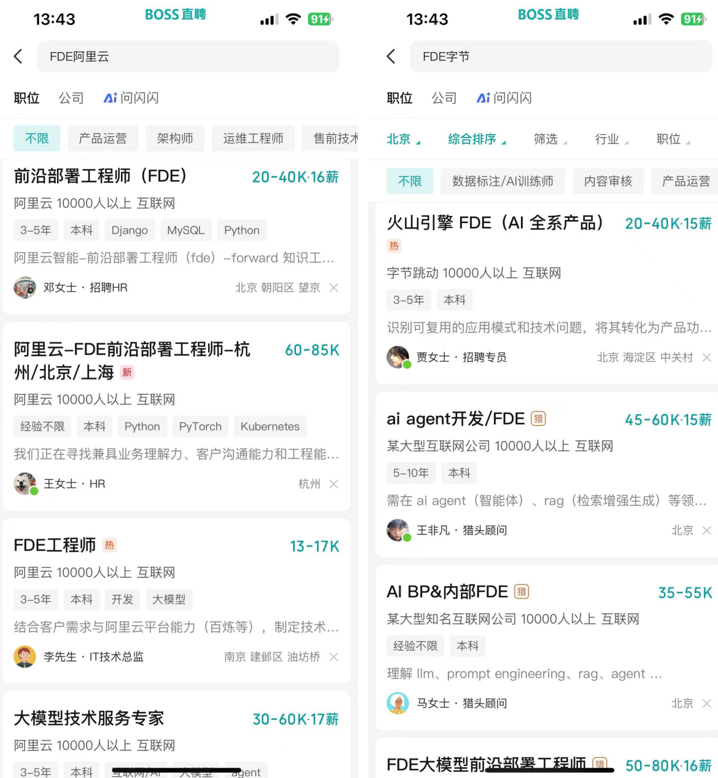
Data from Liepin Big Data Research Institute shows that the average annual salary for FDE roles in China is RMB 408,000, with a talent supply-demand ratio of just 0.28, meaning 3.5 roles compete for one qualified candidate.
It's not just FDE talent attracting massive investments—FDE-related companies are also cashing in. Ciyuan Infinite, founded in 2025, delivers operational, verifiable, and auditable enterprise-grade outcomes using the FDE model, securing hundreds of millions of yuan in angel round funding in just 29 days. Haizhi Technology, the first FDE-concept listed company in China, went public on the Hong Kong Stock Exchange in February 2026, surging 250% on its debut.
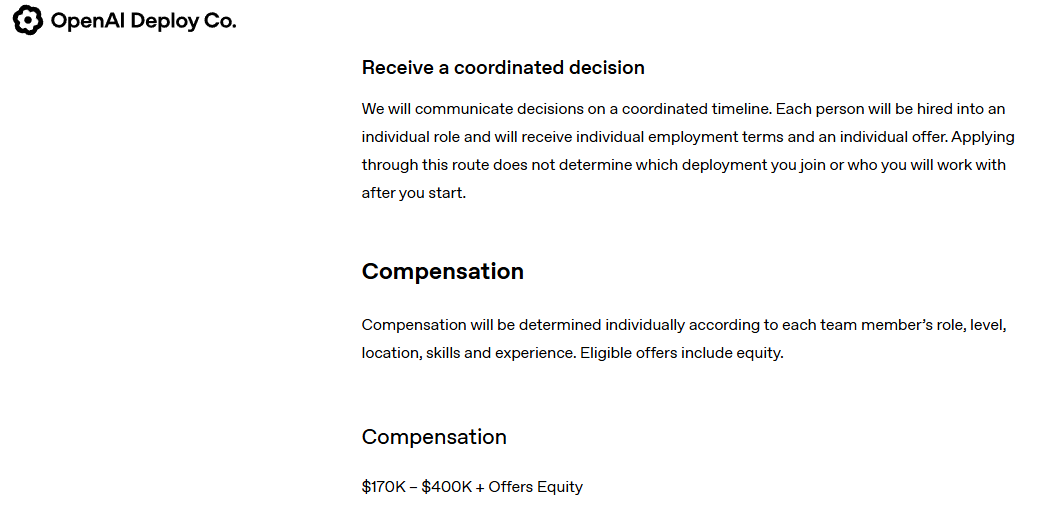
This investment frenzy has also spread overseas. OpenAI's DeployCo launched with over $4 billion in initial funding, led by TPG and co-invested by Advent, Bain Capital, and Brookfield, involving 19 global institutions. DeployCo's FDE roles offer annual salaries ranging from RMB 1.224 million to 2.88 million, plus equity.
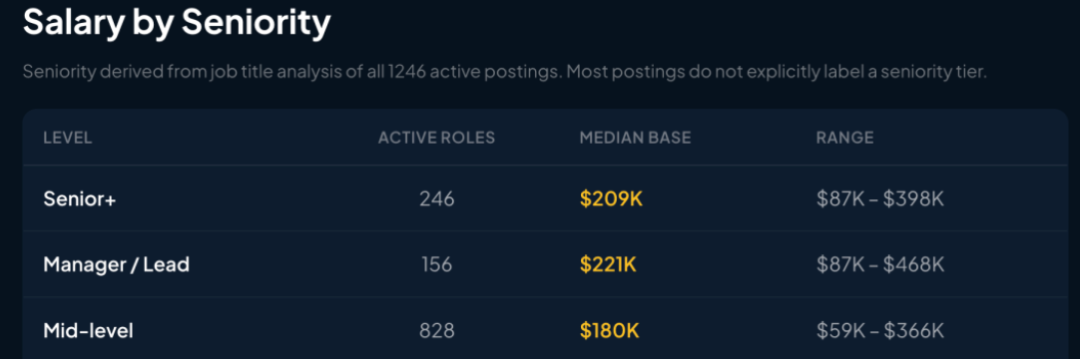
Anthropic offers FDE roles with annual salaries ranging from RMB 1.36 million to 2.03 million while establishing a $1.5 billion joint venture with Blackstone, H&F, and Goldman Sachs. FDE Pulse statistics show that the average annual salary for FDE roles disclosed overseas is approximately RMB 1.34 million.
What makes FDEs so magnetic, attracting million-dollar salaries from top AI companies worldwide and driving massive capital investments?

Not Pre-Sales, Not Outsourcing: What Makes FDEs Unique?
Let's first examine the traditional FDE model.
Taking Palantir's approach as an example, it involves a division of labor between ECHO (focused on business understanding and client collaboration) and DELTA (focused on technical development and implementation), supported by backend Dev engineers responsible for standardized platform development.
ECHO clarifies 'what to do,' while DELTA handles 'how to do it.' Together, they transform vague client business needs into actionable technical solutions. Backend Dev engineers build standardized platforms: DELTA focuses on 'one capability serving many clients,' whereas traditional Dev roles often address 'one client solving many problems.'
'While some companies now label roles as Echo or Delta in their job descriptions, FDEs are still relatively new in China, with unclear role boundaries. In many large domestic companies, FDE responsibilities are still shouldered by product managers,' says Liu Yang (pseudonym), a product manager at a domestic SaaS company, sharing his experience with FDE projects for large enterprises.
Step 1: Enter the client's environment to understand their business and clarify requirements. The team collaborates with managers and frontline employees across departments to map the enterprise's ontology (business framework)—essentially creating an AI-readable business map that includes departments, personnel, business systems, and the relationships and permission rules between various business entities.
Liu Yang considers this the most challenging and critical phase: Many enterprises struggle to articulate their AI needs clearly, and the quality of initial ontology mapping directly determines the final delivery outcome.
Kai-Fu Lee has also noted that while 01.AI's products are commercialized and subscription-based, they are not 'plug-and-play.' Building an enterprise business ontology typically takes 1–3 months, requiring configuration of databases, role permissions, and business processes before clients see expected results.
Step 2: Rapidly develop a functional Demo prototype. Unlike traditional IT projects that prioritize complete requirement documentation before development, FDEs focus on quickly producing a Demo to validate feasibility.
Step 3: After prototype validation, hand over to an internal delivery team for full deployment. Liu Yang summarizes: 'FDE work is 70% communication and 30% technology. Upwards, they align goals with the CTO; downwards, they coordinate with IT for implementation. They train employees on AI tools, understand AI's limitations, identify non-compliant data, and determine which scenarios suit on-premises deployment.'
Step 4: Document and reuse project experience. FDEs package validated modules, industry solutions, and templates into reusable Skills, Agent templates, and industry components, feeding them back to the product team to reduce delivery costs for similar large clients.
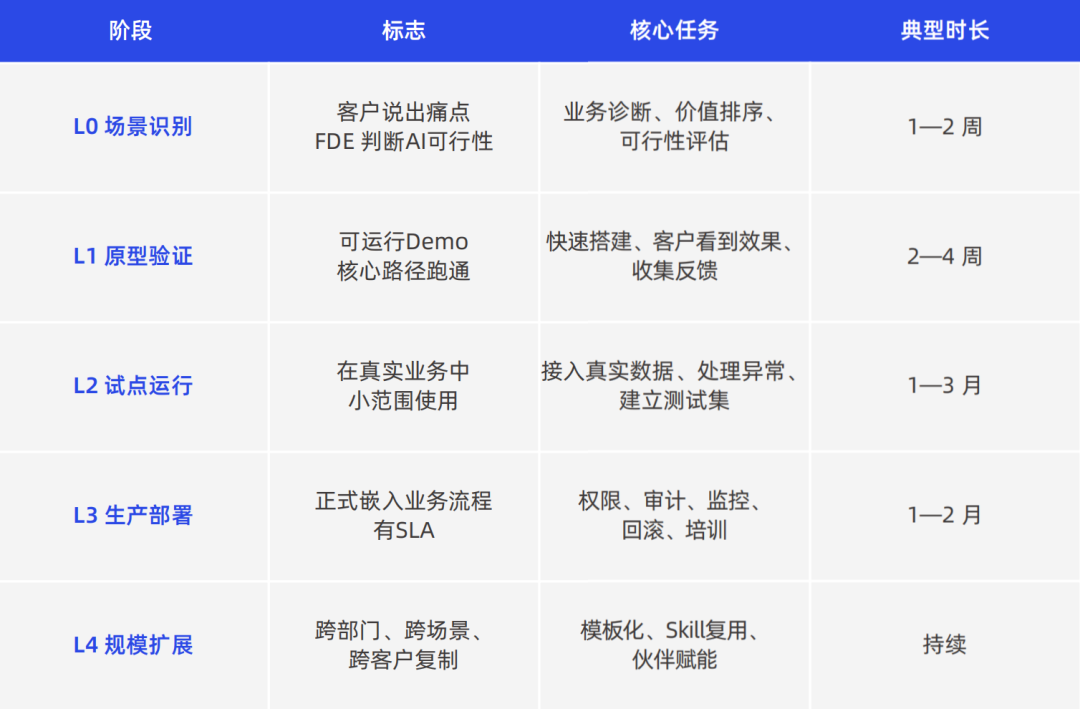
Liu Yang's process exemplifies a typical FDE implementation pathway. Tencent Research Institute's 'FDE Model: Industry Observations and Practices' divides the FDE lifecycle into: L0 Scenario Identification → L1 Prototype Validation → L2 Pilot Deployment → L3 Production Rollout → L4 Scalability Expansion.
Do FDEs simply repackage pre-sales or solution engineering roles?
In Liu Yang's view, merely delivering a system is outsourcing; leaving behind fragmented, non-reusable experience is traditional project delivery. True FDEs capture industry-wide experience into reusable templates and product capabilities, significantly reducing delivery costs for similar large clients.
Wang Peng, a senior expert at Tencent Research Institute, highlights the fundamental difference: Traditionally, project experience resided with individual experts, documents, and code, with low knowledge transfer efficiency. Leveraging large models, FDEs can distill personal business expertise into reusable 'ontologies' through bidirectional knowledge distillation and Skill solidify (Skill solidification), enabling scalable replication.

What Justifies the High Salaries?
Why has the software-era FDE model resurged in 2026, even being incorporated into official policy documents? The Ministry of Industry and Information Technology's 'Notice on Launching a Special Initiative to Cultivate AI Application Service Providers' explicitly encourages service providers to establish FDE teams to ensure AI scenario deployment.
This stems from three real-world contradictions in AI commercialization:
1. **Mismatch Between Model Capabilities and Enterprise Needs**: 2026 is seen as the year of large-scale AI agent deployment. Liu Song, VP of PingCAP, notes that since March 2026, the industry has consensus: Enterprise productivity is the AI mainstream, with large manufacturers, financial firms, and pharmaceutical companies transitioning core operations to enterprise-grade intelligent agents.
However, technological progress doesn't guarantee successful deployment. 'FDE Model: Industry Observations and Practices' categorizes usable scenarios into three tiers: 0–80% scenarios can be covered by general-purpose models with simple prompts, which senior engineers can prototype in a day; 80–95% scenarios require supplementary rules, data labeling, and test sets due to potential misjudgments, terminology misunderstandings, or edge-case failures; 95–99% core business scenarios tolerate only minimal errors (e.g., a customer service mistake could cause a brand crisis).
2. **Conflict Between Rapid Prototyping and Long-Term System Reliability**: Wan Ruyi, VP of Chinasoft International and Dean of AIGC Research Institute, argues that FDEs' advantages are amplified in the AI era, particularly in 'effect front-load ' (upfront demonstration): AI coding drastically shortens the cycle from idea to prototype.
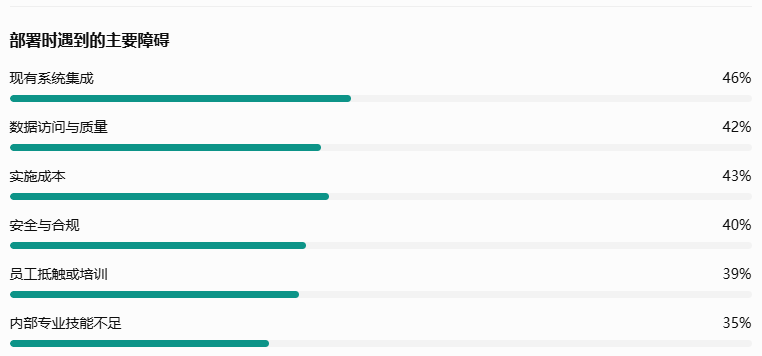
But a working prototype ≠ project success. The '2026 State of AI Agents Report' shows that key deployment barriers include system integration (57%), data access/quality (42%), and security/compliance (43%), raising the deployment threshold. Traditional IT's 'plan-then-execute' model no longer fits; enterprises need agiler development approaches.
3. **AI Vendors' Commercialization Urgency vs. Enterprises' ROI Challenges**: 2026 marks the AI commercialization the first year , with B2B intelligent agents commanding high prices and strong client retention due to deep workflow integration, intensifying competition in the AI office sector.
Yet quantifying AI's value remains a pain point. Wang Peng notes that some firms adopt 'token maximization' strategies, granting employees large token quotas to boost individual efficiency without translating to enterprise-wide gains.
McKinsey surveys echo this: 80% of respondents say AI improves personal productivity, but only 37% see tangible EBIT improvements. Companies will only sustain AI investment if vendors bridge the gap from individual to enterprise-wide efficiency.
FDEs are key to resolving these contradictions and accelerating B2B agent deployment—the core reason for vendors' high-salary recruitment. In Wang Peng's view, FDEs must break through organizational and process barriers: 'They're not just doing custom development.' Top-tier Echo professionals can articulate to client executives how to reconstruct business operations using AI-native methods.
OpenAI Deployment Company's FDE project with John Deere exemplifies this approach: Instead of stopping at isolated AI prototypes, the project embedded AI across the client's business lifecycle, enabling agile iteration and closed-loop value validation.
At the business front, John Deere launched the See&Spray intelligent weed control system for non-technical farmers, using machine vision for targeted herbicide application (reducing usage by 70%) and natural language interactions to lower technical barriers, translating AI capabilities into tangible cost savings and yield gains.

On the commercial and client service side, the project adopted a subscription model for upfront value validation. Leveraging real-time tractor data, AI provided proactive fault alerts and operational optimization, upgrading traditional 10:1 human support to 1000:1 AI-driven scalability, ensuring long-term stability post-deployment.
At scale, John Deere aligned strategies across business, technology, and OpenAI teams, integrating AI throughout the customer journey—from onboarding to seasonal optimization and ROI reporting—using quantifiable benefits to close the value loop, address ROI concerns, and create replicable AI-native client success models.

FDEs Must First Overcome Localization Barriers
If DeployCo and John Deere's FDE project achieved dramatic efficiency gains, can this model be directly replicated in China?
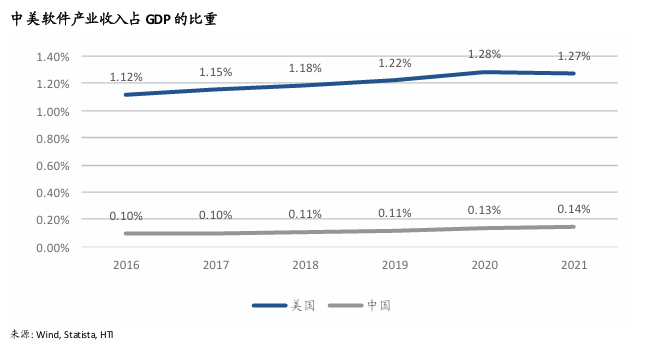
Overseas success relies on mature paid markets and open data environments—factors that clash with China's localization barriers. During the SaaS era, Chinese software vendors' biggest challenge compared to overseas peers was low enterprise willingness to pay for software. Haitong International data shows that in 2021, software revenue accounted for 1.27% of U.S. GDP versus just 0.14% in China—a ninefold gap.
As we enter the AI era, this contradiction has further intensified. According to Wang Peng's estimates, the service fee for a single FDE project generally ranges from 1 million to 5 million yuan, with very few paying customers. Only 10% of traditional industry enterprises are willing to undergo AI transformation, and among them, only 10% are willing to pay for FDE services, accounting for just 1% of the total industry. Customers are primarily concentrated among top-tier large enterprises.
"Even if enterprises are willing to invest funds, the biggest bottleneck for implementation remains data openness and trust issues," believes Liu Yang. For FDE to create true cost-saving and efficiency-enhancing value for enterprises, it must deeply integrate with underlying systems, achieve semantic alignment, and deeply mine business value based on existing data. However, if Party A is unwilling to open up core production data, FDE engineers cannot refine AI configurations that align with the business; yet data openness can easily lead to disputes over rights, responsibilities, and benefits.
Even with localized deployment and confidentiality agreements signed, Party A still has significant concerns: once core data such as salaries, supplier quotes, and process formulas are leaked, how should responsibility be assigned? If Party B is held accountable, suppliers may face substantial compensation claims that could even exceed the project service fee. If responsibility falls on Party A, business leaders will also face internal accountability, causing many projects to stall at the data access stage.
In addition to the challenges of assigning rights and responsibilities, AI's restructuring of business processes reduces the management friction caused by multi-layered approvals in large enterprises, which inevitably affects the existing interests of middle management. If middle managers resist passively, project implementation will struggle to advance, even with full support from top leadership.
Since directly adopting overseas delivery models is not feasible, how can domestic vendors make the FDE business model work?
The FDE Model Industry Observation and Practice report points out that while Silicon Valley's major clients can support annual contracts worth hundreds of thousands of dollars, most domestic projects remain in the range of hundreds of thousands to a million yuan. Assembling a high-priced expert team can easily lead to cost overruns, while full outsourcing prevents the accumulation of reusable project experience.
The report proposes a lightweight solution: building a "three-piece suite" of capabilities. The first is Skills, which involve standardizing tasks such as compliance reporting, content review, and customer follow-ups. The second is connectors, which integrate systems like WeChat Work, document libraries, CRM, knowledge bases, and approval systems for cross-system connectivity. The third is an industry knowledge base, providing AI with professional content in vertical domains.
Implementation must proceed in layers: first, standardize terminology and create scenario lists. After accumulating a sufficient number of similar clients, package high-frequency Skills into industry templates. Once customer scale, average contract value, and reuse rates meet standards, build a complete ontology layer.
Wang Peng adds that FDE projects require high upfront investment, and ontology development raises short-term costs. However, once a benchmark project is established in an industry, the entire capability set can be rapidly replicated across peers, with continuously declining marginal costs. Once capabilities are refined into standardized products, long-tail SMEs can directly adopt off-the-shelf solutions without bearing high custom development costs.
After addressing short-term commercialization challenges, looking further ahead, the FDE role itself will continue to evolve with technological advancements.
In Liu Yang's view, as large language models continue to upgrade, AI will eventually be able to autonomously read code, integrate systems, conduct testing, and generate delivery documentation. The FDE role may gradually evolve, but the long-term trend of AI driving enterprise efficiency will remain unchanged.
Just as ERP and financial software transitioned from custom project deployments to enterprise infrastructure, the FDE model will also shift from on-site engineer customization to normalized enterprise business processes.
There is nothing new under the sun: job roles may evolve, but enterprises' long-term need to improve operational efficiency through technology remains constant.
-
[Insight] The airbag control unit (ACU) is a core component of automotive passive safety systems, with numerous market participants in China.
-
![]()
Grassroots Actors, the First Casualties of AI | Wave Trends
-
Anthropic's Nasdaq Rush: The AI Wealth Creation Narrative Faces Reality Check
-
![]()
Another Surge in Prices to Blame! Mid-Range Smartphones in 2026 Fall Short: Telephoto Cameras Vanish, Main Cameras Degrade
-
![]()
Can AI-Generated Actors Outshine Human Stars? Hollywood is Deeply Split
-
China’s AI is Dominating: Token Usage Hits 48% of Global Total, 4.5 Times That of the U.S.?
-
![]()
Doubao and GPT Compete for FDE Roles with Million-Dollar Salaries: What Makes This 'Most Valuable Work Badge' So Expensive?
-
China Manufactures 35.8% of Global Automobiles, Outpacing the Combined Output of the U.S., Japan, India, Germany, and South Korea!