Raising 1.3 Billion Yuan, Former Doubao Leader Embarks on New Journey: Developing an AI Assistant, Yet Profitability Still a Hurdle
 10/27 2026
 351

Cover | Produced by Pencil News
A former Doubao team member has recently secured 1.3 billion yuan in funding to develop an AI assistant.
On October 21, Today AI, a startup established just seven months ago, announced that it had raised over 200 million US dollars (approximately 1.343 billion yuan) in cumulative funding from investors including IDG Capital, Tencent, 5Y Capital, Ant Group, Sequoia China, Transsion Holdings, and Tongge Venture Capital.
The founder, Junyuan Qi, is a well-known figure in the entrepreneurial world. He previously led the development of Doubao's PC-end product at ByteDance and sold his startup Teambition to Alibaba for 100 million US dollars.
This time, his goal is to create an AI assistant that remembers user habits and proactively manages work and life. Although Today's domestic version is currently free and has not yet started monetizing users, it has managed to secure 130 million US dollars from investors.
Zhang Jiang (a pseudonym), an executive at a leading office software company, told Pencil News that he is skeptical about the viability of a paid business model for personal AI assistants in China. He pointed out that even for products like WorkBuddy, the actual payment rates are quite low. "If we calculate based on actual user payment rates, such products generally have a rate hovering around 3%."
However, this has not deterred capital from flowing into Today AI. "Junyuan Qi alone is considered to be worth 100 million US dollars."
Zhang believes that Today AI's ability to secure over 200 million US dollars in funding is not necessarily due to its current product but rather Qi's entrepreneurial experience, the capabilities of his team, and the potential opportunities in the next-generation Agent sector.
- 01 - Raising 200 Million US Dollars in 7 Months
Junyuan Qi is embarking on a new venture. What he aims to achieve this time is related to how much time you spend on handling trivial tasks and following up on work.
Around 2011, while studying at Shanghai Jiao Tong University, he began developing Teambition, an enterprise collaboration tool that consolidates tasks, files, and discussions onto a single platform.
That venture attracted investments from Gobi Partners and IDG Capital, followed by a strategic investment from Tencent in 2016.
In 2019, Alibaba fully acquired Teambition for a reported 100 million US dollars.
After his first entrepreneurial endeavor, Qi joined major companies, working on Alibaba's cloud storage service and later ByteDance's Feishu before transitioning to Doubao to lead its PC-end product. In November 2025, he left ByteDance to start again. This September, Today launched both international and domestic versions.
Today AI differs from Doubao and ChatGPT.
With Doubao and ChatGPT, users ask questions first, and the AI provides answers. Today AI, however, flips this model: it reminds users of things before they even think of them. It is an assistant that remembers, detects changes, and acts with authorization.
A user feedback record shared by the Today team with Founder Park illustrates this: a student preparing for the CET-6 exam suddenly received a volunteer training notice for the next morning. Today AI noticed the conflict with the student's vocabulary review plan and suggested rescheduling the review to the evening.
Another user traveling in Tibet received proactive recommendations from Today AI for niche temples and optimal travel times because it remembered the travel materials the user had organized earlier.
Behind these scenarios are three key concepts: memory, proactivity, and execution. Memory involves recalling work, habits, preferences, and long-term goals; proactivity means identifying reminders without waiting for questions; execution involves using relevant tools to continue handling tasks.
While traditional AI functions like a "question-and-answer" staff member, Today AI aims to be an assistant who understands what you are busy with after spending time together.

Today AI introduces six dynamic avatars that change actions based on idle, thinking, working, and other states.
On October 21, the Today team announced it had raised over 200 million US dollars in cumulative funding from investors including IDG Capital, 5Y Capital, Tencent, Ant Group, Sequoia China, Transsion Holdings, Tongge Venture Capital, and Shanghai Jiao Tong University's Hanyuan Assets.
However, key metrics such as active users, paid users, and monthly revenue have not been fully disclosed. For AI-driven companies, these numbers are crucial in determining whether user scale can translate into profits. The question arises: while everyone wants a personal AI assistant, how many are willing to pay?
- 02 - Who Will Pay for Personal AI Assistants?
Today AI's first challenge is that while investors are willing to pay, users may not be.
Currently, Today AI's international version has experimented with subscription fees, while the domestic version remains primarily free. The company has publicly stated that it is considering business models such as subscriptions, advertising, and transaction commissions but has yet to establish a viable one.
This poses a problem. Users are unwilling to pay, but companies must continue covering costs. While AI assistants do not require continuous large model calls, they still incur computational costs for understanding user habits, tracking tasks, and searching for information.
Zhang Jiang, an executive at a leading office software company, told Pencil News that he is not optimistic about the paid business model for personal AI assistants in China. "I believe personal payments, especially for efficiency improvements, are unlikely to become a highly profitable business in China."
He argues that domestic consumers are accustomed to paying for entertainment and content services but are less willing to pay for tools that purely enhance efficiency.
Even for products like WorkBuddy, actual payment rates are unimpressive. According to his understanding, if calculated based on actual user payment rates, most products hover around 3%.
A 3% user payment rate is insufficient to sustain a truly independent business.
The overseas market has not provided a solution either.
RevenueCat's "2026 Subscription App Report" shows that among its samples, the median 12-month retention rate for AI app subscriptions is 21.1%, compared to 30.7% for non-AI apps.
This indicates that while AI products generate initial interest in paid trials, long-term renewals remain challenging.
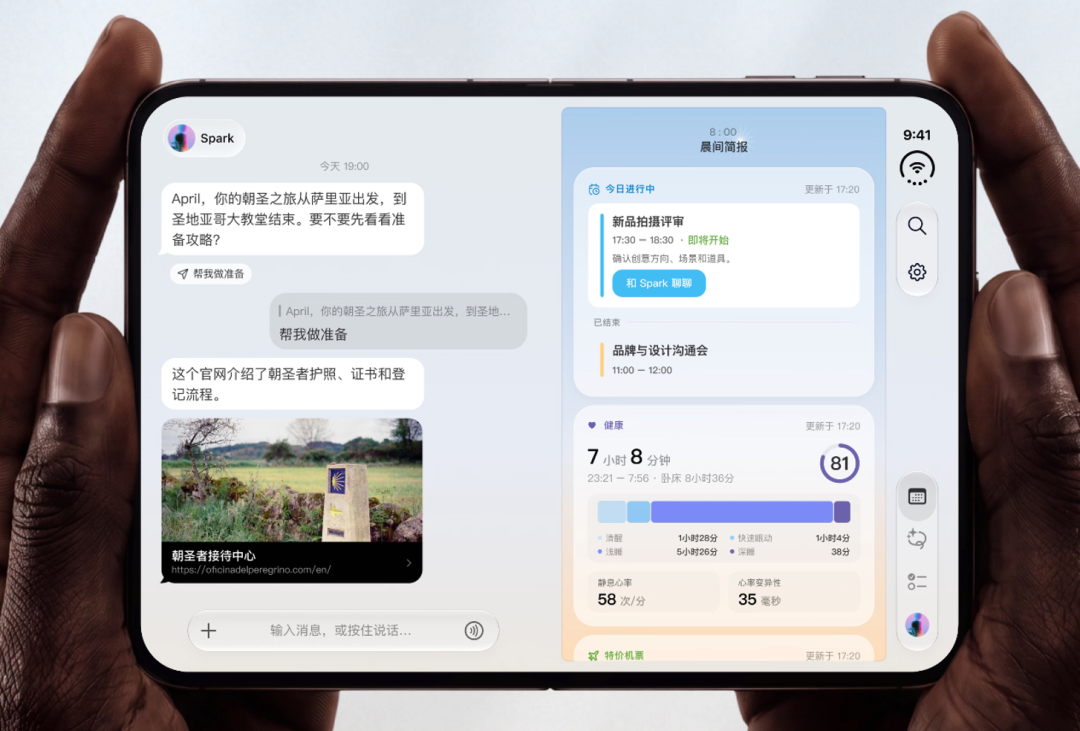
User reviews on Xiaohongshu are polarized: some praise its rich features, while others express concerns about privacy and security.
However, Chinese consumers are not entirely unwilling to pay for efficiency, as seen with mature office software.
Kingsoft Office's 2026 interim report shows that WPS's personal business revenue reached 2.014 billion yuan in the first half of the year, up 15.20% year-on-year; domestic annual paid users reached 48.25 million, up 15.44% year-on-year.
However, WPS's revenue comes from mature office software and value-added services, not solely from AI assistants; users purchase memberships for specific needs like document editing, format conversion, and spreadsheet processing.
General-purpose personal AI assistants offer broader services, but their payment effectiveness is difficult to measure.
What are enterprises willing to pay for? Probably not AI assistants.
Microsoft announced in the fourth quarter of its 2026 fiscal year that Microsoft 365 Copilot had exceeded 30 million paid seats.
Enterprises procure such software not because employees want a chatty assistant but because it handles document processing, information aggregation, business collaboration, and meets corporate data and security requirements.
A similar trend exists domestically: Kingsoft Office's WPS 365 business revenue reached 497 million yuan in the first half of 2026, up 60.84% year-on-year, with the company exploring a combined pricing model based on seat usage and AI consumption.
Zhang believes that such companies' advantage in developing Agents lies in their existing enterprise clients and sales channels.
- 03 - 200 Million US Dollars: Investors Bet on the Future
If the monetization model for personal AI assistants remains unclear, why has Today AI secured over 200 million US dollars in funding?
Zhang's answer: investors are betting on the people, not today's product.
"Today, everyone is investing in Junyuan Qi, who alone is considered to be worth 100 million US dollars. They are also investing in the team and the Agent sector. The personal AI assistant is just a transitional step."
For investment firms, Qi's experience has accumulated expertise in product design, technology development, and commercial organization.
Zhang mentioned to Pencil News that he maintains communication with the Today team. In his view, Today AI is accumulating a set of foundational capabilities needed for future Agents while exploring personal AI assistants.
For example, memory systems.
Ordinary chatbots can answer users' questions for the day. However, a personal Agent must remember past events to serve someone long-term.
An AI that knows you are preparing for postgraduate exams, recalls your weekly study progress, and is aware of your recent overtime hours can adjust plans as your life changes.
This capability can be applied to personal learning or migrated to work management, customer service, and other scenarios.
Another example is connectors.
Connectors are tools that enable AI to read or call different software, such as calendars, documents, emails, and enterprise collaboration platforms.
Without connectors, AI can only tell you what to do; with them, it can actually get things done.
A third capability is a system that allows Agents to arrange execution steps, select models, call tools, and verify task completion. The industry typically refers to related operation and scheduling frameworks as Harness.
While these capabilities lack the visible chat interface of personal AI assistants, they may determine how complex tasks future Agents can complete and their costs.
Today AI has also publicly disclosed that it is training its own interaction model to make AI more suitable for long-term human communication while reducing unit service costs.
This means Today AI is not just developing an application that calls external models but also investing in foundational technologies and engineering capabilities.
In Zhang's view, these accumulations may not be limited to personal AI assistants in the future.
Suppose a new, more profitable scenario emerges in the Agent industry two years from now. A newly established startup would still need to recruit talent, conduct R&D, and build products from scratch.
In contrast, Today AI, with its team, memory systems, connectors, and mature Agent operation frameworks, could enter new markets more quickly.
"Which has a better chance of seizing the next opportunity: a newly formed team or a company that has already secured 200 million US dollars and refined its product and team? If I had to choose, I would definitely invest in the latter," Zhang said.
However, this path is not easy.
Microsoft, Meta, and other major companies already possess mature product entry points, user resources, and financial strength. Even if startups develop new products earlier, they may not sustain their advantages long-term.
More importantly, building infrastructure does not guarantee market success.
No matter how well memory capabilities are developed, if users lack long-term needs, sustained revenue becomes difficult; connecting more software may be undermined if platforms restrict access, affecting execution capabilities.
Today AI must prove not just that AI can remember a person but that this capability can consistently deliver value worth paying for.
This article does not constitute any investment advice.
The accompanying images are sourced from Today AI's official Xiaohongshu account.
-
AI-Driven Computing Power Propels Segment Leader’s Q3 Net Profit Up by 160.77%
-
Anthropic Unveils IPO Prospectus, Reveals $16.3 Billion in H1 Revenue
-
![]()
The Largest IPO in History is Imminent: Tencent, Alibaba, and ByteDance Compete for Cards as Anthropic and Chinese Giants Go All-in on Computing Power
-
“Scoring High” Doesn’t Equate to “Deliverability”: AI Leaderboards Are Undergoing a Credibility Reassessment
-
![]()
Jiemei Technology Unveils Massive 2.684 Billion Yuan Investment to Boost Optical-Grade BOPET Film and High-End MLCC Release Film Production!
-
![]()
Physical AI Fuels Optical Components! Yongxin Optics Reports 37.43% Surge in Q3 Net Profit
-
![]()
Raising 1.3 Billion Yuan, Former Doubao Leader Embarks on New Journey: Developing an AI Assistant, Yet Profitability Still a Hurdle
-
![]()
Anthropic Officially Files for IPO, Aiming for the Largest IPO in History