With the Pareto Curve, Are Large Models Redefining Cost-Effectiveness?
 11/02 2026
 499

DeepSeek has officially launched its new large model version, V4.1 Flash-1017. Public data on its technical indicators had been available previously, and this time DeepSeek also released a Pareto frontier curve of its own for the first time, visually presenting the model's overall performance across the efficiency and cost dimensions.
V4.1 Flash-1017 reaches an industry-leading level on this curve: its comprehensive per-task cost is only one-hundredth to one-twentieth that of comparable models such as Fable and Astra, giving it a cost-effectiveness advantage of more than forty to fifty times.
Actual tests show that in most scenarios token usage has dropped by more than 50% compared with the previous version, and the corresponding TCO level will also see a new round of substantial decline in step.
What looks at first glance like a minor version iteration may be rewriting the way the entire industry does its accounting.
01 The Cabbage-Price Era Is Over, and the Bill Starts to Speak
Over the past two years, domestic large models have gone through a round of extremely intense API price wars.
In May 2024, the Doubao large model put "ultimate cost-effectiveness" at the center of its pricing, with the inference input price of the general model pro-32k version at 0.0008 yuan per thousand tokens, 99.3% lower than the industry price.
Subsequently, Alibaba Cloud issued a price reduction announcement, significantly cutting prices for multiple commercial and open-source models under its Tongyi Qianwen lineup. Among them, the API input price of Qwen-Long, a commercial model benchmarked against GPT-4, dropped from 0.02 yuan per thousand tokens to 0.0005 yuan per thousand tokens, a direct cut of 97%; the output price dropped from 0.02 yuan per thousand tokens to 0.002 yuan per thousand tokens, a direct cut of 90%.
Baidu AI Cloud also announced that two main models of Baidu ERNIE, ENIRESpeed and ENIRELite, would be fully free with immediate effect.
Domestic large model APIs once entered the "li era," with some lightweight models on the input side offering millions of tokens for 1 yuan.
However, underlying computing power and inference costs have rigid constraints, and prices cannot keep converging toward zero indefinitely. Since mid-March, the domestic cloud and AI computing power market has seen a round of structural price volatility: computing infrastructure and some model APIs have been raised, and the industry's pricing logic has begun to diverge.
On March 18, Alibaba Cloud announced that due to explosive global AI demand and supply chain price increases, the industry's core hardware procurement costs had risen significantly. The company decided to adjust prices for AI computing power, CPFS (Intelligent Computing Edition), and other services starting April 18, 2026. Among them, T-Head XuanTie series computing cards rose by 5% to 34%, and the file storage product CPFS (Intelligent Computing Edition) rose by 30%.
Tencent Cloud raised the input price of the Tencent HY2.0 Instruct model by as much as 463%. It also announced that starting May 9 it would uniformly raise prices for AI computing power, container services, and elastic MapReduce-related products by 5%. Baidu AI Cloud announced that starting April 18, prices for AI computing power-related products and services would rise by about 5% to 30%.
In overseas markets, Amazon AWS has implemented a 15% price increase for EC2 instances used for large model training, with the price of top-spec instances equipped with H200 chips rising by 15%; Google Cloud even announced a 20% to 50% price increase for AI computing instances, with CDN egress bandwidth prices in some regions rising by as much as 100%.
Behind the price increases is a clear business logic: it is very difficult to achieve positive gross margin by relying on continuous subsidies; at the same time, enterprise customers' positioning of large models has changed. They are no longer just tools for testing and experiencing, but are gradually becoming production resources embedded in business processes.
What truly leverages the change in industry competition logic is the iteration of the task forms carried by large models.
When models shift from answering questions to executing complete projects in a closed loop, the cost structure changes accordingly: a coding agent has to go through the entire process of requirement parsing, tool invocation, code rewriting, test verification, and loop repair.
Industry actual test data shows that native prompts without standardized optimization have 30%-55% ineffective token consumption, and long-term high-frequency calls will cause a large amount of waste of computing resources and funds.
After the room for unit price decline has peaked, how to spend money is more critical than simply looking at the token unit price. The foundation for the switch in the main axis of competition is gradually taking shape, and a Pareto curve has also begun to reconstruct the industry's criteria for evaluating cost-effectiveness.
The Pareto frontier is not a new concept. In plain terms, it is the optimal boundary between performance and cost: every point on the boundary follows a trade-off logic—to further improve performance, you must bear higher costs; to reduce expenses, you must accept performance loss.
Solutions falling inside the boundary still have room for Pareto improvement: the opportunity to reduce costs without sacrificing performance, or to improve performance without reducing costs. The essence of DeepSeek's upgrade this time is a typical Pareto improvement: the new version moves closer to the frontier curve while achieving both higher performance and lower per-task cost.
In the past, most vendors' common practice was to display indicators separately: release benchmark scores on one hand and separately list API price sheets on the other, rarely placing the two in the same coordinate system for comprehensive trade-off.
What is special about DeepSeek this time is that, as a model supplier, it proactively released to the public a performance-cost Pareto frontier curve oriented toward commercial scenarios, visually presenting the model's comprehensive trade-off relationship across the two dimensions of efficiency and cost.
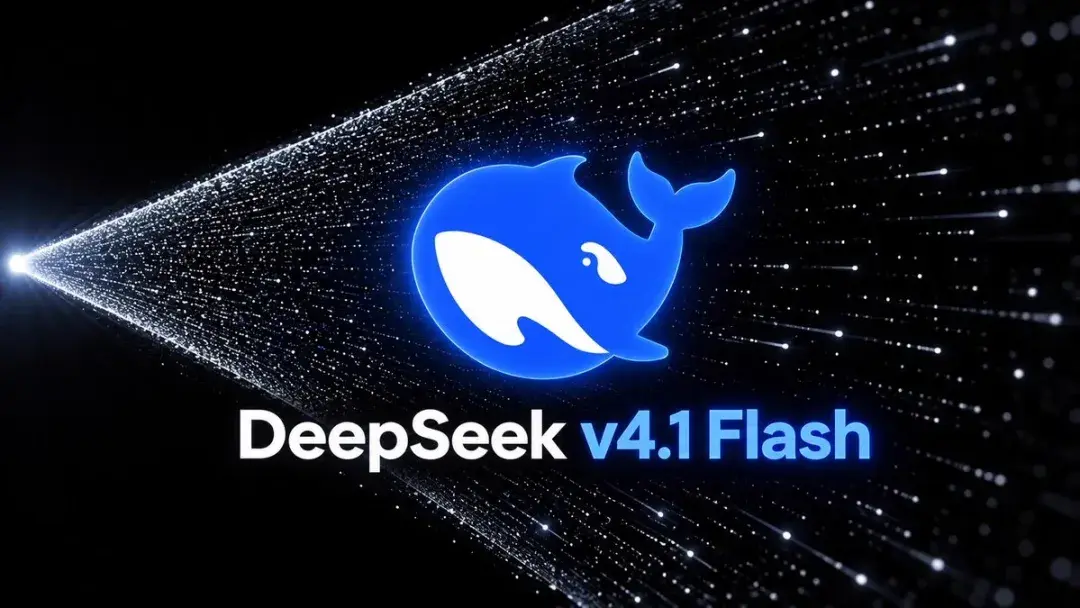
In the DeepSWE v1.1 evaluation chart released by DeepSeek, the new version's highest pass rate (Pass@1) reaches 77.0%. In horizontal comparison, the highest point of the previous version DeepSeek V4.1 Flash was about 74%. The new version's highest score appears at a position where the average cost per task is about 1.3 yuan, significantly lower than many overseas models with similar performance in the chart.
The commercial meaning of this matter goes far beyond cheaper model calls. Establishing per-task cost as a horizontal comparison yardstick is essentially putting forward a new evaluation framework: in the past, B2B procurement was more likely to prioritize scores on public benchmark leaderboards, while this new framework will push buyers to compare the actual expense behind completing the same business objective.
But this curve is drawn by the vendor itself: the accompanying task set, evaluation framework DeepSeek Harness, and inference tier rules are all internally defined. Whether cross-model comparison holds and whether third parties can reproduce the 1/100 to 1/20 cost gap remains to be further verified.
At least for now, it is closer to an official statement given by the vendor rather than a conclusion independently audited by a third party.
02 The List Price Stays Unchanged, but the Bill Shrinks: A Flexible Cost Reduction
The most intriguing design of the DeepSeek V4.1 Flash-1017 iteration is that the external API calling method and the public pricing system remain completely unchanged, with no cuts.
The cost dividend brought by the model is not released by directly modifying the price list, but is hidden in the underlying reconstruction of token usage efficiency.
In the interpretation oriented toward commercial customers, this iteration summarizes token optimization into three layers of mechanisms: task-aware compression, dynamic context trimming, and adaptive decoding strategies; underneath, these correspond to a series of technical combinations such as KV cache compression, context management, and decoding scheduling.
Actual tests show that in most scenarios token usage has dropped by more than 50% compared with the previous version, and the corresponding TCO level will also see a new round of substantial decline in step.
This model can be seen as a flexible price reduction approach in large model services: the publicly listed price remains unchanged, while the actual invocation bill for customers completing equivalent tasks can shrink. Compared with directly lowering API unit prices, this strategy cleverly avoids multiple risks associated with direct price wars.
First, it is not likely to directly trigger a new round of public price wars. Directly lowering API unit prices generates a transparent and easily followed numerical anchor, and competitors can quickly match the price cut, ultimately making the industry prone to unit-price involution and collectively squeezing gross margin space.
The cost reduction brought by efficiency optimization, however, settles within the task execution chain and belongs to hidden advantages at the model engineering level; the threshold for competitors to replicate and benchmark verification will be higher.
Second, the existing contract pricing systems of existing customers will not be affected. For enterprise customers who have already signed contracts, the public API unit price remains the same, so the original commercial terms and budget calculation framework do not need to be readjusted; customers gain lower actual task costs in a nearly imperceptible state, which helps stabilize customer retention.
At a deeper level, vendors' competitive narratives are also switching accordingly. The competitive advantage is no longer confined to the intuitive label of "how much per thousand tokens," but has instead become a composite indicator jointly formed by task completion rate and per-task cost. The focus of industry price comparison is slowly shifting from token unit price to how much actual expense is ultimately required to complete the same business objective.
High-frequency invocation scenarios, Agent workflows, batch automation tasks, and RAG retrieval augmentation businesses are often high-incidence areas of redundant token consumption. Repeated context callback and redundant, lengthy model outputs continuously push up the comprehensive cost of long-term calls.
The significant decline in token consumption this time can optimize the cost structure of such businesses, broaden the implementation boundaries of Agent workflows, and give many automation businesses the possibility of implementation at the budget level.
Looking back at the initial release of V4.1 Flash, DeepSeek chose to directly lower API pricing and also launched a peak-valley billing scheme, with off-peak calls enjoying half price. In the 1017 version updated more than a month later, the vendor no longer adjusts the public list price, but instead releases dividends outward through engineering optimization at the inference layer and token chain.
This shift conveys a signal worth noting: the marginal benefit of the direct price cut path is diminishing, and the focus of industry competition is slowly migrating from numerical games on the price list to underlying engineering capabilities such as inference efficiency and token chain optimization.
03 The Money Saved on Tokens Is Not Free
The cost dividend released by token efficiency optimization has clear applicable boundaries.
The scenarios with relatively significant benefits are concentrated in businesses with high-frequency calls, relatively short contexts, and structured-oriented outputs, such as coding agents, Agent workflows, RAG retrieval augmentation, and online customer service.
The cost bottleneck in such scenarios often lies not in the model's own basic inference cost, but in redundant output and ineffective token consumption caused by repeated callback of historical context in multi-turn conversations. Technical means such as task-aware compression and dynamic context trimming happen to target this pain point, and the leverage effect of cost reduction will be more prominent.
But the industry needs to recognize a reality: the cost savings brought by token compression are never without a price.
When model output streamlining and inference chain compression are applied to complex reasoning, ultra-long document parsing, and multi-step chained logic tasks, potential risks will emerge: could compression strategies lose key details and cause inconsistency in reasoning results?
The average task pass rate obtained from official benchmark evaluations can hardly cover such hidden dangers. Being able to achieve streamlined output in a test set does not mean that key information and result reliability can still be maintained when implemented in diverse real businesses. Compression is a trade-off between information retention and inference cost; once the balance point shifts, behind the cost decline may be a loss of business quality.
At the same time, an unavoidable controversy falls on the comparison basis. The official conclusion that the comprehensive per-task cost is only one-hundredth to one-twentieth that of comparable models such as Fable and Astra hides preconditions: Flash focuses on a lightweight and high-speed route, while Fable 5 and Astra are flagship models, and their positioning, computing foundations, and capability ceilings are not on the same baseline.
For horizontal cost comparison across tiered models, its fairness needs to be carefully dismantled, and the multiple difference cannot be directly equated with comprehensive cost-effectiveness suppression.
When OpenAI explained Astra externally, it also emphasized optimizing cost efficiency with fewer tokens and lower retry frequency. Vendors at home and abroad are sharing the same narrative of optimal task cost, but their evaluation systems and task datasets are not interoperable, making horizontal benchmarking very difficult.
This also raises an industry concern worth being vigilant about: if the Pareto frontier curve gradually becomes a standard tool for vendors' external marketing, will this performance-and-cost measurement framework breed a new round of leaderboard involution?
Task datasets, inference tiers, and evaluation frameworks all have adjustable room, and every vendor can draw a visually impressive frontier curve in its own custom coordinate system. More and more self-contained evaluation standards will instead amplify information noise in the industry.
For B2B buyers, the Pareto curve released by vendors is only suitable as reference material; the most reliable yardstick for measuring model value remains real testing within their own business scenarios.
First, the main line of competition in the API market may shift from paper list prices to effective Token efficiency. In the next stage, the core of vendors' competition may not necessarily be the per-million-Token unit price published on the official website, but how many effective business results the model can stably deliver under the same budget. The reference value of unit price numbers may continue to decline, and the input-output ratio per task is expected to become a new core indicator.
Second, the model selection logic of B2B may also be reshaped accordingly: building internal benchmarks based on their own business data and measuring per-task cost and task achievement rate may gradually replace general leaderboards and become the primary part of model evaluation. Buyers will no longer blindly trust public scores and will place more emphasis on actual test performance in business scenarios.
Third, competition in the lightweight Flash track may further intensify. DeepSeek and MiniMax have already made per-task cost a core selling point, and domestic lightweight high-speed models continue to increase investment, which may continue to push down the price anchors of similar overseas products. The Flash track is no longer just a simple affordable alternative option and has begun to directly compete for implementation share in Agent automation scenarios.
Fourth, engineering scheduling capability may gain weight comparable to the model's basic capabilities. Engineering optimization methods such as context management, inference scheduling, and Token compression strategies are expected to gradually become differentiated barriers as important as model architecture and basic algorithms.
In this iteration, DeepSeek simultaneously opened its self-developed Search and Fetch APIs and completed adaptation with Agent frameworks such as Tencent CodeBuddy and WorkBuddy, also releasing a clear signal: the competitive boundary has already jumped out of the model itself and extended to the entire task delivery chain.
The business logic of reducing costs through Token optimization is premised on the precondition that efficiency optimization must not compromise task quality. Once the compression mechanism frequently makes errors in long-tail complex scenarios, the Token costs saved earlier may very likely turn into hidden expenses caused by retries, manual review, and business failures, driving up the project's total TCO.
The Pareto frontier curve has sparked discussion, and its core change is not the surge in any single evaluation metric, but the shift taking place in who evaluates model value.
It can be seen that the authority to judge large models is gradually moving away from labels such as leaderboard scores and paper pricing, and toward the real business bills in the hands of enterprise customers.
-
![]()
Is Honda Going to Reinvent the Assembly Line?
-
![]()
BMW Completes 1 Million Autonomous Vehicle Transfers Without Ever Touching a Public Road: Does This "Counterintuitive" Case Burst the Industry's Biggest Bubble?
-
October New EV Delivery Rankings: The End of the "Wei-Xiao-Li" Era as Leapmotor, Xpeng, and Xiaomi Take the Spotlight
-
![]()
You Can Now Create "Photorealistic" Worlds and Characters — Complete with Voice Interaction
-
![]()
Ultrafast Nonlinear Optics Technology No. 106: Deep-Ultraviolet Ultra-Broadband Transient Absorption
-
![]()
What Kind of New AITO M8 Did 1.5 Billion Yuan in R&D Investment Create?
-
![]()
Tesla's Latest Move: The "Price Cut" Is All About the Math
-
![]()
Top Four Independent Automakers in Q3 2026: Domestic Shrinkage, Divergent Overseas Paths, Diverging Profits