Is Honda Going to Reinvent the Assembly Line?
 11/02 2026
 445
Introduction
Honda is rethinking the design of future cars to accommodate robot workers.
Not long ago, Japanese automakers were undergoing a sweeping transformation. The theme of this transformation was learning from China's speed to catch up in competition with Chinese automakers, including but not limited to Toyota, Nissan, Honda, Mazda, Subaru, and Suzuki...
Interestingly, Honda is also preparing to take another path: rethinking the design of future cars to accommodate robot workers. In other words, Ford once built cars on assembly lines very quickly. Now Honda hopes to use robots to build cars in factories, also aiming to improve manufacturing efficiency.
But to use robots to build cars, Honda's new vehicles will need to be redesigned. According to a recent report by Automotive News, Honda and Toyota are trialing humanoid robots in Japanese factories, from wiring harness installation to final inspection, hoping to compete with the next wave of AI robots from the United States and China.
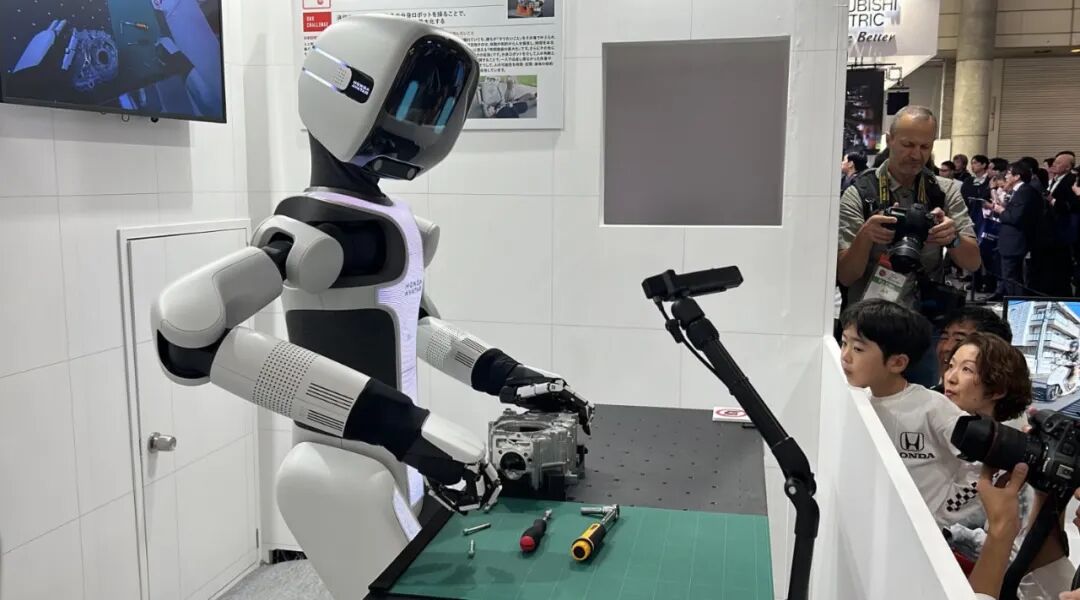
This direction sounds distant, but Honda has already shown concrete moves at its booth at the October Japan Mobility Show. A four-fingered AI robotic hand can mimic human dexterity and can be remotely controlled as an avatar. This robot, which looks like an anime character with cameras for eyes, can grasp a threaded bolt and successfully screw it into a transmission housing.
Honda CEO Toshihiro Mibe put it bluntly: "We are still far from humanoid robots being everywhere in the factory. But robots are gradually advancing, and eventually, parts will be handled by robots." He also said that Honda's automobile manufacturing and design will begin to take this into account, changing car design with this as a goal from the earliest stages.
In other words, Honda is not pinning all its hopes on robots learning human touch and tactile sensation as soon as possible. Instead, it plans to make future parts, fasteners, and assembly sequences more suitable for robotic hands to grasp, align, and screw in.
This is similar to Toyota's approach. Toyota showcased a 7-foot-tall basketball robot called CUE7 and heavily promoted a plan to eventually deploy 400,000 new robots across Toyota Group companies, but Toyota's ELEY robot is still starting with simple tasks such as parts transport, handling, and positioning.
01 Change the Parts First, Then Wait for the Robots
Haru Nakajima, an engineer in the Frontier Robotics Department of Honda R&D, said that Honda is testing its wheeled Avatar robot in Japanese factories to perform various tasks, including installing wiring harnesses, a complex and time-consuming job that traditionally requires human dexterity.
However, this device, called the "Avatar Robot," can be remotely controlled to protect humans from dangerous environments. Honda believes that Avatar robots and robotic hand technology are growth businesses for the future. The system uses AI technology to guide operators to smoothly pick up tiny objects and align gears.
In fact, Honda released the bipedal robot Asimo as early as 2000, becoming a pioneer in the robotics field. But this robot, which looks like an astronaut, was retired in 2022. Honda said it will retain the name Asimo and name it AsimoOS as the operating system for its future software-defined vehicle lineup.
Honda CEO Toshihiro Mibe compared this change to early design adjustments, such as the assembly line's transition from chain conveyors to overhead hangers and automated guided pallets. The idea is that rather than waiting for AI to fully replicate human motion control and tactile dexterity, it is better to first change the geometry of parts so that existing robot hardware can more easily complete grasping and assembly.
Some analysts call this approach a "bold strategic shift." Honda demonstrated auto parts specifically redesigned for assembly by humanoid robotic arms. This pragmatic approach shifts the burden of adaptation from complex neural networks back to the field of mechanical engineering.
However, Toyota's pace is more cautious. According to reports, Toyota's CUE7 humanoid basketball robot wears the black and red jersey of a professional team sponsored by Toyota and can accurately make three-point shots, but the company originally developed it as a test platform for technologies applied to work robots such as ELEY.
Toyota's ELEY stands for Embodied Learning for Enhanced Yield. It is a black-and-white robot with two arms, crab-like pincers, and a blue screen with facial sensors.
Hiroshi Hito, head of robotics research at Toyota's Frontier Research Center, said that Toyota is trialing the ELEY system in Japanese factories for parts supply and positioning, and his team is also testing other forms of embodied AI, including final inspection robots.
Hito said: "Physical AI is not yet mature, so we start with simple tasks." "This is only the starting point." Toyota is developing robots that can work collaboratively with employees. ELEY moves around the factory on wheels and is equipped with robotic arms and grippers for handling parts, assisting with tasks such as parts transport, handling, and positioning during vehicle production.
It can be seen that Toyota is taking a step-by-step approach, because AI robots still need to learn in order to reliably perform complex physical tasks. The goal is to reduce repetitive work, improve production efficiency, and at the same time allow employees to focus on tasks that require more judgment and experience.
In fact, there are many examples of this approach in the industry. Tesla stopped production of the Model S sedan and Model X crossover this year in order to use space at its California factory to produce its Optimus robot; Renault aims to have 350 humanoid robots by 2027; Mercedes-Benz aims to achieve assembly line operations by 2030; Toyota will invest 1 trillion yen annually starting in 2028 to deploy robots, including AI-driven humanoid robot workers.
02 Everything Still Needs to Be Rebuilt from the Ground Up
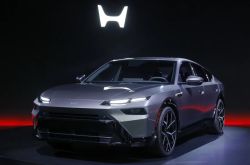
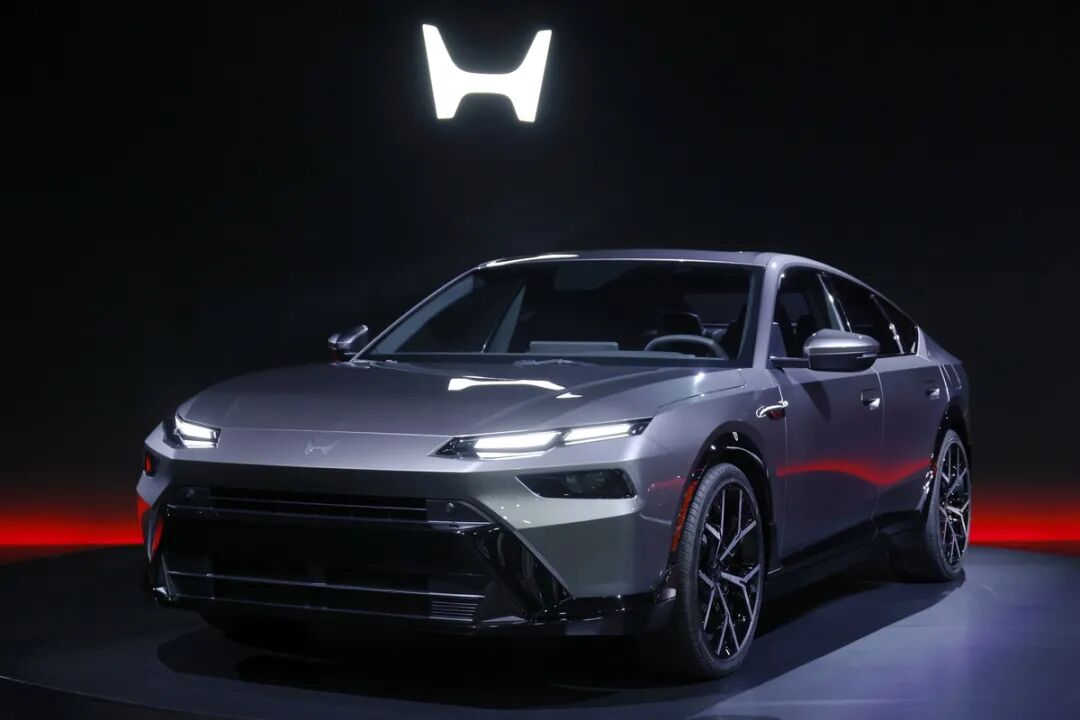
In May this year, Honda Motor unveiled a sedan prototype that outsiders described as "shocking," signaling a major shift for future models such as the Accord or Civic. Reports say this is part of Honda's plan to launch 15 new alternative-fuel vehicles globally by 2030.
This sedan prototype abandons the traditional three-box sedan shape and adopts a lower, wider stance, a longer wheelbase, and smooth fastback roofline. It also incorporates unique styling elements, such as lower-body plastic cladding, which is rare in sedans, including design inspiration drawn from Honda's 0 Series electric concept cars.
Of course, it is possible that this show car is not similar to the new models Honda plans to launch. But at present, the average price of new cars worldwide is constantly rising. Automakers generally believe that if humanoid robots can fully take over the complex, repetitive, and highly intensive labor in factories, they will greatly change vehicle production efficiency and manufacturing costs.
This design innovation oriented toward robot manufacturing may become one of the most effective paths to making vehicles affordable again in the future.
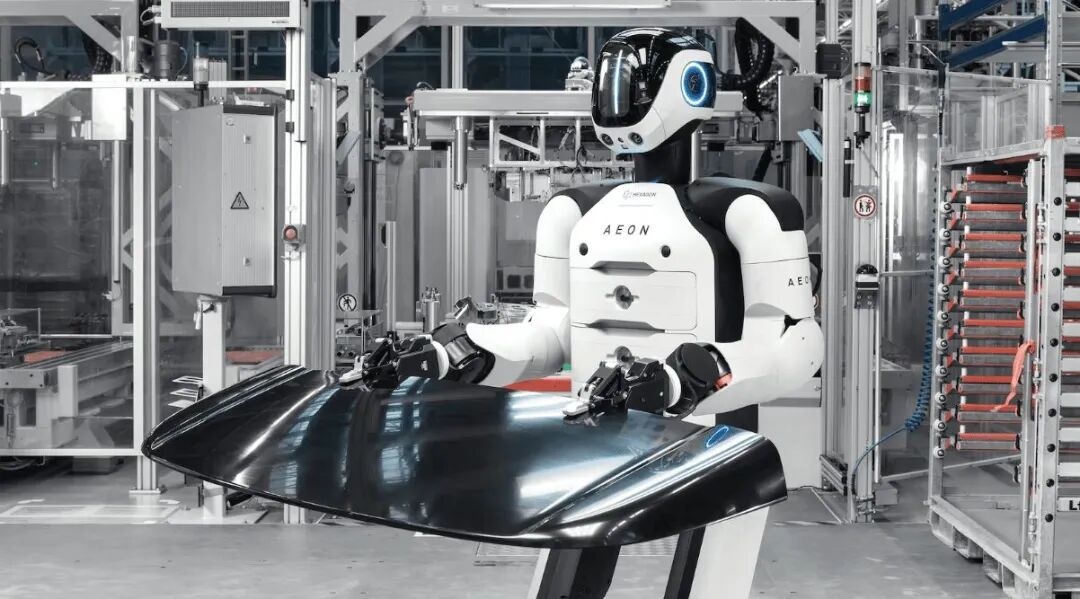
However, some industry insiders believe that the robotic hands displayed by Honda and Toyota at their booths are only the visible demonstrations. What is truly invisible and most difficult lies in part geometry, fasteners, and supply chain certification.
The report noted that for half a century, industrial automation has relied on rigid, single-purpose robotic arms fixed inside safety cages. The selling point of humanoid robots is that bipedal robots can directly enter traditional factories designed for humans without expensive floor modifications.
However, training foundation AI models to handle fragile wiring harnesses, cut internal plastic trim, or align flexible rubber seals is far more difficult than training software agents.
For example, Honda's specialized avatar robot uses computer vision-guided multi-fingered robotic hands to perform complex assembly sequences, but its success depends heavily on standardized parts designed specifically for robotic grippers. By simplifying fastener shapes and gripping angles, the engineering team significantly reduced assembly failure rates in early trials.
The key here is not that robots suddenly become as dexterous as humans, but that parts first become easier for robots to grasp, align, and install stably. The hardware product portfolio must be re-evaluated from this co-design perspective, because raw mechanical flexibility is far less important than the compatibility of software with standardized physical components.
As vehicle architectures are specially customized for robot workers, the time required to integrate new humanoid robots into production lines will be shortened from months to days. Some analysts even judge that the manufacturing leaders that are the first to adopt this co-design of physics and architecture today will determine the profit structure of the global automotive industry over the next decade.
But it is easier said than done. Some analysts believe that Japan's robotics technology faces challenges in catching up with the United States and China. Japan's hardware, including actuators and sensors, is of high quality, but cost control is a key factor.
"Japan's goals are good, but the key lies in what kind of value they can create. Can they complete complex tasks as quickly and accurately as humans? The value of AI robots depends on their versatility in performing various tasks and actions."
Honda's Avatar robot is still in the technology development stage, and its demonstration does not mean that Honda has fully introduced fully autonomous humanoid robot workers across all its automobile factories. Humanoid robots must prove that they can work safely, accurately, and stably in busy factories, and their cost and maintenance requirements will also determine whether large-scale application is economically viable.
Editor: Li Sijia Editor: He Zengrong

THE END
-
![]()
Computing Power Is No Longer the Ceiling for AI Agents—the Ecosystem Wall Is
-
![]()
BYD: Trading Price for Volume at Home, and Its Overseas "Savior" Is Starting to Falter Too?
-
![]()
The Vanished "Golden September and Silver October"
-
![]()
Tesla Changes Its Car-Buying Policies Nine Times a Year—Only "Honest People" Buy Teslas
-
![]()
Volkswagen: Would Rather "Court Death" Than "Wait for Death"
-
![]()
Is Honda Going to Reinvent the Assembly Line?
-
![]()
BMW Completes 1 Million Autonomous Vehicle Transfers Without Ever Touching a Public Road: Does This "Counterintuitive" Case Burst the Industry's Biggest Bubble?
-
October New EV Delivery Rankings: The End of the "Wei-Xiao-Li" Era as Leapmotor, Xpeng, and Xiaomi Take the Spotlight