What Kind of New AITO M8 Did 1.5 Billion Yuan in R&D Investment Create?
 11/02 2026
 359
The new M8 has accumulated R&D investment of 1.5 billion yuan. Seeing that figure, I wanted to take a closer look: for a car that already sells well, how far is AITO prepared to go in changing it this time?
Not long ago, I was more or less watching from the sidelines as discussions swirled around adjustments to AITO's cooperation. Now, the first car under the new phase of cooperation is about to arrive, with a launch expected on November 13.
When the first-generation M8 launched in early April 2025, Seres Automobile President He Liyang called it "three years to sharpen a sword." Positioned as a "family smart flagship SUV," the car delivered more than 150,000 units that year—accounting for more than one-third of AITO's full-year deliveries of 426,000 units—and has already become the brand's sales pillar.
That makes the new M8 a battle Seres cannot afford to lose.
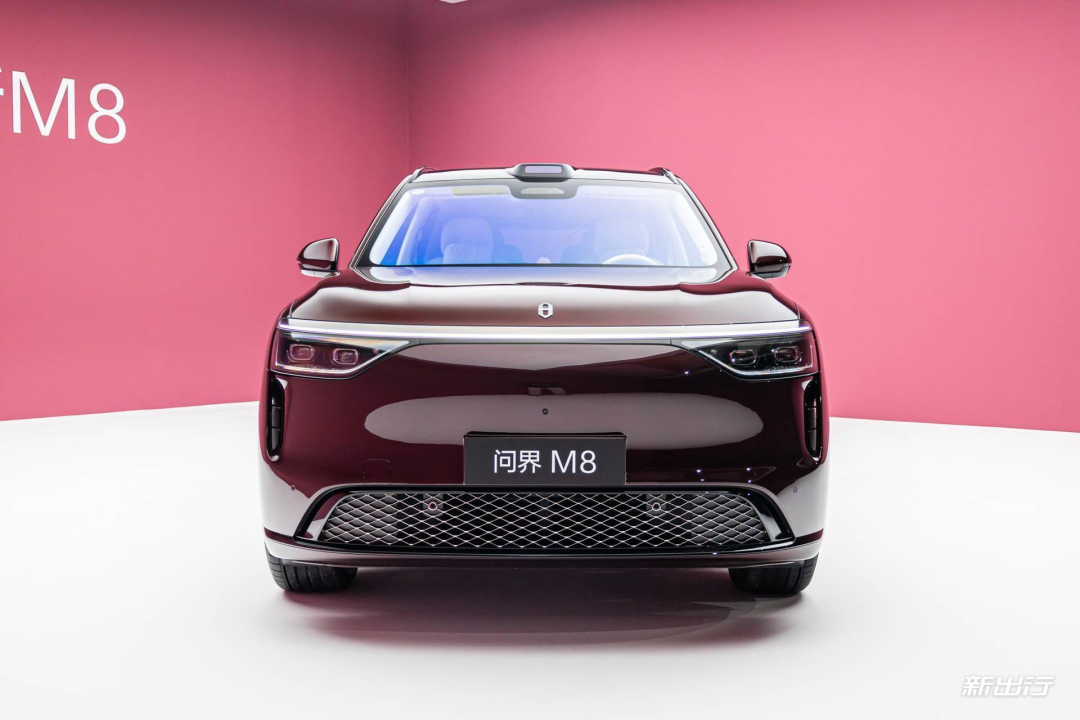
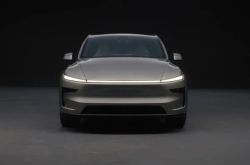
An AITO New M8 on display.
01 The Added Features Are for the Whole Family's Experience
For family SUVs in the 400,000-yuan range, buyers already have multiple choices such as six-seat plug-in hybrids, range extenders and pure electrics, and they can also get models equipped with 70kWh-class batteries, rear-wheel steering and air suspension. What buyers compare has become as detailed as whether daily charging is convenient and whether a large car can be driven easily.
The current pre-sale price of the new M8 starts at 389,800 yuan. The specific choice still depends on the powertrain, seating layout and the total price after options. AITO needs to explain clearly what this facelift can bring to a family's daily car use.
Under the new cooperation model between Huawei and Seres, Seres assumes more leading responsibility in product definition, design and brand operations, while Huawei continues to participate. The new M8 was jointly designed and developed by both parties and carries forward previous R&D accumulation.
The new M8 is equipped with Huawei Qiankun ADS 5 and also uses the holographic perception spatial network and the all-new HarmonyOS cockpit. After the adjustment of cooperation division of labor, Huawei's new-generation technology is still entering AITO's mainstream models.
AITO disclosed that the new M8 was invested in according to the development standards of an all-new model.
Seres has also previously talked about the issue of "rushed cars." On September 19, Liu Zongcheng, president of Seres Group Technology Company, said at the TEDA Auto Forum: "We cannot seize speed by compressing validation cycles and lowering safety standards."
First look at the chassis. For an SUV over 5.1 meters long, the cabin is spacious, but the driver still has to drive it into underground garages every day and turn it around at narrow intersections. For this, the new M8 adds ±8° rear-wheel steering, standard on the Ultra version and optional on the Max+. The chassis is also equipped with dual-chamber air suspension and dual-valve shock absorbers.
The family sits spaciously, and the driver also needs to feel more relaxed. The large space valued at purchase cannot become a burden on the driver when parking.
The electric drive system is also being adjusted. The new M8 adopts an 800V high-voltage platform across the lineup. The range-extender Max+ and Ultra come standard with a 56kWh battery, with an optional battery of about 75.4kWh. For families choosing the range extender, a large battery means more daily commuting and school runs can be completed on pure electric power; on long trips, the refueling option of the range-extender route is still retained.
Looking at these two battery options, I would first calculate a week of commuting, school pickup and weekend trips, and then decide whether to increase the budget for a larger battery.
The new M8 offers both range-extender and pure electric routes. The final choice depends on the home charging conditions and how the family usually travels.
The changes in the cockpit take more care of family members in different seats. According to the currently announced configurations and benefits, the high-trim six-seat version of the new M8 can provide three zero-gravity seats. Rear entertainment has switched to a 21-inch ceiling-mounted screen, standard on the Ultra and optional on the Max and Max+. When resting while parked, family members have more zero-gravity seats to choose from. Where such configurations are placed determines who can use them regularly.
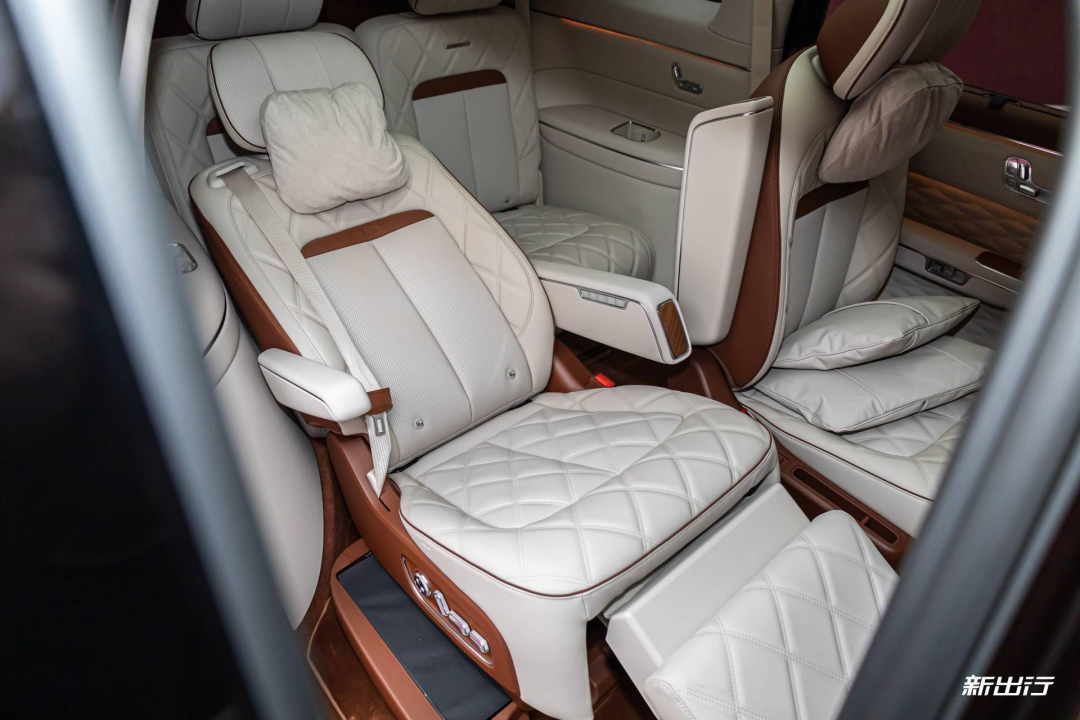
The zero-gravity seat on the right side of the second row in the new M8 six-seat display car.
As for the holographic perception spatial network and the all-new HarmonyOS cockpit, I am more concerned about how they change a family's usage habits. The new M8 has announced all-new in-cabin and out-of-cabin gesture interaction for vehicle control, directional lighting and in-cabin eye-protection lighting. The names sound quite tech-heavy, but what I want to see is simple: when a family sits in the car, can they press fewer buttons and dig through fewer menu levels? Only when the car understands people's actions a little more will the word "smart" be more easily felt by family members.
In the real shots of the new M8 display car, two details made me take another look. The divider in the wireless phone charging area can rise and fall to accommodate foldable phones; rear passengers can adjust the left and right windows separately through the buttons beside them.
The benefits of these details can be felt by family members every day. People sitting in the back do not need to move their bodies for the window on the other side, and there is a suitable place for a phone after it is unfolded. The longer a car is used, the easier these handy little things are to remember.
What I understand as a "family smart flagship" should take these things into account. When buying a car, configurations can be compared item by item; after the car is driven home, only when people in different seats can all use it smoothly is the money well spent.
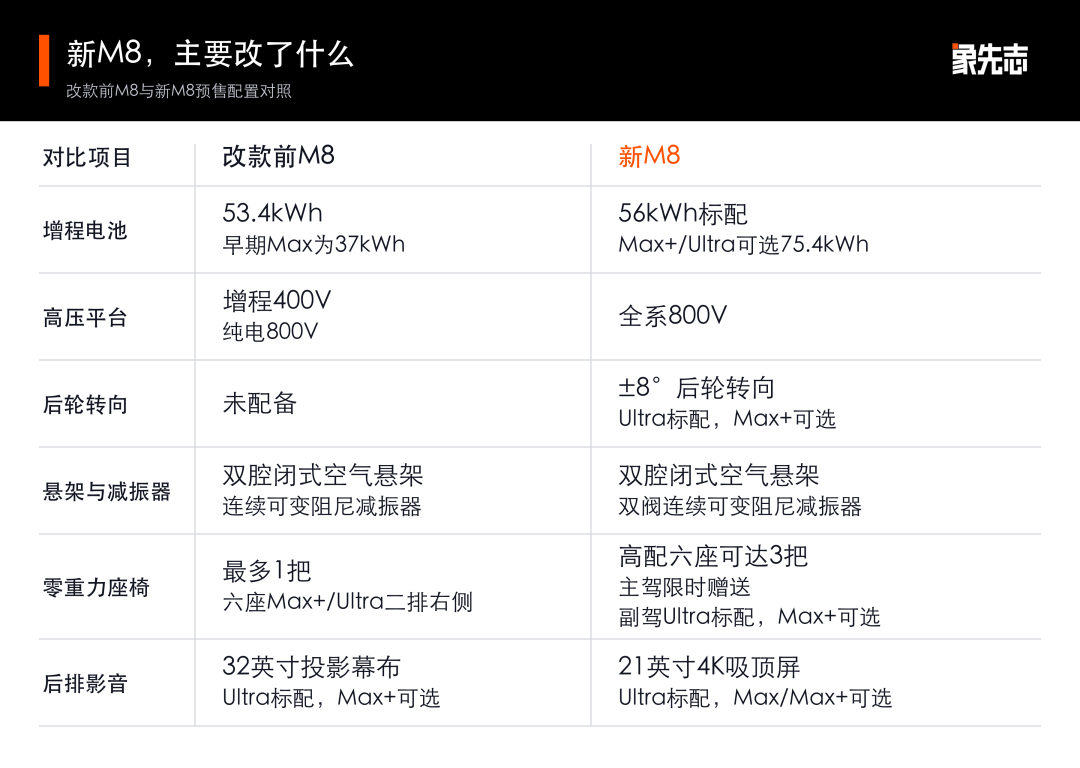
Main configuration changes of the AITO M8 before and after the facelift.
02 After the Car Is Sold, the Experience Still Needs Continuous Improvement
Looking at the changes to the new M8, I think of an interview with an old owner published by the Electric Vehicle User Alliance in April this year. Mr. Liu from Jining, Shandong, bought an M8 range-extender Max+ six-seat version in December 2025. At the time of the interview, he had driven more than 10,000 kilometers and liked taking his family on long road trips. He was generally satisfied with the car, but when it came to the battery, he said: "A 70-degree battery would be better."
When buying a car, people look at parameters; after driving 10,000 kilometers, owners know more clearly what their lives need. The new M8's addition of a large-capacity battery option echoes the expectations of such families who want to use more pure electric driving.
In April this year, on the first anniversary of the M8's launch, cumulative deliveries exceeded 170,000 units. As vehicles enter different families, the product team also has the opportunity to see usage issues outside the showroom. Seres Vice President Kang Bo previously also listed real usage scenarios and user feedback as the basis for driving R&D iteration.
I also want to ask on behalf of old owners: after the new model is launched, what improvements will there still be for the car they bought? The new car's large battery and rear-wheel steering involve hardware, while old cars can continue to improve the experience through software adaptation and maintenance.
Take assisted driving as an example. In the summer OTA notice announced on July 27, the entire M8 lineup was included in the ADS MAX V5.0 upgrade support scope, covering experience optimizations such as start-stop, acceleration and deceleration, and obstacle-avoidance lane changes. The entire M8 lineup is also on the adaptation list for functions such as soft-close door anti-pinch reminders and central control screen eye-protection mode, with specific rollout subject to vehicle notifications. By the National Day version, the M8 series added steering image window size settings, allowing users to adjust the view and keep their own settings.
These updates are for models already sold and require the manufacturer to continue reserving development and testing resources. Owners do not pay the car purchase price again for software improvements, but the manufacturer still bears the cost. This is also why, when I look at family SUVs, I pay attention to subsequent updates for older models.
In a previous CCTV interview, Zhang Xinghai said he hopes to improve the core use value for existing car users, so that old users' car experience and vehicle advancement do not fall behind within five years, and to continue upgrading through OTA. For old owners, this goal must be reflected in updates they can actually use again and again.
The new M8 faces the next group of car-buying families, and old users' evaluations will influence these families' choices. When looking at the new M8, I will also continue to pay attention to updates for the old M8. After all, the car a family buys still has to be used for years to come.
-
![]()
Computing Power Is No Longer the Ceiling for AI Agents—the Ecosystem Wall Is
-
![]()
BYD: Trading Price for Volume at Home, and Its Overseas "Savior" Is Starting to Falter Too?
-
![]()
The Vanished "Golden September and Silver October"
-
![]()
Tesla Changes Its Car-Buying Policies Nine Times a Year—Only "Honest People" Buy Teslas
-
![]()
Volkswagen: Would Rather "Court Death" Than "Wait for Death"
-
![]()
Is Honda Going to Reinvent the Assembly Line?
-
![]()
BMW Completes 1 Million Autonomous Vehicle Transfers Without Ever Touching a Public Road: Does This "Counterintuitive" Case Burst the Industry's Biggest Bubble?
-
October New EV Delivery Rankings: The End of the "Wei-Xiao-Li" Era as Leapmotor, Xpeng, and Xiaomi Take the Spotlight