You Can Now Create "Photorealistic" Worlds and Characters — Complete with Voice Interaction
 11/02 2026
 455
You push open a door and see your 22-year-old self.
Fresh out of college, wearing that old T-shirt that's been washed a bit loose, standing in the shade of trees on campus, eyes half nervous, half filled with fearless arrogance.
You walk over, sit down beside him, and talk with him about the years in between. You talk about the things you once worried yourself sick over that later turned out never to happen, and about the present you never expected to reach back then.
This movie-like scene comes from a researcher at Google DeepMind named Hollinsky. He chatted for a long while with his just-graduated self, and at the end even said with a smile that he was quite naive back then — but it seems he hasn't changed much.
Although it's a virtual character, it feels especially real and natural. If you look closely, you can even see his chest rise and fall as he breathes.
This cross-time conversation comes from the new-generation world model "Genie 4," released by Google DeepMind a few days ago.
If you're no stranger to world models, you can spot Genie 4's two biggest innovations from the passage above: photorealism and real-time conversation.
All world models can generate a running world. You can walk into it and use the keyboard to control direction and camera. Some can also change any element with a single sentence, and some can simulate the world's development in real time.
Genie 4 can do all of these — and "conversing with characters in the world" is something only Genie 4 can do.
The characters in the world respond and react in real time to what you're doing and saying. Moreover, the voice and visuals are computed synchronously by the same model, not dubbed in afterward.
Let's look at the cases Google officially provided.
Below are cases from users on X who got internal testing access first.
This one was made by Mollick, a professor at Wharton, well known in the AI circle as the hands-on type.
He simply entered the sentence "a neo-Gothic Brutalist city inhabited by robots and horses." In less than a minute, the city appeared. Gloomy stone streets, gas streetlights, steam rising from ground grates, and a horse and a robot walking past.
Then came the sentence "add a dragon, and a friendly otter." The dragon and the otter appeared in the city in real time.
He also played with something even more outrageous: making all the computers and walls in the entire office run an old game called DOOM, and having a demon colleague hold a machine gun and say he was going to give him a bonus.
The camera first zooms in and then out. You can see that the objects in the room don't collapse, but there are some consistency issues — such as the desktop on the left.
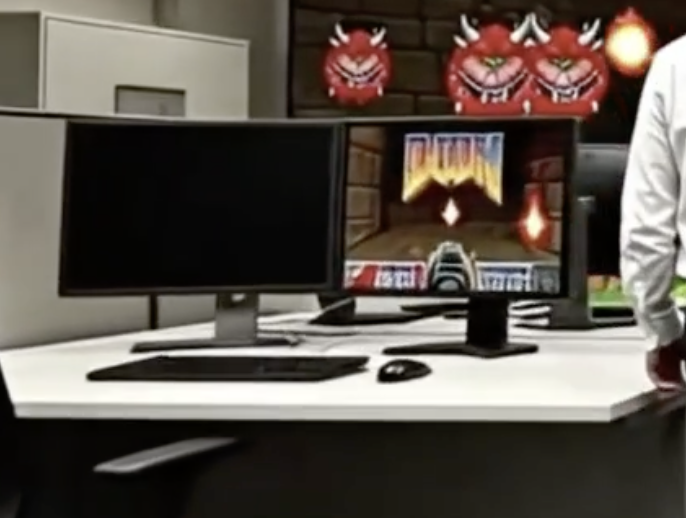

The character knows to turn and go around when walking up to a wall, which is good. But a normal person wouldn't walk straight at a wall and then change direction right before it. Also, here the person and the wall clip through each other.
So the overall effect of current world models is already quite good, but many details still have considerable room for improvement.
This one is from a16z partner Justine Moore. She is exploring inside a shipwreck, with glowing gems, electric eels, and gold coins inside.
Notice the lighting details. Realistic, right? This is real-time recomputation of global illumination.
In plain terms, once the light source changes, the brightness, reflections, and shadows of everything in the entire scene are recalculated accordingly, and the calculation follows the laws of physics. Previously this was work that only game engines and professional rendering could do.
This also shows that the world of Genie 4 is indeed computed. Light, objects, and space all have a self-consistent internal logic. Only then does it qualify to be called a world model, rather than a moving wallpaper.
Justine also played with a meme that went viral.
She created a Waymo self-driving car driving through the flooded streets of San Francisco, with giant monsters emerging from the water in the distance and buildings along the street exploding and collapsing. She named this work GTA Waymo, joking that before GTA 6 arrives, GTA Waymo has come first.
Behind the joke is actually real business.
Waymo already used the previous generation of Genie to build its own simulation model in February this year. Why? Because extreme and absurd scenarios like cities flooded and monsters appearing are exactly the data autonomous driving needs most but can never collect in reality.
In Genie 4, such scenarios are available as much as you want. Floods, blizzards, earthquakes, and all kinds of intruding objects can be generated infinitely. This is the most tangible value it brings to autonomous driving and robots: a training ground that is always open and always restartable.
But then again, there is also quite a bit of clipping here.
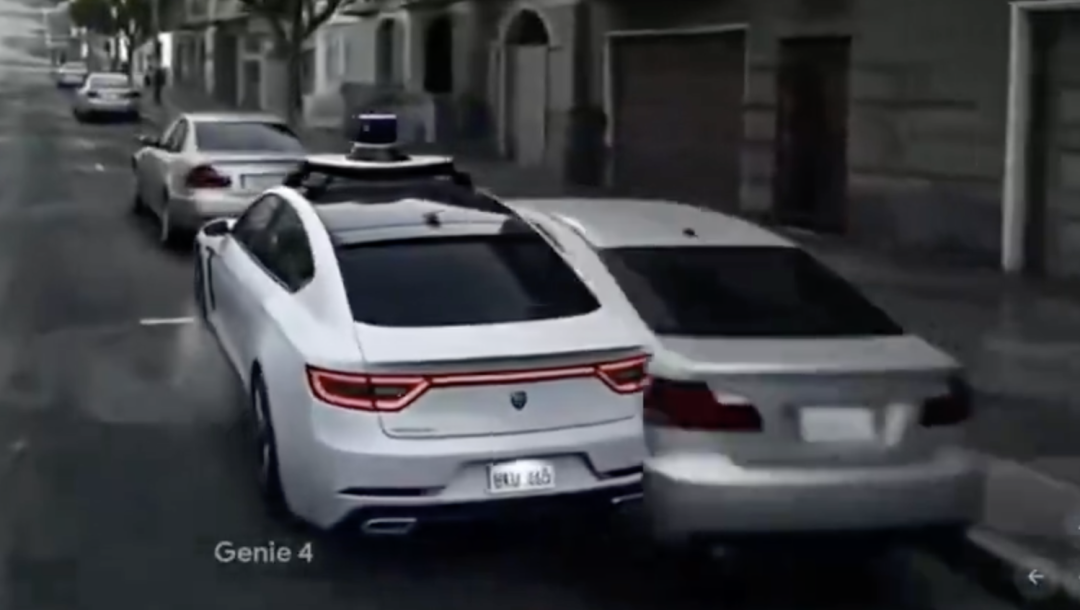
If such data were used directly for training, the consequences would be unimaginable.
There is one case worth discussing separately. It gave me a bit of a shock.
DeepMind research director Kukarni had Genie 4 simulate in real time a 3D modeling software called Blender.
The software interface you see in the frame is all fake. The rotating avatar, the switchable wireframe mode, and the dense sidebar toolbars — every cell is generated on the spot by the model, exactly like the real software.
This means world models can simulate not only games and landscapes, but also software and work interfaces.
Of course, at present it only simulates the most basic functions, but this tears open a gap in our imagination: in the future, why not directly do software work inside a world model?
If that becomes possible, software operation will no longer be one-dimensional linear click logic and two-dimensional flat display, but three-dimensional all-around operation. Now it is like drawing a swing on paper, while the future is like building a swing by hand in a garden — even if that garden is virtual.
Let's talk briefly about Genie 4's technical architecture in plain language.
Genie 4 is not fighting alone. Behind it is the Gemini series working in coordination.
Gemini Omni is responsible for anchoring the appearance of the world to reality, making the generated things look and move in line with the real world.
Gemini 3.8 Flash is most like an on-set supervisor, watching the frame in real time, breaking what you want to do into steps, checking whether each step is completed, correcting deviations, and changing the plan when the world changes.
Gemini 4 Argon is responsible for breaking complex tasks into concrete actions.
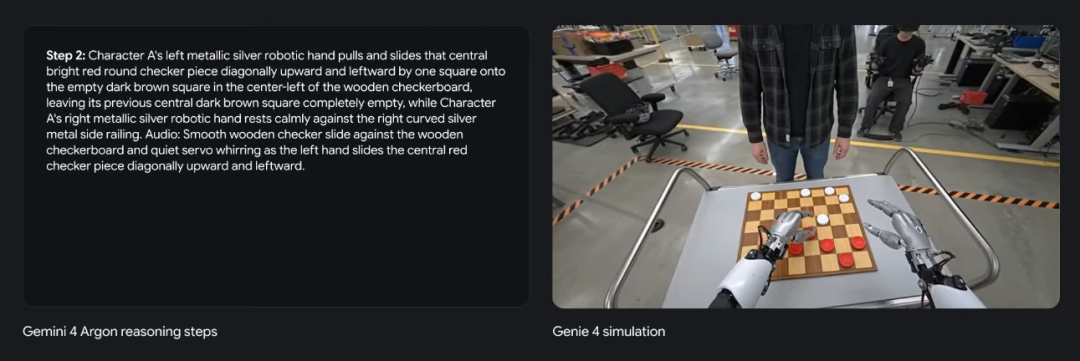
Google calls this approach a "hybrid world model."
You can understand it this way: Gemini is the logic and planning in the brain, and Genie is the reality seen by the eyes and touchable by the hands. One is responsible for thinking it through, and the other for drawing it out, with the two aligned in real time.
Okay, now let's talk about something deeper and a bit more brain-burning: when the world can be generated infinitely, what is left of reality?
Let's push this forward step by step.
At its foundation, the world model is actually a craft of compression.
If you look back at human civilization, you will find a very hidden thread. Language compresses long experience into a few sentences, numbers compress a pile of scattered objects into symbols, maps compress the entire land into a sheet of paper, and physics formulas compress the laws governing the universe into a line of equations.
Humans have never understood the world by moving the whole world into their brains, but by compressing it into a model that can be called upon at hand.
Things like Genie are the product of this thread reaching today. What it compresses is the world itself. Light, sound, the reactions of objects, and how something will happen next are all compressed into something that can be unfolded in real time.
Follow this line of thought further.
In the past, questions like "what if I had taken another path back then" could only exist in the mind or be written into novels.
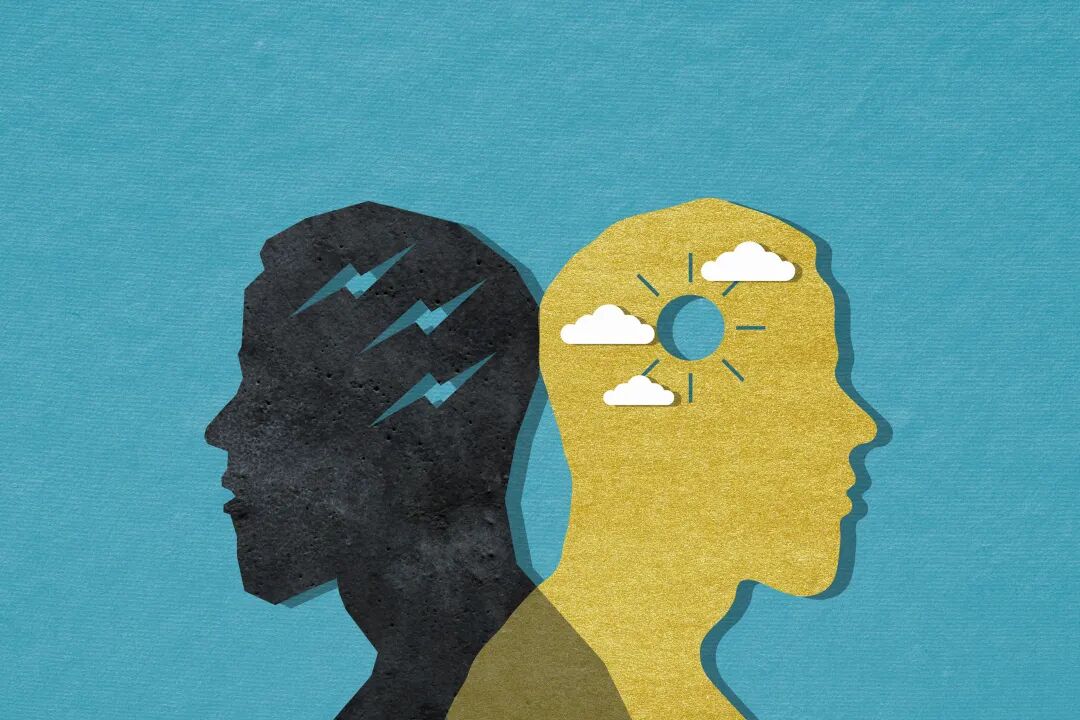
But now, you can generate those paths not taken one by one and look at them. Change a city, change a decision, change the weather, change a person who walks in.
For the first time, possibilities are mass-produced and turned into everyday consumer goods available at hand.
This sounds like pure freedom. But when any kind of possibility can be supplied infinitely, possibility itself depreciates.
What is truly scarce is no longer "building another world," but "which one you believe in and which one you are willing to pay for."
This is the point I most want to make.
Have you ever thought about why reality is reality, rather than a more realistic simulation?
The difference is not clarity. In a few more years, or a dozen years, simulated visuals, sounds, and touch could completely fool your senses. The difference lies in a very plain place: in reality, once something happens, it cannot be taken back.
This reminds me of the movie "Annual Meeting Cannot Stop 2" that I watched these past few days. In it, Liu Ben and Ma Jie enter an "infinite loop" every time they resign, so they accumulate promotion experience with each loop. Although they rise to very high positions, in the end the infinite loop fails, and Liu Ben panics because all he knows is trial and error.
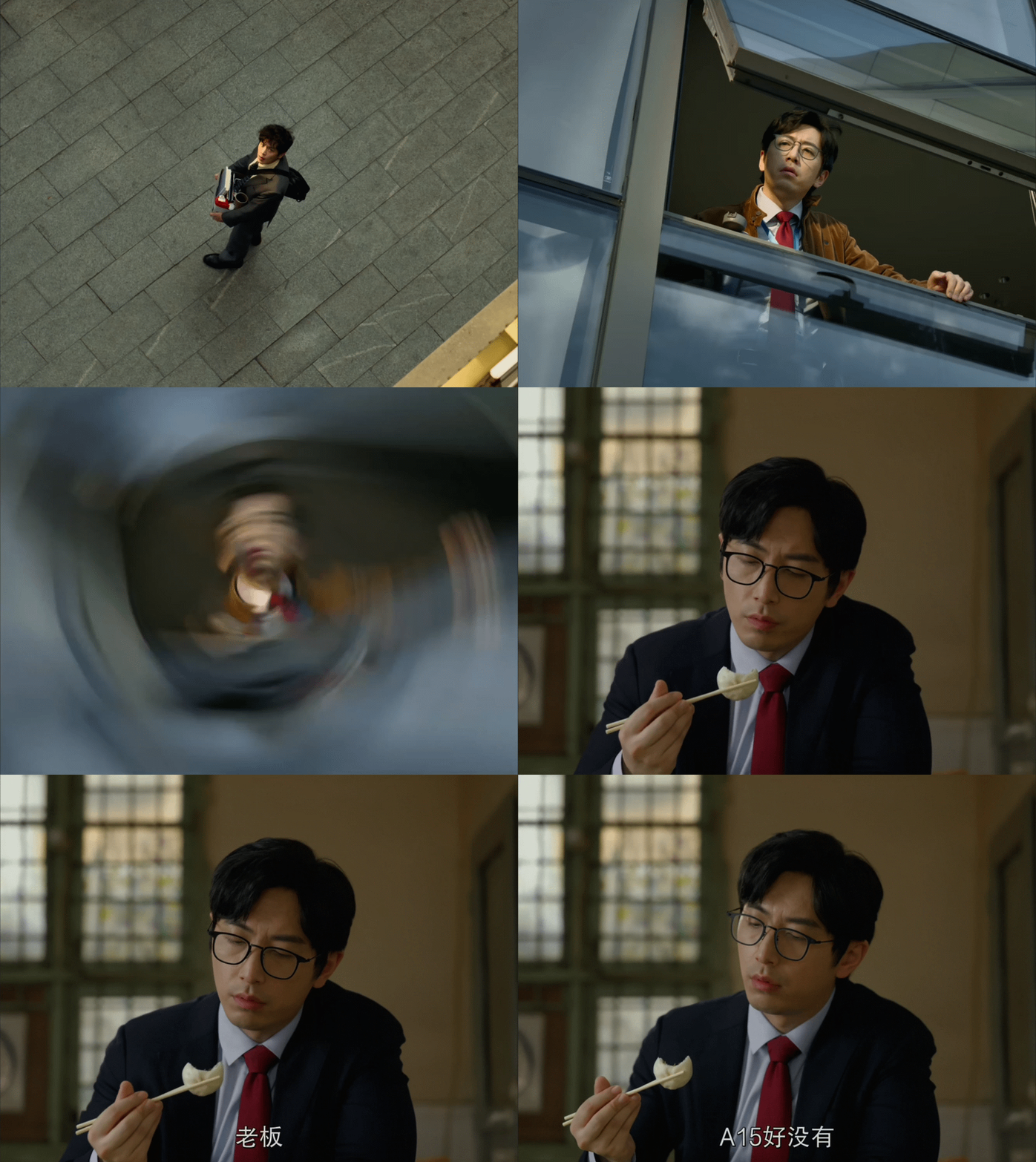
This irrevocability, this real cost that must be paid for every choice, is exactly where the weight of reality lies.
In a game, you can clear it a hundred times, and that thrill is light, because you know you can reload a save. In reality, when you accomplish something, that solid feeling is heavy, because you know it happens only once, and if you mess it up, it really hurts.
So I actually think the greatest value of world models is not replacing reality, but forcing us to see clearly again why reality is precious.
Deeper still, this concerns our own brains.
The core of biological intelligence is actually also a kind of ability to "rehearse the world in the mind."
Before you reach out to catch something, your brain has already predicted where it will land. Before you say a sentence, you have already simulated in your mind the other person's possible reaction. Humans survive in a complex world precisely because of this built-in world model.
And now, we are beginning to hand this rehearsal over to external models.
There is nothing wrong with this in itself. Tools have always saved us effort. But there is a detail worth being alert to, and it has already happened elsewhere.
After navigation apps became widespread, many people's ability to find their way noticeably degraded. Away from the screen, even the city they have lived in for years feels unfamiliar. It is not that the roads changed, but that the spatial map in our brains slowly shrank after being outsourced.
The ability to rehearse the world may be like this too.
Concrete work, repetitive simulation, and massive trial and error can be handed over generously to tools. That is their strength. But there are three things I suggest you keep firmly with yourself: direct perception of reality, the ability to judge independently, and the courage to be responsible for the results.

No matter which industry you are in, what this wave really changes is an ancient division of labor: machines are responsible for unfolding the possibilities of the world as much as possible, and humans are responsible for making choices among them and bearing the weight of those choices.
In the future, more and more realistic worlds will unfold before you. They will understand you better and better, cater to you more and more, and make you more and more comfortable.
But remember: comfortable worlds are for experiencing, while imperfect reality is for living.
The world can be generated, but life cannot.
What kind of world do you want to create? Let's talk about it together in the comments section~
If you have any views, welcome to discuss them together in the comments section.
If you gained a little from this, you can like, repost, recommend the article, and follow "AI Robot Teahouse."
Club A releases Claude Duet and charges into the personal Agent track, yet I cannot get excited. Taking advantage of the STEPX Neo launch, let's talk in depth about AI-native phones. The chip queen teams up with the AI godmother, preparing to take on Old Huang.
-
![]()
Computing Power Is No Longer the Ceiling for AI Agents—the Ecosystem Wall Is
-
![]()
BYD: Trading Price for Volume at Home, and Its Overseas "Savior" Is Starting to Falter Too?
-
![]()
The Vanished "Golden September and Silver October"
-
![]()
Tesla Changes Its Car-Buying Policies Nine Times a Year—Only "Honest People" Buy Teslas
-
![]()
Volkswagen: Would Rather "Court Death" Than "Wait for Death"
-
![]()
Is Honda Going to Reinvent the Assembly Line?
-
![]()
BMW Completes 1 Million Autonomous Vehicle Transfers Without Ever Touching a Public Road: Does This "Counterintuitive" Case Burst the Industry's Biggest Bubble?
-
October New EV Delivery Rankings: The End of the "Wei-Xiao-Li" Era as Leapmotor, Xpeng, and Xiaomi Take the Spotlight