Does AI Make Writing Worse? Actually, People Are Deliberately Dumbing Down Their Prose for Fear of Being Accused of AI Generation If They Write Too Well
 11/04 2026
 461
That's putting the cart before the horse—and it's utterly absurd.
Have you ever felt that inexplicable pang of guilt? Like going through airport customs even though there's absolutely nothing contraband in your suitcase.
Yet you inexplicably blush and your palms sweat. You flash a forced grin at the stone-faced customs officer, and your mind even starts wandering: maybe I should just kneel down and confess to hiding drugs that don't even exist?
As a writer in the AI era, that's how I feel every single day.

(Image source: Generated by Doubao AI)
Of course, not all writers may share this trouble—mainly people like me, whose writing naturally carries a bit of an "AI flavor." Embarrassing to even admit it!
But I have to come clean: now that the UK's Joint Council for Qualifications has released an official guide for identifying AI-ghostwritten homework, articles I casually write myself actually hit several typical features of AI text dead-on.
For instance, I've always loved using bookish, formal words like "delve into," "typical microcosm," and "core driving force"—according to the guide, these are clear signals of AI writing. I also always use long em dashes around parenthetical phrases—just like this sentence I'm writing now—and I casually throw in semicolons, all of which are high-risk identification points.
Also, beware the so-called "balanced tricolon"—what we commonly call the three-part parallel structure.
Sure, it's a classic rhetorical technique passed down for thousands of years. It makes content both memorable and persuasive, and it reads smoothly.
Great. I've fallen right into that trap too.
The problem is, AI has learned all of our writers' treasured signature skills.
This is no exaggeration: when tech companies train large language models, they feed them billions of pages of various texts accumulated over thousands of years of human civilization.
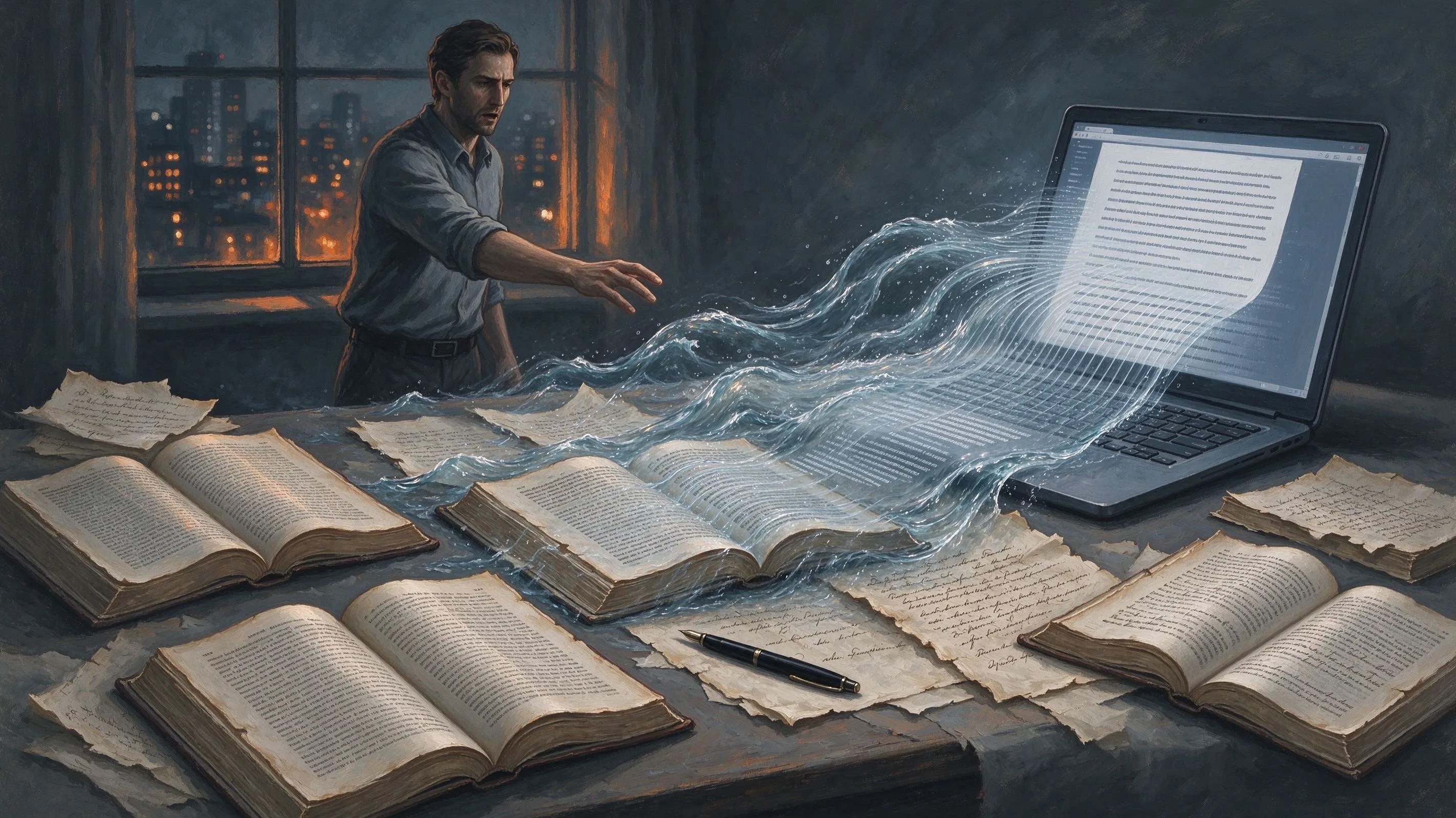
(Image source: Generated by Doubao AI)
As the old saying goes, to write well you must read widely. So AI is definitely the most well-read "writer" in history, bar none.
Before AI appeared, semicolons were almost extinct in everyday writing.
Back then, being proficient with semicolons meant you were a grammar expert—someone who had genuinely read a lot of classic literature and had real substance.
Now, the moment a semicolon appears in an article, people look at you differently: this person probably just copied from AI, right?
AI's writing is so "standard and neat"—at least technically flawless—that it has put professional writers in an absurd dilemma: do I now have to deliberately write more crudely, actively lower my vocabulary, and dare not use any punctuation except commas and periods? To prove I wrote it myself, do I have to pretend to be uneducated?
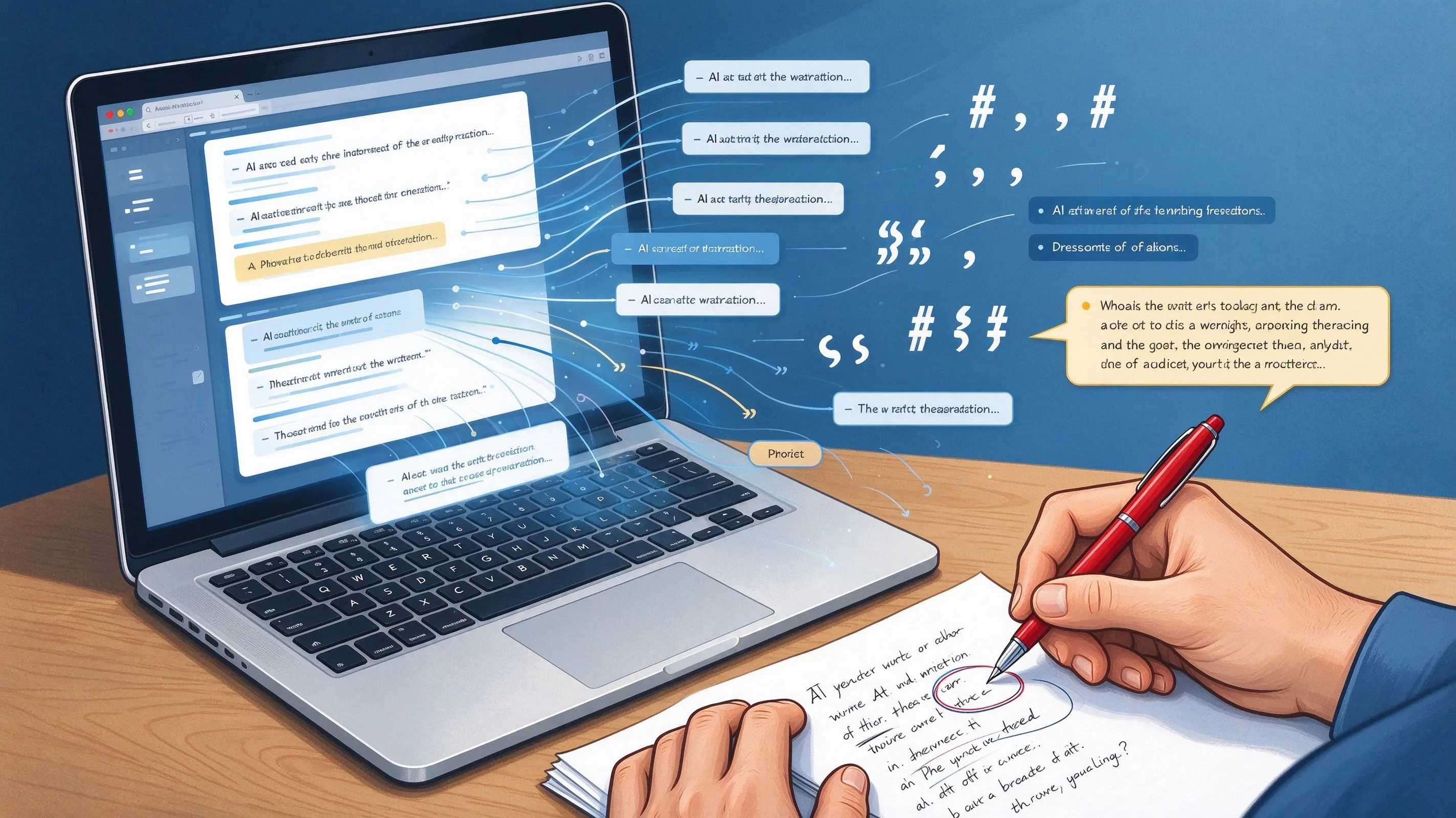
Fortunately, grammatically neat and refined wording are only surface features of AI text. There is another more typical but harder-to-pin-down core characteristic: a love for empty, verbose talk.
(Image source: Generated by Doubao AI)
AI can't shake its verbosity; something that could be said in ten words gets dragged out into hundreds of words of circular talk.
It especially loves writing those short, seemingly philosophical sentences that at first glance look like life quotes, but after careful thought contain no actual content—pure emotional placebo.
"Not broken, just learning to live a different way. Occasionally alone. But always moving forward. Always."
This passage comes from several award-winning short stories currently under review because the AI detection software Pangram judged them to be AI-generated.
I don't want to say which work or which author, in case the detection tool is wrong and unfairly wrongs someone.
But honestly, the vibe is too strong—exactly like the AI pretentious captions you see under atmospheric photos of a girl staring at a rainy window on social media: empty and deliberate.
(Image source: Generated by Doubao AI)
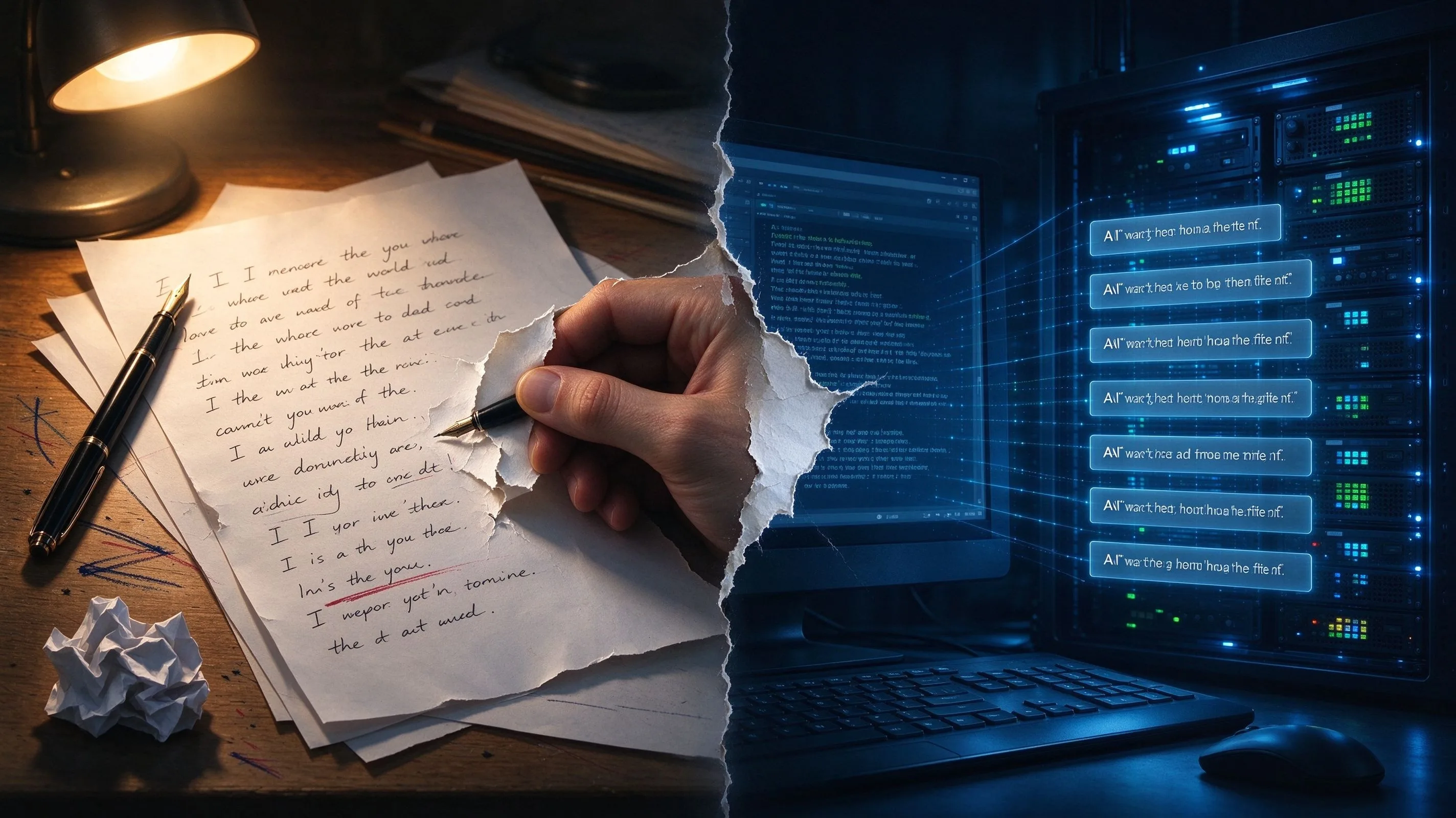
Now many authors and editors have gone to the other extreme: they refuse to touch AI at all, afraid that AI will "contaminate" their writing style and creative purity. They resolutely don't use it themselves—not even for purely auxiliary tasks like looking up information or fact-checking—and they think all writers should be so "clean."
But this actually backfires, making us gatekeepers in the content industry more easily fooled by AI-generated content.
Numerous studies have proven: the more often you interact with AI and the more you understand its writing logic and patterns, the better you become at identifying AI-written content at a glance.
We all need to gradually develop this intuitive ability to distinguish, otherwise before long, award-winning works in various literary prizes might all be written by robots.
This article was compiled by Leikeji from The Telegraph
Original link: Is AI making us worse writers? But the reason isn't what you think
Source: Leikeji
Images in this article are from: 123RF licensed image library Source: Leikeji
-
![]()
Young People Are No Longer Buying Cars
-
![]()
Self-Driving Tech Is Getting Cheaper and Cheaper—Are Suppliers Sacrificing Profits for Market Share?
-
![]()
BYD's 490,000 Vehicles Dominate the Field as Joint-Venture Automakers Beat a Hastier Retreat: October Auto Market Undergoes Major Shakeup
-
![]()
Musk's 2029 Space Prophecy
-
BMW Brilliance Reportedly Lays Off Workers with N+5 Compensation Package
-
![]()
Lei Jun Touts Number One Value Retention, But Third-Party Data Tells a Different Story: Xiaomi Auto's Residual Value Has Declined for Three Consecutive Months
-
![]()
Automotive Chip Giant Raises Prices Again: Can Automakers Still Absorb the Costs?
-
![]()
After AITO Went "Independent," Seres Posts 1.42 Billion Yuan Net Profit; Three Major Long-Term Goals Revealed