Global Buzz: Is Huawei's Pangu LLM—the One Yu Chengdong Vowed Would "Become World No. 1"—About to Get a Refresh?
 11/09 2026
 448
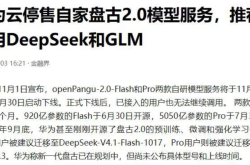
In early November, Huawei Cloud issued a notice about the offline removal of MaaS models and the suspension of sales effective November 6, which sparked considerable discussion in the AI community.
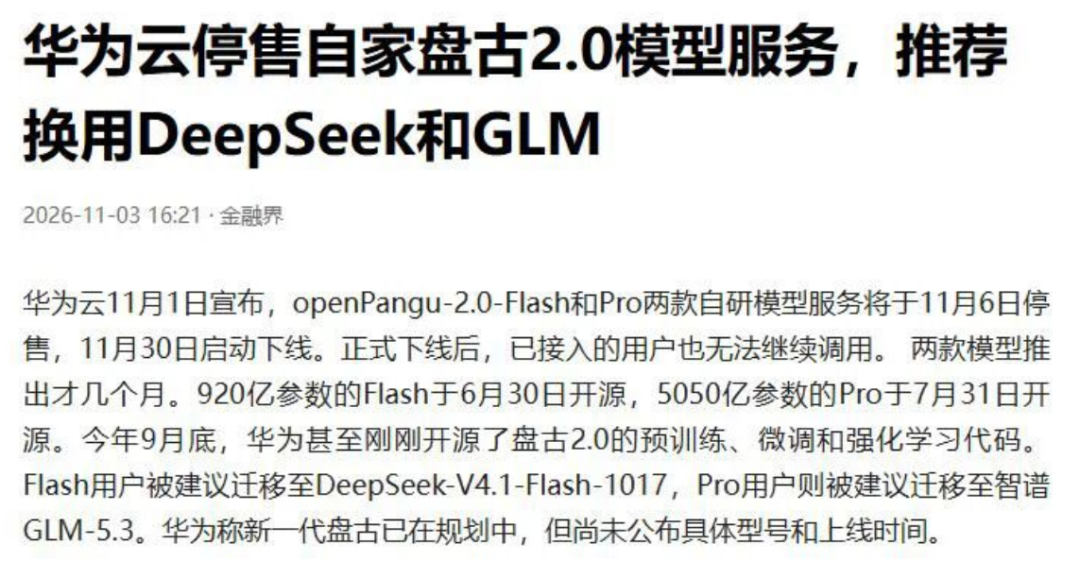 Image source: JRJ.com
The announcement itself is very specific: MaaS hosting services for two models—openPangu-2.0-Flash and openPangu-2.0-Pro—will stop being sold on November 6 and be officially taken offline on November 30, applicable to the China site Guiyang Region 1. After existing customer contracts expire, calls will no longer be supported. The announcement also provides migration suggestions: the Flash version moves to DeepSeek-V4.1-Flash-1017, and the Pro version moves to Zhipu GLM-5.3.
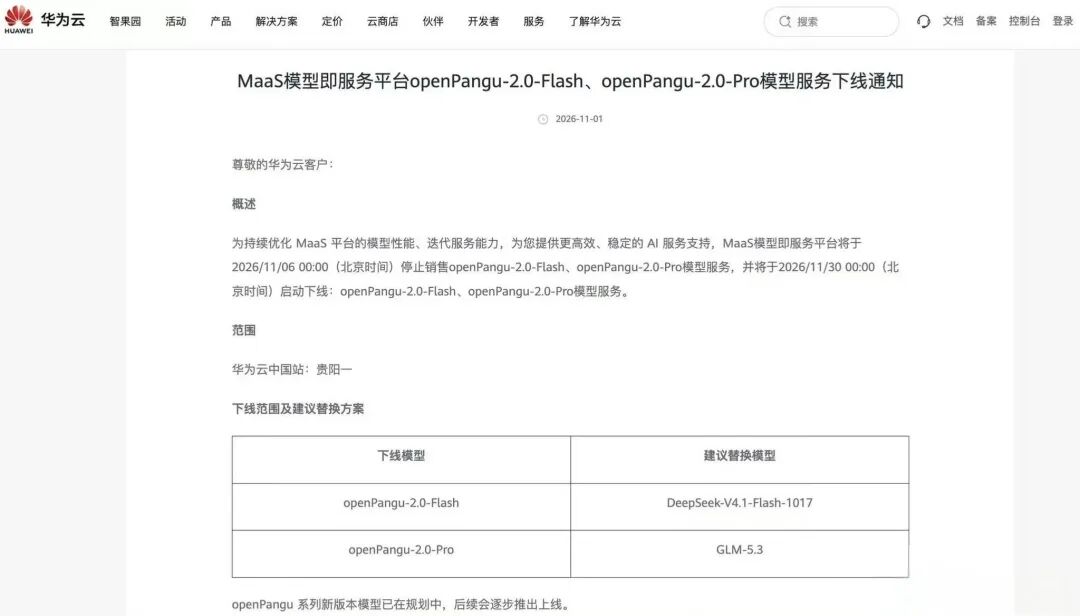 Image source: Huawei Cloud
The timing contrast is striking. At the HDC conference a few months ago, Yu Chengdong announced the open-sourcing of Pangu 2.0 and said he was personally leading the effort. "In my dictionary, there is no second place, only first," he declared, aiming to go from China's number one to the world's number one.
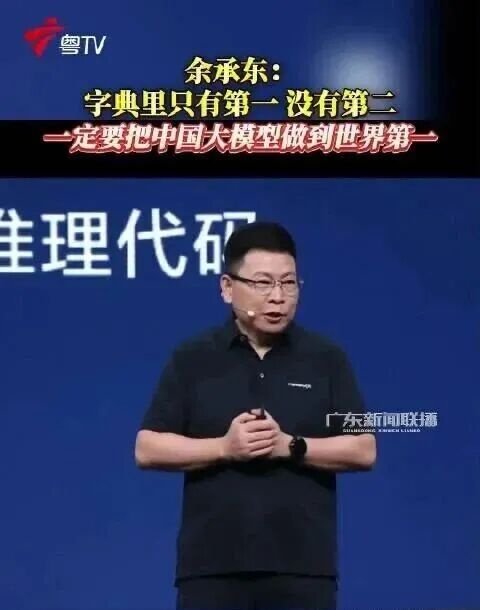 Image source: WeChat Channels
Trading a Bit of Yu Chengdong's Embarrassment for Ecosystem Trust
Yu Chengdong's "only first, no second" was indeed shouted too early. But this is also the norm in big-company workplaces: the business leader is responsible for painting the vision and charging ahead, while the strategy leader is responsible for crunching the numbers and cleaning up. When the direction is wrong, even a boast made by Yu Chengdong must be cut loose when necessary.
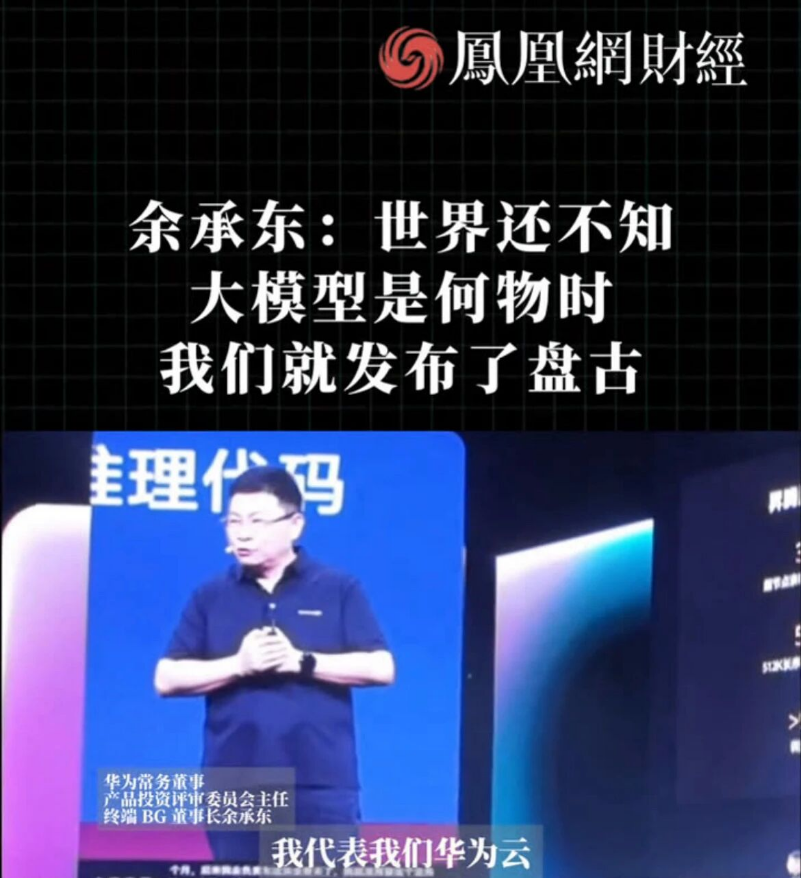 Image source: WeChat Channels
Like HarmonyOS, Huawei's Pangu large model has also been written into middle school textbooks, becoming one of the world's top three most formidable large models. Pangu, so proud.
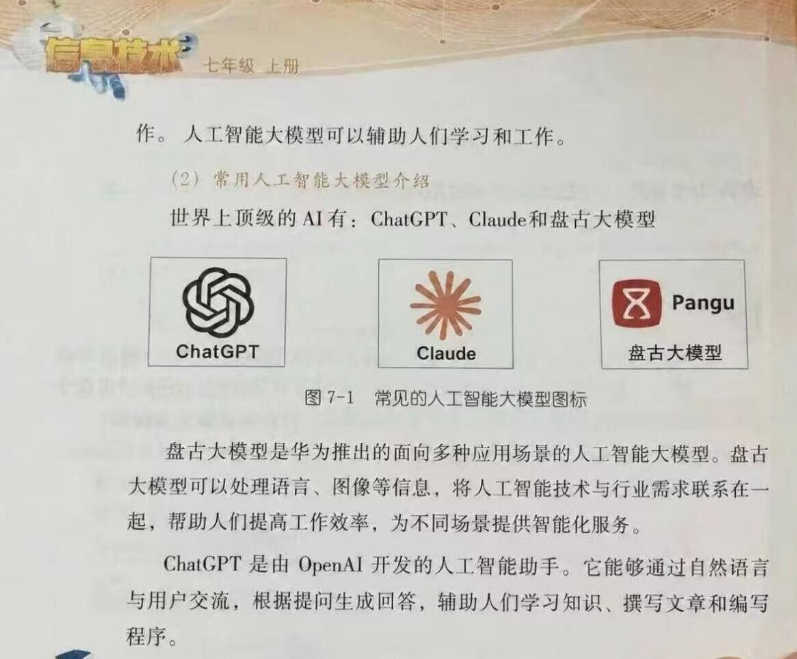
But as soon as the sales suspension announcement for the "proud" Pangu came out, the entire internet exploded.
"@Digital Old Zhang: On stage they're still saying world number one, but the shelf is cleared first—I really don't understand this script."
"@Cloud-Native Xiao Chen: Read the announcement before drawing conclusions. What's being stopped is the cloud-hosted API; the weights and code are still on the open-source community. These two things are very different."
If you break these debates apart, most disagreements actually come from different framings: is it the service that's being stopped, or the model itself?
01 First, Clarify: What Exactly Is Being Discontinued
What is being taken down is the hosted model invocation service on Huawei Cloud's MaaS platform—that is, the ready-made inference API.
The model weights and training code are not within the scope of this shutdown. The 92B Flash version was open-sourced on June 30, the 505B Pro version was open-sourced on July 31, and on September 28 the entire set of pre-training and post-training code was also released. Developers can still obtain the weights from the open-source community and deploy and fine-tune them on Ascend clusters themselves.
There is another easily overlooked distinction: Pangu is not a single product.
Industry Pangu: aimed at vertical scenarios such as meteorology, mining, and industry, delivered in the form of government and enterprise solutions, and still being sold normally.
Open-source Pangu (openPangu): an open-source general-purpose model for the Ascend ecosystem; what is being discontinued this time is the cloud hosting service for its two 2.0 variants.
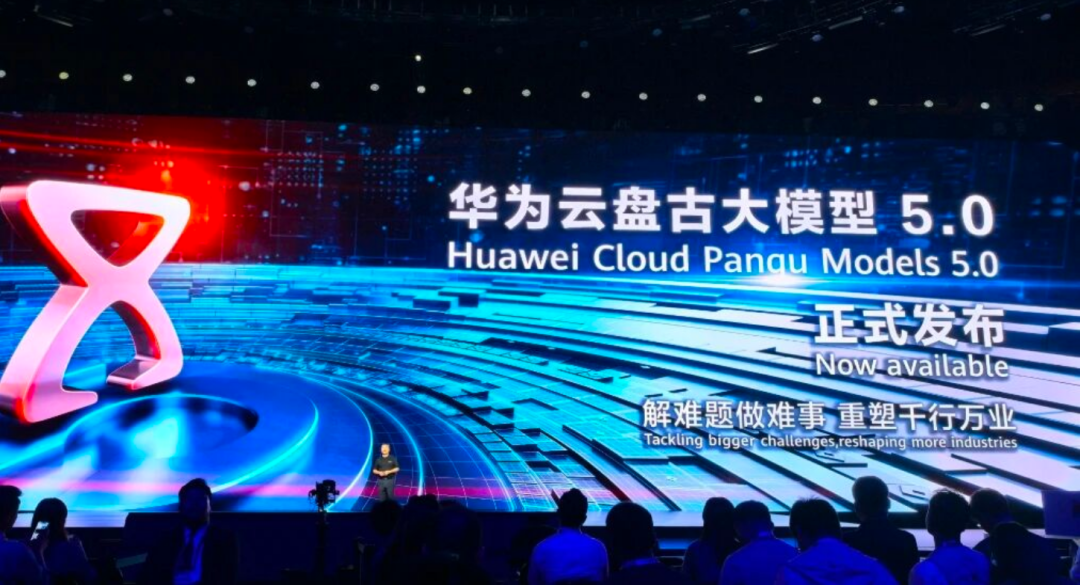
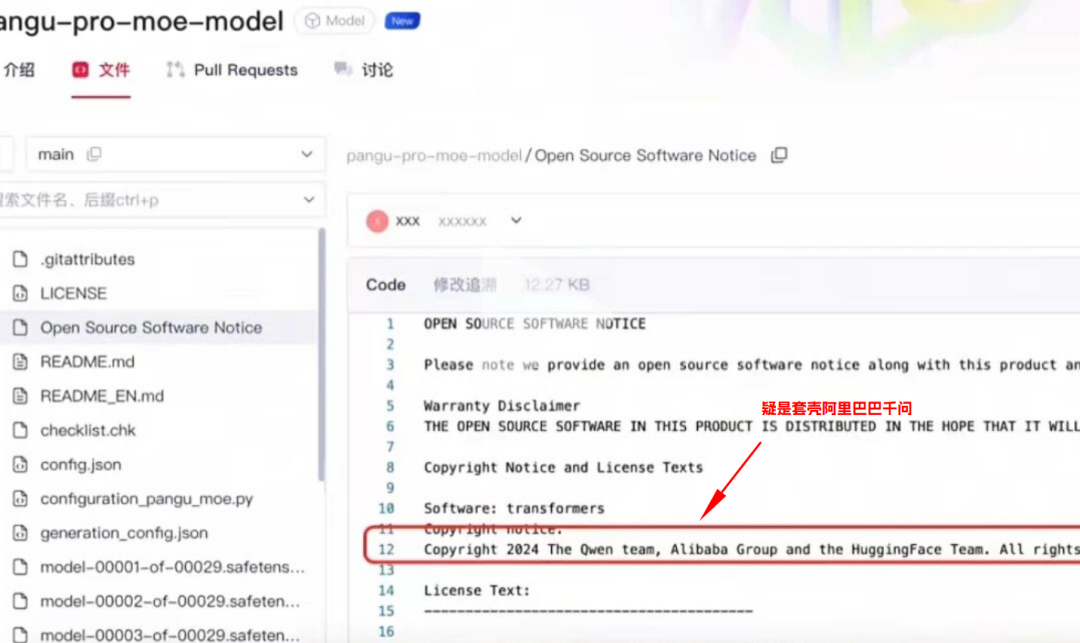 Image source: Weibo
Another old topic that cannot be avoided is last year's heated community discussion about "wrapping Qwen." Some developers compared parameter fingerprints and believed that early Pangu Pro had a high correlation with Alibaba's Tongyi Qianwen Qwen, and found Qwen copyright comments in the code. Huawei's response at the time was that the model was trained independently, and the residual comments came from the open-source code cleanup process.
 Image source: Weibo
This topic has never reached a consensus, but every time Pangu makes a new move, it gets brought up again.
"@Open-Source Porter: There's still no conclusion on the correlation thing, and now it's taken offline again—it's hard not to make associations."
"@Model Engineer Old K: Similar parameters are too common in the open-source community. Continuing training based on a base model is normal practice; a fingerprint chart doesn't prove anything."
Back to the announcement itself. The initial positioning of open-source openPangu 2.0 was to provide the industry with a reference practice for Ascend-native training and inference: how to get the model running on Ascend chips, how to tune throughput and latency, and how to deploy stably. With the solution and code open-sourced, this demonstration value has been handed over to the community.
On this premise, Huawei Cloud shutting down the hosting service for general-purpose models and handing the entry point to teams focused on general-purpose models such as DeepSeek and Zhipu is a logical line that fits.
02 A Strategic Trade-Off with the Same Origin as "Not Building Cars"
This set of trade-offs is structurally similar to Huawei's choice in the automotive business back then.
If it built cars itself, partners like Changan, Chery, and GAC would inevitably have concerns when purchasing intelligent driving solutions: the supplier is also a competitor on the field. Only when Huawei retreated to the position of technology supplier did HarmonyOS Intelligent Mobility later reach its scale.
The large-model track faces the same type of problem. Selling Ascend computing power on one hand while listing self-developed general-purpose models to grab customers on the other would make other model vendors think twice when training on its computing power.
Shutting down the cloud entry point for its self-developed general-purpose model and even directly recommending competitors to customers is objectively sending a signal to the industry: this is mainly a computing power base. Model companies can run on Ascend with confidence, and Huawei earns money from computing power, clusters, and cloud infrastructure.
This is also the position Nvidia has validated over the long term: the one selling shovels doesn't dig for gold personally; the harder the computing base, the broader the customer base.
External doubts are equally specific.
"@AI Observer: If self-development is really strong, why push customers away?"
"@Algorithm Migrant Worker: Can performance and cost really hold up? There's no data in the announcement, so outsiders can only guess."
Behind the doubts is a real gap: statements at the launch event raised expectations very high, and then the cloud service was taken offline right after, so many people's first reaction was "they can't compete anymore, cutting losses in time."
Judging from the cost structure visible in public information, the computing power expense of general-purpose large-model APIs is indeed not light, while DeepSeek and GLM have already reached scale in cost-effectiveness and user reputation. Continuing to maintain cloud services for self-developed general-purpose models may not yield good input-output results, which is also the explanation given by many industry insiders.
03 Pangu's New Battlefield Is Not Involution Within General-Purpose APIs
But discontinuation does not mean project termination. The announcement clearly states that a new version of openPangu is already being planned, though the model numbers and launch time have not yet been announced.
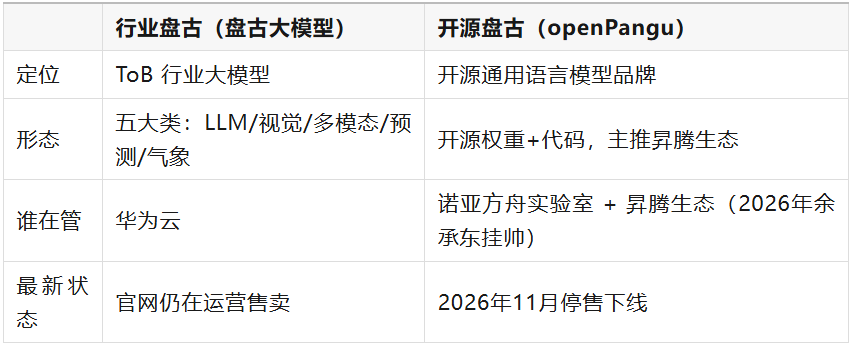 Image source: Weibo
Combined with information publicly disclosed at HDC, the focus of the new Pangu is most likely not the cloud-based general-purpose conversational API, but two directions:
On-device: adapted to Kirin chips and the HarmonyOS system, running locally on phones, tablets, and other devices to support Xiaoyi's agent capabilities. The agent framework of HarmonyOS 7 and cross-device collaboration all depend on on-device models.
Industry: continuing AI for Industries and deepening work in scenarios such as industry, energy, and meteorology. These are the tracks Pangu has accumulated over years.
In other words, the cloud version of openPangu 2.0 is closer to a phased sample rather than the final product form. Once the sample task is over, resources shift to on-device and industry versions.
So the more accurate statement is: not competing in general-purpose MaaS does not equal giving up on building large models.
Huawei's boundaries are becoming clearer: the general-purpose conversational market is left to ecosystem partners, while it guards Ascend computing power, Kirin chips, HarmonyOS on-device, and industry large models.
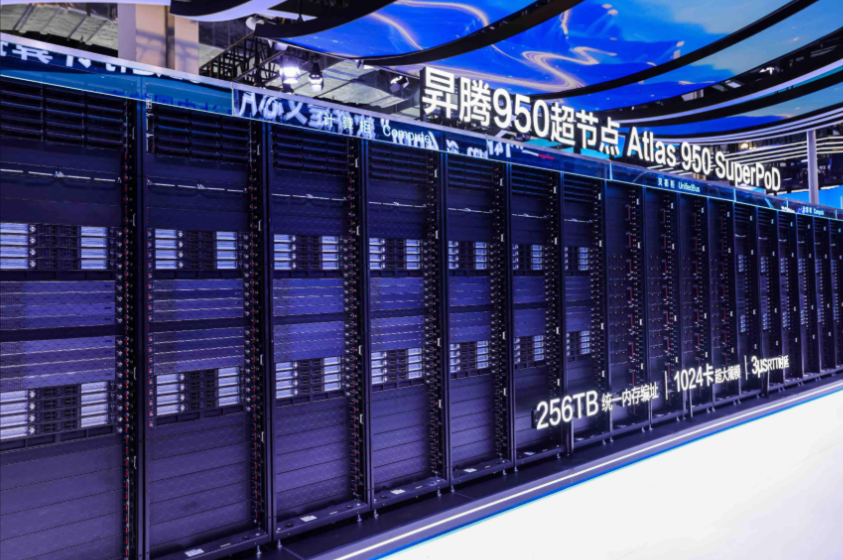 Image source: Huawei official website
This is both a contraction and an exchange: giving up short-term model service revenue in exchange for trust in the Ascend ecosystem. Only when the industry sees that Huawei is willing to take its own models offline and give users to peers will it be more willing to put training and deployment on Ascend clusters.
At a stage when most vendors want to simultaneously build models, build applications, and grab API orders, Huawei chooses to retreat to the infrastructure side.
In the short term, this takedown will still be controversial, and the wrapping rumors and performance doubts will most likely be dug up and discussed for another round.
"@Spectator Product Manager: Changing tracks is understandable, but when the new version will come—there should at least be some explanation."
"@Computing Power Observer: As long as Ascend cards are still shipping, it doesn't really affect the big picture whose model is running."
As for when the new version of Pangu will appear and what the on-device and industry versions can deliver, the industry is still waiting for answers.
Interactive topic: Do you think Huawei giving up the general-purpose model track and focusing on being a computing power base is a smarter choice? With the wrapping rumors plus this takedown, are you still optimistic about Pangu's subsequent new versions?
Disclaimer: This article is only a big-company financial commentary and does not constitute any investment advice. The enterprise data and regulatory events mentioned in the article all come from public information and are for reference only; the specific information shall be subject to official releases. Images are from the internet; if there is any copyright issue, please contact us for deletion.
-
![]()
Global Buzz: Is Huawei's Pangu LLM—the One Yu Chengdong Vowed Would "Become World No. 1"—About to Get a Refresh?
-
![]()
Alibaba Leads Investment in Its Former Intern: UniPat AI, the "Examiner" for Large Models, Completes $300 Million Financing
-
![]()
Phone Storage Full Again? What You're Clearing Might Not Be What's Actually Taking Up Space
-
![]()
In-Depth Discussion of "Byte Time"
-
![]()
One-Person Company Goes Viral: AI Agents as Employees—Has the Era of Solo Entrepreneurship Truly Arrived?
-
Report | 2026 China AI Listed Enterprise Development Insights
-
Trends | Gartner's Top 10 Technology Trends for 2027: Three Phases Clarify Enterprise Technology Priorities
-
Two Governance Paradigms: The U.S. Ban on Artificial Superintelligence Act and the Wuzhen Summit