Hillhouse, Zhiyuan Robotics, and SMIC Juyuan Join Forces in AI4S as a New Paradigm of "AI-Native Instruments" Takes Shape
 11/11 2026
 482
Tide AI Editorial Department
Beijing Qingxi Zhiyan Technology Co., Ltd., an AI for Science company, recently announced the completion of nearly 100 million yuan in angel round financing.
The investors include SMIC Juyuan, Hillhouse Venture Capital, Zhiyuan Robotics, Dongfang Jiafu, Fengwu Capital, and several funds with industrial backgrounds. Multi-dimensional Capital served as the long-term exclusive financial advisor. The proceeds will be used for model iteration and expansion of industrial customers.
Founded in 2026, Qingxi Zhiyan has a core team that clearly carries Tsinghua and Stanford genes.
Founder and CEO Dong Siming holds a bachelor's degree from Tsinghua University and a PhD in Materials Science from Stanford University, and has more than 15 years of experience in semiconductors and industrial R&D. He once led the first AI automated process development project at a leading U.S. semiconductor company, which later grew into an industry-standard technology.
Co-founder and COO Zhao Zhenlin also has Tsinghua and Stanford backgrounds and previously played a deep role in the development of Tesla's battery-body integration process.
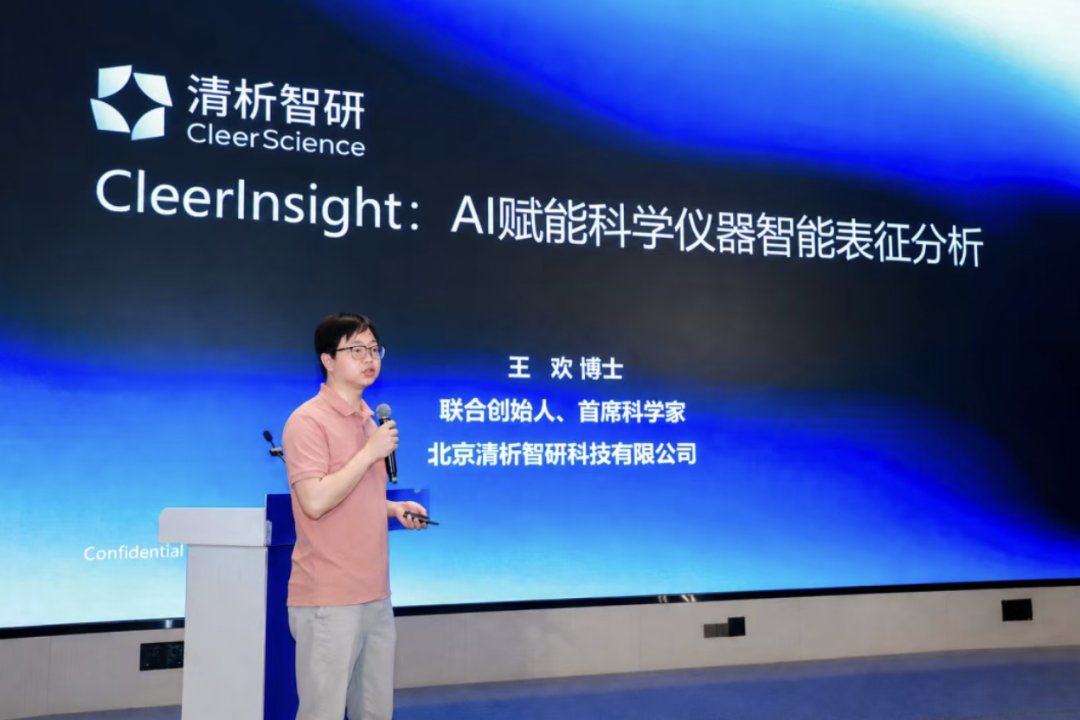
Co-founder and Chief Scientist Dr. Wang Huan graduated from Tsinghua University and has long been engaged in research on multimodal large models and complex scientific systems.
In the AI4S field, most teams train models first and then look for data. Qingxi Zhiyan has reversed that order.
The company starts with scientific instruments and process equipment, embedding specialized models into the measurement, analysis, and control processes of characterization equipment such as XRD, SEM/TEM, and Raman. This enables the equipment to autonomously complete region selection, parameter tuning, acquisition, and analysis, while turning measurement results and process parameters into directly usable data. This "AI-native instruments" route unfolds in three steps: making a single device AI-enabled to achieve autonomous measurement, then building an AI-native laboratory that integrates multiple measurement capabilities, and ultimately moving toward autonomous laboratories and multi-in-one mainframe stations.
Data accumulation underpins the deployment of model capabilities.
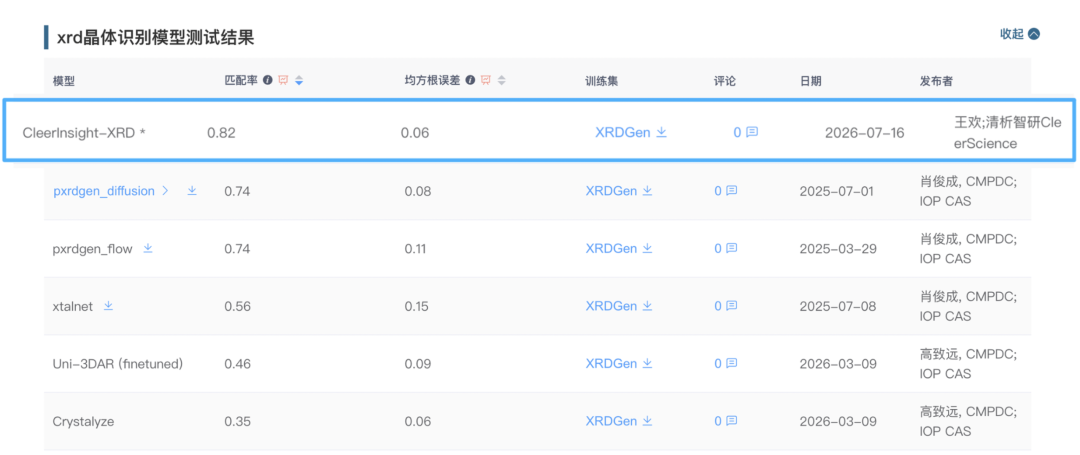
The company's self-developed XRD analysis model topped the MatSciBench benchmark of the Institute of Physics, Chinese Academy of Sciences, surpassing Nature benchmark models. The company also plans to soon release a full-modal, expert-level intelligent characterization analysis model covering more than 20 mainstream characterization methods.
Industrialization progress is more noteworthy than the financing milestone.
In less than half a year since its establishment, Qingxi Zhiyan has signed cumulative orders totaling tens of millions of yuan, with customers spanning industrial enterprises and research institutions in advanced manufacturing, semiconductors, new materials, and other fields. It has also signed a full-stack entrusted R&D order for materials with a leading intelligent terminal customer.
Its self-developed new-generation rare earth permanent magnet materials have entered pilot-scale transformation, with the goal of mass production in 2027. At the same time, the company is jointly developing high-performance permanent magnet materials for hip, knee, and shoulder joints and dexterous hands with leading robot manufacturers, focusing on solving challenges related to high torque density, lightweighting, and high-temperature stability.
The participation of Zhiyuan Robotics in this funding round points to direct demand for rare earth permanent magnet materials in robot joints and dexterous hand applications.
Qingxi Zhiyan is building its data barrier at the instrument end rather than relying on public datasets. Once this path works, the fuel for model iteration will come from real experimental data continuously generated by its own equipment, rather than from external procurement.
However, the orders and material pilot testing at the angel round stage are still some distance from replicable industrial delivery.
The 2027 hundred-million-level data target and the rare earth permanent magnet mass production timetable are two hard milestones for testing whether this closed loop of "instruments produce data, data trains models, and models guide materials" can be closed.
-
![]()
Cars That Sell Well Will All Be Replaced by Cheaper Alternatives Eventually
-
![]()
The 'Golden September and Silver October' Phenomenon Has All but Vanished: The Auto Market Enters an Era of Pure Survival
-
![]()
Tesla Sold Just 8,817 Vehicles in October—But the Factory Didn't Build a Single One Fewer
-
The King of Mobile Chips Shifts Battlefields
-
Amid the Personal Agent Boom, Xiaohongshu Enters the Fray with "Mishu"
-
![]()
Geely Auto October Sales: Xingyuan Hits 50,000 Units a Month, but What Does the Bigger Picture Look Like?
-
Chinese Brands Capture 90% of Thailand's Pure Electric Market—How Did the Japanese "Backyard" Slip Away?
-
![]()
Memory Price Hikes Leave Notebook Market Reeling: Q3 Sales Plunge 14%, Yet Apple Gains Ground