Anthropic's Valuation Shrinks, Putting Pressure on Chinese Large-Model Companies
 11/11 2026
 399
Lead: From $2 trillion to $1 trillion—the global AI valuation system is undergoing a reality check.

Anthropic's IPO was once seen as a capital feast for the global artificial intelligence industry.
The developer of the Claude large model planned to list on Nasdaq and become one of the first top-tier AI labs in the global capital market to face public-market scrutiny. According to earlier investor expectations, its listing valuation was once expected to reach $2 trillion.
But before the feast officially began, the price had already changed.
First, the $2 trillion valuation expectation was lowered to $1.5 trillion. Subsequently, as tech stocks corrected, financing costs for AI infrastructure rose, and investors re-examined the company's financial performance, some potential investors began discussing a valuation of around $1 trillion.
From $2 trillion to $1 trillion means the market's valuation expectation for Anthropic may have been cut in half.
For an AI company whose revenue is still growing rapidly, $1 trillion is still an astonishing number, but what truly deserves attention is why investors are beginning to be unwilling to pay such a high price for it.
The impact of this matter may go beyond Anthropic.
Over the past two years, Chinese large-model companies have also enjoyed the valuation premium brought by the global AI industry. Companies such as Zhipu, MiniMax, Moonshot AI, and DeepSeek have become targets of capital market attention.
When the world's most representative AI company begins to undergo a valuation re-rating, domestic large-model companies will also face a new test.
01 Re-evaluating Anthropic
Anthropic is not a company lacking a growth story.
On the contrary, its revenue growth rate remains at the forefront of the global tech industry.
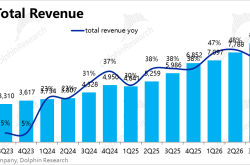
According to the IPO documents the company submitted to the U.S. Securities and Exchange Commission, in the first quarter of 2026, Anthropic achieved revenue of $4.731 billion; second-quarter revenue reached $11.555 billion; and third-quarter revenue further grew to $16.956 billion.
From the second quarter to the third quarter, revenue grew about 47% quarter over quarter.
This figure is not low, but compared with previous growth rates, it has clearly slowed. Second-quarter revenue grew about 144% from the first quarter, while the quarter-over-quarter growth rate in the third quarter dropped to about 47%.
In other words, Anthropic is still growing rapidly, but the acceleration of growth is declining.
This is precisely one of the reasons investors are re-evaluating the valuation.
Previously, the market was willing to give Anthropic a valuation close to $2 trillion, largely because investors believed that generative AI would become a continuously expanding market and that Anthropic had a chance to become one of its most important infrastructure providers.
Claude's penetration among enterprise customers, software development, and agent applications provided support for this expectation.
But the pricing approach of the capital market is changing.
When a company's revenue scale has already reached tens of billions of dollars, investors will not only care about how much more it can grow, but will also begin to ask: how much cost does growth require? Can new revenue cover new compute? Can profit margins stabilize?
Anthropic's financial data precisely exposes these problems.
In the first three quarters of 2026, the company's cumulative revenue reached $33.242 billion, far higher than $2.545 billion in the same period of the previous year.
During the same period, the company's operating loss calculated in accordance with U.S. generally accepted accounting principles was $1.26 billion.
If calculated according to the company's self-defined adjusted operating profit, the situation is different: adjusted operating profit in the first three quarters reached $4.081 billion.
There is a clear difference between the two sets of figures.
Taking the third quarter as an example, Anthropic achieved adjusted operating profit of $2.463 billion, but under GAAP, the company still recorded an operating loss of $567 million.
The difference mainly comes from items such as share-based payment expenses and non-cash charitable donations. In the third quarter, the company excluded about $1.07 billion in share-based payment expenses and $1.96 billion in non-cash charitable donations from adjusted operating profit.
Adjusted profitability can reflect some improvement in operating efficiency, but investors still need to judge how much of these adjustment items is sustainable and how the dilution cost brought by equity incentives should be included in the valuation.
The bigger problem lies in compute power.
Anthropic disclosed in its IPO documents that, as of September 30, 2026, and thereafter, the cumulative committed expenditure under compute procurement and leasing agreements signed was approximately $895.4 billion.
Of this, approximately $447.5 billion is expected to occur before the end of 2030, and about $69.8 billion needs to be paid in the next 12 months.
This is not a bill that needs to be paid immediately, but a long-term commitment distributed over many years involving compute procurement and infrastructure leasing.
As of the end of September 2026, Anthropic had approximately $146.6 billion in liquidity, including cash, short-term investments, and available credit facilities.
The numbers look large enough, but they also illustrate one thing: competition in frontier large models is no longer just competition in R&D investment, but also competition in capital organization capability.
Companies must lock in data centers, chips, and power resources in advance to ensure that model training and commercial services are not affected by compute shortages.
The problem is that infrastructure investment occurs first, while revenue realization occurs later.
If model demand continues to grow, these investments can ultimately be transformed into scale advantages; if revenue growth slows, or if a new generation of models quickly changes the competitive landscape, long-term compute contracts signed in advance may become a heavy financial burden.
Anthropic's valuation changes actually reflect that investors have begun to become cautious about this long-term investment.
02 Pressure is coming for Chinese large-model companies
The reason Anthropic's valuation changes deserve attention in the Chinese market is that the valuation system of domestic large-model companies is also built on judgments about future market space.
For some time, the capital market's attention to large-model companies has mainly focused on three aspects:
First, whether model capabilities can reach the global leading level; second, whether token consumption can continue to grow; third, whether companies can occupy an important position in the global AI industry chain.
These indicators are certainly important, but they are not directly equal to revenue, let alone profit.
In a research report on China AI financing released by the U.S. think tank Rhodium Group in September 2026, a set of noteworthy data was provided.
The institution counted seven leading Chinese AI model developers, including DeepSeek, Moonshot AI, Zhipu, MiniMax, Alibaba, ByteDance, and Kuaishou.
The combined annualized recurring revenue (ARR) of these companies' AI model businesses was about $10.7 billion, only about 10% of the relevant revenue scale of OpenAI and Anthropic.
The user scale and model invocation volume of Chinese large-model companies are growing, but in terms of commercialization revenue, there is still a clear gap compared with leading U.S. companies.
More noteworthy is the relationship between valuation and revenue.
According to Rhodium Group's estimates at the time, Anthropic's valuation-to-ARR ratio was about 21 times, and OpenAI's was about 34 times.
By comparison, Zhipu was about 46 times, Moonshot AI about 50 times, and DeepSeek as high as 163 times.
Although these figures come from research institutions' estimates of company valuations and ARR, are not public-market price-to-sales ratios under a unified standard, and cannot be directly regarded as fully comparable transaction multiples, they at least illustrate one problem: the valuations of some Chinese large-model companies already contain quite high expectations for future growth.
This means that once the valuation anchor of global AI companies changes, domestic companies will also find it difficult to remain completely unaffected.
In the past, the market was willing to pay a premium for Chinese large-model companies' technological breakthroughs, domestic substitution, and global competitive potential.
Now, investors may raise more specific questions: how much of these companies' revenue comes from real paying customers? Can the API business form a stable scale effect? After model invocation volume increases, will gross margins improve simultaneously?
Judging from the financial data that has been disclosed, these questions are not easy to answer.
Take Zhipu as an example.
In the first half of 2026, the company achieved revenue of 954 million yuan, a year-on-year increase of about 400%; gross profit in the same period was about 252 million yuan, R&D expenses reached 2.131 billion yuan, and the loss for the period was 2.072 billion yuan.
Revenue growth is very fast, but R&D investment still far exceeds the revenue scale.
MiniMax's situation is similar.
In the first half of 2026, the company achieved revenue of $116.6 million, a year-on-year increase of 283.1%. Among this, revenue from the open platform and other AI enterprise services reached $73.9 million, accounting for 63.4% of total revenue.
From the perspective of business structure, MiniMax is extending from AI-native consumer products to enterprise services and the developer market.
But revenue growth has not immediately translated into profitability.
In the same period, the company's gross margin was 17.9%, and the adjusted net loss reached $293 million.
Rhodium Group's research also found that the gross margins of Zhipu and MiniMax both declined.
In 2025, the gross margins of Zhipu and MiniMax were 41% and 25%, respectively; by the first half of 2026, they had fallen to about 26% and 18%.
This shows that the contradiction facing domestic large-model companies is not a lack of demand, but that there is still a distance between demand growth and profitability.
03 The cheaper the model, the harder commercialization becomes
Another problem facing Chinese large-model companies is that their business models are not entirely the same as those of leading U.S. companies.
Anthropic's commercialization path is relatively clear: through Claude subscriptions, API calls, and enterprise-level services, it directly sells model capabilities to customers.
For enterprises, as long as the model can help them improve software development efficiency, reduce operating costs, or replace part of manual work, enterprises have reason to pay for these capabilities.
But the competitive environment in China's large-model market is more complex.
On the one hand, domestic cloud vendors, internet companies, and independent model companies all participate in competition at the same time; on the other hand, the spread of open-source models has greatly lowered the threshold for enterprises to deploy large models.
This has brought a subtle change.
The stronger the model capabilities, the easier it is for users to obtain low-cost intelligent services, but model developers may not be able to obtain revenue matching the value of the models.
For example, an enterprise can use open-weight models for self-deployment, or obtain API services through third-party cloud service providers. Even if model developers gain a large number of users, they may not be able to directly obtain revenue from all invocations.
Rhodium Group specifically mentioned this issue in its report.
Under the business model of open-weight models, if third-party cloud service providers deploy models and provide API services externally, model developers may not be able to obtain revenue sharing from them.
Moonshot AI and Alibaba have begun trying to establish revenue-sharing mechanisms with major model users, but this still needs time to verify.
At the same time, price competition in the domestic market is also squeezing the profit space of model companies.
Rhodium Group's research pointed out that Chinese enterprise customers' willingness to pay, fierce market competition, and the widespread application of open-weight models are all limiting the pricing power of large-model companies.
This forms a contrast with Anthropic's situation.
The problem Anthropic faces is how to maintain high growth and high profit margins under massive compute investment.
Chinese large-model companies need to solve two problems at the same time: how to let models gain more users, and how to make users willing to pay a sufficiently high price for the models.
If companies only pursue token invocation volume, they can rapidly expand scale by lowering prices.
But if revenue growth cannot catch up with the speed of decline in inference costs, larger scale does not necessarily mean higher profit.
From this perspective, model invocation volume is no longer a sufficient indicator for measuring the commercial value of an AI company.
What really matters is how much revenue and gross profit an enterprise can retain for each additional token.
04 The "blood transfusion dependence" of Chinese large models
There is another important difference between Anthropic and Chinese large-model companies: the financing structure.
U.S. frontier AI labs can obtain funds through investment from large tech companies, cloud computing cooperation, and public market financing.
Anthropic's investors and partners include tech giants such as Google and Amazon. These companies provide not only capital but also compute power and commercial distribution channels.
The financing structure of Chinese large-model companies relies more on equity financing, bank loans, and industrial capital support.
Research from Rhodium Group indicates that during the first eight months of 2026, four companies—Zhipu, MiniMax, DeepSeek, and Moonshot AI—collectively secured 179 billion yuan through private equity investment, IPO financing, and targeted additional share issuances.
Of this total, Zhipu raised approximately 4 billion yuan through a Hong Kong stock IPO in January of this year and completed roughly 27 billion yuan in H-share targeted additional issuances in July.
Capital remains willing to fund China's AI industry.
It should be noted, however, that a company's ability to raise capital in the financial markets does not equate to its own capacity to generate cash flow.
For large-model companies still in the R&D investment phase, equity financing can help them sustain model iteration, purchase computing power, and expand their teams.
But if valuation continues to hinge on the next round of financing rather than on operating cash flow, then once market risk appetite declines, financing costs could rise significantly.
This is also the most important lesson that Anthropic's IPO offers to the domestic market.
It does not mean that the valuations of Chinese large-model companies must fall in tandem with Anthropic's, nor does it mean that the pricing framework of the U.S. capital market can be directly applied to Chinese companies.
Chinese large-model companies operate in a distinctly different industrial environment.
The development of domestic computing power, the digitalization needs of domestic enterprises, industrial policy support, and the low-cost expansion enabled by open-source models may all contribute to independent valuation logic.
Ultimately, however, these factors still need to be reflected at the enterprise operating level.
The capital market can pay a premium for technological breakthroughs, but it is difficult to pay indefinitely for commercial prospects that remain unfulfilled.
For Zhipu, MiniMax, Moonshot AI, and DeepSeek, what they truly need to prove going forward may not simply be whether their models can continue to close the gap with global frontrunners, but whether they can establish a stable business model amid fierce price competition.
This means that the metrics the market needs to watch will also change:
whether revenue growth comes from continuously paying enterprise customers, whether gross margins can improve as scale expands, whether inference costs continue to decline, whether R&D investment can be translated into product revenue, and whether operating cash flow can gradually cover computing investment.
These indicators may not appear as dazzling as model parameters and leaderboard rankings, but they determine whether a large-model company is a technology lab or a tech enterprise capable of continuously generating profits.
Anthropic's IPO may ultimately become a pricing watershed for the global AI industry.
In the past, capital markets were willing to pay high prices for the future of AI.
Now, investors are beginning to demand that AI companies prove how much revenue this future can actually generate and how much capital it will consume.
For Chinese large-model companies, the real pressure may only just be beginning.
-
![]()
Sea: Heavy Bets on Both E-commerce and AI—Is the "Little Tencent" Also Heading for Troubled Waters?
-
![]()
Musk Says the Cybercab Costs Two Dimes per Mile—Institutions Crunch the Numbers and Laugh: Not Even Enough to Cover Insurance
-
Anthropic's Valuation Shrinks, Putting Pressure on Chinese Large-Model Companies
-
Ecovacs' Single-Quarter Profit Plunges 70%: What Went Wrong?
-
![]()
Financial AI Agent Tenders Drop by One-Third in October, Winning Bid Amounts Hit Four-Month Low
-
![]()
Anthropic Sets Sights on $1 Trillion Market Cap — Is This a Double Eleven 50% Off Sale?
-
![]()
Joint Venture Car Brands at the CIIE: A Distinctly "Local Flavor"
-
![]()
"Golden September and Silver October" Is a Thing of the Past: In the Domestic Stock Market Game, Breaking Through Overseas Is the Only Way Out