Sea: Heavy Bets on Both E-commerce and AI—Is the "Little Tencent" Also Heading for Troubled Waters?
 11/11 2026
 371
Sea, Southeast Asia's "Little Tencent," released its Q3 2026 earnings report before the market opened on November 10, Eastern Time. The quarter delivered mixed results: growth was solid, with revenue in all three major segments—e-commerce, fintech, and gaming—beating expectations; but profitability was lackluster, with GAAP operating margin missing consensus and declining sequentially, while adjusted EBITDA also fell short. What the market may be most focused on right now, however, is perhaps not the results themselves but the investment burden brought on by the push into cloud computing—a strain that appears to have already begun to surface this quarter. Specifically:
1. Overall Performance: Revenue Beats, Profitability Lags
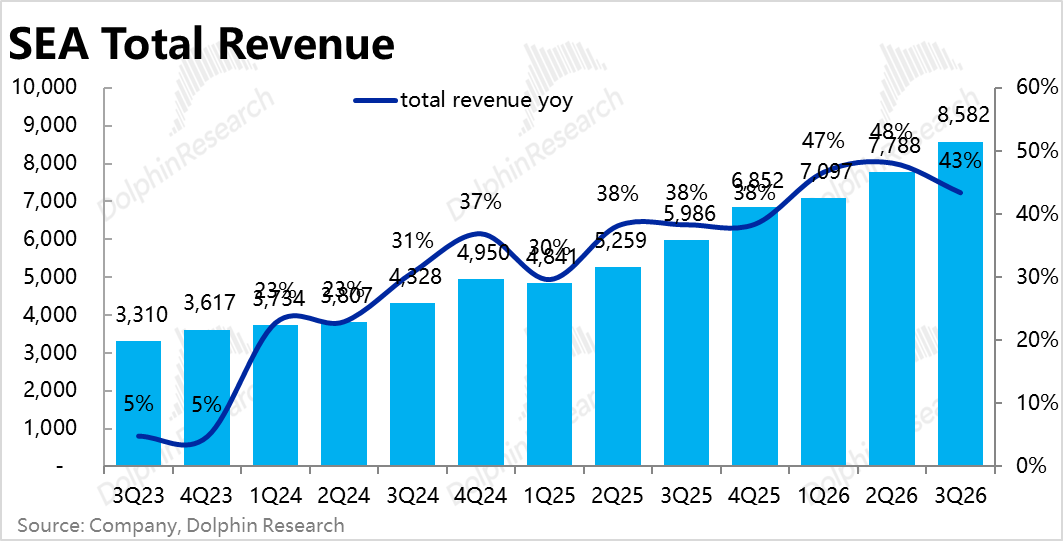
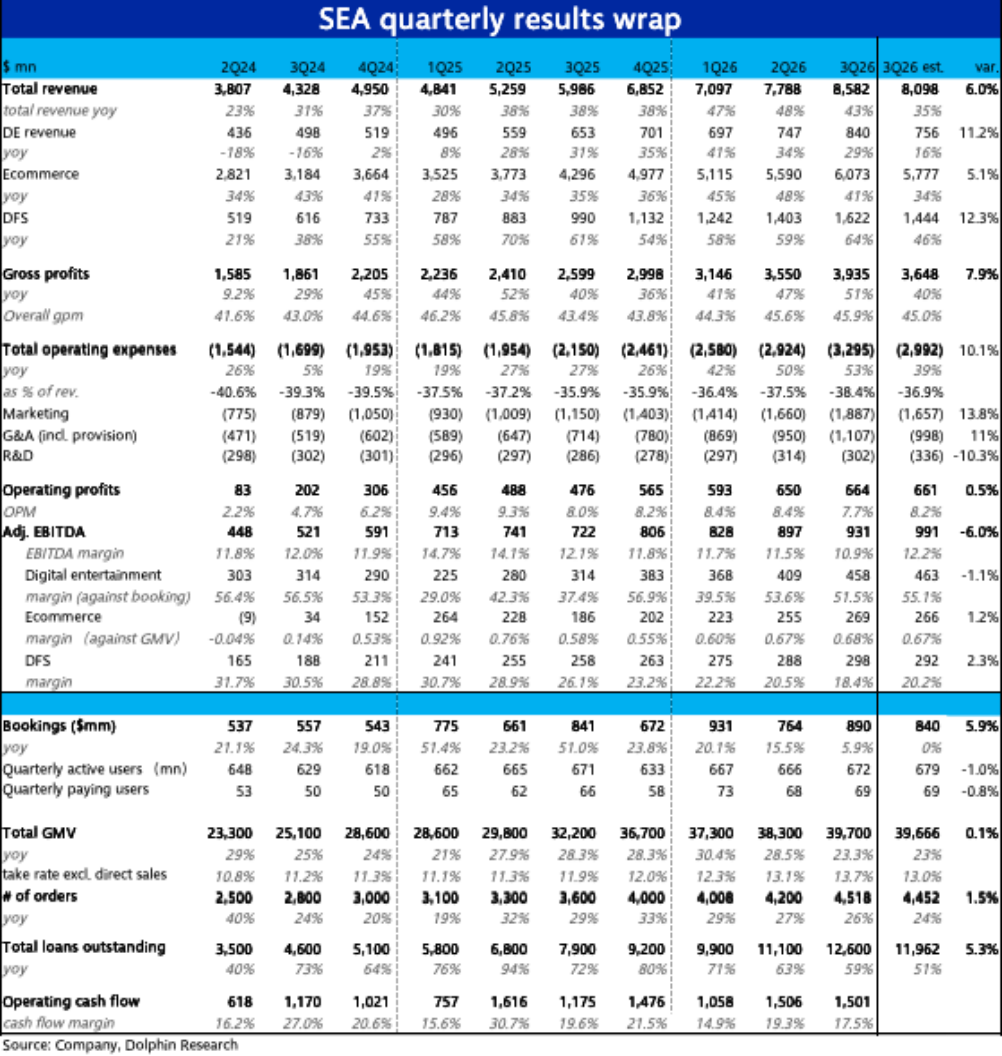
Total revenue this quarter came in at roughly $8.6 billion, up 43% year over year. Although growth slowed slightly on a sequential basis, it beat consensus by about 6%—a solid showing. And there were no obvious weak spots across the three major segments, with revenue in all of them exceeding expectations.
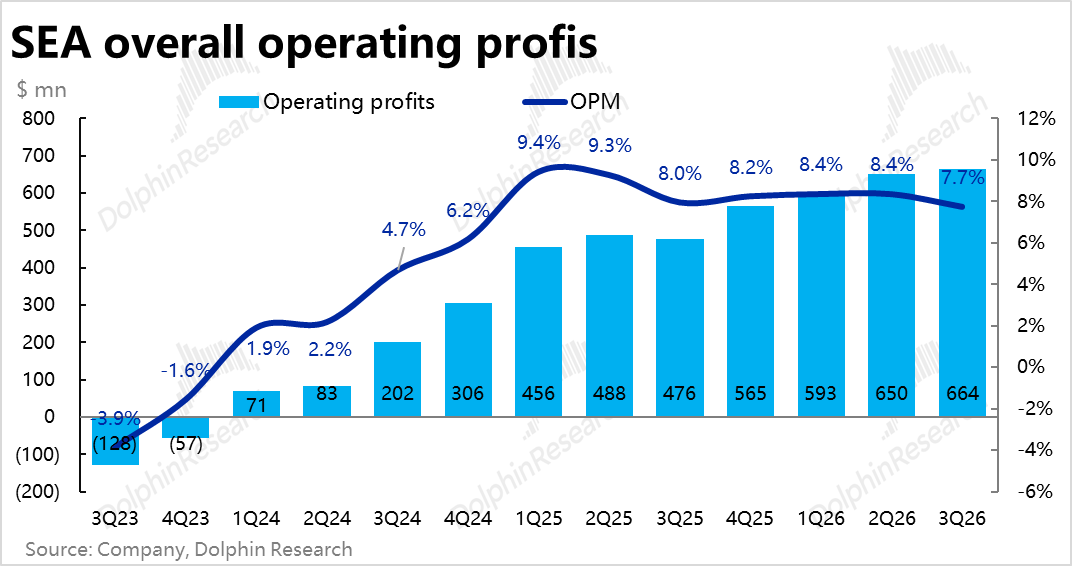
Profitability, however, was mediocre: GAAP operating margin came in at about 7.7%, down roughly 0.6 percentage points sequentially and clearly below market expectations. By segment, e-commerce performed reasonably well, with margin edging up sequentially, but margins in gaming and fintech both weakened. Notably, losses in the "other" business nearly doubled sequentially this quarter—the biggest culprit behind the group's profit miss. The profitability pressure brought on by the push into cloud computing appears to have already manifested.
2. E-commerce: Slowdown in Line with Expectations, Dragged by Average Order Value; Margin Edges Up
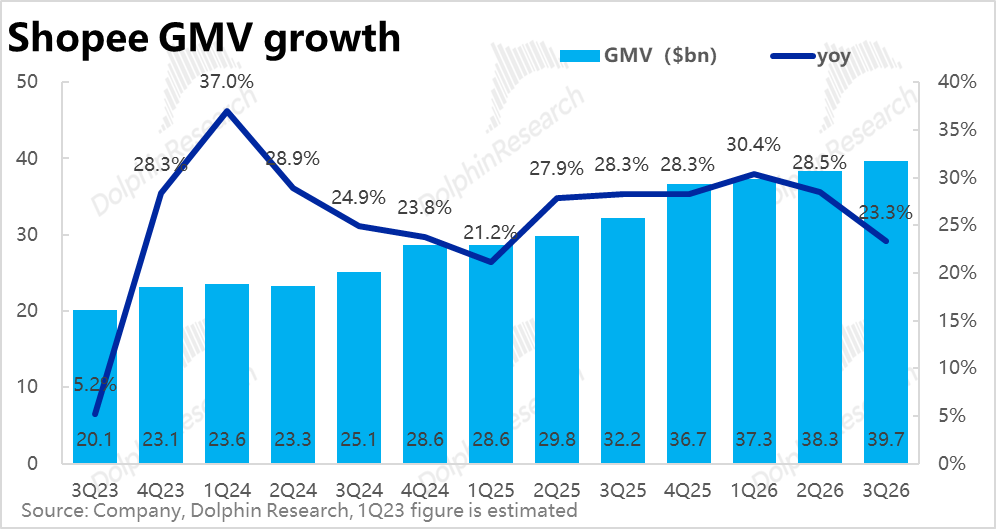
E-commerce GMV this quarter was about $39.7 billion, up 23% year over year—slower than last quarter but in line with consensus. Broken down, order volume grew about 25.5%, better than expected, with the drag coming mainly from average order value, which fell about 1.8% year over year. Sell-side analysts had anticipated this to some extent ahead of results, and it should mainly reflect the depreciation of Southeast Asian currencies: according to major bank statistics, the Indonesian rupiah and Philippine peso depreciated about 8% against the US dollar year over year this quarter. The company also confirmed on the earnings call that excluding FX effects, GMV growth exceeded 26%, similar to last quarter.
Order volume growth was driven mainly by user acquisition: average monthly active buyers rose 20% year over year, with new buyers up more than 50%, further accelerating from last quarter (>35%). The company said Brazil remains its fastest-growing market, continuing to outpace the overall market.
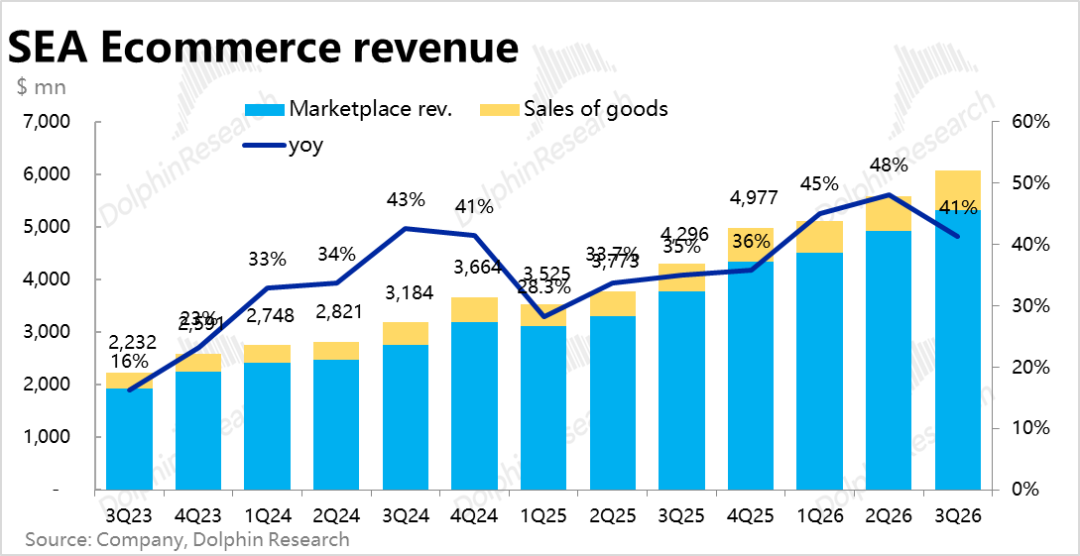
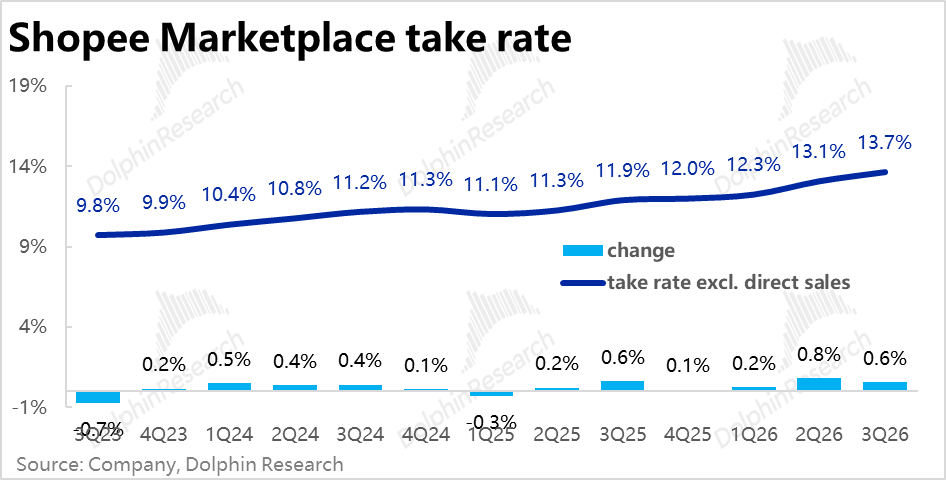
Monetization continued to rise and beat expectations, with 3P platform monetization up about 0.6 percentage points sequentially, driving Shopee revenue up 41% year over year—about 5% above consensus. Broken down, core marketplace revenue comprising commissions and advertising grew about 51% year over year, while value-added services revenue, mainly logistics, was flat year over year—meaning all the improvement came from commissions and advertising, while the drag from free shipping has not yet ended.
Management said future monetization gains will come mainly from advertising, with commissions contributing less. However, advertising growth is slowing: ad revenue this quarter grew more than 55% year over year, and paid advertising sellers grew more than 35%, versus more than 70% and about 45%, respectively, last quarter.
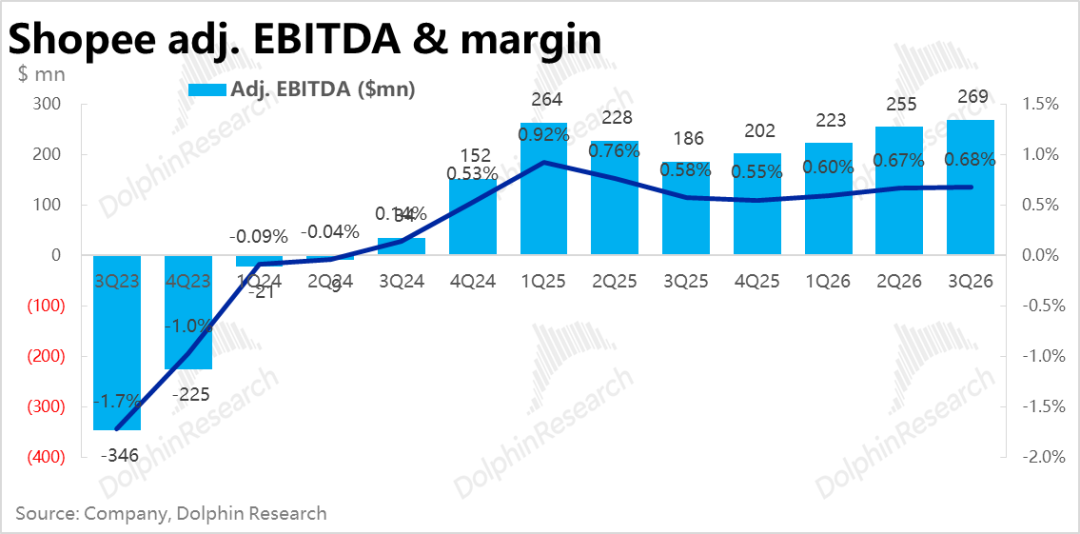
On profit, e-commerce adjusted EBITDA was about $270 million, roughly 0.68% of GMV—up slightly by 0.01 percentage points sequentially and broadly in line with expectations. The better-than-expected monetization improvement was largely "eaten up" by heavier marketing spend: e-commerce marketing expenses surged 60% year over year.
This synchronized with new user growth and membership program expansion: ShopeeVIP members have surpassed 21 million, up more than 40% sequentially, contributing nearly 25% of GMV.
As for why margin did not improve noticeably alongside monetization, management explained that part of the monetization gain would be reinvested to expand the market, but committed that full-year e-commerce EBITDA would exceed $1 billion, and that EBITDA would still improve year over year even after accounting for these investments. In addition, the contribution profit of live streaming and short video businesses turned positive this quarter.
3. Gaming: Bookings Growth Slows, User Metrics Weak, Margin Down Sequentially
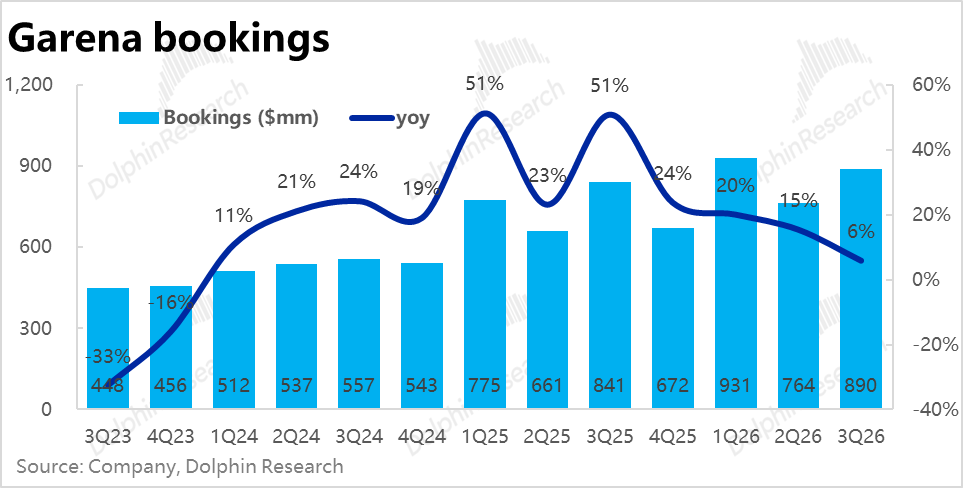
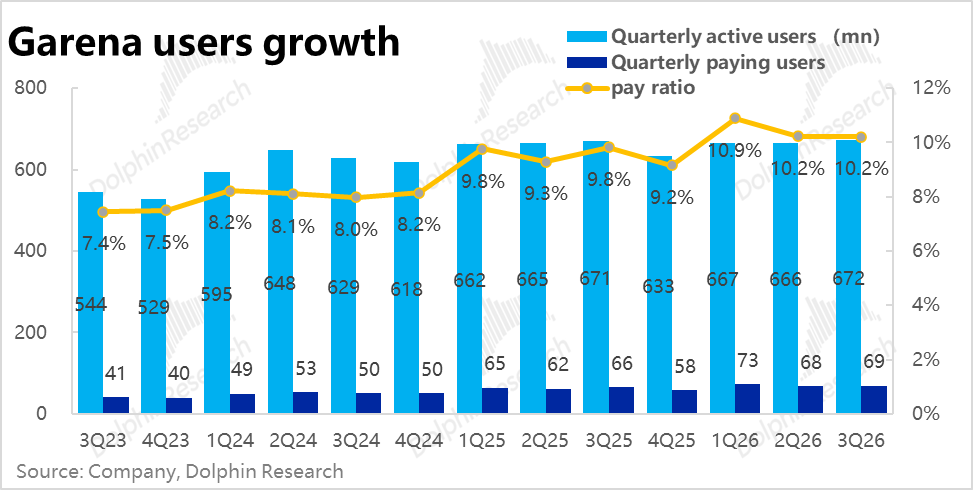
Gaming bookings this quarter were about $890 million, up about 6% year over year—a marked slowdown from last quarter's 15.5% growth. In addition, active users were roughly flat year over year, while paying users grew about 4% year over year (versus about 10% last quarter); both user engagement indicators also came in slightly below expectations.
The company said growth this quarter was supported mainly by Free Fire's Naruto Shippuden collaboration and the tenth-anniversary event for Arena of Valor, but the base from last year's collaboration was very high, so absolute growth was modest—though stronger than consensus.
On revenue, because deferred revenue was a net increase in the year-ago period, revenue was understated, so revenue growth this quarter looked good; but as usual, the underlying bookings growth is the more important metric.
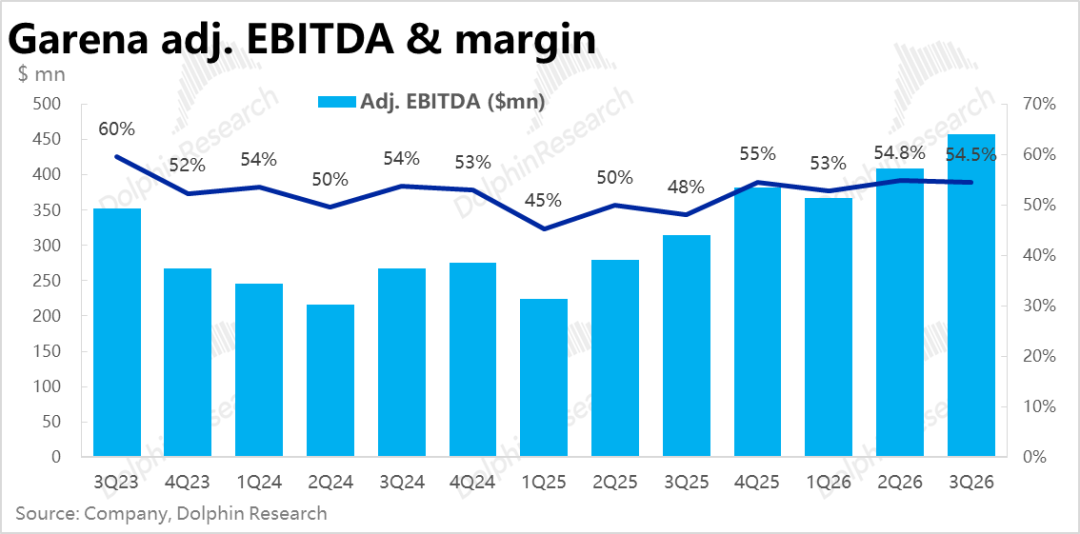
On the profit side, adjusted EBITDA under the new methodology was about $460 million (no longer reflecting the impact of deferred revenue), with margin down slightly sequentially—also a mediocre performance.
4. Fintech: Growth Remains Rapid, but Credit Quality Is Deteriorating
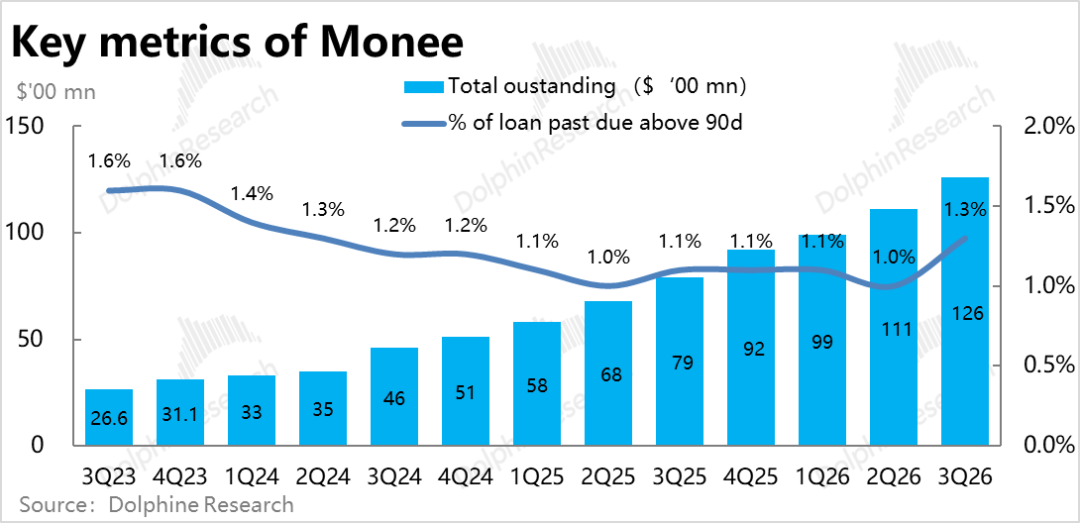
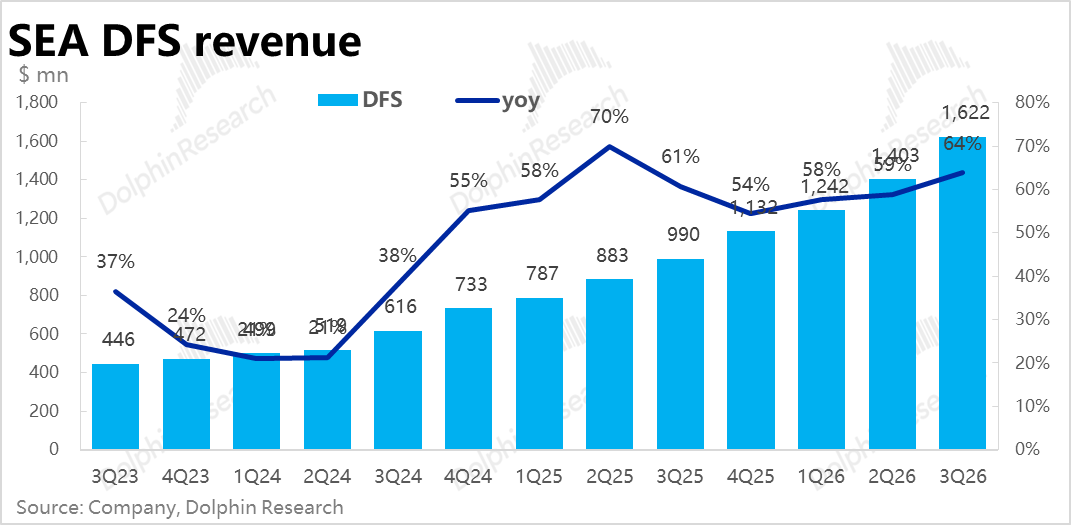
Loan balance was about $12.6 billion, a net increase of about $1.5 billion sequentially, continuing to accelerate from last quarter and driving fintech revenue up 64% year over year, with growth accelerating; both metrics were clearly better than expected.
However, credit quality is worsening: the 90+ day non-performing ratio rose to 1.3% from 1.0% last quarter (the first rebound after declines since the metric was disclosed), and the bad debt loss rate calculated by Dolphin Research (credit impairment provisions/average loan balance) rose to about 23% from about 21%. The company explained that the rise in NPLs mainly reflected changes in the credit environment, especially in Thailand and Brazil, as well as faster growth in higher-risk businesses such as SPayLater off Shopee in Brazil, and that it had tightened approval standards and limit management for certain customer groups.
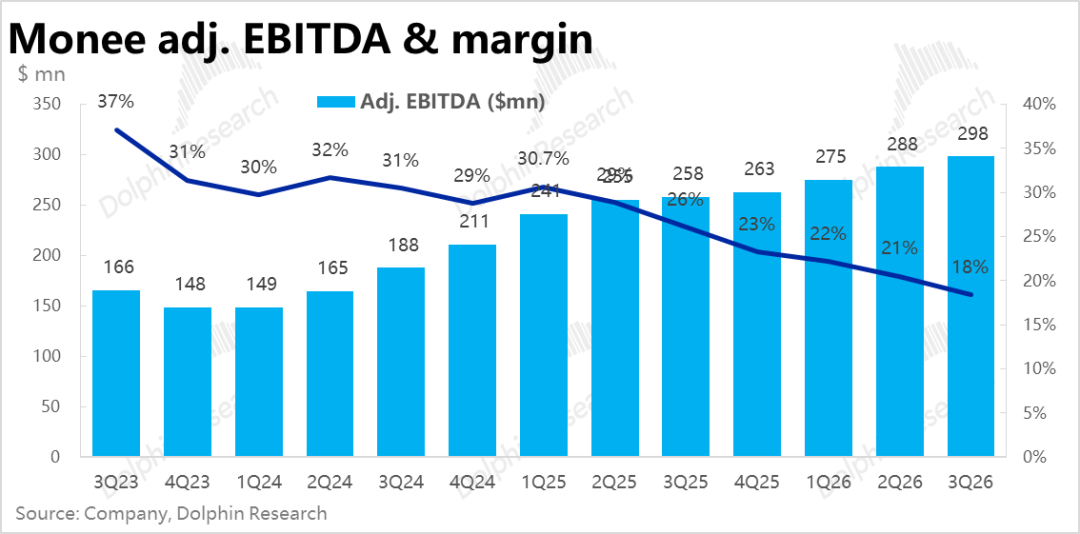
Dragged by bad debt and high marketing spend (fintech segment marketing expenses more than doubled year over year), the fintech segment's adjusted EBITDA margin fell further to about 18.4% (from 20.5% last quarter), declining for multiple consecutive quarters and missing expectations.
Growth is indeed still rapid, but it is hitting exactly the market's concern about worsening credit market risk.
5. Has the Cloud Investment Already Begun to Show in Capex and the "Other" Business?
Capex in Q3 was about $550 million, already exceeding full-year 2025 spending, with the first three quarters cumulatively about 3x the year-ago period (logistics investment is, of course, also a reason for the clear increase in capex). At the same time, losses in the "other" business nearly doubled sequentially this quarter. Both metrics seem to suggest that the additional investment and losses associated with the company's push into cloud computing have begun to appear.
6. Gross Profit and Expenses: Gross Margin Edges Up, Expenses Grow Faster Than Revenue
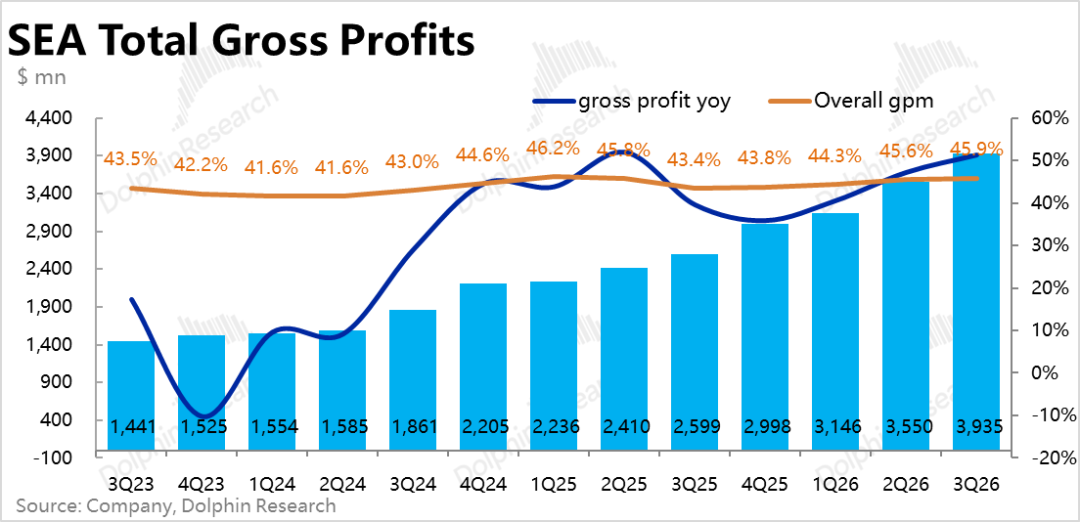
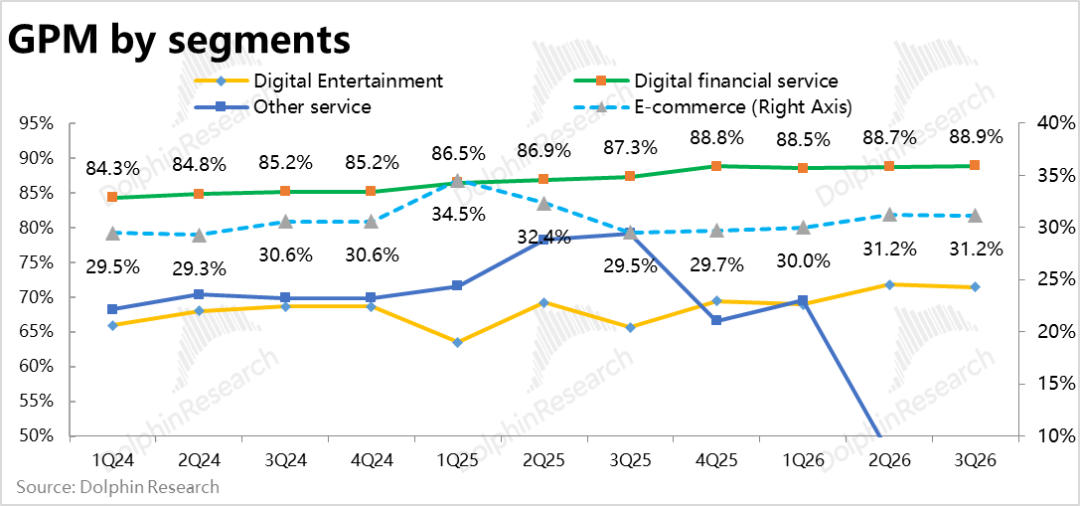
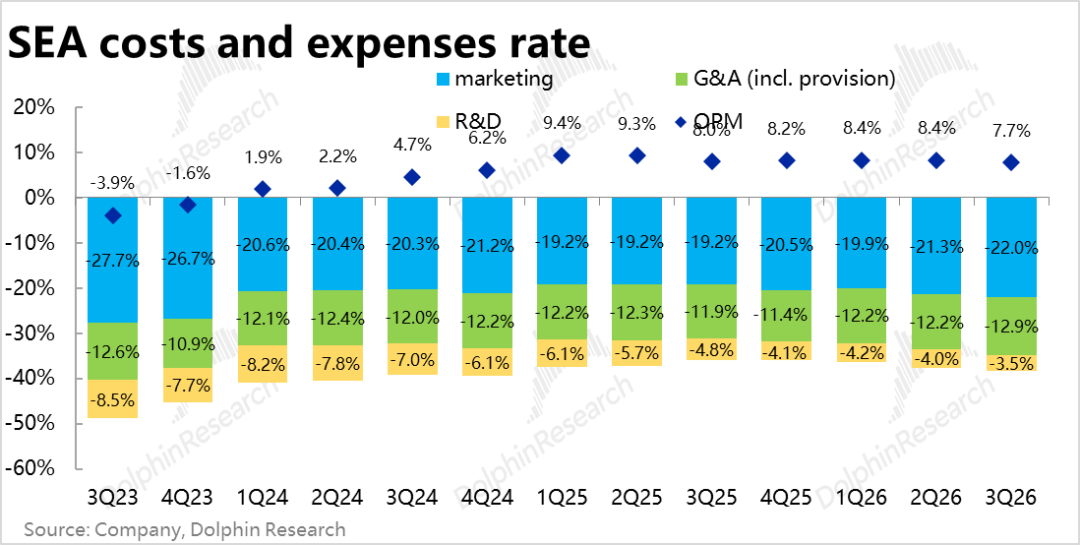
On costs and expenses, gross margin this quarter was about 45.9%, up about 0.3 percentage points sequentially and slightly better than expected. But by segment, gross margins in e-commerce, gaming, and fintech were not much different from last quarter; the overall gross margin beat was mainly due to changes in revenue mix, as revenue growth in higher-margin fintech and gaming beat expectations by a wider margin.
On the expense side, total operating expenses grew 54% year over year, faster than revenue growth of 43%, showing the company is still in an investment cycle. The main drivers remained marketing and bad debt provisions, up 64% and 82% year over year, respectively, with e-commerce marketing up 60% and fintech marketing more than doubling; R&D expenses grew only about 5% year over year. Therefore, even with gross margin slightly beating expectations, operating margin fell both year over year and sequentially, missing expectations.
7. Cash Flow and Buybacks: Cash Declines, New $1 Billion Buyback Authorization Added
Operating cash flow this quarter was about $1.5 billion, but lending and capex are both accelerating their use of cash, and the company's total cash (including short-term and treasury investments) fell to about $9.5 billion, down about $800 million sequentially. On shareholder returns, the original $1 billion buyback has been largely used up, and the board approved a new $1 billion buyback authorization—about 2% of the current market value.
8. Summary of Core Metrics
Dolphin Research View:
1. Quarterly Performance
Overall, this quarter's results were not bad but mixed: growth remained strong, with revenue across all three major segments beating expectations; the problem was profit, as expenses still grew faster than revenue, and the pattern of "revenue growth without much profit growth" has not changed.
By segment, the most important e-commerce business performed reasonably well, with the slowdown mainly due to FX drag, while monetization and margin continued to edge upward; gaming entered a lackluster period after a high base; and fintech saw faster growth alongside worse quality. Beyond the three major segments, capex and losses in the "other" business are jumping—a new variable for future profit release.
2. Sea Cloud Is the Core Variable This Quarter: Commitment to Cloud Is Clear, but Scale and Approach Remain Blank
After the CEO officially announced on October 20 that the company would launch Sea Cloud, the stock plunged more than 9% that day and fell 20% cumulatively over the following week—showing this is the core reason pressuring the stock recently. The reason behind it is that a new investment cycle required by the cloud business may once again delay the group's profit inflection point and also expose Sea to the cash flow and financing issues that plague cloud companies.
The logic behind this choice is not hard to understand. Similar to the situations of Amazon and Alibaba, both are internal cloud platforms that originally supported in-house businesses and were pushed to external markets once the technology and scale became "initially mature," as a new growth engine. An important point of divergence here is whether Sea Cloud will adopt an asset-heavy model (building/purchasing large amounts of facilities and GPU equipment) or an asset-light model (mainly leasing externally), which will significantly affect the company's future cash flow pressure.
Company statement: From the earnings call, management leans toward an asset-light model, which is good news for the market. Sea Cloud's focus is on agent software and computing power operating efficiency rather than large-scale leasing of computing power; when customers need dedicated computing power, it will only take on projects with clear customer commitments and returns, with physical infrastructure mainly funded by partners and customer prepayments, and it does not expect a major impact on the company's finances in the near term.
Currently, Sea Cloud has not signed any enterprise customers, and management also admits that the market segment, customers, and business model are still being explored—it is a long-term bet. In addition, management stated that regardless of whether they pursue cloud, they will continue to invest in GPUs, mainly for their own business, and may also build their own data center to meet Monee's data localization requirements.
3. Competition: Southeast Asia Is Relatively Rational; Brazil's Shopee Is Raising Fees to Protect Profits and Moving Upmarket
As for the e-commerce segment, although this quarter's results were good, Dolphin believes competitive pressure remains very high, whether in Southeast Asia or South America.
In Southeast Asia, TikTok Shop is still grabbing share and has recently launched a standalone TikTok Shop App (according to third-party data, in 1H26 its share of GMV among the three major Southeast Asian platforms rose to 39%, while Shopee fell to 55%). However, all three platforms have recently been raising commissions, and competition remains relatively rational—this is the basis for Shopee's continued improvement in monetization rate.
In Brazil, Mercado has chosen to cut commissions and ramp up logistics investment to capture market share; Shopee, while also scaling its logistics, is raising fees and shifting toward higher-ticket categories and brands. The financial reports of both Mercado and Sea clearly reflect the heavy drag of logistics investment and free shipping on profits.
From this vantage point, Dolphin believes that Shopee should still have room to keep raising monetization rates—through advertising, for instance—and to unlock logistics efficiency and profit margin. On the other hand, competition in Southeast Asia and Latin America is likely to remain an endless, protracted battle. The e-commerce segment's profit margin may therefore rise slowly and modestly, but a rapid increase over the medium term seems unlikely.
4. Monee: IPO on a 1–3 year horizon, but credit quality must come first.
In the same internal letter announcing the cloud initiative, management also said they would consider separately listing the financial segment, Monee. This time a timetable was provided: within the next one to three years, depending on market, macroeconomic, and regulatory conditions, they will pick an opportune moment for an IPO, using an independent capital base to expand into mortgages, insurance, and wealth management, while the partnership with Shopee remains unchanged.
The value of an IPO lies in making valuation explicit and enabling independent financing, but it will also dilute the parent company's stake. Overall, Dolphin views the IPO as a medium-term catalyst; what determines Monee's near-term valuation, however, is credit quality. This quarter the non-performing loan ratio ticked up, and growth is increasingly coming from higher-risk businesses such as Brazil and off-platform SPayLater. If the profit margin continues to decline, it will directly lower the valuation at the time of the spin-off.
5. Outlook
The company does not provide guidance for next quarter's results, but it maintains its full-year guidance for Shopee unchanged: full-year GMV growth of about 25%, and e-commerce adj.EBITDA of about US$1 billion (on the earnings call, the wording was "more than US$1 billion"). Based on the lower end of the guidance, this implies fourth-quarter GMV growth slowing to around 20% and e-commerce profit declining slightly quarter over quarter. Management said future monetization will mainly rely on advertising, and that part of it will be reinvested, so the improvement in e-commerce profit margin will be gradual.
After Monee tightened approvals for certain customer groups, lending growth is expected to slow somewhat. As for Garena, following this quarter's bookings slowdown, attention in 4Q should be paid to the relaunch of the India version of Free Fire and the promotion of the new game "Monster Hunter Outlanders," to see whether they can drive growth to reaccelerate.
6. Value Analysis
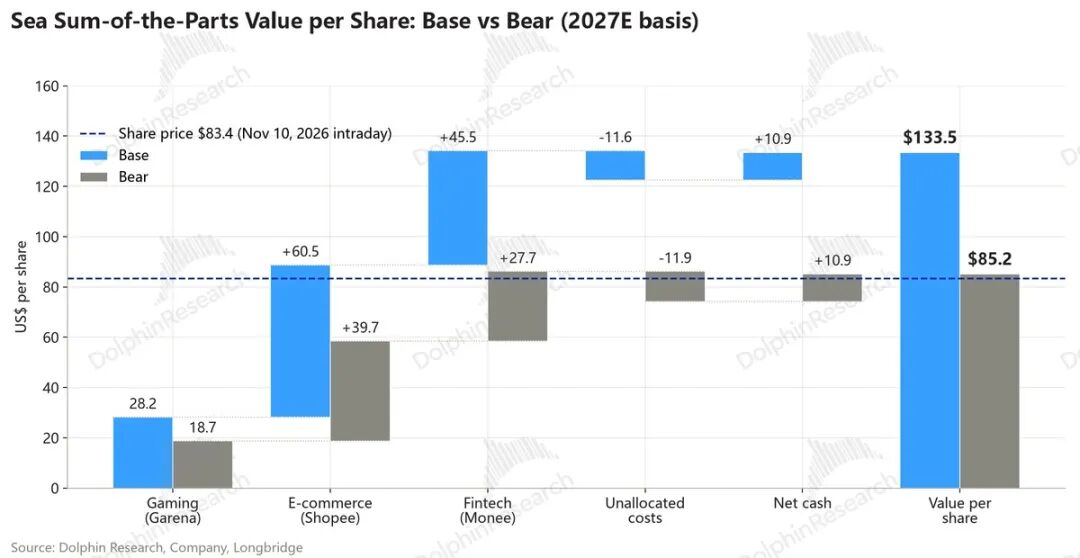
Based on this quarter's results and information from the earnings call, Dolphin lowered its 2027 profit margin forecast for the e-commerce segment: logistics investment and free-shipping concessions are still ongoing, and part of the monetization improvement will be reinvested. Therefore, assuming that the 2027 e-commerce gross margin will only improve slightly and that marketing expense growth will be raised, the e-commerce profit margin (adj.EBITDA/GMV) is lowered from about 0.89% to about 0.68%. For the financial segment, because this quarter's loans and revenue beat expectations, revenue and profit forecasts were slightly raised.
Overall, Sea currently does have quite a few points to "complain" about: gaming growth has slowed after a high base, and user metrics are weak; although financial growth is fast, credit quality is deteriorating and profit margins continue to decline; e-commerce is still in a period of continuous investment, and the pace of profit margin improvement will not be too fast; investment in the cloud business may also put potential pressure on profits.
However, the stock price, which had already undergone a deep correction, has basically fully priced in these concerns, and the range corresponding to Dolphin's pessimistic scenario is already comparable to the current price. Therefore, in the short term, the company's performance may still see fluctuations, but from a long-term perspective, there is already value in positioning and observing at present.
Note: Change in adj.EBITDA definition. In its 2Q26 results announcement, the company indicated that starting from 3Q26, Garena's adj.EBITDA will no longer include the net impact of changes in deferred revenue and related costs, and will instead be disclosed separately as a supplement (the impact this quarter was about US$50 million, versus about US$150 million in the same period last year). The company has restated recent quarters under the new definition, and the year-over-year and quarter-over-quarter figures in this article are calculated under the new definition.
- END -
// Reprint authorization
This article is an original article by Dolphin Research. Authorization is required for reprinting.
// Disclaimer and general disclosure notice
This report is intended only for general comprehensive data use, aimed at general reading and data reference by users of Dolphin Research and its affiliates, and does not take into account the specific investment objectives, investment product preferences, risk tolerance, financial situation, and special needs of any person who receives this report. Investors must consult independent professional advisers before making investments based on this report. Anyone who makes investment decisions based on the use of or reference to the content or information mentioned in this report must bear the risk themselves. Dolphin Research shall not be liable for any liability or loss that may be directly or indirectly caused by the use of the data contained in this report. The information and data contained in this report are based on publicly available materials and are for reference only. Dolphin Research strives for but does not guarantee the reliability, accuracy, and completeness of the relevant information and data.
The information mentioned or views expressed in this report may not, under any jurisdiction, be treated or regarded as an offer to sell securities or an invitation to buy or sell securities, nor do they constitute recommendations, inquiries, or endorsements regarding the relevant securities or related financial instruments. The information, tools, and materials contained in this report are not intended or intended to be distributed to citizens or residents of any jurisdiction where the distribution, publication, provision, or use of such information, tools, and materials would contravene applicable laws or regulations, or would cause Dolphin Research and/or its subsidiaries or affiliates to be subject to any registration or licensing requirements in that jurisdiction.
This report reflects only the personal views, opinions, and analytical methods of the relevant creators and does not represent the position of Dolphin Research and/or its affiliates.
This report is produced by Dolphin Research, and the copyright belongs solely to Dolphin Research. Without the prior written consent of Dolphin Research, no institution or individual may (i) produce, copy, reproduce, reprint, forward, or otherwise create any form of photocopy or reproduction in any way, and/or (ii) directly or indirectly redistribute or transfer it to other unauthorized persons. Dolphin Research reserves all related rights.
Writing articles is not easy. Click "Share" and give me a little power~
-
![]()
Sea: Heavy Bets on Both E-commerce and AI—Is the "Little Tencent" Also Heading for Troubled Waters?
-
![]()
Musk Says the Cybercab Costs Two Dimes per Mile—Institutions Crunch the Numbers and Laugh: Not Even Enough to Cover Insurance
-
Anthropic's Valuation Shrinks, Putting Pressure on Chinese Large-Model Companies
-
Ecovacs' Single-Quarter Profit Plunges 70%: What Went Wrong?
-
![]()
Financial AI Agent Tenders Drop by One-Third in October, Winning Bid Amounts Hit Four-Month Low
-
![]()
Anthropic Sets Sights on $1 Trillion Market Cap — Is This a Double Eleven 50% Off Sale?
-
![]()
Joint Venture Car Brands at the CIIE: A Distinctly "Local Flavor"
-
![]()
"Golden September and Silver October" Is a Thing of the Past: In the Domestic Stock Market Game, Breaking Through Overseas Is the Only Way Out