"Golden September and Silver October" Is a Thing of the Past: In the Domestic Stock Market Game, Breaking Through Overseas Is the Only Way Out
 11/11 2026
 529
The entire industry is now squeezing out the bubble. The visibility that was once built through traffic marketing and press conferences will gradually give way to competition in product strength, technological strength, and global operational capabilities.
On November 9, when the Passenger Car Market Information Joint Committee released October auto market data, many people's first reaction was not to the "Silver October" report card, but rather that "Golden September and Silver October has completely lost its flavor."
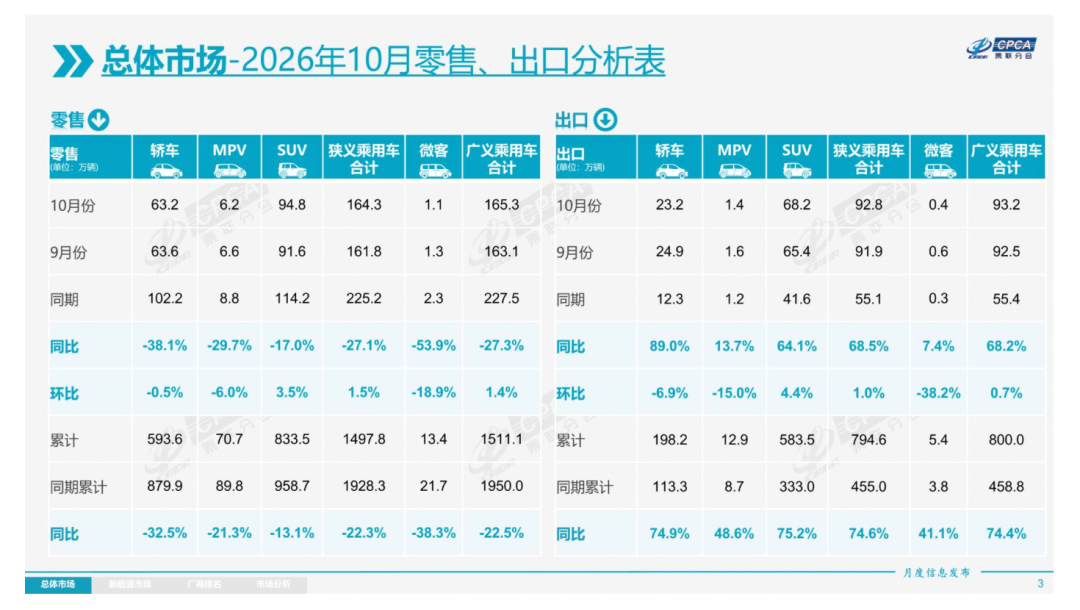
According to data from the Passenger Car Market Information Joint Committee, retail sales of broad passenger cars were about 1.653 million units, up only 1.4% month-on-month and down 27.3% year-on-year; retail sales of narrow passenger cars were 1.643 million units, up slightly 1.5% month-on-month and down 27.1% year-on-year.
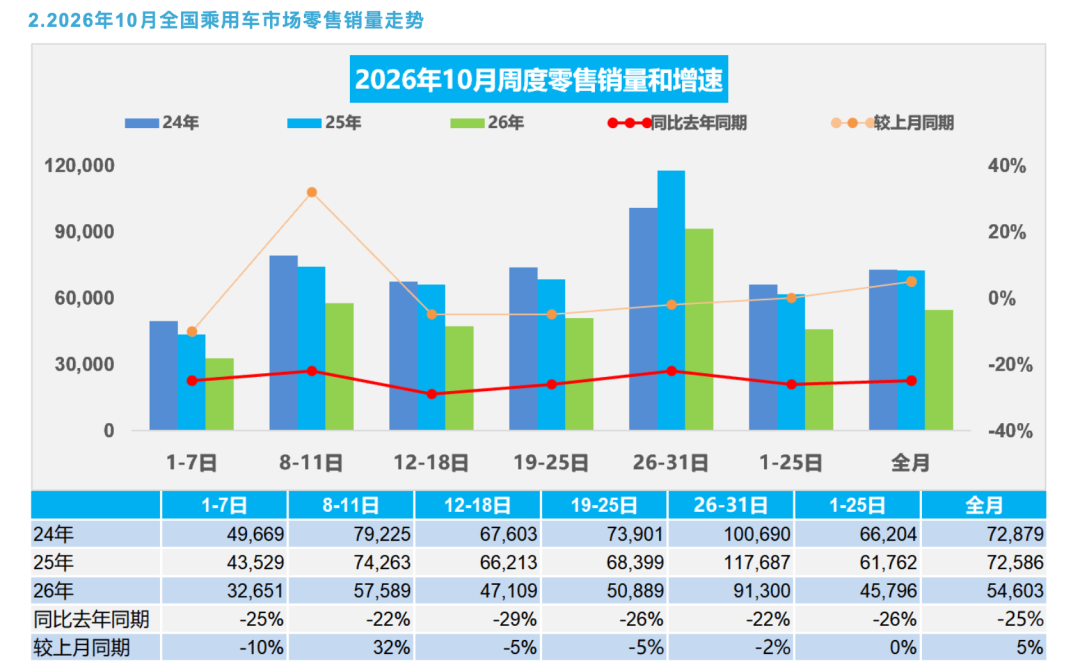
In other words, in previous years at this point, the foot traffic at dealerships, the density of promotional posters, and the overtime sales copy in WeChat Moments could all create a lively sense that "peak season is here." But this year that feeling is noticeably weaker, and even at many stores on weekends, there are fewer customers than staff.
This "peak season that is not prosperous" report card contains a signal more symbolic than the sales decline.
"Golden September and Silver October" Has Completely Faded
The first thing worth examining is the penetration rate. In October, the retail penetration rate of new energy passenger cars reached 67.5%, and the wholesale penetration rate also reached 67.3%, both hitting record highs. Normally, autumn and winter are when the new energy penetration rate flattens seasonally, but this year it rushed upward directly, equivalent to the market's structural switching speed being half a beat faster than many people expected.
Cui Dongshu, head of the Passenger Car Market Information Joint Committee of the China Automobile Dealers Association, said in an interview that "the traditional concentrated explosive Golden September and Silver October has basically disappeared, and this may become the norm in the future." This is not a polite remark, but a real judgment drawn from the data.
Today's auto market is no longer the era when A-segment fuel vehicles led the way. The entire foundation has quietly shifted to a market structure dominated by new energy vehicle replacement purchases.
There are two very practical reasons for this. One is that the scale of young first-time buyers is shrinking. People who in the past saved money in their twenties to buy their first car are now either slowed down by housing prices and employment expectations, or feel that public transportation and shared mobility are sufficient, so their car purchase decisions are repeatedly delayed.
The other is that the traditional sales model for fuel vehicles is really weakening step by step. Consumers now complete most of the work of looking at cars, comparing prices, and understanding specifications online. The test-drive and delivery functions of 4S stores are becoming stronger, and the old playbook of driving sales through offline lead generation and holiday promotions is increasingly ineffective.
The sudden surge in A0-segment electric vehicles in October also confirmed a saying: many of those now truly willing to spend money on cars are not first-time buyers, but additional-purchase groups who already have a car at home and want to add a new energy vehicle for commuting.
Overall, the "tail-raising effect" that everyone expects at the end of the year in the domestic market is unlikely to be very impressive. From January to October, cumulative passenger car retail sales were 14.978 million units, down 22.3% year-on-year, and new energy vehicle retail sales in the same period were 8.869 million units, down 12.9% year-on-year. The basic picture of "shrinking first-time purchases and replacement purchases dominating" directly compresses the room for a year-end tail-raising effect.
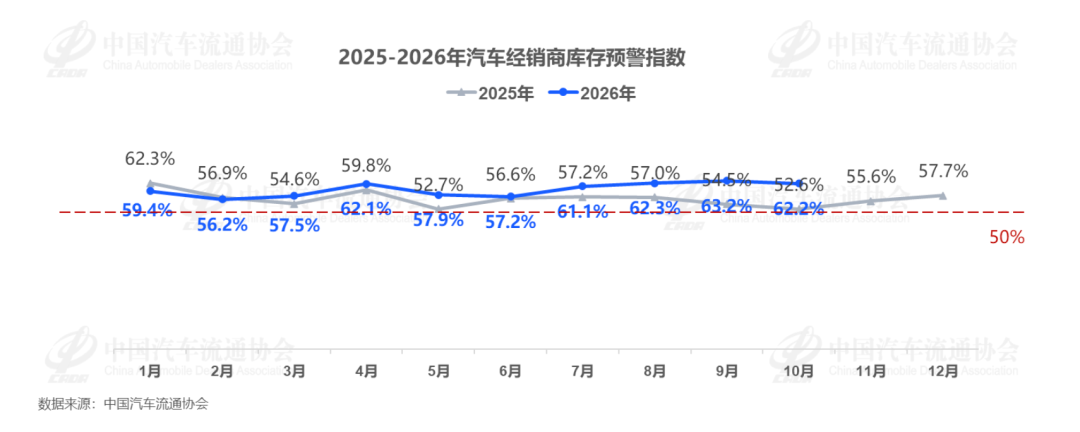
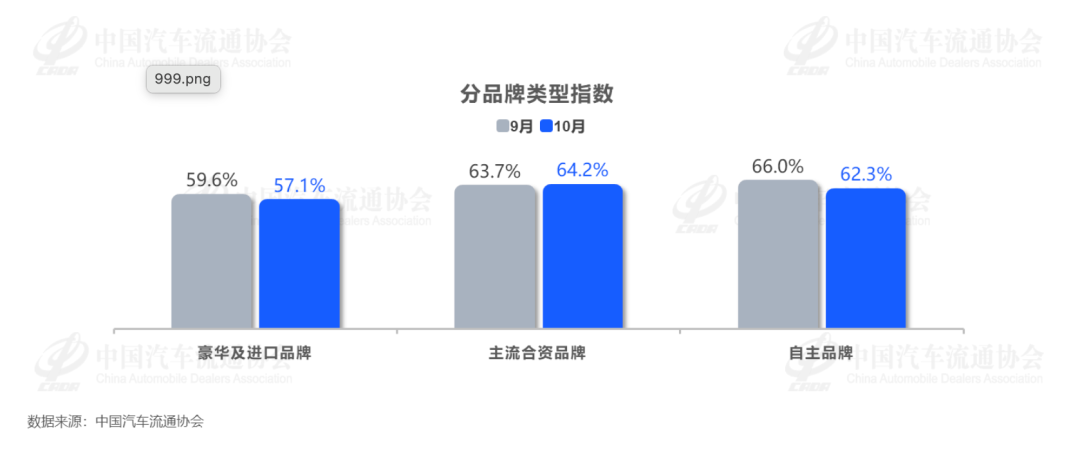
At present, both ends of the replacement chain are not very smooth. It is difficult to dispose of used cars, and many people want to change cars but cannot get a good price for their old ones, which directly slows the efficiency of replacement conversion. The income expectations of first-time buyers are also cautious, and their already low purchasing power is further stretched by expectations that "waiting a bit longer may bring more price cuts," making it naturally hard to see a concentrated outbreak at the end of the year.
Although there is still a balance of subsidies for trade-ins, the marginal effect has clearly diminished. They mostly play a supporting role and can hardly drive a large increase as they did in previous years.
Lithium carbonate prices have recently fallen sharply, which in theory helps reduce battery costs, but this benefit takes time to transmit to the terminal market, and the real beneficiaries are mainly leading automakers with in-house battery development capabilities. Most small and medium-sized brands can hardly obtain the cost dividend immediately.
Looking at these factors together, the November auto market will likely see only moderate month-on-month recovery, with the year-on-year decline gradually narrowing. It will be difficult to see the kind of "year-end volume push and across-the-board gains" scene from the past.
The plight of fuel vehicles bottomed out at once this year. In previous years, fuel vehicles could still get a large share of the cake during Golden September and Silver October. This year, under high oil prices, even the traditional winter peak sales season for fuel vehicles has directly weakened. In the first four weeks, wholesale sales of fuel vehicle manufacturers fell 52% year-on-year, which is a quite astonishing margin.
The more realistic pressure remains the major problem of industry profit margin. From January to September, the automotive industry's revenue was 8,043.5 billion yuan, up 2.6% year-on-year, but costs rose 3.8%, profit fell 23% year-on-year, and the sales profit margin was only 3.3%. Compared with the 5.68% profit margin of industrial enterprises above designated size in the same period, the profitability of the automotive industry is far worse.
Especially in September alone, the automotive industry's profit directly fell to 14.2 billion yuan, down 68% year-on-year, with a sales profit margin of only 1.4%, almost the lowest level in nearly four years.
On one side, AI is driving doubled profit growth in the electronics industry, and upstream raw material industries are seeing high profit growth. On the other side, the automotive industry is squeezed from both sides by rising costs and weakening demand. Profits in upstream links such as oil, nonferrous metals, and semiconductors are surging, while the vehicle end alone is under severe pressure. Price wars continue year after year, new cars are frequently discounted, consumers are increasingly wait-and-see, and automakers' operating pressure grows day by day.
Exports Become the Core Support; Misaligned Chinese and Foreign Demand Reshapes Automakers' Rankings
The only thing more eye-catching than the domestic overall market is exports, the biggest highlight of this year's auto market. In October, narrow passenger car exports were 928,000 units, surging 68.5% year-on-year and up only 1.0% month-on-month. Breaking down the structure, sedan exports were 232,000 units, up 89% year-on-year; SUV exports were 682,000 units, up 64.1% year-on-year; MPV exports were 14,000 units, up 13.7% year-on-year.
From January to October, cumulative narrow passenger car exports were 7.946 million units, up 74.6% year-on-year. This growth rate is quite exaggerated in any mature auto market.
Cui Dongshu mentioned a detail that many people have not noticed: the growth structure of domestic and foreign models is completely reversed. In the domestic market, the year-on-year decline in sedans is even larger than that in SUVs, and people are increasingly favoring large-space SUVs and crossovers when buying cars. But in the export market, the growth rate of sedans clearly outperforms SUVs.

Obviously, the demand systems in China and abroad are not the same.
The domestic new energy market is clearly moving toward larger and higher-end products, with more and more large vehicles over 5 meters, and many new forces' main models are all large-sized products. But in most overseas markets, overall consumer purchasing power is not that strong, and users prefer small, practical, and cost-effective sedans. This misalignment directly creates a completely different product landscape for exports and the domestic market.
Against the backdrop of continued pressure in the domestic overall market and a sharp year-on-year decline in retail sales, exports are no longer just a bonus, but a key variable that truly supports automakers' fundamentals.
More interestingly, the main export models are precisely low- and mid-priced mainstream products. In October, exports as a proportion of manufacturers' total sales rose to 35%, compared with only 19% in the same period last year. That means one out of every three cars sold is now sold overseas.
The explosive power of new energy exports is even stronger. In October, new energy passenger car exports were 582,000 units, surging 144.7% year-on-year, accounting for 62.8% of total passenger car exports, directly up 20 percentage points from the same period last year. Among these, pure electric vehicles accounted for 61.7% of new energy exports, and A00+A0-segment pure electric vehicles accounted for 56.4% of pure electric exports, close to 60%. Plug-in hybrid models accounted for 33.7% of new energy exports, and extended-range products accounted for 4.6%.
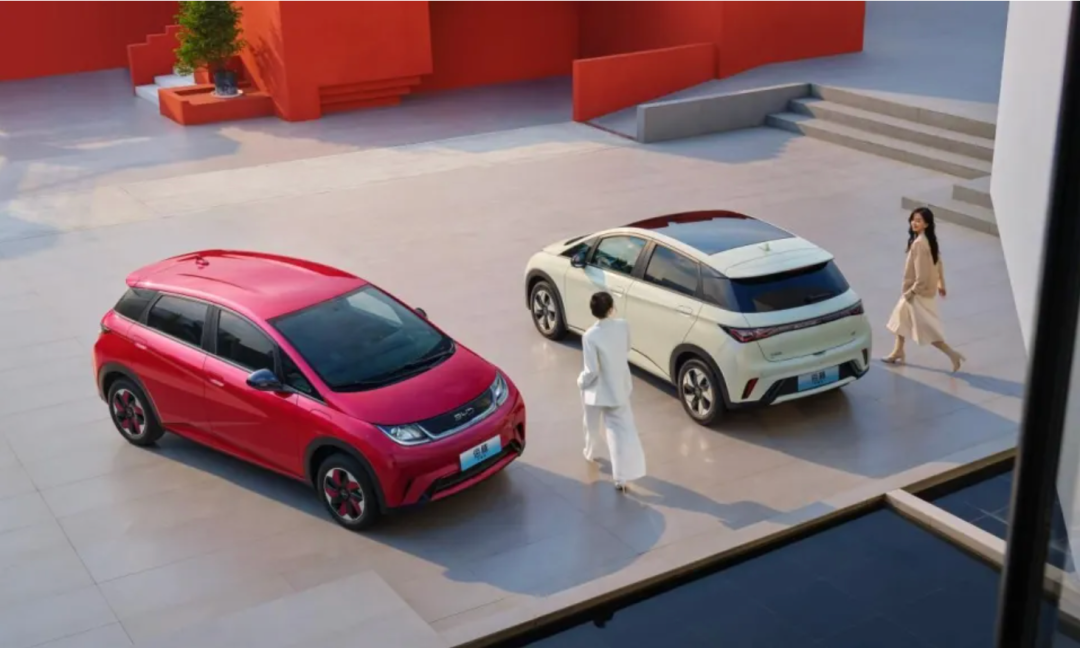
In other words, what is really driving volume in overseas markets are entry-level and mainstream products that are not large in size, are affordable, and have low usage costs.
This structure directly widened the differentiation among automakers. Self-owned brands such as BYD, Chery, and Geely, which have long focused on cost-effectiveness and built global networks through scale advantages, have clearly stronger overall sales resilience driven by exports. Conversely, automakers that rely excessively on high-end models or still peg their main sales to pure fuel vehicles are having a much harder time during this period.
Cui Dongshu also directly mentioned that many new car-making forces generally have weak export performance. The reason is very realistic: their main domestic products are large-sized high-end vehicles, which happen to misalign with the small and medium-sized models preferred by mainstream overseas markets, so it is naturally not easy for them to quickly gain volume.
Data also confirms this. Among self-owned brand export models, A00-segment cars account for 4%, A0-segment cars 34%, A-segment cars 51%, and B-segment and above combined account for only 11%.
More noteworthy is that exports of self-owned plug-in hybrid models are growing especially fast in many developing countries, with quite prominent competitive advantages. Many automakers are no longer relying solely on complete vehicle exports for volume, but have begun moving toward localized production.

Great Wall Motor's CKD exports account for 31.1%, SAIC-GM-Wuling reaches 41.9%, Leapmotor's CKD share is 8%, and SAIC Passenger Vehicle also has 27.6%. These numbers show that Chinese automobiles going global are gradually moving from the primary stage of "building cars well and shipping them out to sell" toward "building factories overseas, building supply chains, and integrating into local markets."
However, no one can say with eyes closed that exports will remain this strong forever. Cui Dongshu predicts that China's domestic automobile exports will likely reach the million-unit level this year, but growth will definitely slow afterward. Next year's export growth is expected to be only about 10%, directly falling from this year's ultra-high-speed growth to a medium-low-speed range.
To break this situation, relying only on low-price volume is certainly not enough. Localized production capacity overseas must be accelerated. It is not just about selling cars, but also exporting the entire industrial system and the consumer concept that "new energy vehicles are a brand-new mobile space" to the global market, so that the short-term dividend of exports can be turned into long-term sustainable global competitiveness.

From a global perspective, the growth momentum of this year's global auto market is itself weakening. From January to September 2026, global cumulative automobile sales were 72.52 million units, up only 3% year-on-year. China's share of the global market fell from 35.4% in 2025 to 32.1%, with the core reason being lower domestic market sales.
Overall, China's auto market in 2026 is essentially a real storyline of "domestic stock game and overseas incremental breakthrough." The era when a wave of sales could be driven simply by seasonal promotions has passed, and the explosive peak season of the traditional Golden September and Silver October will most likely only become weaker and weaker.
Note: Some images are from the internet. If there is any infringement, please contact us for deletion.
-END-
-
![]()
Sea: Heavy Bets on Both E-commerce and AI—Is the "Little Tencent" Also Heading for Troubled Waters?
-
![]()
Musk Says the Cybercab Costs Two Dimes per Mile—Institutions Crunch the Numbers and Laugh: Not Even Enough to Cover Insurance
-
Anthropic's Valuation Shrinks, Putting Pressure on Chinese Large-Model Companies
-
Ecovacs' Single-Quarter Profit Plunges 70%: What Went Wrong?
-
![]()
Financial AI Agent Tenders Drop by One-Third in October, Winning Bid Amounts Hit Four-Month Low
-
![]()
Anthropic Sets Sights on $1 Trillion Market Cap — Is This a Double Eleven 50% Off Sale?
-
![]()
Joint Venture Car Brands at the CIIE: A Distinctly "Local Flavor"
-
![]()
"Golden September and Silver October" Is a Thing of the Past: In the Domestic Stock Market Game, Breaking Through Overseas Is the Only Way Out