Long Time No See, "Little" Smart | Why Build a Car That Doesn't Make Money?
 11/13 2026
 539
Peanut Says
Smart spent seven years and billions to build a two-seater compact car that may not make money.
This isn't slander conjured from thin air—the company's executives have already mentally prepared for it.
In a market where everyone is making cars bigger, smart is once again going against the grain. Why would it do this?
Answering this question requires three cognitive premises: What has smart done in the past few years? What is smart's role as a company? What has happened in the market?
Having been in this industry for a long time, I've noticed a pattern: there are two major challenges in carmaking—what kind of car to build, and when to build it.
Over the past few years interviewing smart, I've chatted several times with Tong Xiangbei, CEO of the brand's global company. He always emphasizes one sentence: Not only small cars are called smart; smart is a tone, a character.
He practices what he preaches. After the Mercedes-Benz and Geely joint venture, the product line indeed broadened: Elf #1, #3, #5, with vehicle lengths going from 4.27 meters to 4.7 meters—they even made a boxy SUV. Then in June this year came the Elf #6, a luxury hatchback sedan priced from 170,000 to 220,000 yuan, with a CLTC combined range of 1,810 kilometers. Cars keep getting bigger, prices keep going higher.
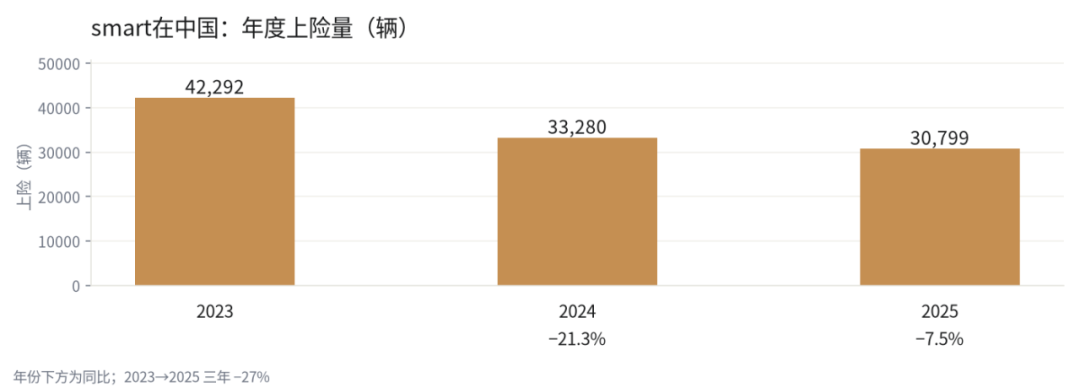
Product diversification inevitably comes at a cost: uniqueness weakens, distinctiveness thins. Looking back over the past few years, the market can hardly be said to have met expectations. Smart's retail sales in China dropped from 42,292 units in 2023 to 30,799 units in 2025—a nearly 30% decline in two years. The product line kept widening, but the number of people choosing it didn't equivalently increase.
So seeing the Elf #2 this time—two seats, under 2.8 meters, 99,900 yuan—feels different. Especially since they chose Guangzhou, a city whose old-town narrow streets and hard-to-find roadside parking spots bear a striking resemblance to Paris and Rome.
Taking a longer view, smart's rhythm has always been somewhat interesting. Back when everyone else was making small cars, it made cars bigger first; when others started making four-door and A-segment cars, it turned back to making the most classic two-seater. Now the whole industry's trend is A00 becoming A0, A0 becoming A—mini vehicle sales are down 40% in a month—yet it's shrinking again.
Half a step ahead makes you a pioneer; a full step ahead makes you a lone army. This balance is hard to strike.
So here's the question: smart could have rested on its past experience, made a good small car, made a good series—so why does it keep stirring things up, keep iterating on itself?
That's because smart is not merely a product series—it has become a multinational brand. In Peanut's view, this is an interesting experimental field. Sales volume is its goal, but not its only goal.
Made in China, sold in Europe—the two sides have different understandings of small cars, different pricing, and different equipment requirements. Finding a balance between the two markets is harder than building the car itself.
And the exploration within it is already value in itself—it has been endowed with certain special significance by both shareholders.
Mercedes-Benz's design, the user perception smart has accumulated over the years, plus Geely's engineering and manufacturing systems—all must be fused together onto one specific car.
In Peanut's view, for Geely at this moment, building cars and cutting costs are already within easy reach. The next step is how to coordinate and balance, avoid internal friction, and let each subsidiary retain its own character.
If it can do this well, Geely can advance to become a true brand operator.
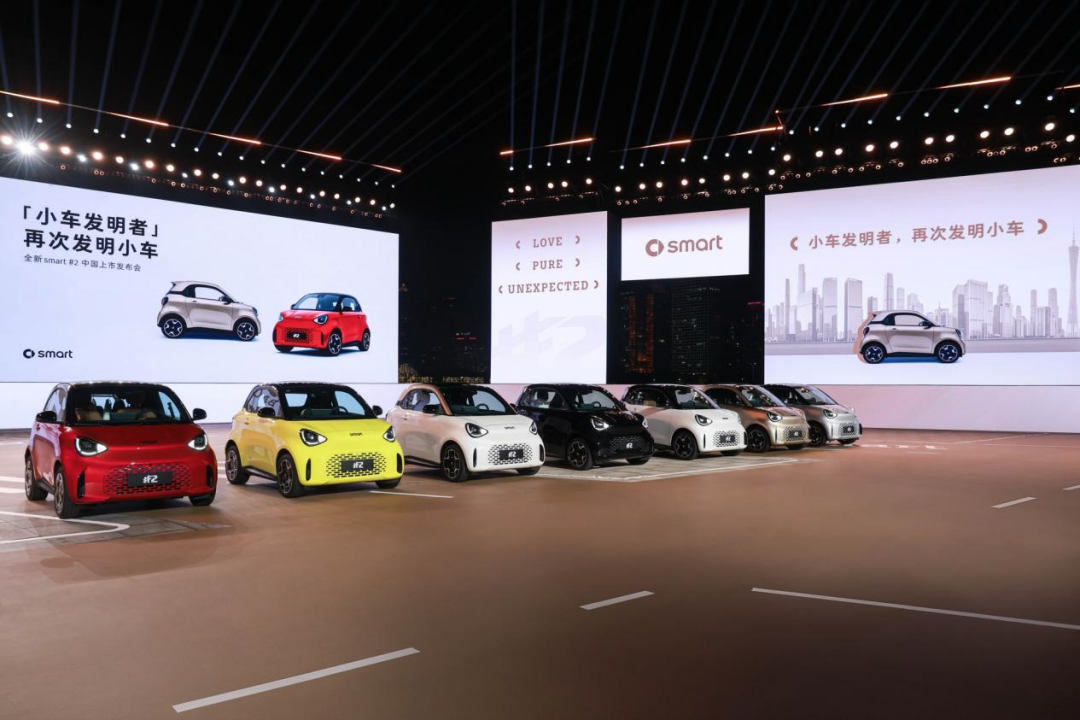
In October, the production version of the all-new smart Elf #2 made its global debut at the Paris Motor Show. The gold-plated haute couture editions, limited to 999 units each in China and Europe, have both sold out—the European market went from opening orders to sold out in just two weeks.
Five years ago, I drove a gasoline-powered fortwo once, and I still remember that nimble feeling of man and machine as one. For example, when driving mountain roads, you can barely feel any delay between the front and rear wheels—after all, in this car, you can have your feet on the front wheels while your butt sits on the rear wheels.
At the same time, sitting in the driver's seat, everything within sight is within reach. Even something as laborious as opening the trunk is just an arm's stretch away. It felt to me like wearing a "suit made of car."
01. A Car That May Not Make Money
99,900 yuan, two seats, 410 kilometers of range—this price is not cheap in China.
Geely's own Xingyuan has already reached 4.135 meters in length and has brought features like the Flyme Auto infotainment system and independent suspension into the small-car market. Two more doors, a bit more space, and more equipment—a small car now has to serve more purposes.
The China Passenger Car Association's October wholesale data for pure electric passenger vehicles shows: A00 segment at 101,000 units, down 41% year-on-year; A0 segment at 456,000 units, up 13.6% year-on-year. The mini vehicle volume is less than a quarter of the next segment up.
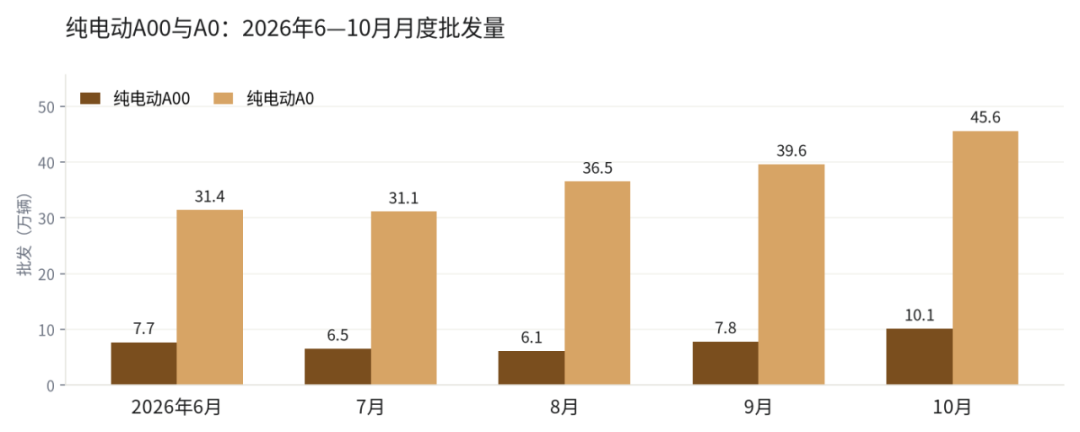
A small car just needs two more doors and a bit more space to enter a bigger pool—but smart chose not to do that. Because smart's own big-car strategy didn't bring sustained growth either. As mentioned earlier, the brand's retail sales in China dropped about 27% in two years.
The bigger the cars got, the more the brand's originally most distinctive characteristics faded.
At this moment, the Elf #2's price is not in the range of China's mainstream same-type vehicle market.
But even so, internal management assessment concluded that this would be a car that temporarily doesn't make money.
The prerequisite for making money is reaching sales scale.
This creates a contradiction: more expensive than same-sized cars, yet still not profitable?
02. Why Is It Expensive?
It's expensive because of stuffing things into 2.76 meters.
The gasoline fortwo sold from 1998 to March 2024, with three generations totaling 2.2 million units, directly becoming the representative of the entire A00 small-car category. Why? Because it targeted a specific group: one or two people, in the city, driving every day. With the same budget back then you could buy a bigger car—but buyers knew what they wanted.
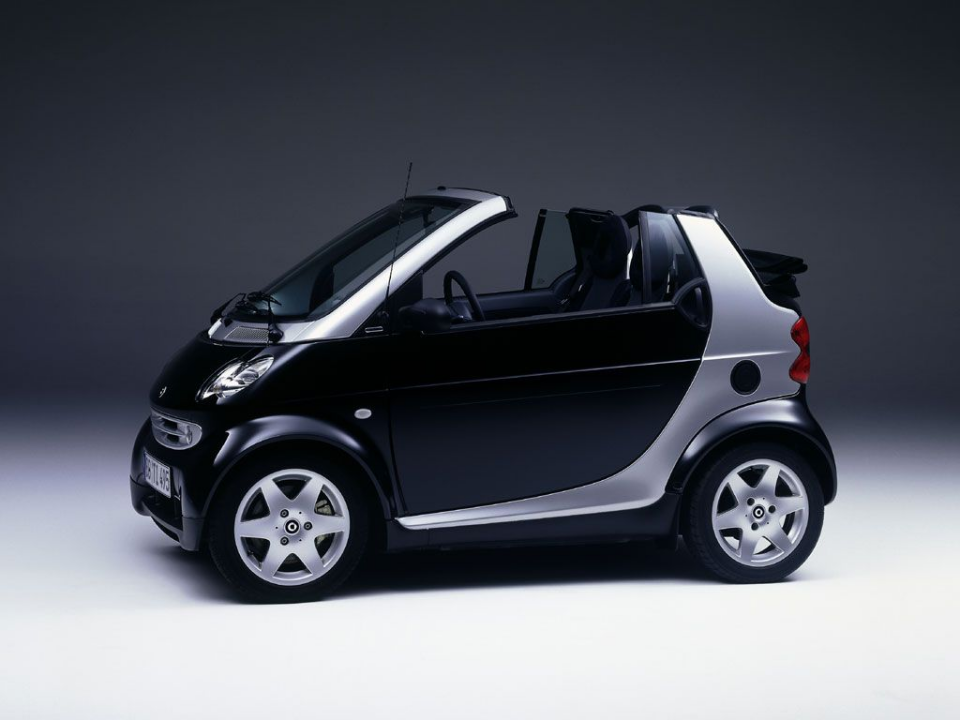
In the electric era, giving a small body big wisdom—a small belly that still has to hold stuff—is extremely difficult:
The battery is the bulkiest piece of furniture. The Elf #2 packs a 35.8 kWh battery, nearly double that of the last-generation electric fortwo. The battery must fit inside, people's heads can't hit the roof, and the chassis still needs room to move.
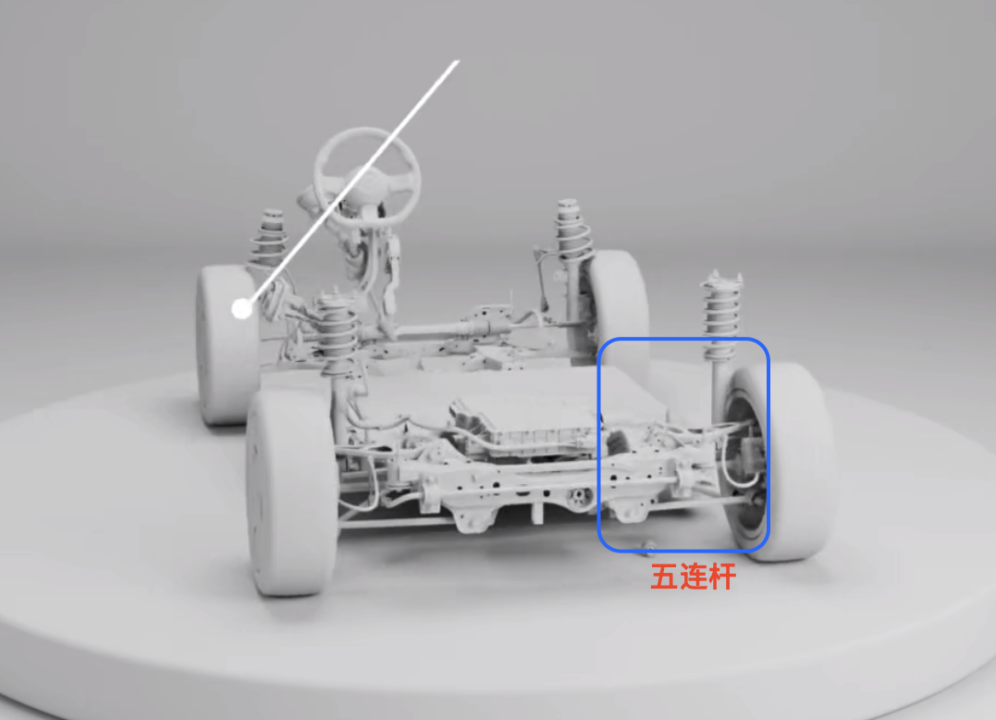
The trade-offs happen right here. Tong Xiangbei said the team tried three rounds: first a torsion beam, but dynamic performance didn't meet standards; then a three-link setup, where a long rod extended forward, taking up battery space, requiring the battery pack to be reshaped and affecting range; finally settling on a five-link setup—higher cost, but both suspension and battery were preserved.
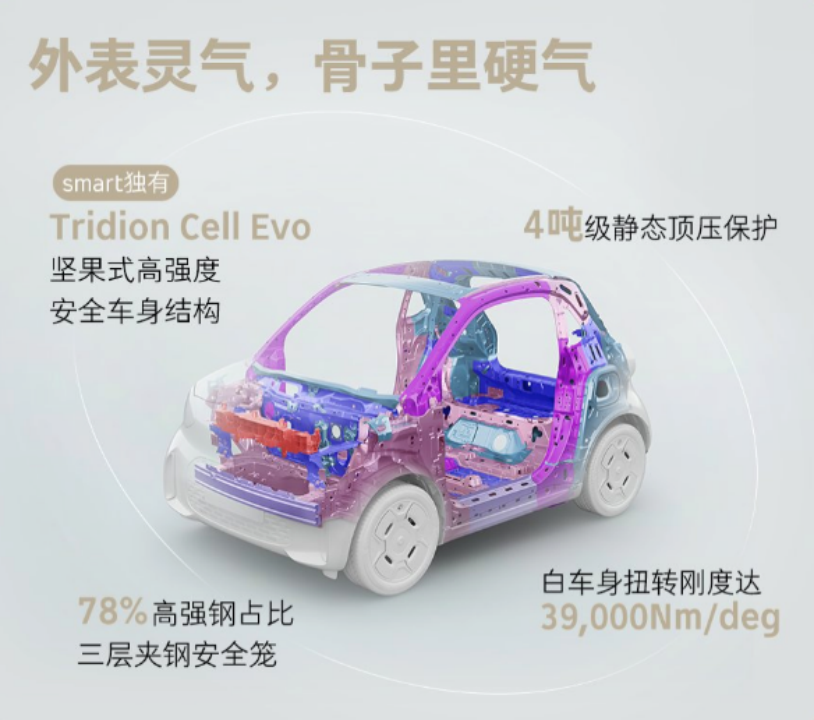
Some things are reflected in product values: among the 7 airbags is a far-side airbag, used to reduce the risk of two occupants colliding with each other in a side impact. This is a cost, but also a brand value orientation. Peanut still remembers that a certain "national A00" model's first launch version didn't even have airbags...
Trade-offs on space like the above wouldn't happen in a big car. With a longer wheelbase, every problem can be solved separately. In a 2.76-meter body, all problems are squeezed together—you can only compromise one by one.
It's also expensive because this foundation is new.
In 2007, smart tested an electric trial vehicle in London; the 2016 generation's battery was only a dozen or so kWh. Those cars were all built on gasoline-version skeletons—not like today's platform developed specifically for pure electric two-seaters.
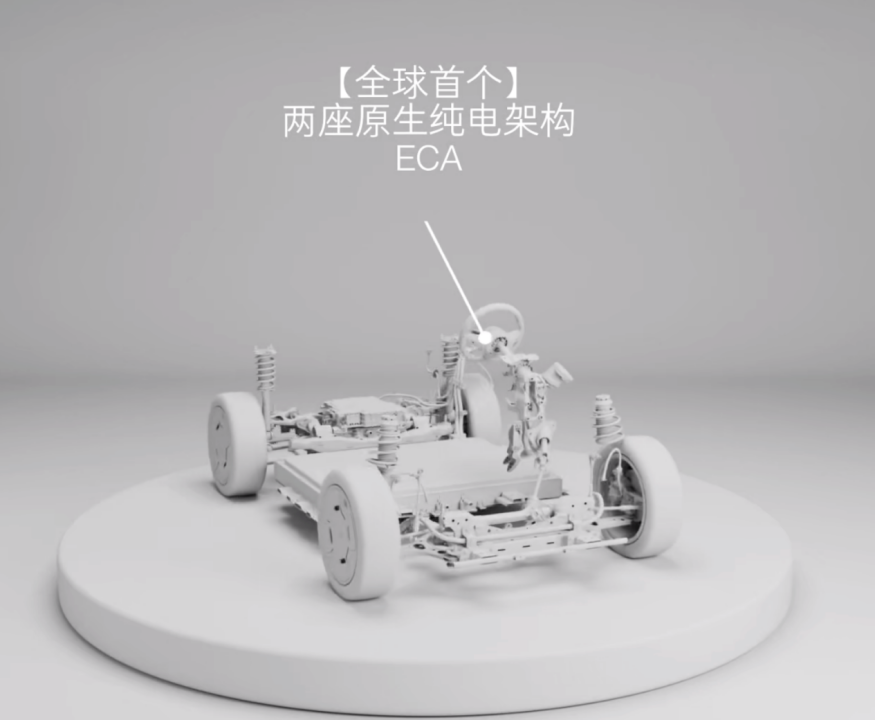
Smart developed the ECA platform for this—full name Electric Compact Architecture. This architecture took seven years to develop, with cumulative investment of billions of yuan. The Elf #2 is the first car hatched from it.
03. Who's Paying for It
In old European cities like Paris and Rome, narrow streets, roadside parking spaces, and short-distance travel give small cars their place.
Famous car reviewer Hammond once demonstrated in the 2021 France special of The Grand Tour how Parisians park: bump the car in front, bump the car behind, push the neighboring cars away, and squeeze into half a parking spot. Over there, this isn't out of line—it's just daily parking practice.
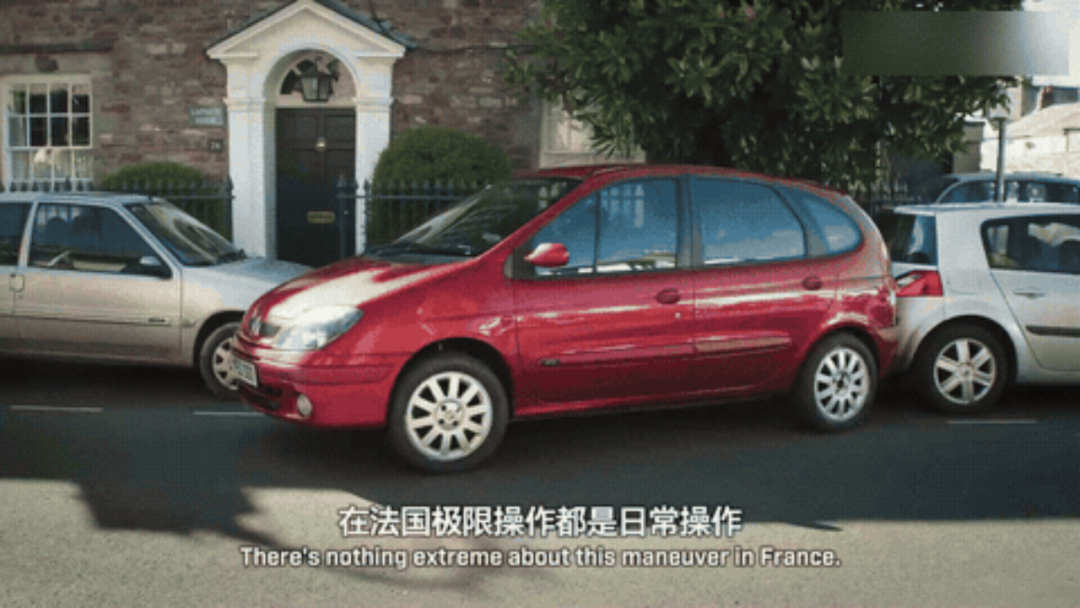
Narrow streets, old towns, and hard-to-find roadside parking mean locals may not give the same answer as Chinese users when choosing between "one more row of seats" and "taking up half a parking spot less"; and the old fortwo owners have long been waiting for this generation change.
The user base fortwo built over the years also means the Elf #2 doesn't need to explain from scratch what a two-seater is. Rear wiper, heated mirrors, and special tuning for slippery roads cater to daily use in local rain and fog.
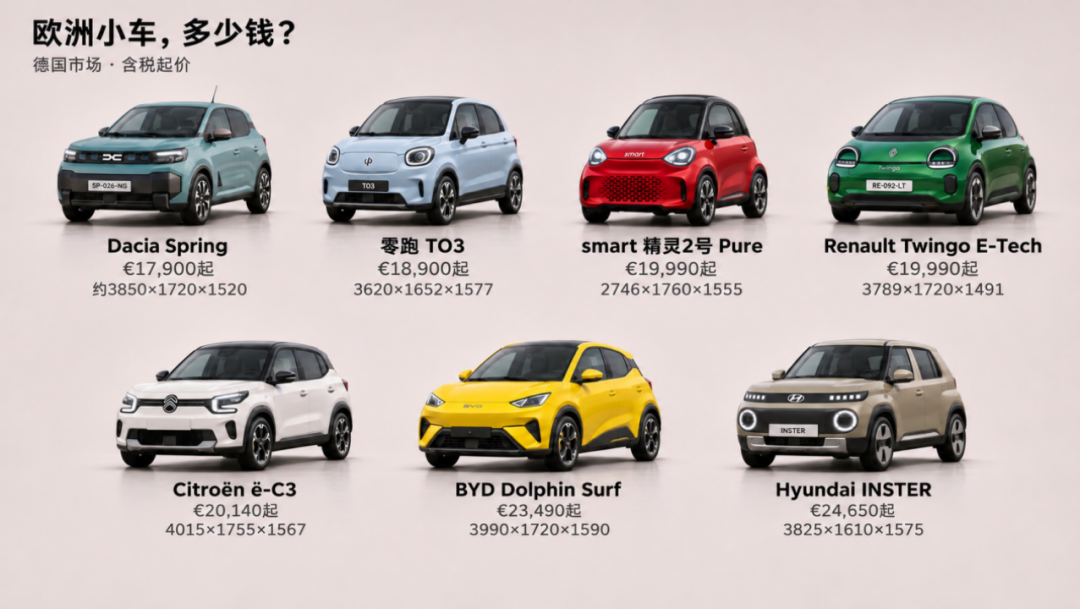
On price: the 100,000 yuan price tag is "a bit expensive" for ordinary Chinese consumers, but "just right" for Europeans. The Elf #2 starts at 19,990 euros in Germany, landing in a similar range as the new-generation Renault Twingo E-Tech. In China, 100,000 yuan can buy a bigger EV; in Europe, this is a proper and mainstream small-car price point.
In June this year, Tong Xiangbei told Peanut: The brand's orders and deliveries in Europe have both surpassed China. The best-selling model in Europe is the Elf #5, while in China it's still the Elf #1. The Elf #2, from project inception, bet on Europe.

Kang Yi judges that the Elf #2's sales potential in Europe may exceed China—this market has been blank for the past seven years.
The market has already responded. The gold-plated haute couture editions, 999 units each in China and Europe, both sold out—Europe in about two weeks. Among early European orders opened after the Paris Motor Show, about 70% of customers directly chose the high-spec version.
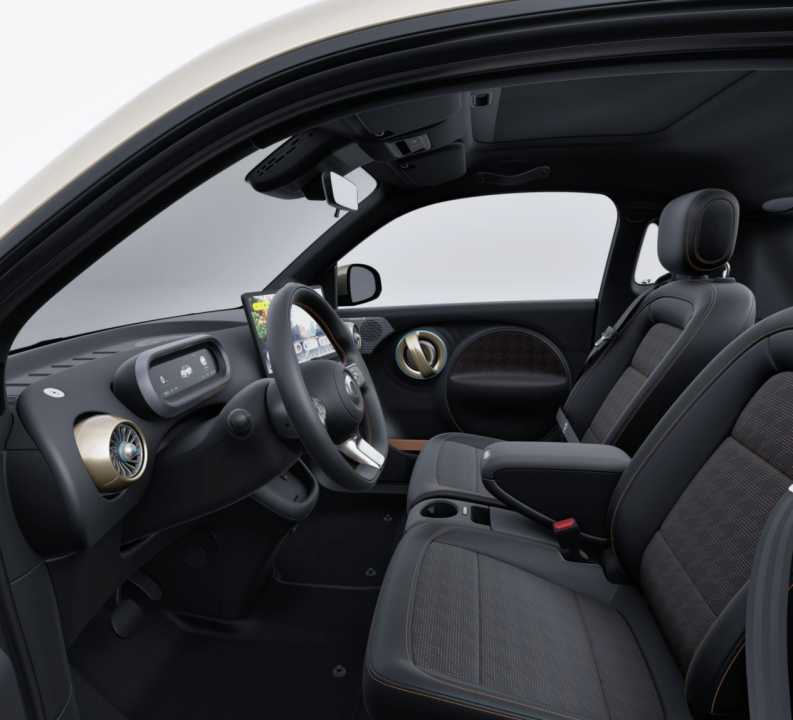
What's the point? The emotional value brought by user insight: the dashboard has reserved space for photos and accessories, and the capsule structure on the front grille can be customized for personal decoration. Photos of two people, favorite little plush toys—all can find their place in the car.
Now look at China. The problem here isn't that the car is bad—first, competition is fierce; second, the user pool isn't deep enough. Not enough two-seater users means it's hard to further incubate such a finely segmented market demand.
"The Chinese market feedback exceeded expectations." Chen Xiaofei, deputy general manager of smart China's marketing company, revealed that both the earlier pre-orders and the official orders on launch day (over 2,000 units in ten minutes) exceeded expectations, and the limited haute couture models also sold out faster in the domestic market.
In his view, demand in the Chinese market is not small—what the market lacks is good products that meet consumer needs. Currently many buyers are additional-purchase customers of ABB brands and large six-seat vehicles; smart small cars are seen as the first choice for a family's second or third car.
This pool is only so big, and those willing to pay extra for design and driving feel are even fewer. For the Elf #2 to sell well in China, it must pick from this group the people willing to spend 100,000 on a two-seater.
This is a small but certain business—not one that can amortize seven years of investment.
04. What Comes Next?
Let the same architecture spawn more models.
The platform is another path. Last year, chatting with smart R&D staff, they mentioned that ECA has a four-door model planned in addition to the two-door. That was last year's information; unclear whether it was later adjusted. What's certain is that this architecture reserves space for different wheelbases, vehicle lengths, and body styles.
This playbook is very "Geely-style": CMA, BMA, SPA, SEA—various architectures let R&D results be reused across new cars, achieving higher product adaptability, with scale advantages bringing lower procurement costs, better product quality, and faster carmaking.
But shared technology only solves half the problem. Who the car is ultimately sold to, and why people are willing to pay for this brand—those still have to be answered by different products themselves.
For Geely at this moment, building cars and cutting costs are already within easy reach. The next step is how to coordinate and balance, avoid internal friction, and let each subsidiary retain its own character.
If it can do this well, Geely can advance to become a true brand operator.
Mercedes-Benz's design, the user perception that smart has accumulated over the years, plus Geely's engineering and manufacturing system, must be blended together in one specific car.
In my view, smart is more than just a product, a model series, or a brand—it represents a company, a testing ground. Only by grasping this can you truly appreciate today's new car.
The fortwo from five years ago left me with a sense of freedom that a small car can offer in the city. Elf #2 aims to win back this group of users.
Whether it succeeds in capturing them won't be determined by the launch event, but by the monthly insurance registration figures going forward.
As for whether the billions invested over seven years can be recouped, it depends not only on the sales of this two-seater but even more on whether this platform can continue to spawn new models.
Let's wait and see.
-
![]()
"Space AI's First Stock" Debuts Today, but Investors Aren't Exactly Rushing In
-
Apple Doesn't Want to Keep "Winning by Doing Nothing"
-
![]()
Token Overseas Revenue Can No Longer Keep Up with Soaring Storage Costs
-
![]()
Suzuki: From Retreat in China to Japan's Third Largest | Cover Story: Japanese Automakers at the Crossroads of Transformation (Part 5)
-
Nearly Half of Q3 Complaints to 12365auto.com Came from Cars Less Than Three Years Old, Putting Validation Under Pressure
-
![]()
1113 Domestic Computing Power Expert Exchange Minutes
-
AI Film & TV: Top 10 Companies with the Fastest Growth and Strongest Profitability
-
![]()
Long Time No See, "Little" Smart | Why Build a Car That Doesn't Make Money?