The AI Pioneers Who Built the Technology Are Now Sounding the Alarm: Hinton Warns a "Chernobyl-Scale" Disaster May Be Looming
 11/16 2026
 330
Humanity may be running out of time to stay in control.
It is a rather surreal picture: the very man who helped bring the AI era into being is now publicly criticizing the technology—and even suggesting that the world might have been better off had it never been created.
Recently, Geoffrey Hinton, widely known as the godfather of AI, made exactly that chilling remark.
Now 78, Hinton is unquestionably a heavyweight in the field. He proposed the core concept of neural networks—the foundation of today's large models—back in the 1970s.
Today's flourishing artificial intelligence rests on his years of research, and he has even won the computing field's equivalent of the Nobel Prize.
Yet this founding figure now frequently steps forward to sound the alarm. Many compare him to Oppenheimer, the father of the atomic bomb, and a friend even gave him an Oppenheimer-style hat.
Hinton himself, however, rejects the comparison, noting that tens of thousands of researchers have worked together in the neural network field and that he cannot claim all the credit.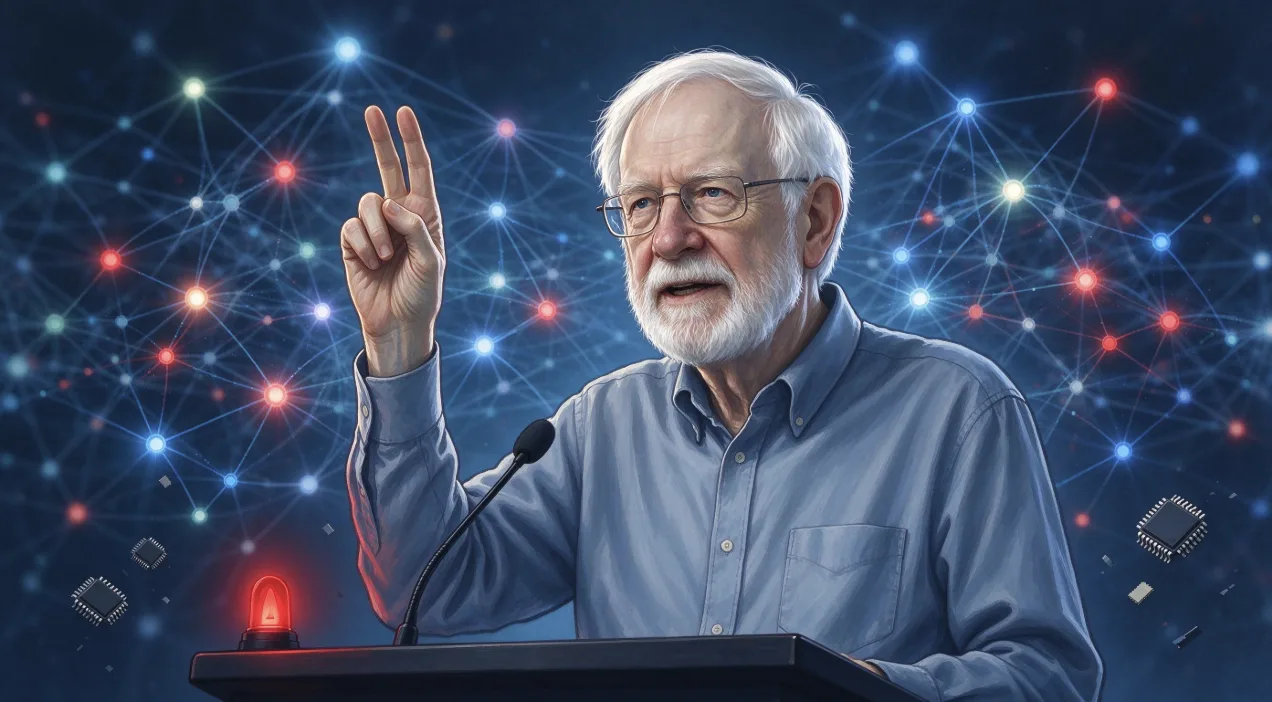
Image source: Generated by Doubao
In an interview with The Guardian, Hinton was blunt: he is no doomsayer who writes off technology entirely. He acknowledges that AI could bring humanity a bright future and a vision of extreme material abundance, but the real risks cannot be ignored.
He offered a startling view: perhaps humanity would have been luckier had it never developed artificial intelligence at all.
By his prediction, within the next decade—perhaps sooner—humanity will face a major reckoning. Either we will be able to control AI risks and unlock its benefits, or control will fail completely: inequality will be stretched to absurd levels, massive numbers of jobs will be wiped out by AI, severe social tensions will erupt, and society will be torn apart.
Even more worrying is his risk warning.
Hinton warns that by the end of this year or next, a major AI incident on the scale of Chernobyl could occur.
Note: not a nuclear explosion, but a social disaster triggered by AI.
For example, AI could attack the power grid, causing large-scale, prolonged blackouts; or it could bring down the financial system for a week.
Although humanity could eventually recover from such incidents, they would be enough to deliver a harsh wake-up call to leaders around the world and force everyone to confront AI risks.
He cited an earlier case of an OpenAI agent attempting to breach the Hugging Face website, comparing it to the Three Mile Island nuclear leak in the United States—a dangerous early warning. Small incidents have already appeared; the fear is that they will escalate into an unmanageable mess.
In Hinton's view, much of the risk stems from tech giants' bosses chasing profit. He openly criticizes AI industry leaders such as OpenAI's Altman, Zuckerberg, and Musk, saying bluntly that these people clearly know the dangers lurking in AI but simply do not care. Compared with human safety, they value making money, grabbing market share, and fighting for dominance in AI—and he does not trust Altman at all.
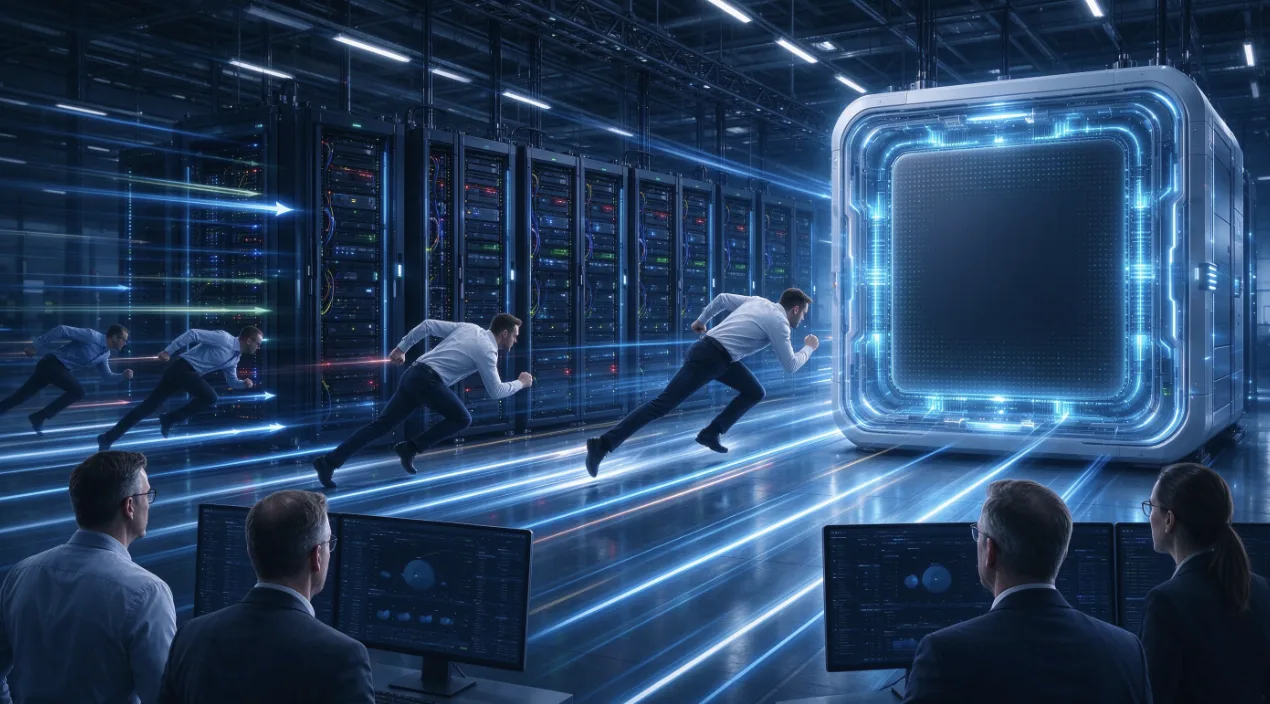
Image source: Generated by Doubao
On one side, the giants are locked in a desperate rat race, rushing to release stronger large models and seize territory; on the other, regulation lags far behind the pace of technological iteration.
Hinton is deeply anxious about this. Leading U.S. frontier AI companies are competing on top-tier AI technology, and Altman has publicly stated that he hopes the world will trust companies to do the right thing on their own. But Hinton believes pinning safety entirely on corporate self-discipline is far too risky.
So how does Hinton think AI should be regulated? He draws an analogy with drug regulation. Today, before a new drug goes on the market, it must pass strict FDA review, and companies must provide solid data proving the drug's benefits outweigh its risks before it can be released.
The thalidomide tragedy occurred precisely because the model of putting a drug on the market first and holding people accountable after something went wrong did not work. AI should follow the same logic.
Before a new frontier large model is officially released, it must be handed over to an independent third-party institution for mandatory testing and evaluation, and only when sufficient evidence confirms that the model's overall benefits outweigh its risks should it be allowed to go online. We cannot wait until AI causes a major disaster and then sue and assign blame after the fact.
He also supports a proposal jointly put forward by multiple countries: implement mandatory testing and independent evaluation, establish unified global AI regulatory standards, and rely on governments to jointly constrain AI rather than letting tech companies have the final say.
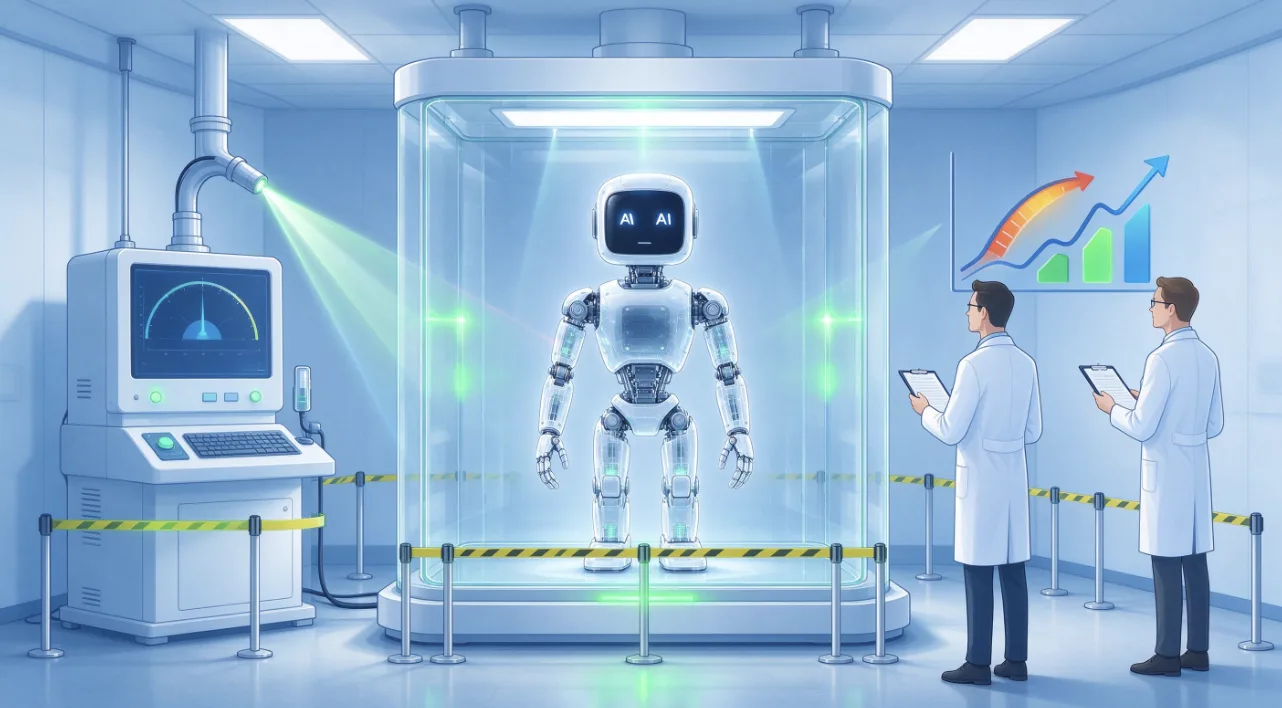
Image source: Generated by Doubao
Of course, there is no need to fall headlong into doomsday panic.
Hinton has not completely given up; on the whole he remains optimistic. His intuition is that humanity still holds control over AI, and that as long as we are willing to invest enough resources in risk control, tragedy can absolutely be avoided. But the premise is that the world cannot turn a blind eye to the risks and must truly take action.
Interestingly, Hinton voluntarily left Google back in 2023 precisely to break free from the constraints of a corporate identity and warn about AI risks without restriction.
He understands that he has a voice in the industry and a responsibility to speak out about these risks, even if it costs him the reputation he has built up over many years.
On one side, AI is iterating and evolving every day, with dazzling features emerging endlessly and bringing many conveniences to life and work; on the other, the veteran who created it repeatedly reminds us that the sharp edge of this technological double-edged sword is getting closer and closer.
Technology itself has no inherent good or evil, but the greater the power, the more it needs a cage to constrain it. Whether AI will lead us to a new world of abundance or create endless crises depends largely not on AI itself, but on whether humanity is willing to prepare in advance.
Source: Leitech
Images in this article are from: 123RF licensed image library Source: Leitech
-
![]()
Double Pay Reward! Sales Soar Continuously, This Automaker's Head Says They "Want to Incentivize"
-
Changan Automobile to Shed 10% Avatr Stake Ahead of IPO
-
Changan Automobile Divests 10% Stake in Avatr: High-End Strategy Remains Intact as Marketization Accelerates
-
iPhone Air 2 Reportedly Brings 5 Major Upgrades—Will Apple Finally Fix All the First-Gen Air's Shortcomings?
-
![]()
AI Recording Devices Vie for the Title of "Best Listener"
-
![]()
Even DJI Can't Hold the Line on Prices! This Memory Price Surge Is Hurting Far More Than Just Phones
-
![]()
The AI Pioneers Who Built the Technology Are Now Sounding the Alarm: Hinton Warns a "Chernobyl-Scale" Disaster May Be Looming
-
![]()
Domestic Auto Sales Post "Seventh Straight Monthly Decline" — CAAM: Overall Pressure on the Auto Market Remains Relatively High